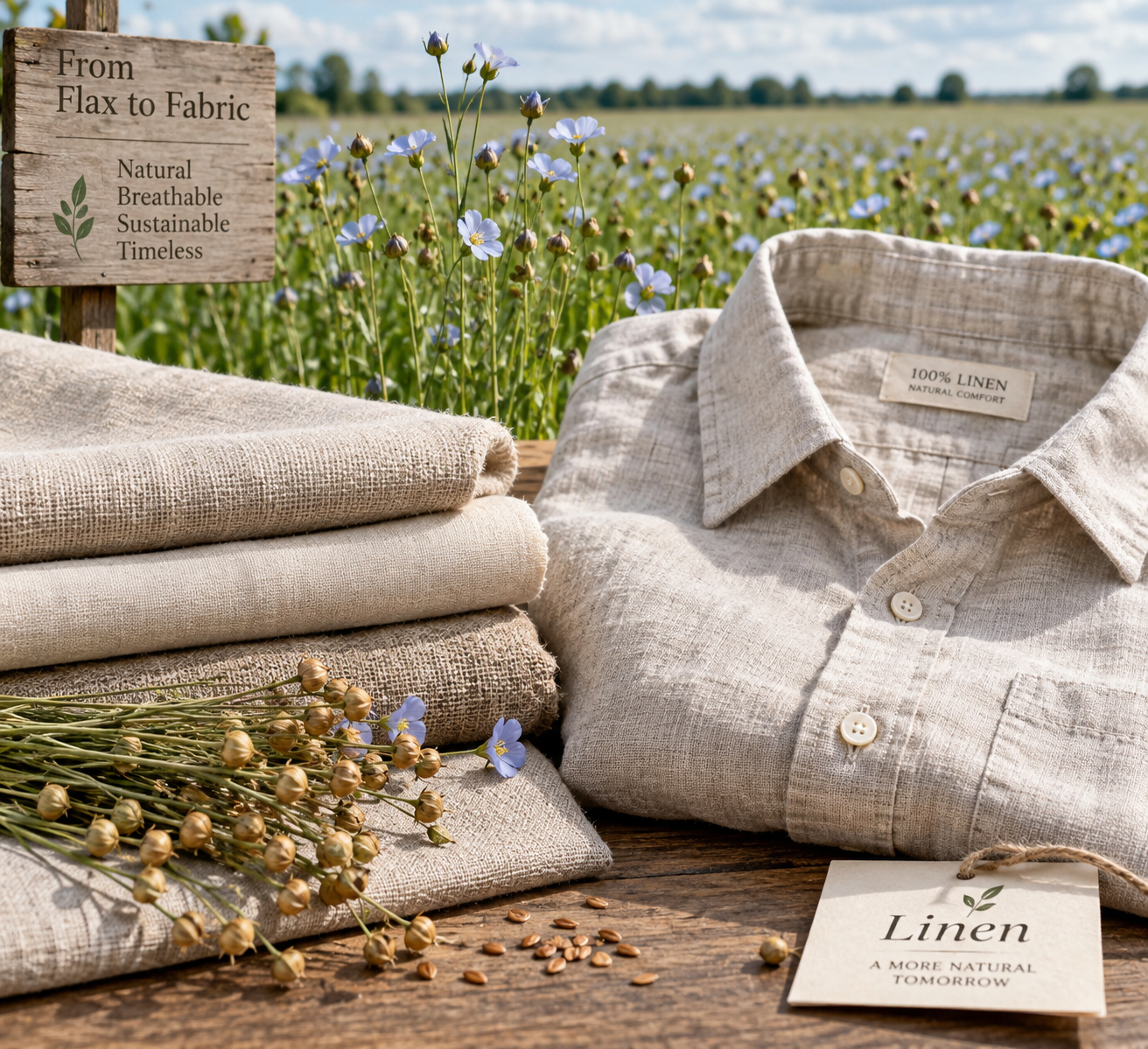
Linen is a natural textile made from the fibers of the flax plant. It is known for its breathability, absorbency, durability, and lightweight feel, making it especially popular for warm-weather clothing and household products.
Unlike cotton, which comes from the fluffy fibers surrounding cotton seeds, linen is made from the fibrous stalk of the flax plant. Linen dries quickly, does not retain moisture for long, and allows heat to escape from the body. These qualities make it comfortable in hot and humid climates.
Although linen was once one of the world’s most important textiles, its production is more labor-intensive and expensive than cotton. Today, it is mainly used for selected apparel, home textiles, and specialty products. Linen is widely recognized as one of the most breathable fabrics for hot weather.
Quick Facts About Linen Fabric
| Feature | Details |
|---|---|
| Fabric name | Linen |
| Also known as | Flax fabric |
| Composition | Spun fibers from the stalks of flax plants |
| Fiber type | Natural plant-based fiber |
| Thread count | Approximately 200–2,000, depending on the fabric |
| Breathability | Highly breathable |
| Moisture-wicking ability | High |
| Heat retention | Low |
| Stretchability | Low |
| Pilling tendency | Generally low |
| Origin | Prehistoric Europe |
| Largest producer/exporter | China |
| Common uses | Clothing, bedding, towels, table linens, bags, upholstery, wallpaper, and canvas |
| Recommended washing | Cold, warm, or hot water, depending on the care label |
What Is Linen Fabric?
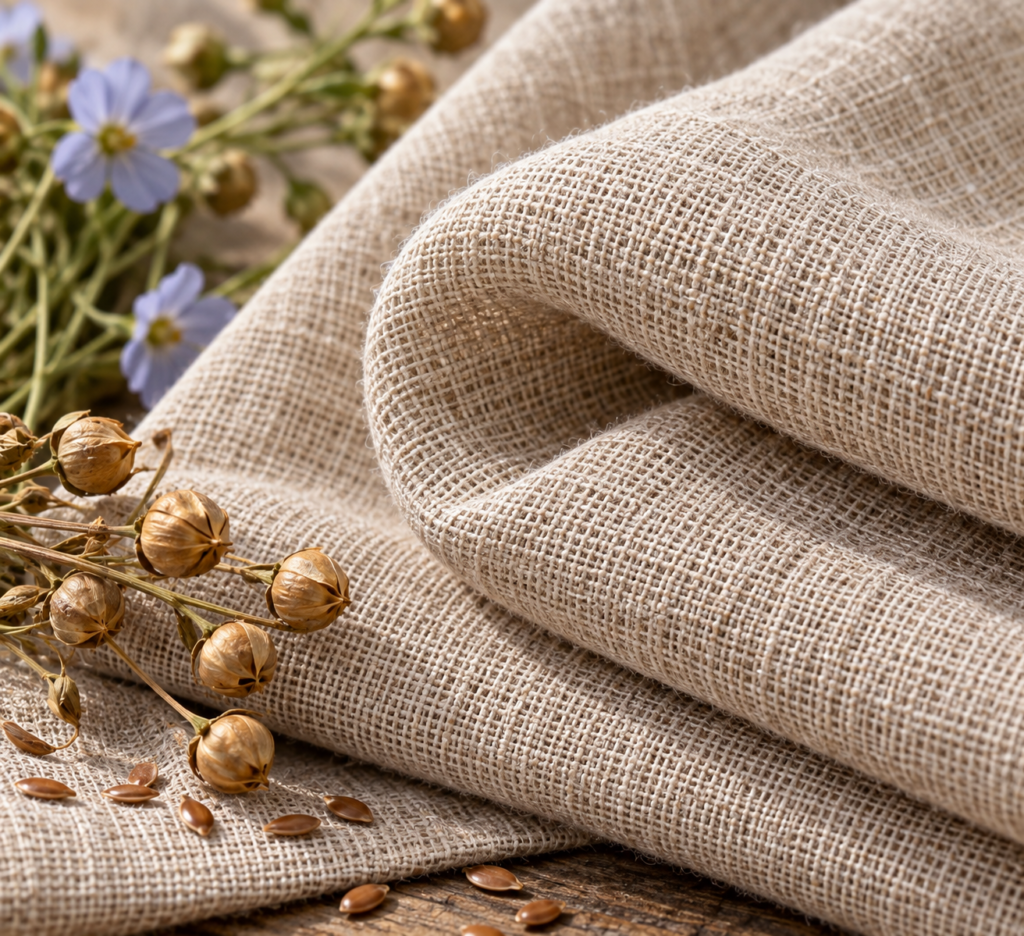
Linen fabric is made from cellulose fibers found inside the stalks of the flax plant. The stalk contains a woody inner section and a fibrous outer layer. The useful fibers are carefully separated, processed, spun into yarn, and then woven or knitted into fabric.
Linen is often compared with cotton because both are natural, breathable textiles. However, linen generally dries faster and retains less moisture than cotton. This makes it particularly useful for summer shirts, dresses, trousers, bedding, and towels.
Linen is also naturally strong and durable. It may feel slightly stiff when new, but it usually becomes softer with repeated washing and use. One of its most recognizable characteristics is its tendency to wrinkle. While some people consider this part of linen’s natural appearance, wrinkle-resistant finishes can be applied when a smoother look is required. Linen is also frequently discussed as a sustainable fabric because it comes from the flax plant.
The terms “linen” and “linens” should also be distinguished. Linen refers specifically to fabric made from flax fibers. “Linens” is a broader household term for products such as sheets, towels, and tablecloths, even when they are made from cotton or synthetic fibers.
Explore more fabric guides
History of Linen
Linen is one of the oldest known textile fibers. Archaeological evidence suggests that flax textiles may have been produced in prehistoric Europe as far back as 36,000 years ago. Later evidence of linen use has been found in ancient lakefront settlements in Switzerland.
Flax may have first been domesticated in ancient Mesopotamia. In Mesopotamian society, linen clothing was often associated with the ruling class. In Ancient Egypt, however, linen became much more widely used.
Egypt’s hot climate made linen especially valuable because it was lightweight, breathable, naturally pale in color, and able to support rapid cooling. Linen became one of Egypt’s most important textiles and was sometimes used as a form of currency. It was also used for clothing, household products, burial shrouds, and mummy wrappings.
The Ancient Greeks used linen for garments and homewares, while the Phoenicians helped spread linen production into Western Europe. Ireland later became an important center of European linen manufacturing. By the 18th century, Belfast had earned the nickname “Linenopolis” because of its thriving linen industry.
Linen remained important for centuries, but the invention of the cotton gin made cotton production faster and less expensive. As cotton became easier to manufacture, linen gradually lost its dominant position in the textile market. Cotton, another popular plant-based fabric.
Linen Fabric Today
Today, linen is considered more of a specialty or premium textile than a mass-market fabric. It remains popular because of its distinctive appearance, breathability, strength, and comfort in warm weather.
Modern linen is used for both clothing and home products. It is especially valued in markets where consumers appreciate natural fibers, long-lasting textiles, and relaxed, textured designs.
Although linen production remains relatively expensive, countries such as China continue to produce it in large quantities. European countries also maintain important traditions of high-quality linen manufacturing.

Hemp fabric is another plant-based textile that can be compared with linen for durability and sustainability.
How Is Linen Fabric Made?
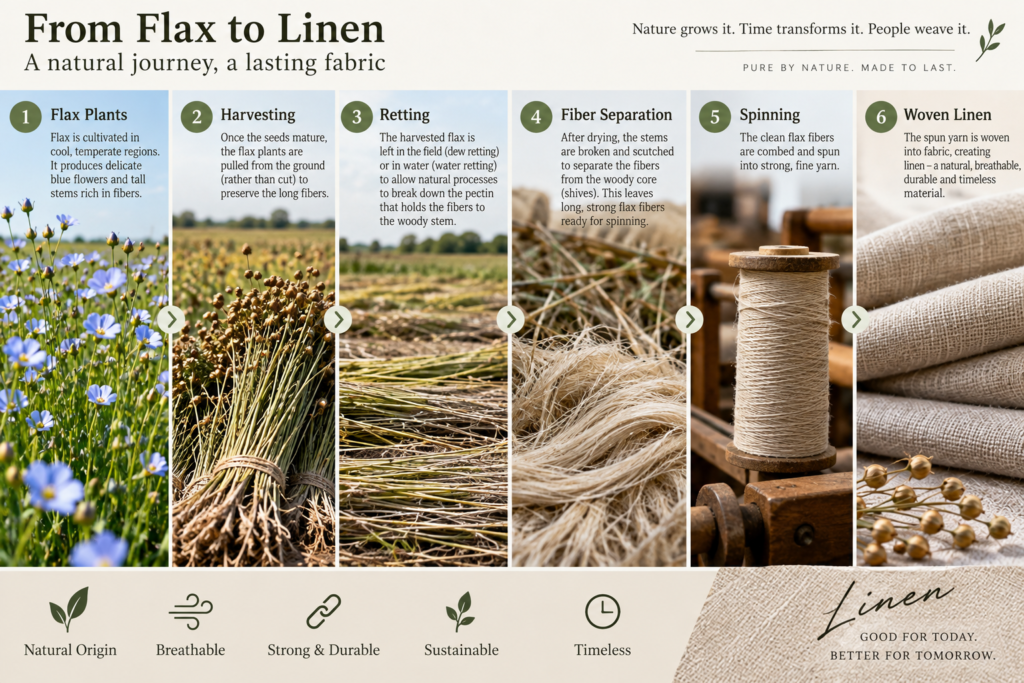
Linen production begins with flax plants and involves several stages. The process is more complicated than the production of many other plant-based fabrics because the useful fibers must be separated from the woody interior of the stalk.
1. Planting
Flax plants are generally ready for harvesting after approximately 100 days of growth. They do not tolerate excessive heat, so they are usually planted during the cooler part of the year.
2. Growing
Flax seeds are commonly planted using agricultural machinery. Since flax plants do not naturally suppress weeds effectively, farmers may use tilling or herbicides to protect crop yields.
3. Harvesting
Flax is ready for harvesting when its stems turn yellow and its seeds become brown. Although harvesting can be done by hand, modern farms generally use machines.
4. Fiber Separation
After harvesting, the flax stalks are processed to remove leaves and seeds. The fibrous outer layer must then be separated from the woody inner section.
This stage is called retting. Traditionally, flax stalks were soaked in water to encourage the natural separation of fibers. Some manufacturers use chemical retting methods because they are faster and more efficient. However, chemical retting can create environmental concerns if the chemicals are not properly managed.
5. Breaking
The retted stalks are crushed using rollers. Rotating paddles then help remove the unwanted outer material and separate the useful fibers from the woody parts of the plant.
6. Combing
The separated fibers are combed and aligned into thin strands. This process removes remaining impurities and prepares the fibers for spinning.
7. Spinning
The combed flax fibers are joined into longer strands called rovings. These rovings are then spun into yarn using industrial spinning machinery.
8. Reeling
The spun yarn is wound onto bobbins. Reeling is usually carried out in humid or wet conditions because moisture helps the flax fibers hold together and prevents the yarn from breaking apart.
9. Drying and Finishing
The yarn is dried and placed onto bobbins. It can then be dyed, treated, woven, or knitted into finished linen products.
Cotton and linen are two popular natural fabrics used for lightweight clothing.
How Is Linen Fabric Used?
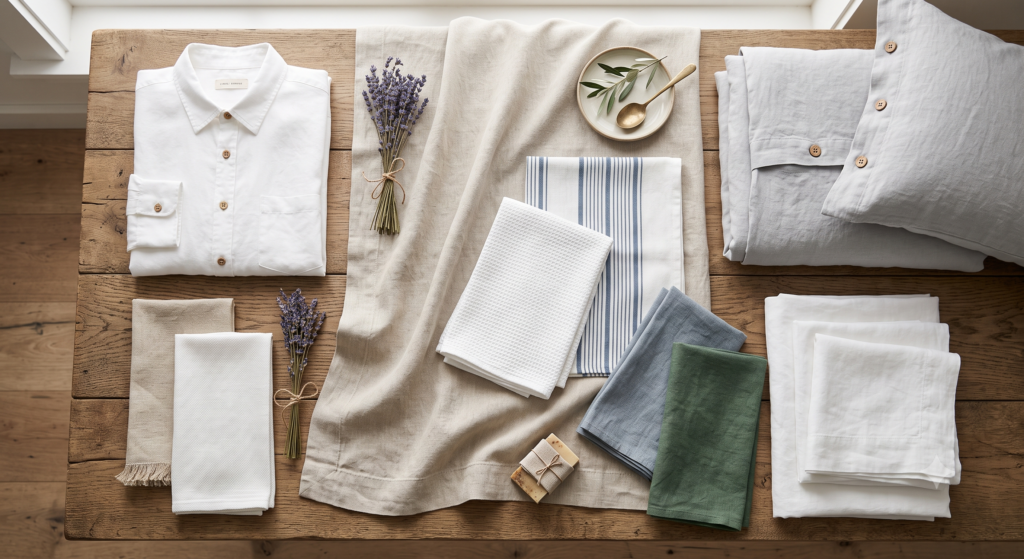
Linen has historically been used for clothing and household products. Although cotton has replaced it in many everyday applications, linen remains popular for products that benefit from breathability, absorbency, and durability.
Apparel
Linen is commonly used to make:
- Shirts
- Dresses
- Skirts
- Trousers
- Shorts
- Jackets
- Blazers
- Vests
- Suits
- Nightgowns
- Dressing robes
- Underwear and lingerie
- Lightweight summer clothing
Linen clothing is especially suitable for hot and humid climates. Its ability to absorb moisture while drying quickly helps the wearer feel cooler and more comfortable.
Home Textiles
Linen is widely used for:
- Bed sheets
- Pillowcases
- Blankets
- Napkins
- Tablecloths
- Hand towels
- Kitchen towels
- Bath towels
- Dish towels
- Curtains
- Upholstery
- Decorative textiles
Linen bedding is valued for its strength and breathability. Linen can also support high thread counts without necessarily losing its durability.
See also: Hemp fabric, another durable natural fiber.
Other Applications
Linen is used in:
- Bags
- Luggage
- Aprons
- Reusable diapers
- Sanitary napkins
- Thread
- Wallpaper
- Painting canvases
Where Is Linen Fabric Produced?
China is currently one of the world’s largest producers and exporters of linen fabric. However, linen production remains culturally and economically important in several European countries.
Important linen-producing regions include:
- China
- Ireland
- Italy
- Belgium
- France
- The United States
Ireland, Italy, and Belgium are particularly known for high-quality linen products and long-established textile traditions. The United States also produces linen, especially for homeware applications.
The country where flax is grown may not be the same country where the fabric is manufactured. Flax can be cultivated in one region, processed into yarn in another, and woven or finished elsewhere.
Linen can be a useful option when looking for lightweight natural fabrics for sensitive skin.
How Much Does Linen Fabric Cost?
Linen is generally more expensive than many common natural fabrics because flax processing is labor-intensive and requires several specialized stages.
Woven linen fabric commonly costs approximately $5–$12 per yard, although prices vary significantly according to quality and market conditions.
The final cost depends on:
- Fiber quality
- Fabric weight
- Thread count
- Weave structure
- Finishing treatments
- Country of origin
- Organic certification
- Brand
- Order quantity
- Whether the fabric is blended with another fiber
Lightweight linen for summer clothing may cost less than heavyweight linen used for upholstery or premium bedding. High-quality European linen and certified organic linen are often more expensive.
What Different Types of Linen Fabric Are There?
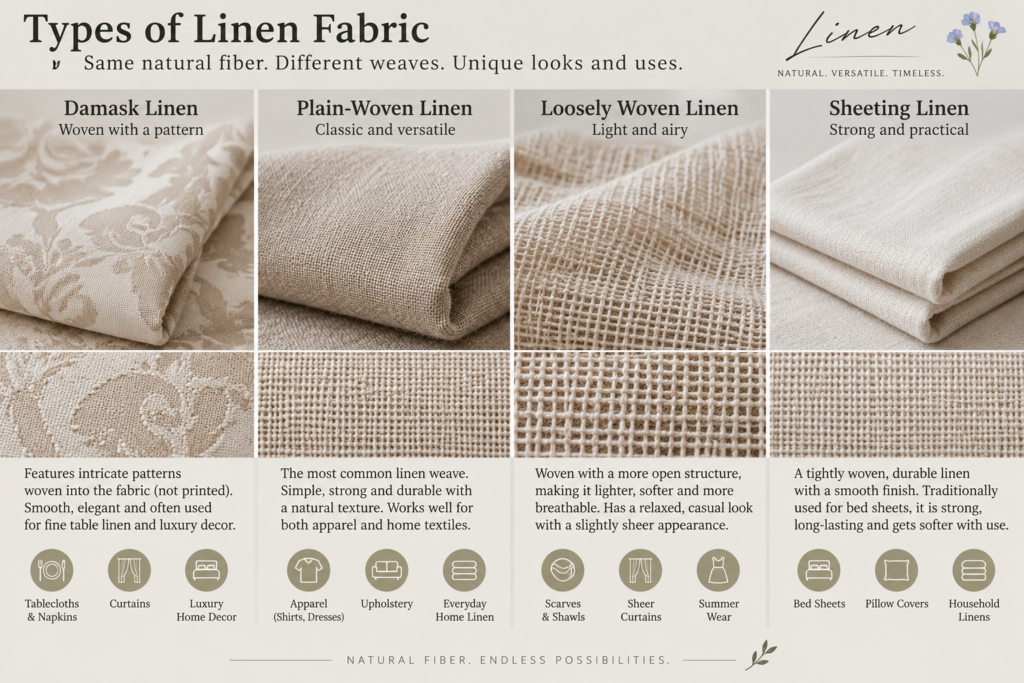
All linen fabrics are made from processed flax fibers, but different weaving methods create different textures, strengths, and appearances.
1. Damask Linen
Damask linen is decorative and often produced on a jacquard loom. It can feature elaborate patterns that resemble embroidery.
Because of its delicate and ornate appearance, damask linen is generally used for:
- Decorative tablecloths
- Napkins
- Luxury household products
- Special-occasion textiles
It is not usually selected for heavy everyday use.
2. Plain-Woven Linen
Plain-woven linen has a simple weave and is commonly used for household towels, including:
- Dish towels
- Hand towels
- Kitchen towels
- Some bath towels
It is durable and practical, making it suitable for frequent use.
3. Loosely-Woven Linen
Loosely-woven linen has a more open structure. It is highly absorbent but generally less durable than other linen types.
It is often used for:
- Reusable diapers
- Sanitary napkins
- Absorbent household products
4. Sheeting Linen
Sheeting linen has a close weave and a smooth, relatively untextured surface. It is commonly used for clothing and bedding.
This type of linen usually has a higher thread count than more loosely woven varieties and provides a comfortable balance of softness, strength, and breathability.
How Does Linen Fabric Impact the Environment?
Linen is a biodegradable, plant-based fiber and can be a more environmentally suitable option than many synthetic textiles. However, its environmental impact depends on how flax is grown, processed, dyed, and manufactured.
Retting Chemicals
One of the main environmental concerns is chemical retting. Some manufacturers use alkaline substances or oxalic acid to separate flax fibers from the woody stalk. If these chemicals are released into nearby water or soil without proper treatment, they can damage ecosystems.
Water retting is generally considered a more environmentally preferable method, but it takes longer and can increase production costs.
Land and Soil Management
Flax cultivation can contribute to soil degradation if farming practices are poorly managed. Tilling, intensive cultivation, and inadequate crop rotation may increase soil erosion and reduce soil quality.
Responsible farming practices, including crop rotation and careful land management, can help reduce these risks.
Labor and Manufacturing Conditions
As with other textiles, linen’s environmental and social performance also depends on working conditions, wages, chemical management, and factory practices. Responsible sourcing should consider both environmental protection and fair treatment of workers.
Biodegradability
Linen is biodegradable because it is made from natural plant fibers. At the end of its useful life, untreated linen can break down under suitable conditions. It also does not contribute to plastic-based microfiber pollution in the same way as synthetic fabrics.
Overall, linen can be a relatively low-impact textile when flax is responsibly cultivated and the fibers are processed using well-managed methods.
Linen Fabric Certifications Available
Several certifications may help buyers identify linen products that meet specific environmental, chemical, or production standards.
Organic Certifications
Linen can qualify for organic certification when the flax is grown and processed according to approved organic agriculture standards. Depending on the market, relevant systems may include:
- United States Department of Agriculture organic certification
- European Union organic certification
Organic standards generally address farming practices, chemical use, and production requirements.
OEKO-TEX
OEKO-TEX certification focuses on the safety of textile products. It confirms that the tested product meets specific limits for certain harmful substances.
OEKO-TEX is not an organic certification. Instead, it helps indicate that a finished linen product has been tested for chemical safety.
When purchasing linen, buyers should check the exact certification, the organization issuing it, and whether it applies to the raw fiber, the finished fabric, or the complete product.
Frequently Asked Questions
Is linen a natural fabric?
Yes. Linen is a natural plant-based fabric made from the fibers of the flax plant.
Is linen breathable?
Yes. Linen is highly breathable and is especially comfortable in warm and humid weather.
Does linen absorb moisture?
Linen absorbs moisture effectively but dries faster than many other natural fabrics, including cotton.
Is linen durable?
Yes. Linen is a strong and durable textile. With proper care, linen garments and household products can last for many years.
Does linen stretch?
Linen has relatively low stretchability. It may soften with use, but it does not naturally provide much elasticity.
Why does linen wrinkle?
Linen fibers have low elasticity, so the fabric creases easily. These wrinkles are considered part of linen’s natural appearance.
Is linen expensive?
Linen is generally more expensive than many common fabrics because flax processing is time-consuming and labor-intensive.
Can linen be washed in a washing machine?
Many linen products can be machine-washed, but the correct temperature and cycle depend on the fabric and finish. Always follow the care label.
Is linen environmentally friendly?
Linen is biodegradable and can have a relatively low environmental impact when flax is responsibly grown and processed. However, chemical retting, soil degradation, and poor manufacturing practices can create environmental concerns.
What is the difference between linen and cotton?
Linen is made from flax stalks, while cotton comes from the fibers surrounding cotton seeds. Linen generally dries faster, wrinkles more easily, and has a more textured appearance than cotton.