Quick answer: Supima cotton is a certified, trademarked form of Pima cotton grown exclusively in the USA. Its extra-long fibers make it softer, stronger, and far more resistant to pilling than regular cotton, which is exactly why it feels luxurious and holds up for years. Only the American Supima Association can certify the real thing.
You’ve probably run your hand across a T-shirt that felt noticeably softer than everything else in your drawer and wondered what made it different. There’s a good chance the answer was Supima cotton.
This fabric has quietly become the gold standard for premium clothing and bedding. It shows up on hangtags for luxury tees, high-end dress shirts, and hotel-quality sheets. But most shoppers couldn’t tell you what Supima actually is, why it costs more, or how to spot the real thing versus a clever marketing claim.
This guide covers all of it: what Supima is, how it’s made, where it comes from, and what to check before you pay extra for it. By the end, you’ll know whether it’s actually worth the premium for your wardrobe.
What Is Supima Cotton Fabric?
Supima is a certified, trademarked type of Pima cotton grown only in the United States. The name blends “Superior” and “Pima,” and it exists specifically to protect buyers from counterfeit or exaggerated cotton claims.
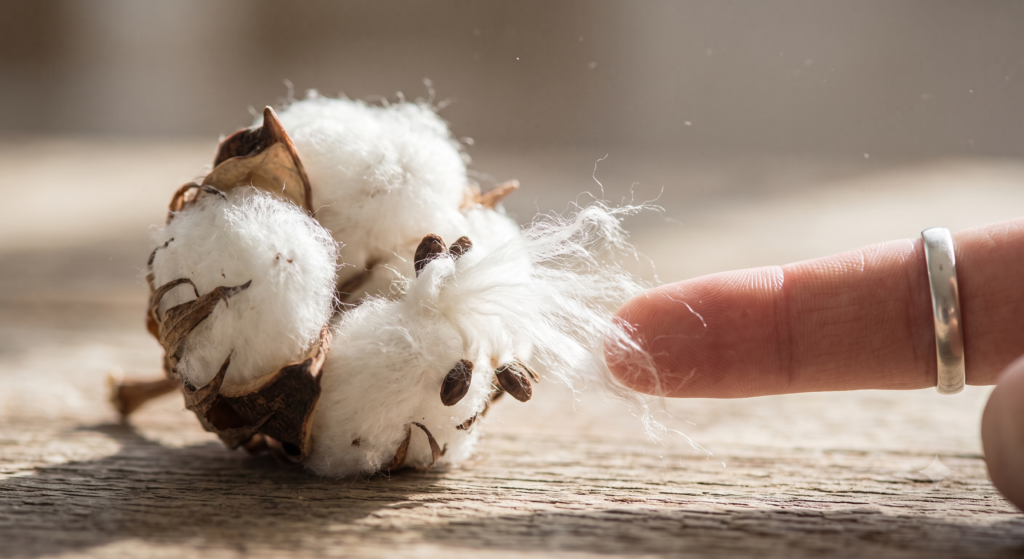
What separates it from regular cotton is fiber length. Supima is an extra-long staple (ELS) cotton, meaning the individual fibers run longer than average. Longer fibers spin into smoother, stronger yarn with fewer loose ends sticking out.
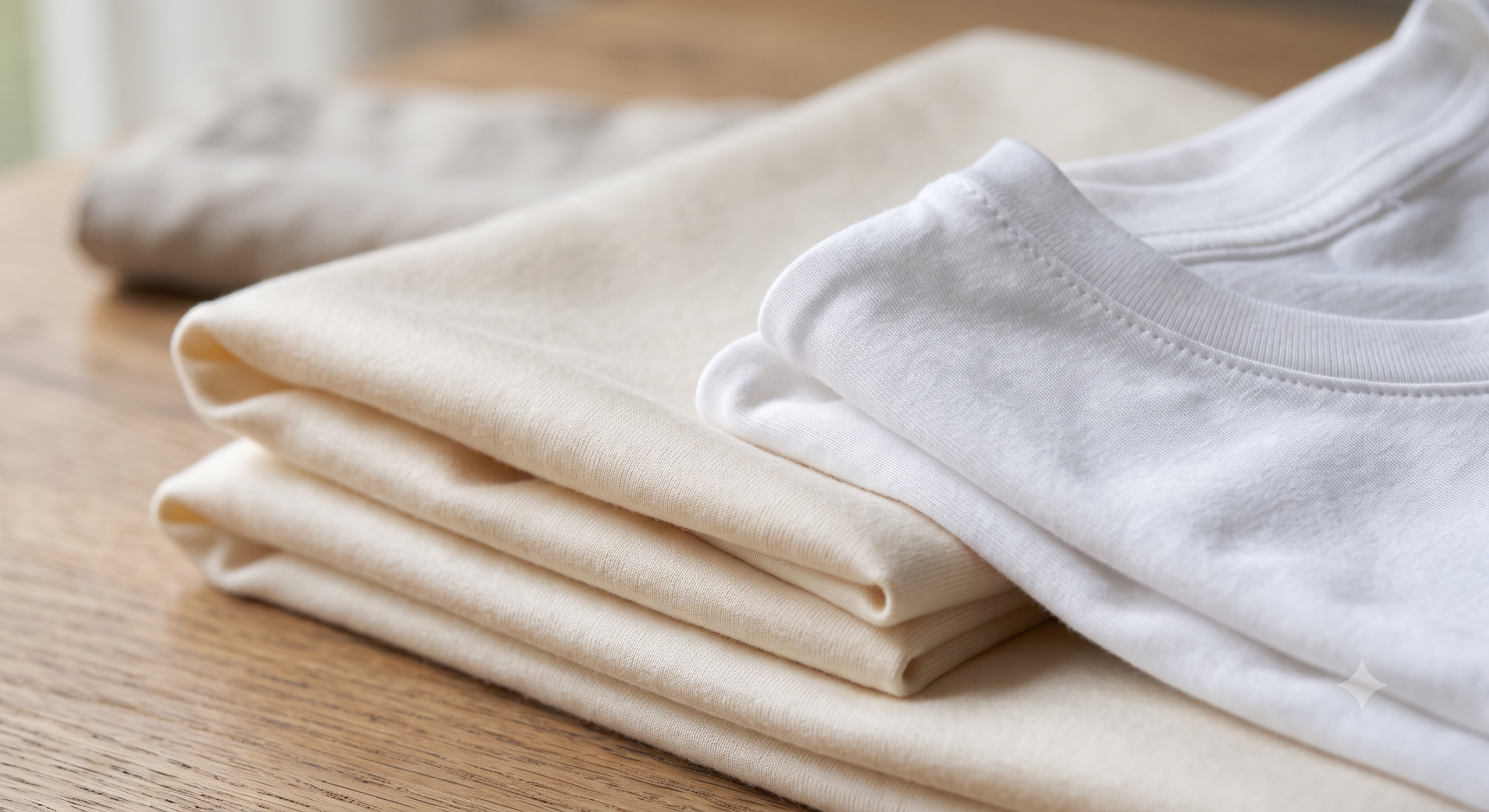
That difference matters more than it sounds. Those long, smooth fibers resist pilling, the little fuzzy balls that show up on cheaper cotton after a handful of washes. Supima stays soft against skin and keeps that softness through years of regular use, not just the first few wears.
The American Supima Association (ASA) is the only body that certifies genuine Supima. No ASA certification means no Supima, no matter what the hangtag implies.
Read our complete fabric encyclopedia
Read also: What Is Cotton Fabric? A Complete Guide
What Is Pima Cotton Fabric? A Complete Guide
How Is Supima Cotton Made?
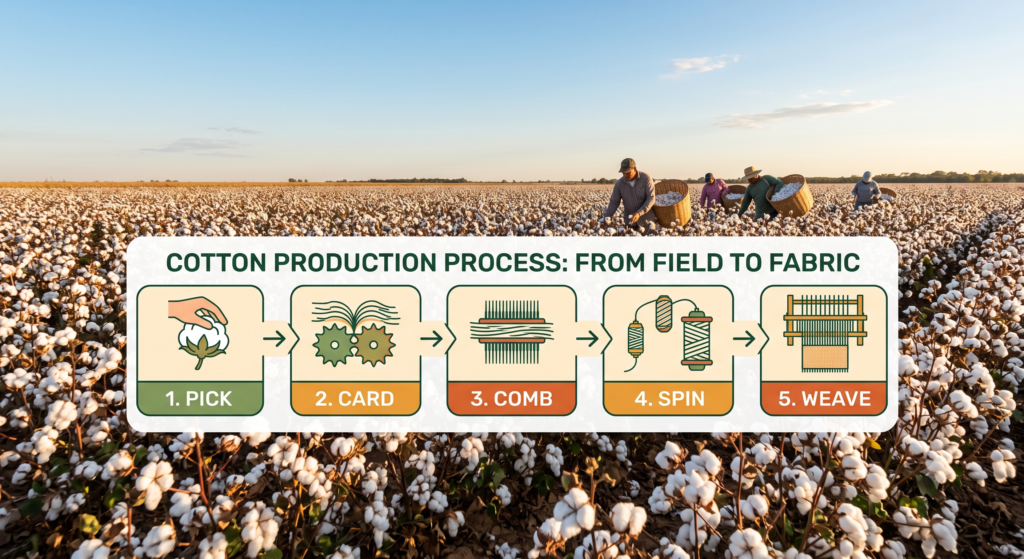
Getting from field to fabric runs through a few key stages: handpicking, carding, combing, spinning, and weaving. What sets Supima apart is the care taken at every one of these steps to protect fiber length.
Handpicking preserves fiber length and avoids the damage machine harvesting can cause. From there, the cotton gets carded and combed, cleaning the fibers and aligning them so only the longest, best strands make it into the yarn. Those combed fibers are then spun into fine, strong yarn before being woven or knitted into fabric.
The extra care pays off in the finished product. Because the process favors fiber quality over speed, the fabric ends up with a consistent, silky feel that mass-produced cotton rarely matches.
It’s also worth knowing about the farming side. US cotton production operates under strict agricultural regulations that limit toxic inputs, and growers increasingly rely on practices that cut down water waste and chemical use. That makes Supima a more responsible pick than cotton grown in regions with looser standards.
How Is Supima Cotton Used?
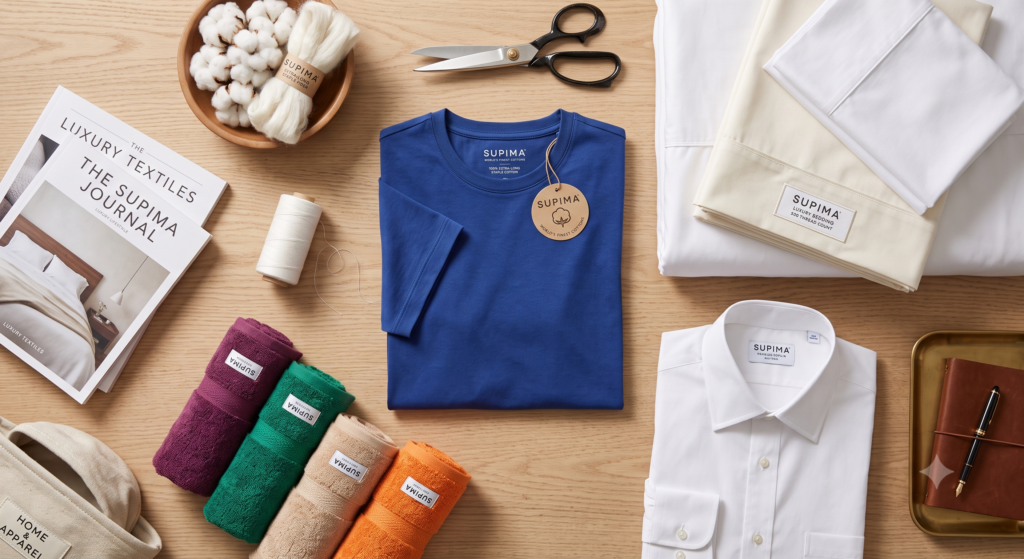
You’ll find Supima across a wide range of everyday products:
- T-shirts: the most common use, valued for softness and shape retention
- Bedsheets: for that smooth, hotel-quality feel
- Dress shirts: crisp but comfortable, with a subtle sheen
- Loungewear: soft enough to wear all day
- Underwear and socks: gentle on skin and durable through frequent washing
A lot of people describe Supima as a silk alternative, and that’s a fair comparison. You get that same smooth, luxurious feel without silk’s fragility or its price tag, plus you can actually throw it in the wash.
What Should You Look for When Shopping for Supima?
A few things to check if you want to make sure you’re getting the real thing:
- Check the hangtag for the official Supima seal or explicit ASA certification.
- Look for the ASA logo specifically, it’s the clearest sign you’re looking at authentic Supima.
- Read the blend percentage. A 100% Supima product delivers the full experience; a blend mixes in other fibers and won’t perform quite the same way.
Where Is Supima Cotton Produced?
Supima grows only in the United States, mainly across four states: California, Arizona, Texas, and New Mexico. Their hot, dry climates happen to suit ELS cotton particularly well.
Pima cotton actually traces back to early collaboration between the US Department of Agriculture and the Pima people of Arizona, who helped cultivate it in the early 1900s. As high-quality Pima built a reputation, counterfeit and misleading “Pima” claims started popping up from other regions. The Supima trademark came out of that problem specifically, giving buyers a reliable way to confirm they’re getting authentic American ELS cotton.
How Much Does Supima Cotton Cost?
Supima sits at the premium end of the cotton market. It typically costs more than regular cotton, more than organic cotton, and even more than standard Pima.
So why pay more? You’re paying for verified quality and longevity, not just a name on a tag. Certification standards, US-only production, and careful manufacturing all add cost, but they also produce something genuinely built to last.
Cost-per-wear is really the right way to think about it. A $40 Supima T-shirt that stays soft and holds its shape for five years beats a $15 tee you replace every year, that adds up to $75 over the same stretch, and the cheap version never feels as good along the way. If long-term comfort and value matter more to you than the lowest price tag, Supima makes sense.
Types of Supima Cotton
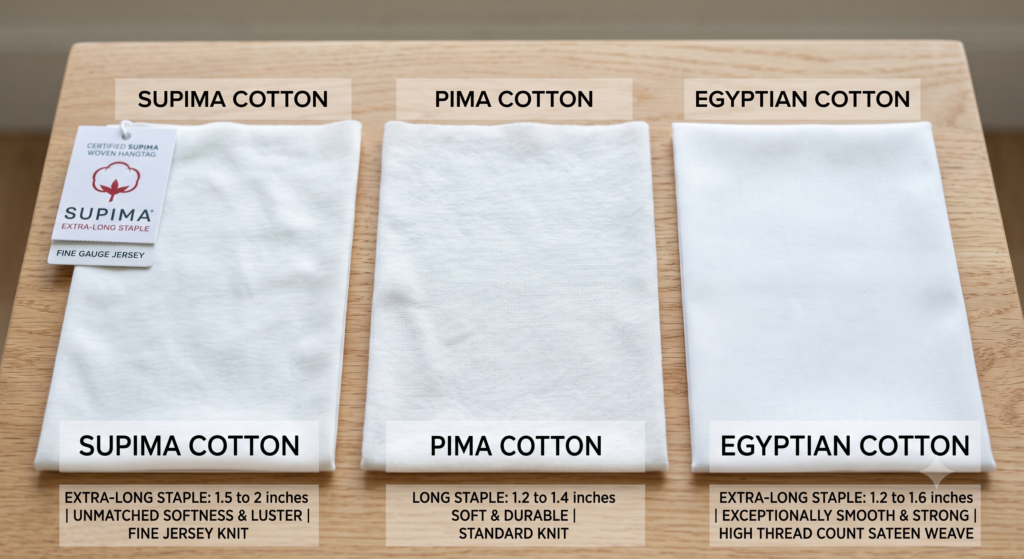
There’s really only one certified “Supima,” the trademark itself guarantees that consistency. Where shoppers get tripped up is confusing Supima with other premium-sounding cottons. Here’s how the three most common options stack up:
| Feature | Supima | Regular Pima | Egyptian Cotton |
|---|---|---|---|
| Fiber type | Extra-long staple | Extra-long staple | Extra-long staple |
| Origin | USA only | USA and other countries | Egypt (Nile River region) |
| Certification | ASA certified | No unified certification | Often unregulated; claims vary |
| Price tier | Premium | Mid to premium | Premium (varies widely) |
| Verification | Official Supima seal | Difficult to verify | Difficult to verify |
The takeaway: Supima and Egyptian cotton both use extra-long fibers, but only Supima comes with a certification system that actually lets you verify what you’re buying. If guaranteed authenticity matters to you, Supima is the safer bet.
The Environmental Impact of Supima Cotton
Supima makes up a small slice of global cotton production, less than 1% of all cotton grown worldwide. That limited scale alone means a smaller overall footprint compared to mass-market cotton.
US farming regulations help too. American growers work under stricter environmental rules than cotton producers in many other parts of the world, and modern precision farming techniques cut water and chemical use even further.
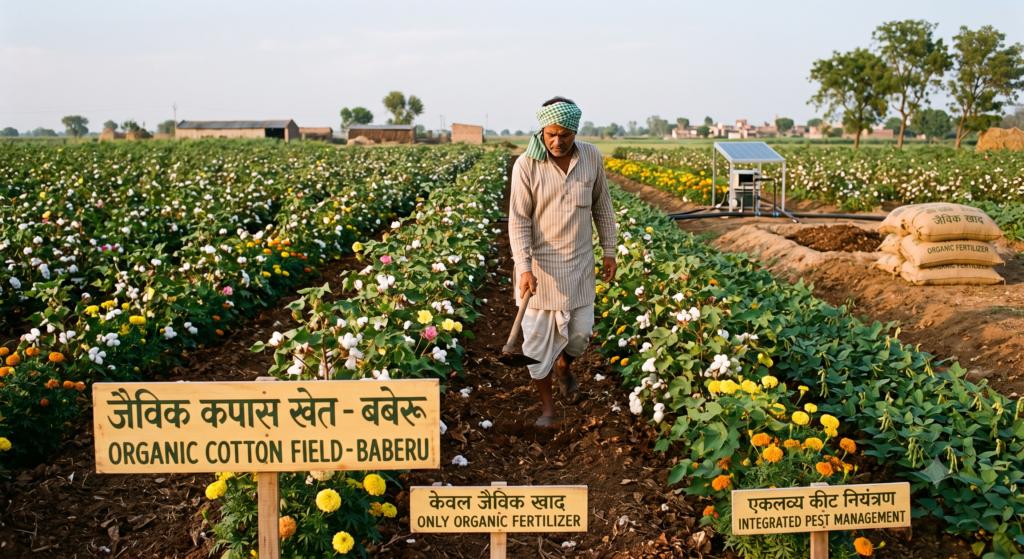
One thing worth clearing up: organic-certified Supima does exist, but organic status isn’t a requirement for ASA certification. So a genuine Supima product may or may not be organic. If organic matters to you specifically, look for both certifications rather than assuming one guarantees the other.
Supima Certifications Explained
ASA certification is the only reliable way to verify genuine Supima. The American Supima Association tracks the fabric through the supply chain, so a certified product can actually be traced back to US-grown ELS cotton.
Some products layer USDA organic certification on top of the ASA seal. That’s optional, and it simply signals the cotton was also grown to organic standards in addition to being genuine Supima.
A quick label check before you buy:
- Look for the official Supima seal or explicit ASA certification on the tag.
- Be skeptical of anything labeled only “Pima” or “Egyptian” without certification, that’s not verified Supima.
- Want organic too? Confirm both the Supima seal and a USDA organic mark are present.
Is Supima Cotton Worth It?
Supima earns its premium through real, measurable qualities: longer fibers, genuinely superior softness, strong pilling resistance, and durability that stretches the life of every garment. For anyone who values comfort and long-term value over the lowest sticker price, it’s a smart upgrade.
Next time you’re shopping for a T-shirt, sheets, or a dress shirt, flip the hangtag and look for the Supima seal. It’s the simplest way to confirm you’re getting the real thing, and a fabric that’ll still feel good years from now.
Frequently Asked Questions
Is Supima cotton better than regular cotton?
Yes. Supima uses longer fibers that make it softer, stronger, and more resistant to pilling. It holds up to years of washing far better than standard cotton, which tends to fade and fuzz much sooner.
Is Supima cotton the same as Pima cotton?
They come from the same plant species, but they’re not identical. Supima is a certified version of Pima cotton grown exclusively in the USA under strict standards set by the American Supima Association. All Supima is Pima, but not all Pima is Supima.
Why is Supima cotton so expensive?
Certification standards, limited US-only production, and a labor-intensive process built around preserving fiber quality all add cost. In short, you’re paying for verified quality and longevity, not just a name.
Is Supima cotton good for sensitive skin?
Yes. Its extra-long fibers create a smoother yarn with fewer rough edges, which is why it’s a popular choice for people who find regular cotton scratchy or irritating.
How do I know if I’m buying real Supima cotton?
Look for the official Supima seal or explicit ASA certification on the label. Cotton marketed simply as “Pima” or “Egyptian” without that certification isn’t verified Supima.
Can Supima cotton be washed in a washing machine?
Yes. Unlike a lot of luxury fabrics, Supima can be machine washed in warm or cool water and even tumble dried without damaging the fibers.