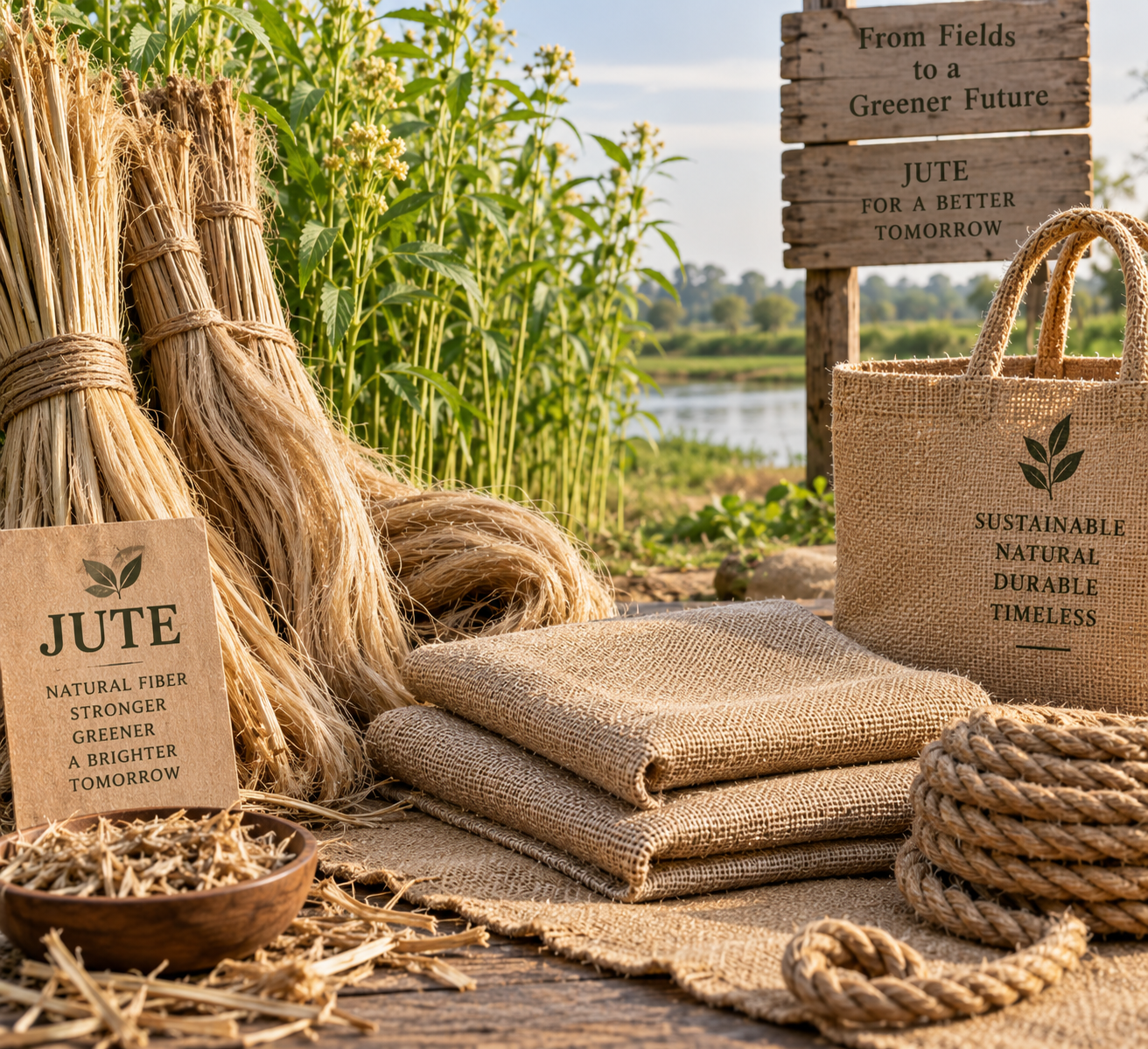
Jute fabric is a natural textile made from the fibers of the jute plant. It is commonly known as burlap, hessian, or gunny cloth and is valued for its strength, breathability, affordability, and biodegradability.
Jute is mainly used for bags, ropes, packaging, agricultural products, rugs, upholstery, and other industrial applications. Although traditional jute is relatively rough, modern processing techniques have made it possible to use softer varieties in selected clothing and fashion products.
Jute is one of the most widely produced plant-based textile fibers after cotton. It grows especially well in warm, humid regions with seasonal monsoon rainfall and is closely associated with the Indian subcontinent.
Quick Facts About Jute Fabric
| Feature | Details |
|---|---|
| Fabric name | Jute |
| Also known as | Burlap, hessian cloth, gunny cloth |
| Composition | Cellulose and lignin fibers from the jute plant |
| Fiber type | Natural plant-based fiber |
| Breathability | High |
| Moisture absorption | High |
| Heat retention | Medium |
| Stretchability | Low |
| Pilling tendency | Low |
| Historical origin | Indus Valley region |
| Largest producer/exporter | India |
| Common uses | Bags, ropes, rugs, carpets, upholstery, packaging, erosion control, and some apparel |
| Recommended washing | Cool, warm, or hot water, depending on the care label |
What Is Jute Fabric?
Jute fabric is produced from the long fibers found in the stalks of jute plants. Two important species used in jute production are white jute, scientifically known as Corchorus capsularis, and tossa jute, known as Corchorus olitorius. Tossa jute is generally considered stronger and more productive, although it can be more difficult to cultivate.
Jute plants can grow more than 10 feet tall, producing some of the longest natural textile fibers available. The fibers are usually light brown or golden in color, although certain varieties are pale or off-white.
Traditional jute has a rough texture and is often woven into loose networks of thick yarn. This makes it more suitable for industrial and household products than for garments worn directly against the skin. However, softening and finishing techniques can make jute more comfortable for selected apparel applications.
Jute absorbs water readily but can also dry relatively quickly. It is breathable, resistant to abrasion, and generally less likely to pill than many other fabrics. However, it does not perform especially well in prolonged outdoor exposure because moisture and weathering can reduce its durability over time.
Browse every fabric guide
History of Jute
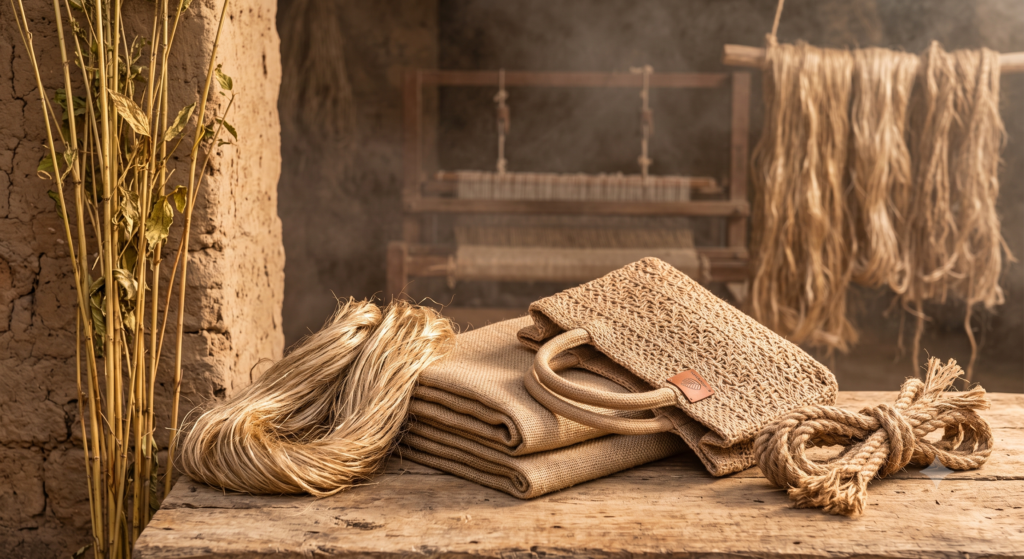
Jute has been cultivated on the Indian subcontinent for at least 5,000 years. Evidence of jute fiber production dates back to approximately 3000 BC, although earlier use by communities in the Indus Valley region is also possible.
For centuries, jute was an important material in India and neighboring regions. It was used to make ropes, household items, clothing, and practical agricultural products.
During British colonial rule, jute became a major cash crop. Production expanded rapidly in Bengal and other parts of India, eventually becoming more important than jute cultivation in Scotland. Scottish manufacturers and business owners moved to Bengal to participate in the growing jute industry.
Jute remained an important part of the British Empire’s economy until the late 19th century. After Indian independence, it continued to be a major export from the region.
The introduction of synthetic fibers reduced demand for jute during the second half of the 20th century. However, interest in natural and biodegradable materials helped the jute industry regain importance during the early 21st century, particularly in India, Bangladesh, and other parts of South Asia.
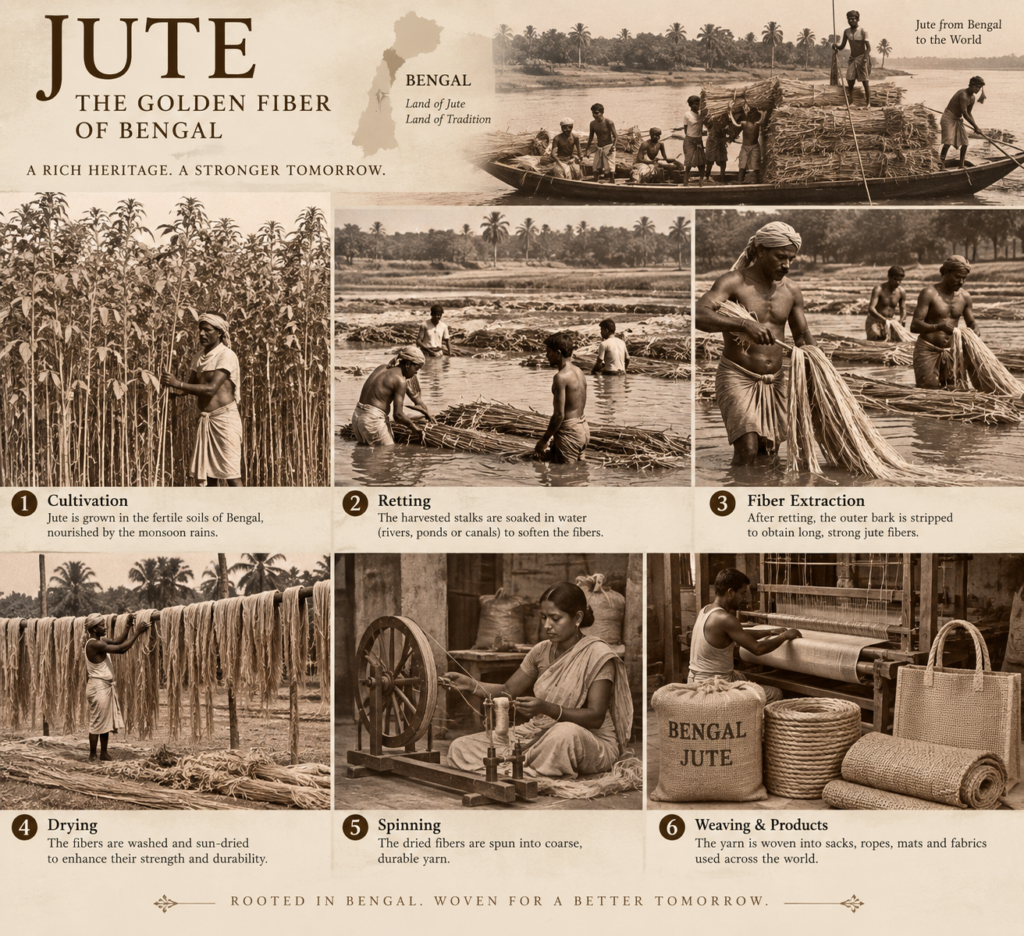
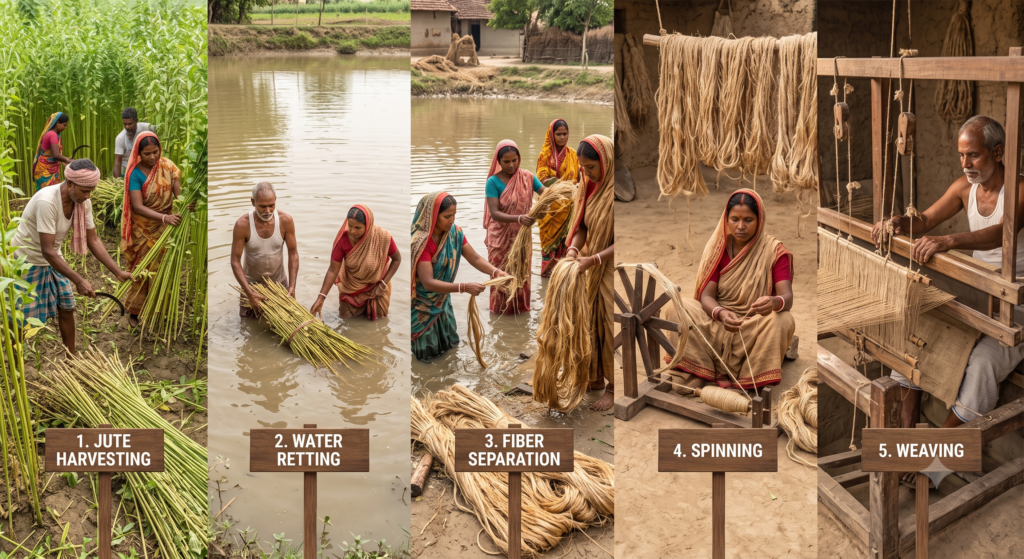
How Is Jute Fabric Made?
Jute production has remained relatively similar for centuries, although modern machinery is used in many larger facilities.
1. Growing the Jute Plant
Jute grows best in warm, humid climates with seasonal rainfall. It requires high humidity and performs well in regions with growing conditions similar to rice cultivation.
The plant generally grows quickly and develops tall stalks containing long, useful fibers.
2. Harvesting
Mature jute stalks are usually harvested by hand, although machinery may be used on larger farms. The stalks are cut when the plants have reached the appropriate stage of growth.
After harvesting, the leaves and other unwanted plant material are removed.
3. Retting
The stalks are soaked in water in a process called retting. This allows natural microorganisms to break down the non-fibrous material that holds the fibers together.
Retting softens the stalks and makes it easier to separate the useful fibers from the woody parts. The quality of the final jute depends partly on the duration and conditions of this process.
4. Fiber Separation
Once retting is complete, the long, silky fibers are separated from the stalk by hand or with machinery. The fibers may come from both the inner stem and outer skin of the plant.
The separated fibers are then washed, dried, and combed into long strands.
5. Spinning
The combed fibers are spun into yarn. While automated spinning equipment is available, many jute-producing communities continue to use traditional spinning wheels or small-scale methods.
The thickness and twist of the yarn affect the strength, texture, and appearance of the finished fabric.
6. Dyeing and Finishing
Jute yarn may be dyed or treated to improve its appearance and performance. Manufacturers may apply finishes to make the material:
- More water-resistant
- More fire-resistant
- Softer
- More flexible
- Better suited to a particular end use
Jute intended for industrial applications is often left in its natural, rough condition. When jute is used for apparel, manufacturers may use mechanical agitation or chemical softening methods to reduce its stiffness.
7. Weaving
The finished yarn is woven into fabric for use in bags, packaging, rugs, upholstery, clothing, agricultural materials, and other products.
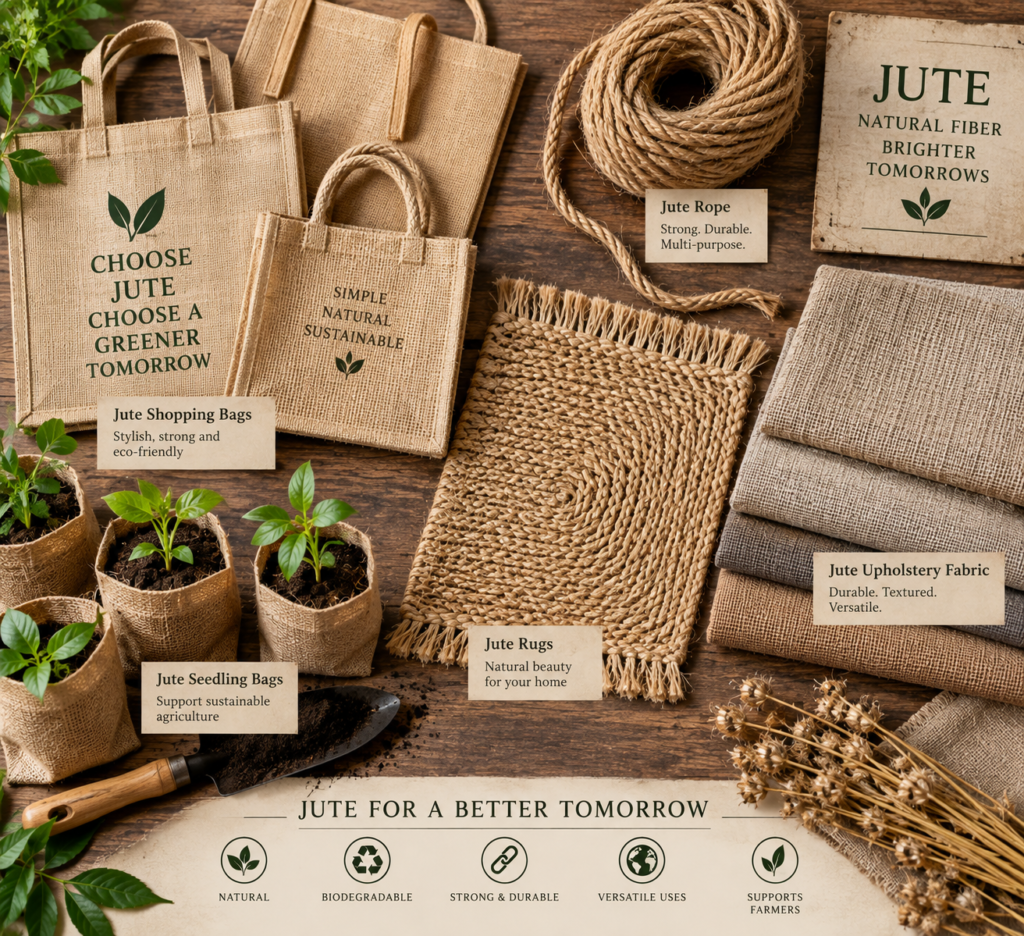
How Is Jute Fabric Used?
Jute is best known for industrial, agricultural, and household applications. Its rough texture and strength make it less common in everyday clothing, although improved processing has expanded its use in fashion.
Apparel
Modern jute fabric may be used for:
- Sweaters
- Cardigans
- Light jackets
- Vests
- Fashion accessories
- Bags and footwear
Jute is still uncommon in underwear or garments that remain in direct contact with sensitive skin. However, blended and softened jute fabrics can be more comfortable than traditional burlap.
Bags and Packaging
Jute is widely used to make:
- Shopping bags
- Tote bags
- Sacks
- Gift bags
- Agricultural bags
- Packaging materials
Burlap sacks have traditionally been used to transport vegetables, fruits, grains, and other goods. The material is strong, breathable, and relatively inexpensive.
Agricultural Applications
Jute fabric is used in agriculture for:
- Soil erosion prevention
- Protective coverings
- Mulching
- Seedling bags
- Tree-root wrapping
- Field protection
Jute bags are especially useful for transporting and planting young trees. Because jute is biodegradable, plant roots can eventually grow through the material without requiring the bag to be removed.
Home Textiles and Flooring
Jute is used in:
- Rugs
- Carpets
- Upholstery
- Curtains
- Canvas
- Decorative textiles
- Linoleum backing
Its natural color and textured appearance make it popular in rustic, traditional, and eco-inspired interior designs.
Other Uses
Jute is also used for:
- Rope
- Twine
- Wall coverings
- Industrial textiles
- Protective materials
- Ghillie suits and camouflage products
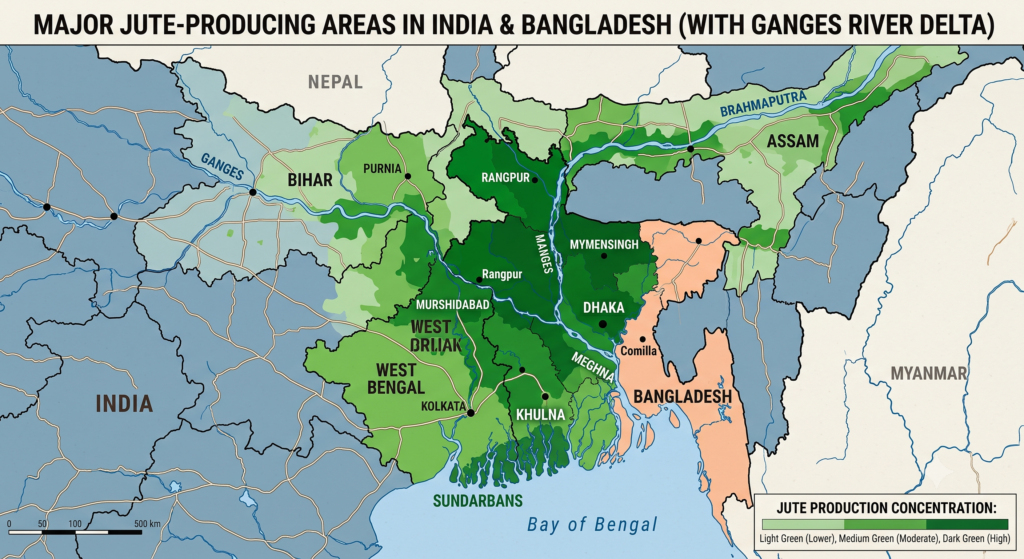
Where Is Jute Fabric Produced?
India, Bangladesh, and Pakistan are the main jute-producing countries. Approximately 85% of global jute production is concentrated around the Ganges River Delta, which extends through Bangladesh and the Bengal region of India.
India is currently one of the largest producers and exporters of jute. Bangladesh is also a major producer and has a strong jute-processing and export industry.
Other countries involved in jute production include:
- China
- Thailand
- Myanmar
- Bhutan
A large part of the global jute market remains concentrated in Asia. India and Bangladesh also export jute products to the United States, the European Union, and other international markets.
The location where jute is grown may differ from the location where it is processed, spun, woven, dyed, and finished into fabric.
How Much Does Jute Fabric Cost?
Jute is generally one of the least expensive natural textiles. Basic jute fabric may cost approximately $1 per yard, although the price varies according to quality, construction, finishing, and supplier.
Artisan-made jute products and decorative fabrics may cost considerably more. Pricing depends on:
- Fiber quality
- Fabric weight
- Yarn thickness
- Weave density
- Dyeing and finishing
- Softening treatments
- Organic certification
- Country of origin
- Order quantity
- Brand or supplier
The most economical way to purchase jute fabric is often to work directly with manufacturers or suppliers in major jute-producing countries such as India and Bangladesh. Direct sourcing may also help support local producers and reduce unnecessary supply-chain costs.
What Different Types of Jute Fabric Are There?
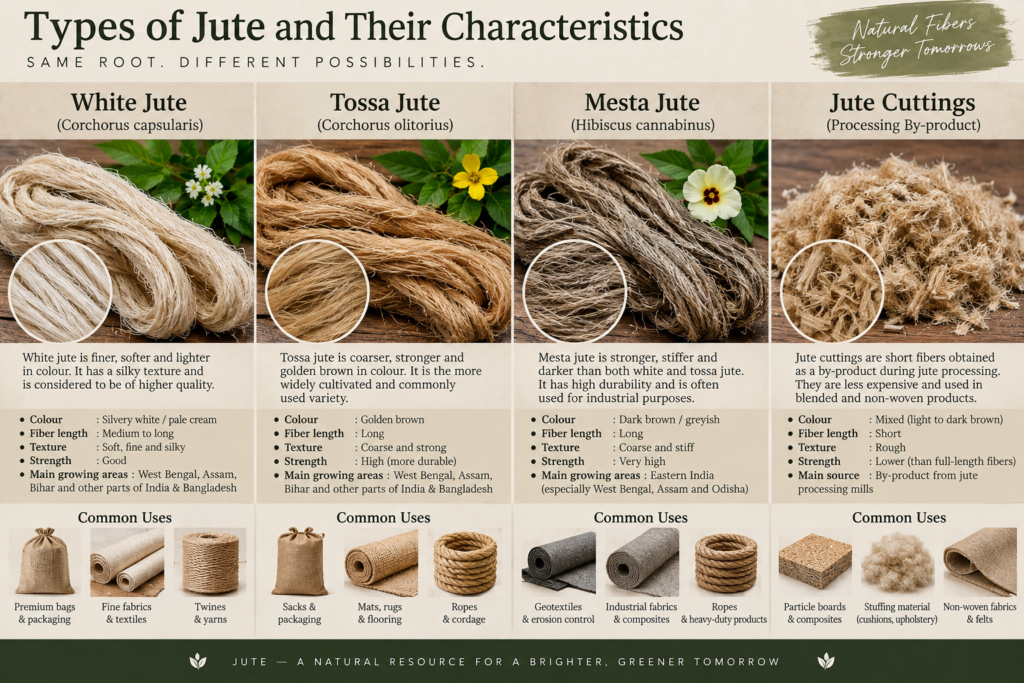
Jute fabric is made from several botanical varieties and production byproducts. The most important types include white jute, tossa jute, mesta jute, and jute cuttings.
1. White Jute
White jute is lighter in color than many other varieties. It was historically used to make clothing for ordinary people in the Bengal region.
Although it is less popular today, white jute may still be useful for selected apparel and textile products. It is generally considered less durable than tossa jute.
2. Tossa Jute
Tossa jute is the main type of jute produced today. It is a hardy crop that generally yields more fiber than white jute.
Its fibers are long, strong, and usually brown or golden in color. Tossa jute is widely used for bags, ropes, packaging, rugs, and other industrial products.
3. Mesta Jute
Mesta jute is a hybrid related to white jute and tossa jute. It became more prominent during political and economic changes surrounding the independence of India.
It is used in several applications where jute fiber is required, although it is generally less prominent than tossa jute.
4. Jute Cuttings
Jute cuttings are byproducts left over from jute production. They are usually rougher and less desirable than the main fibers but can still be used to make basic textiles and other low-cost products.
How Does Jute Fabric Impact the Environment?
Jute is often considered a relatively environmentally friendly fiber because it is plant-based, biodegradable, and generally requires fewer agricultural chemicals than many conventional crops. However, its environmental impact depends on farming practices, processing methods, and working conditions.
Benefits of Jute Cultivation
Jute and rice are often grown in similar regions because they require comparable environmental conditions. When managed properly, jute can help return nutrients to the soil and retain soil moisture.
Jute cultivation may also support crop rotation and reduce pressure on land when it is integrated into a responsible farming system.
However, jute is not automatically sustainable. Poor farming practices, including a lack of crop rotation or excessive use of fertilizers and pesticides, can damage soil and surrounding ecosystems.
Water and Chemical Use
Traditional water retting requires substantial water and can affect water quality if wastewater is not properly managed. Chemical retting and finishing treatments may also create environmental concerns when chemicals are released without adequate treatment.
Responsible manufacturers should manage wastewater carefully and reduce the use of harmful chemicals wherever possible.
Biodegradability
Jute is biodegradable and can break down naturally under suitable conditions. Unlike synthetic fibers, it does not persist in the environment for centuries in the same way.
Its natural composition also means that it does not create the same type of long-term plastic microfiber pollution associated with many synthetic textiles.
Outdoor Durability
Although jute is strong, it is not highly resistant to prolonged exposure to moisture, sunlight, and changing weather conditions. Products used outdoors may deteriorate more quickly than synthetic alternatives.
Humanitarian and Economic Concerns
Many jute producers are independent farmers or locally owned businesses. However, large corporate supply chains may sometimes reduce the economic benefits received by local communities.
Responsible purchasing should consider fair compensation, safe working conditions, environmental management, and whether local producers benefit from the supply chain. Buying from transparent suppliers and manufacturers can help support more responsible jute production.
See also: banana fiber fabric
Jute Fabric Certifications Available
Jute products may qualify for several types of certification, depending on how they are grown, processed, and manufactured.
Organic Certifications
Jute is a plant-based fiber and may qualify for organic certification under approved standards. Relevant systems may include:
- USDA Organic certification
- European Union organic certification
These certifications generally address agricultural practices, chemical use, and processing requirements.
SGS Certification
SGS provides testing and certification services for jute fiber. Its certification generally focuses on the quality and grade of the material rather than confirming that the jute was organically produced.
Buyers should check the exact certification and determine whether it applies to the raw fiber, finished fabric, or complete product.
Frequently Asked Questions
Is jute a natural fabric?
Yes. Jute is a natural plant-based fiber made from the stalks of the jute plant.
What is jute fabric also called?
Jute fabric is also known as burlap, hessian cloth, or gunny cloth.
Is jute fabric breathable?
Yes. Jute is highly breathable and allows air to move through its woven structure.
Is jute fabric soft?
Traditional jute is relatively rough. However, mechanical and chemical finishing methods can make it softer and more suitable for selected clothing applications.
Is jute fabric durable?
Jute is strong and resistant to abrasion, but it may not perform well when exposed to outdoor moisture and weather for long periods.
Is jute fabric waterproof?
No. Jute absorbs water readily. It can be treated to improve water resistance, but untreated jute is not waterproof.
Is jute fabric biodegradable?
Yes. Jute is a natural plant fiber and can biodegrade under suitable environmental conditions.
Is jute fabric expensive?
No. Basic jute is generally inexpensive and may cost around $1 per yard. Artisan, decorative, organic, or specially finished jute fabrics may cost more.
Can jute be used for clothing?
Yes, but traditional jute is usually too rough for direct skin contact. Softened or blended jute may be used for sweaters, cardigans, light jackets, and accessories.
What is the difference between jute and hemp?
Both are natural bast fibers, but jute generally has a rougher texture and is widely used for packaging, ropes, rugs, and industrial products. Hemp fabric is often stronger and more versatile for clothing and technical textiles.
Is jute environmentally friendly?
Jute can be a relatively low-impact textile because it is biodegradable and may require fewer chemical inputs than some crops. However, its environmental performance depends on cultivation, retting, chemical use, wastewater management, and labor conditions.