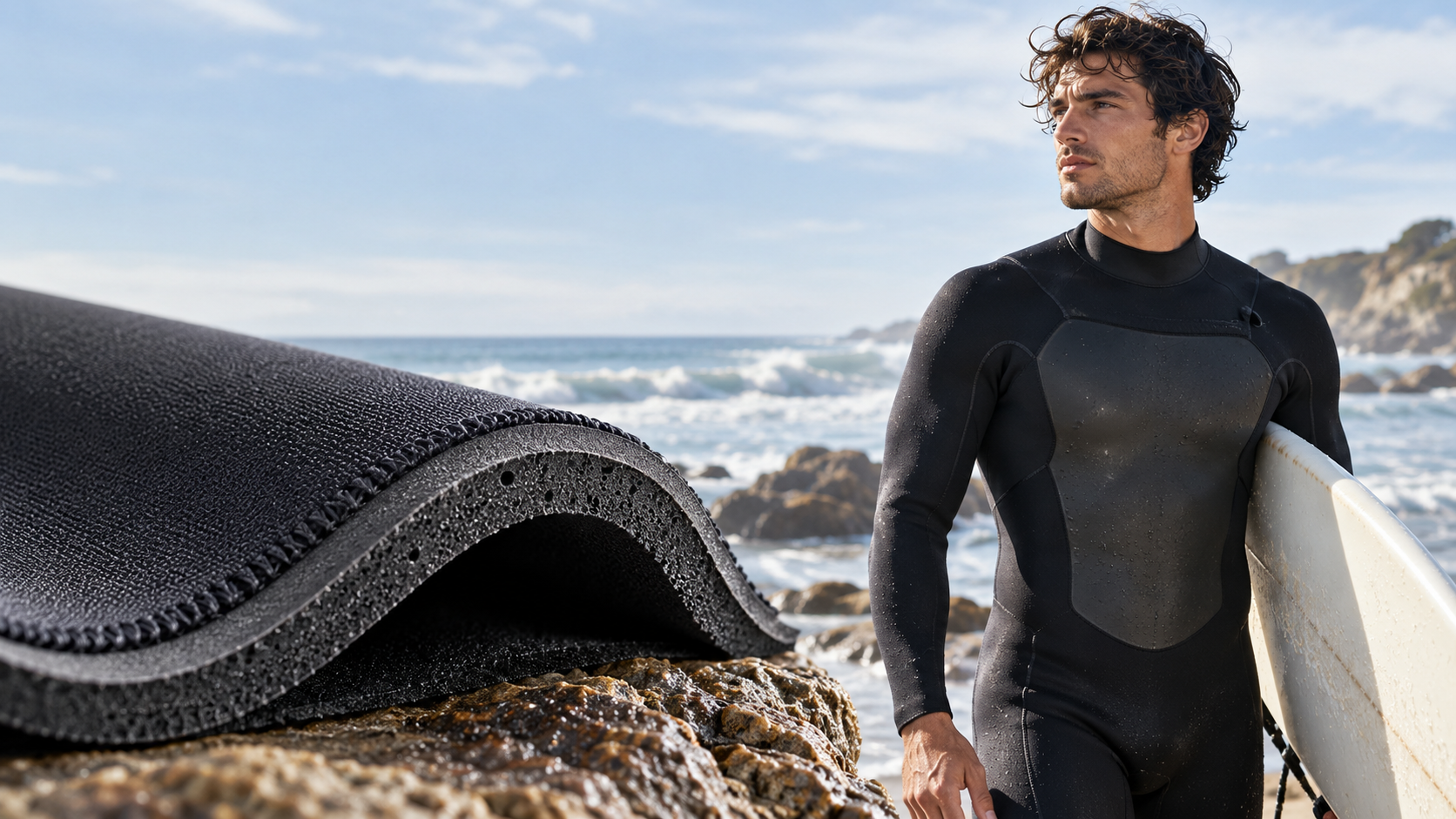
Neoprene is a synthetic rubber known for its flexibility, cushioning and ability to help insulate against cold water. It is best known for wetsuits, but the material is also used in laptop sleeves, bags, protective supports, sports equipment and structured fashion products.
The name Neoprene is a trademark historically associated with DuPont. The generic name for the rubber is polychloroprene.
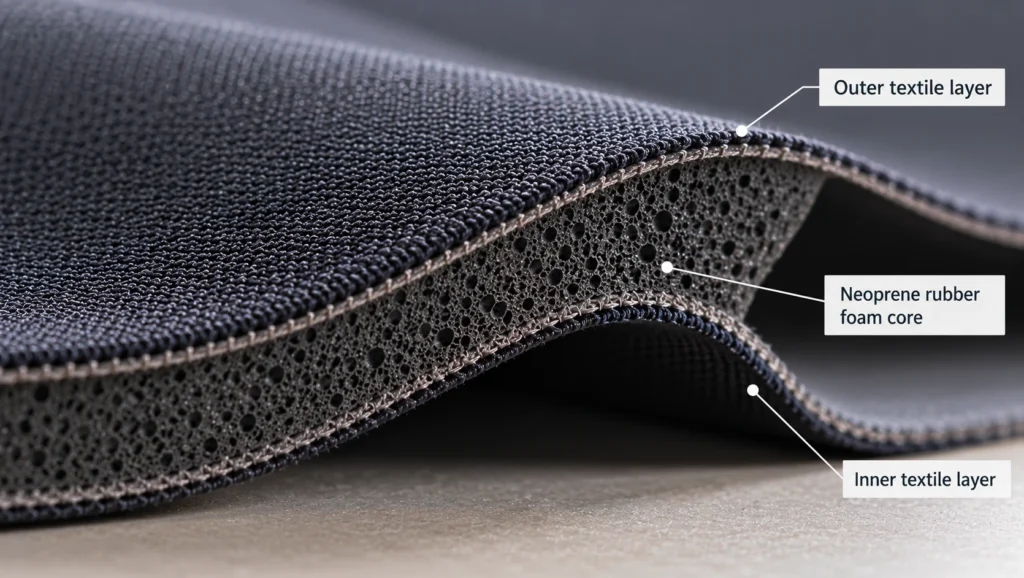
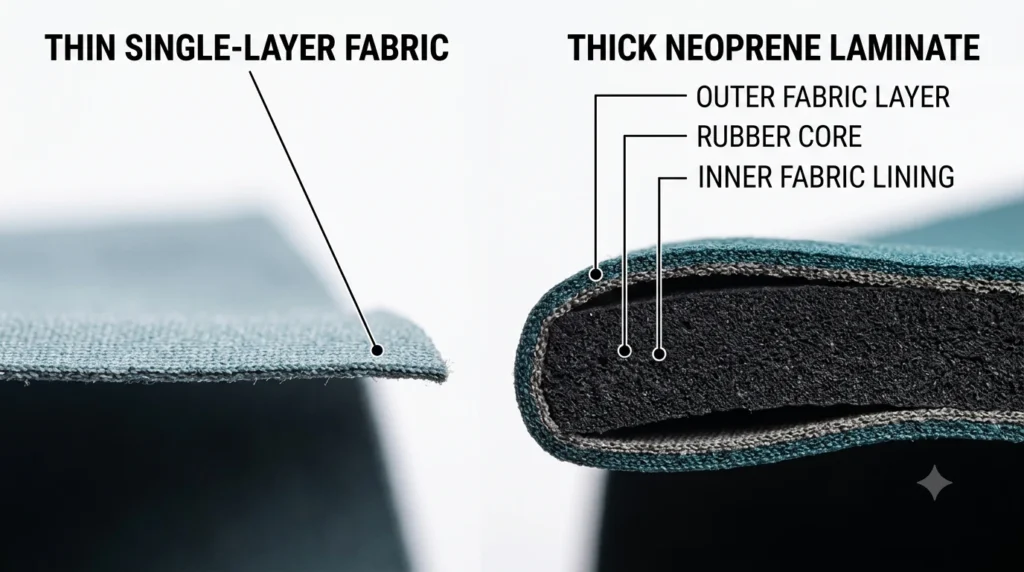
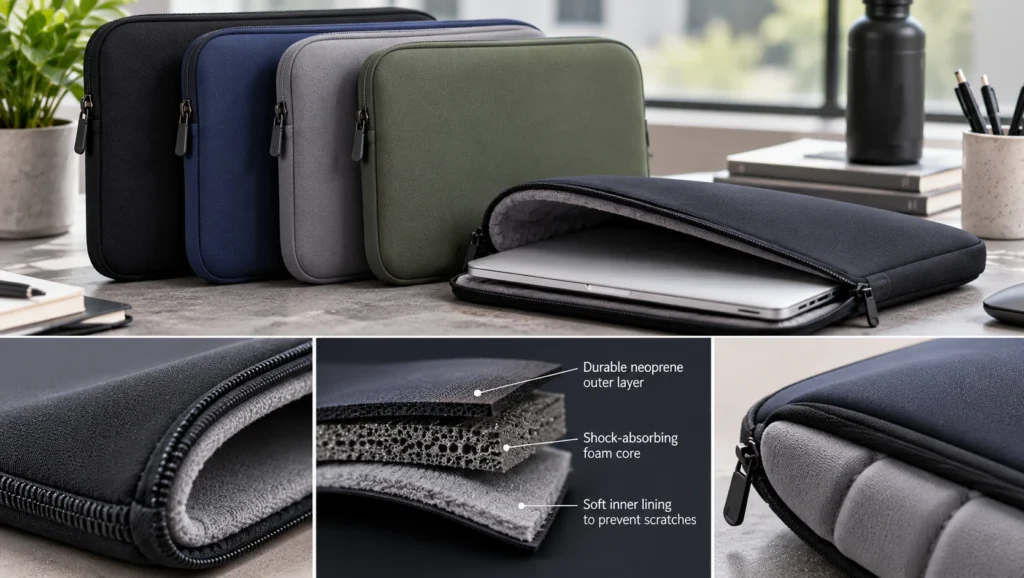
What people call neoprene fabric is often a layered material. A sheet of neoprene rubber foam may be covered with knitted or woven fabric, usually polyester or nylon. The rubber core provides cushioning and insulation, while the outer layers improve the surface, strength and appearance.
This construction makes neoprene different from ordinary woven fabrics. Rather than relying on yarns alone, it uses a flexible rubber layer to create a material with body, stretch and protective qualities.
Quick Facts About Neoprene Fabric
| Property | Details |
|---|---|
| Material type | Synthetic rubber, often laminated with textiles |
| Chemical name | Polychloroprene |
| Original commercial development | United States, during the 1930s |
| Main characteristics | Flexible, cushioning, insulating and water resistant |
| Breathability | Generally low, especially in solid or closed-cell constructions |
| Stretch | Varies with thickness, foam structure and textile layers |
| Common uses | Wetsuits, sports equipment, bags, braces and protective covers |
| Typical construction | Rubber foam with one or two textile faces |
| Main limitation | Can trap heat and moisture and may be difficult to recycle |
1. What Is Neoprene Fabric?
Neoprene is a synthetic rubber made by polymerizing chloroprene. It was developed as an alternative to natural rubber and became useful in products requiring flexibility, resistance to weathering and reliable performance under demanding conditions.
The rubber can be manufactured in different forms, including solid rubber and foam. For many textile applications, it is made into a flexible sheet and bonded to fabric.
This layered construction is often called neoprene fabric.
Why Is Neoprene Different From Ordinary Fabric?
A cotton or polyester fabric is generally formed by weaving or knitting fibers together. Neoprene fabric often has a rubber core that gives it thickness and structure.
The result can be soft and springy rather than thin and drapey. Depending on its thickness, it can cushion impacts, help retain body heat and provide a barrier against water.
Is Neoprene Waterproof?
Neoprene rubber itself can provide a strong barrier to water, particularly when made as a continuous closed-cell foam. However, a finished product’s water resistance also depends on its seams, openings, stitching, laminated layers and overall construction.
A neoprene laptop sleeve may protect against splashes and minor impacts, while a properly constructed wetsuit is designed for use in water. Neither should automatically be assumed to be completely waterproof in every situation.
2. History of Neoprene
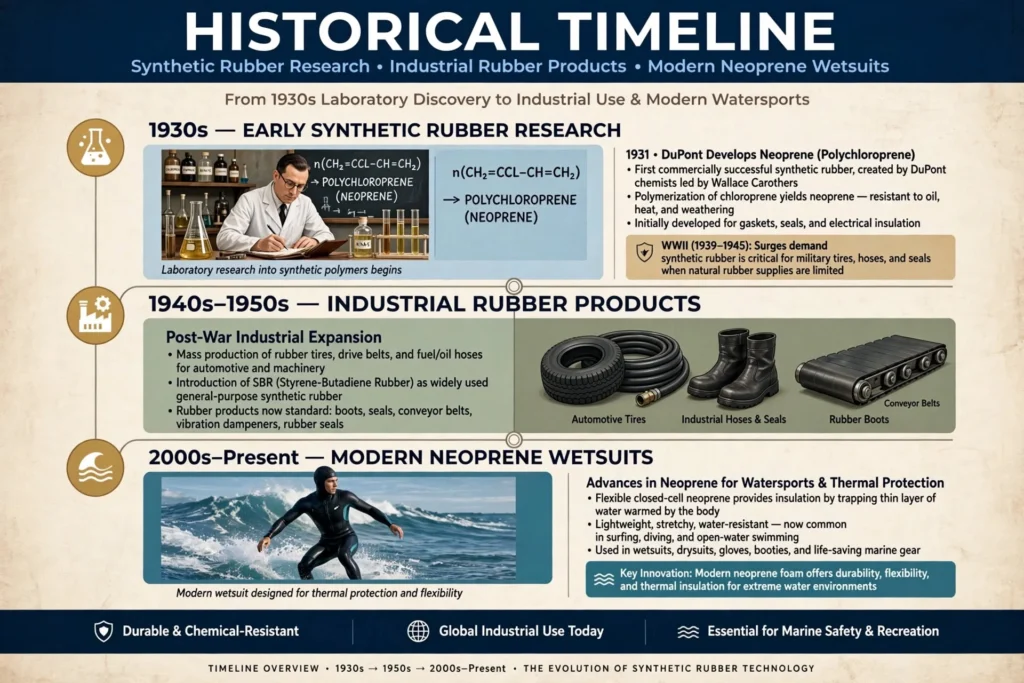
Neoprene was developed in the United States during the early 1930s, when researchers were looking for alternatives to natural rubber. Natural rubber was an important industrial material, and its supply and price could be affected by changing demand and availability.
Chemist Julius Arthur Nieuwland, working at the University of Notre Dame, conducted research into acetylene chemistry. His work helped lead DuPont researchers to develop a practical synthetic rubber based on chloroprene.
The material was introduced commercially in 1931 under the name Duprene, before the name Neoprene became established.
Its resistance to oils, weathering and various industrial conditions made it useful beyond the textile industry. It was adopted for products such as hoses, seals, gaskets and other rubber components.
Later, manufacturers developed foam forms suitable for thermal insulation and cushioning. These developments helped make neoprene an important material for wetsuits and other water-sports equipment.
Today, neoprene is used in industrial products, protective equipment, sports goods, accessories and fashion.
3. How Is Neoprene Fabric Made?
The manufacturing process has two main parts: producing the rubber and turning it into a usable sheet or textile laminate.
Step 1: Producing Polychloroprene
Manufacturers begin with chloroprene, a chemical building block that is polymerized to form polychloroprene.
Commercial production commonly uses emulsion polymerization. The process joins many small chloroprene molecules into long polymer chains that form the basis of the synthetic rubber.
The resulting rubber compound is processed further to achieve the required properties.
Step 2: Mixing and Compounding
The rubber is combined with other ingredients selected for the intended use.
These may influence flexibility, strength, curing, color, aging resistance and other characteristics.
The exact formulation differs between products. A rubber intended for an industrial seal may need different properties from foam intended for a wetsuit.
Step 3: Forming the Rubber Sheet or Foam
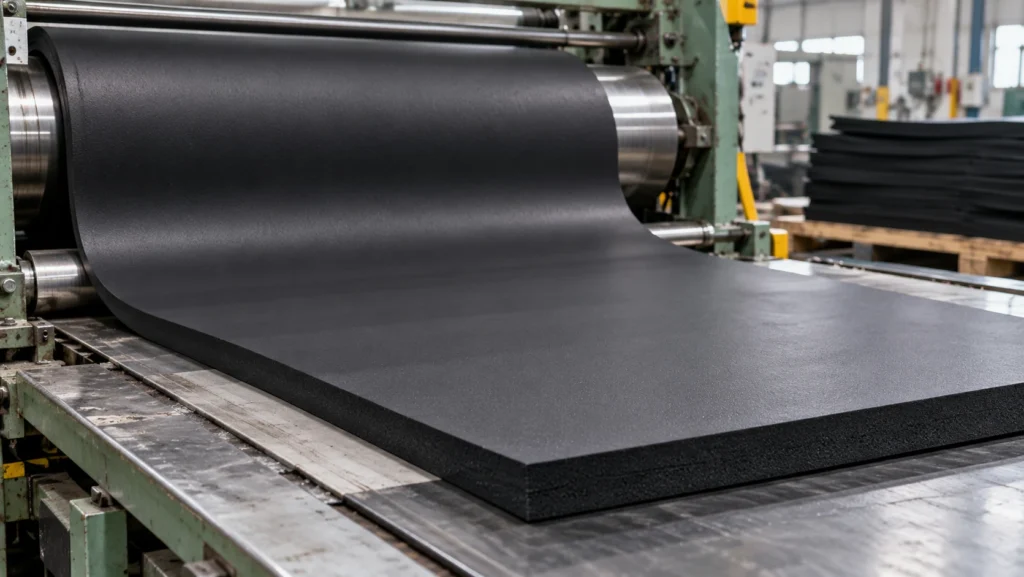
The compound is processed and cured into sheets or blocks. When foam is required, the material is expanded to create a cellular structure.
Closed-cell foam contains many small enclosed cells. These cells help reduce water absorption and trap gas, contributing to insulation and buoyancy.
The foam is then cut or sliced to the required thickness.
Step 4: Laminating the Textile Layers
For many fabric applications, the rubber sheet is bonded to a textile face.
Polyester and nylon are commonly used, although other fabrics may be selected for particular requirements.
One or both sides may be covered. The textile layers provide a more suitable surface for sewing, printing and handling, while the rubber core supplies cushioning and insulation.
Step 5: Cutting and Making the Final Product
The laminated material is cut into pattern pieces or product components.
These pieces may be stitched, bonded or assembled using other suitable methods. Wetsuits, for example, require careful construction to reduce water entry and allow movement.
Finished products are checked for thickness, bonding quality, flexibility and other requirements relevant to their intended use.
4. How Is Neoprene Fabric Used?
Neoprene is useful when a product needs cushioning, insulation, flexibility or a protective layer.
Wetsuits and Water-Sports Equipment
Wetsuits are among the best-known neoprene products.
The foam helps slow heat loss in cold water. A wetsuit does not keep the wearer completely dry in the way a sealed drysuit is designed to do. Instead, the suit’s construction and close fit help manage a thin layer of water while the neoprene foam provides insulation.
Neoprene is also used in gloves, boots, diving accessories and other water-sports equipment.

Bags and Protective Cases
Neoprene’s soft, padded structure makes it useful for protecting objects from scratches and minor knocks.
Common products include:
- Laptop sleeves
- Tablet covers
- Camera cases
- Travel pouches
- Protective equipment bags
- Lunch bags and insulated carriers
The level of protection depends on the foam thickness and how the case is designed.
Clothing and Fashion
Neoprene laminates are sometimes used in fashion garments because they hold their shape more readily than many lightweight textiles.
Applications include jackets, skirts, dresses, structured tops and accessories. Thinner versions can be more flexible, while thicker sheets produce a more sculptural silhouette.
However, the material may feel warm during prolonged wear because air and moisture movement can be limited.

Sports and Medical Supports
Neoprene is used in knee supports, wrist braces, protective sleeves and some sports equipment.
Its flexibility allows it to conform to the body, while its thickness can provide cushioning and a sense of support. The level of support depends on the product’s design and should not be assumed to be the same across all neoprene braces.
Industrial Applications
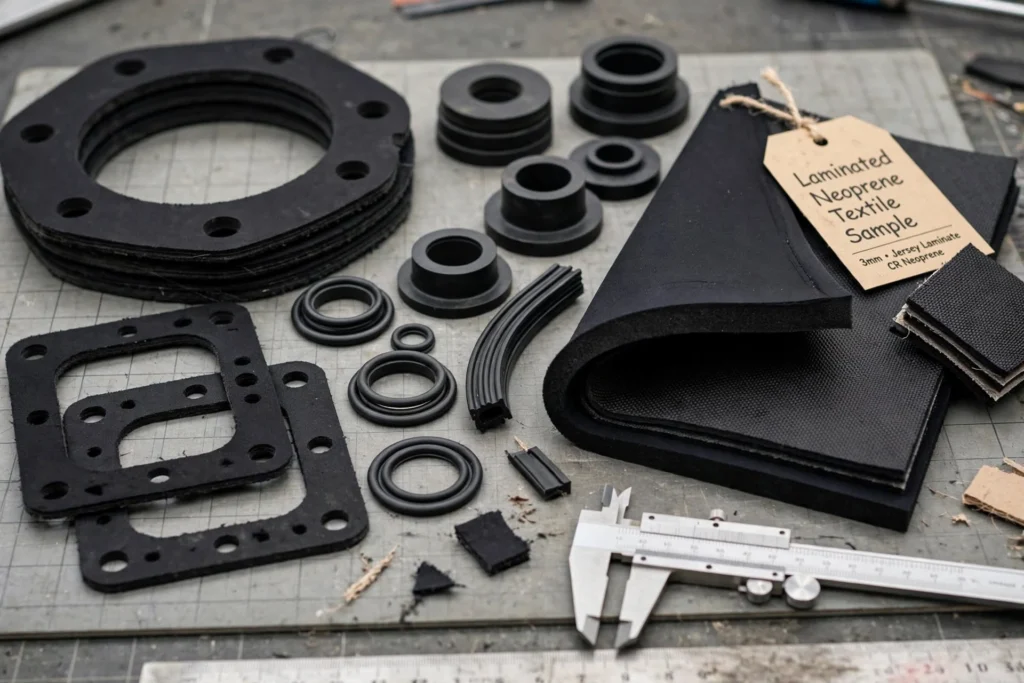
Neoprene rubber is used in seals, gaskets, hoses, vibration-control components and other industrial products.
These uses rely on the rubber’s flexibility and resistance to weathering, oils and other conditions, depending on the particular formulation.
5. Where Is Neoprene Fabric Produced?
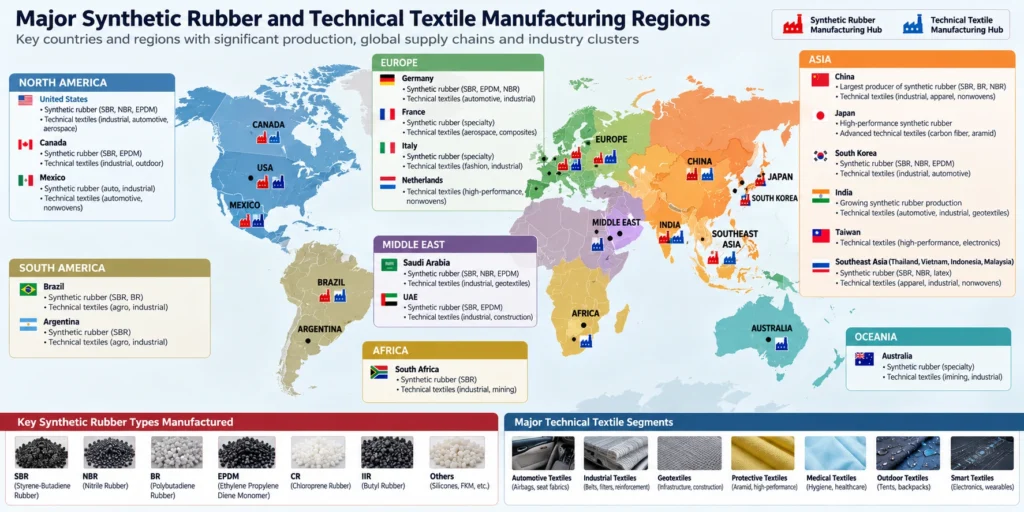
Neoprene and polychloroprene are manufactured through international chemical and rubber supply chains.
Production takes place in several industrial regions, including parts of Asia, Europe and North America. Textile lamination and finished-product manufacturing may take place in different countries from the original rubber production.
It is important to distinguish the trademarked name Neoprene from generic polychloroprene rubber. Not every product sold as neoprene fabric necessarily contains rubber produced by the original trademark owner.
For buyers, the material specification, foam density, thickness, textile face, bonding quality and manufacturing standards are generally more useful than the country of origin alone.
6. How Much Does Neoprene Fabric Cost?
Neoprene prices vary widely according to the rubber formulation, foam structure and finished construction.
Important cost factors include:
- Thickness
- Foam density
- Rubber formulation
- Textile face material
- One-sided or two-sided lamination
- Stretch and flexibility
- Color and printing
- Water-resistance requirements
- Order quantity
- Product testing and quality standards
A basic neoprene sleeve may use a relatively simple laminated material. A technical wetsuit requires more carefully specified foam, textile faces and construction. Industrial rubber components may have entirely different specifications.
For this reason, price comparisons should be based on equivalent thickness, density, laminate construction and performance requirements rather than the word “neoprene” alone.

7. What Different Types of Neoprene Fabric Are There?
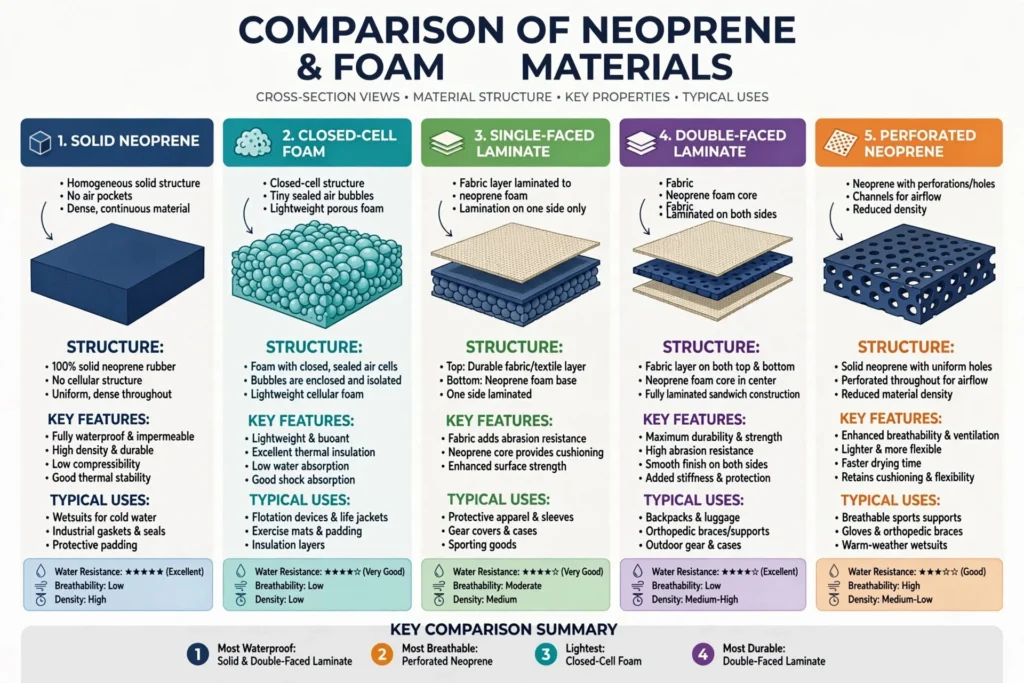
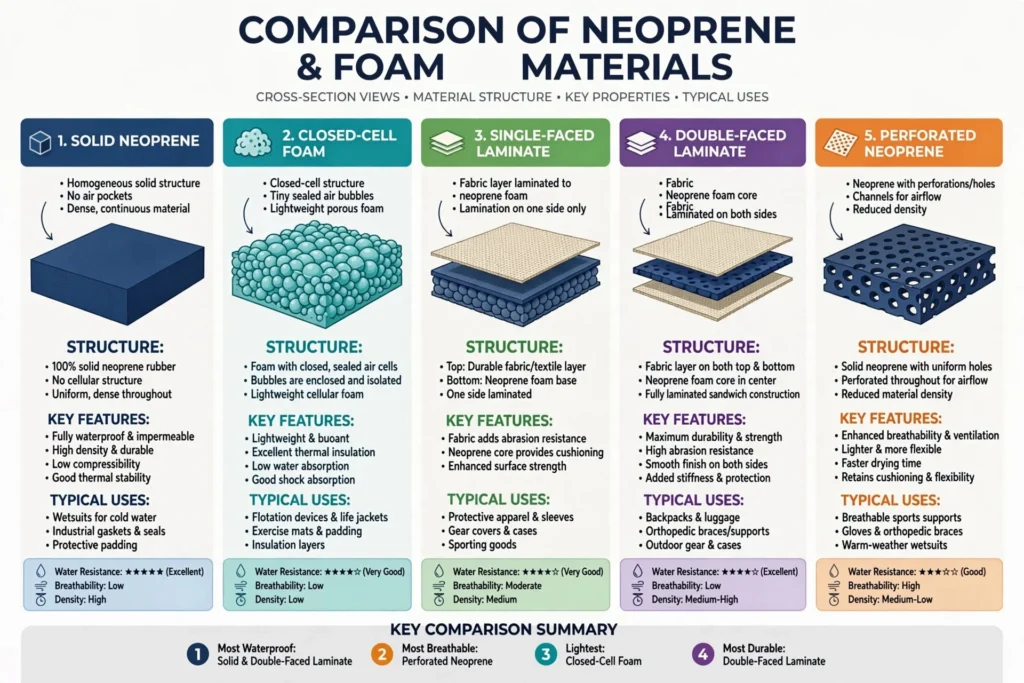
Neoprene products are best classified by their physical form and construction rather than by assuming there is only one type of fabric.
1. Solid Neoprene Rubber
Solid neoprene is a dense rubber material without the expanded foam structure used in many wetsuits.
It is commonly used for seals, gaskets, hoses and other industrial components.
2. Closed-Cell Neoprene Foam
Closed-cell foam contains small enclosed cells that help trap gas and limit water uptake.
It is widely used in wetsuits, cushioning products, protective cases and insulation-related applications.
3. Textile-Laminated Neoprene
This construction bonds neoprene foam to one or more fabric layers.
The textile surface improves handling and makes the material more practical for garments, bags and accessories.
4. Single-Faced Neoprene
Single-faced neoprene has fabric laminated to one side of the rubber core. The other side remains exposed or receives a different treatment.
It can be suitable when a product requires a textile surface on only one side.
5. Double-Faced Neoprene
Double-faced neoprene has textile layers on both sides of the foam.
This construction is common in wetsuits and many consumer products because it provides fabric surfaces on the inside and outside.
6. Perforated Neoprene
Perforated neoprene contains small openings designed to improve air movement, drainage or flexibility in specific applications.
Perforations can change the material’s insulation and water-resistance properties, so the construction must match the intended use.
7. Limestone-Based Neoprene
Some manufacturers use limestone-derived feedstocks as part of the chemical route for producing chloroprene.
The term describes the source of certain raw materials, not a completely natural rubber. The resulting polychloroprene remains a synthetic polymer, and limestone-based production should not automatically be considered biodegradable or environmentally harmless.
8. How Does Neoprene Fabric Impact the Environment?
Neoprene provides useful performance, but its production and disposal raise environmental concerns.
Raw Materials and Manufacturing
Conventional polychloroprene is produced through industrial chemical processing, generally using petrochemical-derived feedstocks. The manufacturing process consumes energy and requires careful management of chemicals and emissions.
The environmental impact depends on the feedstocks, production methods, energy sources and controls used at the manufacturing facility.
Product Lifespan
Durability is an important part of the environmental picture.
A well-made wetsuit, protective sleeve or industrial component may remain useful for years. Keeping a product in service for longer can reduce the need to replace it frequently.
Repairability also matters. Some neoprene products can be repaired when seams, panels or other components are damaged, depending on their construction.
Recycling Challenges
Neoprene foam is often bonded to textile layers, adhesives and other components. These combinations can make material separation and recycling difficult.
Used wetsuits and laminated neoprene products may therefore be hard to process through ordinary textile recycling systems.
Limestone-Based Alternatives
Using limestone-derived feedstocks does not make neoprene a natural or biodegradable material. The final rubber remains polychloroprene.
Environmental performance should be assessed across the whole manufacturing process, including energy, emissions, chemical handling, durability and disposal.
Responsible Purchasing
Buyers can reduce waste by selecting a product suited to its intended use, checking construction quality and maintaining it properly. For manufacturers, longer-lasting designs, repair options and better end-of-life planning can also help reduce unnecessary material waste.
9. Neoprene Fabric Certifications Available
Neoprene does not have one universal certification that guarantees environmental sustainability or product quality. The appropriate standards depend on the product and its intended use.
ISO Quality Management Standards
ISO 9001 concerns quality management systems. It can be relevant to a manufacturer producing neoprene rubber, foam or finished products.
It does not certify that a material is environmentally friendly or that every finished item meets a particular performance requirement.
ISO 13485 for Medical Devices
ISO 13485 is a quality management standard for organizations involved in medical devices. It may be relevant to manufacturers supplying neoprene components for medical applications, depending on the product and regulatory requirements.
It is not a general certification for all neoprene fabric.
Chemical and Product-Safety Testing
Depending on the intended use, manufacturers may need to test products for relevant chemical restrictions, skin-contact requirements or other safety specifications.
Performance Testing
Neoprene products may also require testing for:
- Thickness and density
- Flexibility
- Tensile strength
- Compression recovery
- Bonding strength
- Water resistance
- Thermal insulation
- Aging resistance
The most appropriate evidence is the certification or test report that applies to the actual product and its intended use.
10. Frequently Asked Questions
Is neoprene a fabric or a rubber?
Neoprene is a synthetic rubber. The material sold as neoprene fabric often consists of neoprene foam bonded to textile layers.
What is neoprene made from?
Neoprene is made from polychloroprene, a synthetic rubber produced by polymerizing chloroprene.
Is neoprene waterproof?
Neoprene rubber foam can provide strong water resistance, particularly in closed-cell constructions. The water resistance of a finished product also depends on its seams, openings, laminate and overall design.
Does neoprene keep you warm?
Yes. Neoprene foam can help retain heat by trapping gas within its cellular structure. This is why it is widely used in wetsuits and other cold-water equipment.
Is neoprene breathable?
Most solid and closed-cell neoprene constructions have low breathability. Textile laminates and perforated versions may behave differently, but neoprene is generally not chosen for high air permeability.
Is neoprene stretchy?
It can be. Stretch depends on the rubber formulation, foam thickness, textile face and direction of construction.
Is neoprene the same as scuba fabric?
Not always. Neoprene is synthetic rubber, often supplied as foam or a textile laminate. Scuba fabric usually refers to a dense double-knit textile that holds its shape and may contain polyester and elastane without a neoprene foam core.
Can neoprene be washed?
Many neoprene products can be cleaned with cool water and a mild detergent, but care instructions differ by product. Avoid excessive heat and harsh chemicals unless the manufacturer specifically permits them.
Is neoprene environmentally friendly?
Not automatically. It is a synthetic polymer that requires industrial processing, and laminated products can be difficult to recycle. Product durability and repairability can help reduce waste during use.
Is limestone-based neoprene natural?
No. Limestone may be used as a feedstock in the production route, but the resulting polychloroprene is still synthetic rubber.
What is neoprene fabric used for?
Common applications include wetsuits, water-sports equipment, laptop sleeves, bags, medical supports, sports accessories, protective cases and industrial components.
How long does neoprene last?
Its lifespan depends on the formulation, thickness, construction, exposure conditions and care. Products exposed to sunlight, heat, chemicals or repeated stretching may age differently from products used indoors.
Is neoprene good for clothing?
It can be useful for structured garments and outerwear because it provides body and cushioning. However, its low breathability may make it uncomfortable in hot conditions or during intense activity.