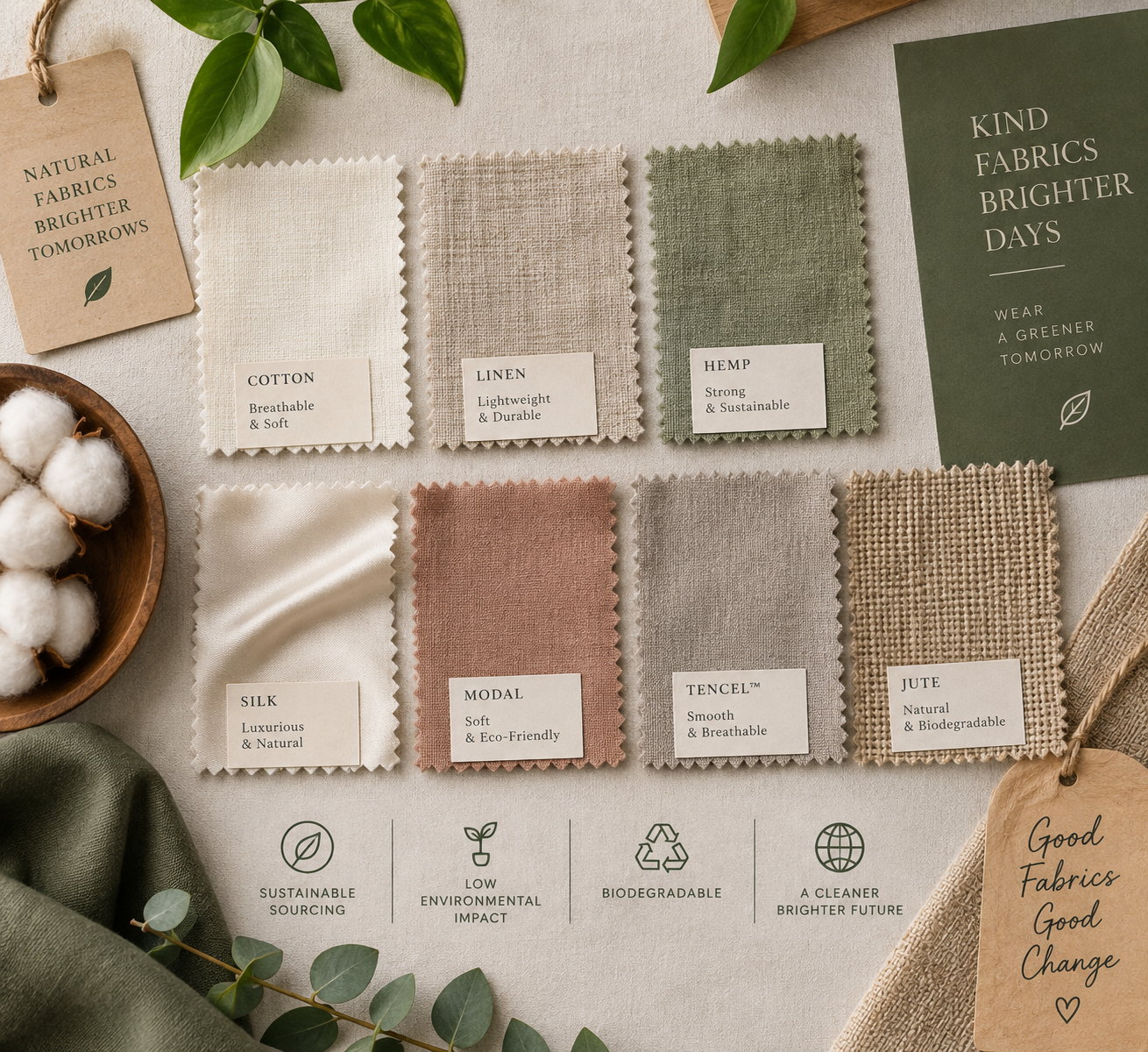
Quick answer: Sustainable fabrics can reduce the environmental impact of clothing through better farming practices, cleaner production methods, recycling, or the use of existing materials. Some of the most notable options include organic cotton, Tencel, recycled polyester, Piñatex, hemp, recycled wool, cork, bamboo lyocell, deadstock fabric, and Econyl. Each has its own advantages, limitations, and environmental trade-offs.
Not all fabrics have the same environmental impact.
Fashion uses large amounts of water, energy, land, and raw materials, and the fabric itself is a major part of that equation. Choosing a better material can make a meaningful difference, whether you’re a designer deciding what to source or a shopper trying to make more responsible purchases.
The problem is that the word “sustainable” can mean different things.
One fabric may require less water to grow but use more chemicals during processing. Another may be biodegradable but depend on poorly managed agricultural land. A material made from recycled waste may reduce the demand for new resources but still create problems at the end of its life.
So looking only at one part of a fabric’s story can be misleading. Water consumption, chemical use, farming practices, durability, recyclability, and biodegradability all deserve consideration.
Certifications can help. Standards such as GOTS and OEKO-TEX provide useful ways to check whether certain environmental and chemical claims are backed by established criteria, rather than simply relying on marketing language.
Here are ten sustainable fabric options worth knowing about and what makes each one different.
1. Organic Cotton
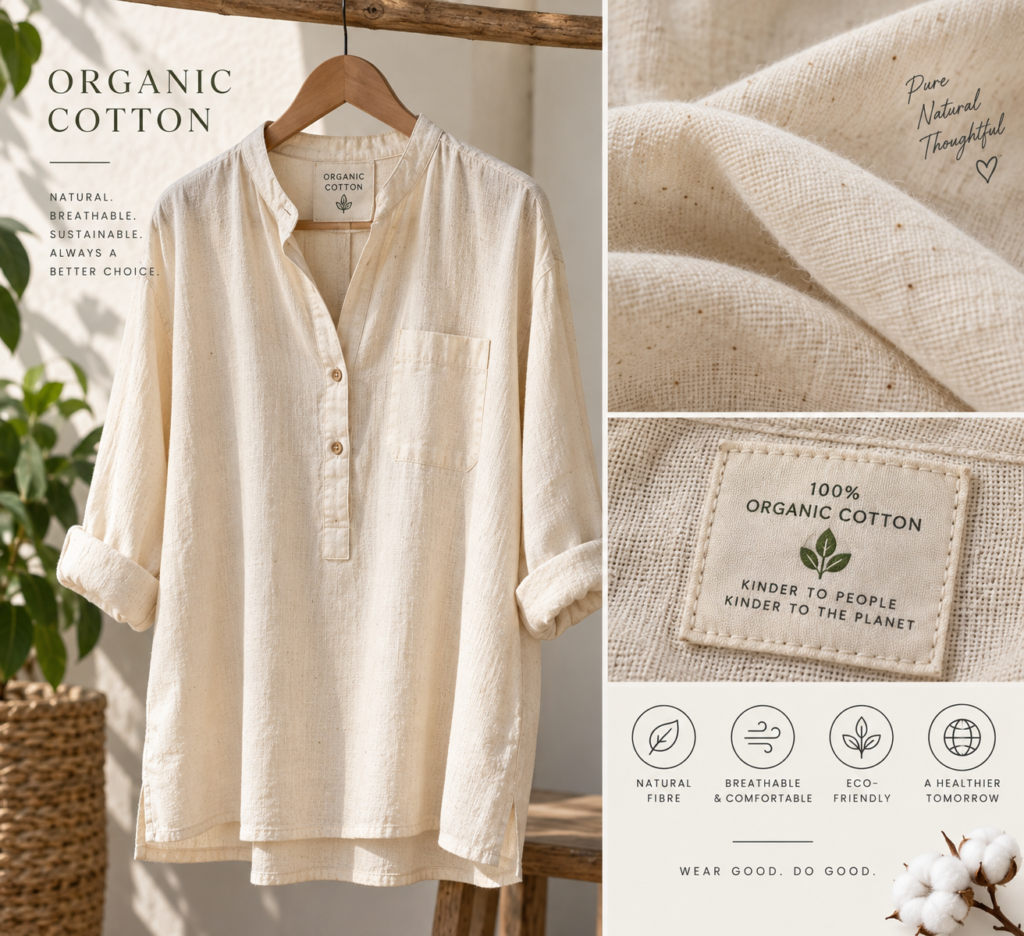
Organic cotton is one of the most widely used options when brands want to make a move toward more sustainable clothing.
The biggest difference from conventional cotton is how it is grown. Organic cotton is produced without synthetic pesticides and fertilizers, which can help reduce chemical runoff into soil and waterways.
For shoppers who want some form of certification behind the claim, GOTS-certified organic cotton is one of the better-known standards. It covers more than the cotton itself and includes requirements related to processing and working conditions.
Water is an important part of the cotton discussion. Conventional cotton can have a substantial water footprint, although the actual figure varies by growing region and farming method. Organic systems may rely more heavily on rainfall instead of irrigation in some areas, which can reduce water demand.
Avoiding synthetic agricultural inputs can also support healthier soil over time, which matters when thinking about the long-term health of farmland.
Organic cotton is particularly useful for everyday items such as T-shirts, underwear, and denim. It does not require an entirely different manufacturing system, and it is already widely available.
The main drawback is price. Organic cotton usually costs more than conventional cotton, and supply remains smaller than demand.
Even so, it is one of the easier places for a brand or shopper to start when looking for more responsible everyday fabrics.
2. Tencel / Lyocell
Tencel is a brand name used for lyocell fibers, and it has become one of the better-known examples of a more responsible wood-based textile.
The fiber starts with wood pulp, often sourced from trees such as eucalyptus and beech. What makes Tencel particularly interesting is the way that pulp is processed.
Its manufacturing process uses a closed-loop system that can recover and reuse up to 99% of the water and solvents involved in production.
That is important when you compare it with conventional viscose, another fabric made from wood-derived cellulose. Traditional viscose production has historically involved significant chemical processing, and poor solvent recovery can lead to chemicals entering wastewater.
The closed-loop approach used for Tencel helps reduce that problem considerably.
The trees used as raw material can also come from sustainably managed forests, with some sources carrying FSC certification. That means the environmental story can extend from the original raw material all the way through to the finished fiber.
From a design perspective, lyocell is also very flexible. It takes dye well, has a soft drape, and can be blended with other fibers.
There is still an end-of-life consideration, particularly when lyocell is blended with synthetic materials. Those blends can make recycling and biodegradation more complicated.

3. Recycled Polyester (rPET)
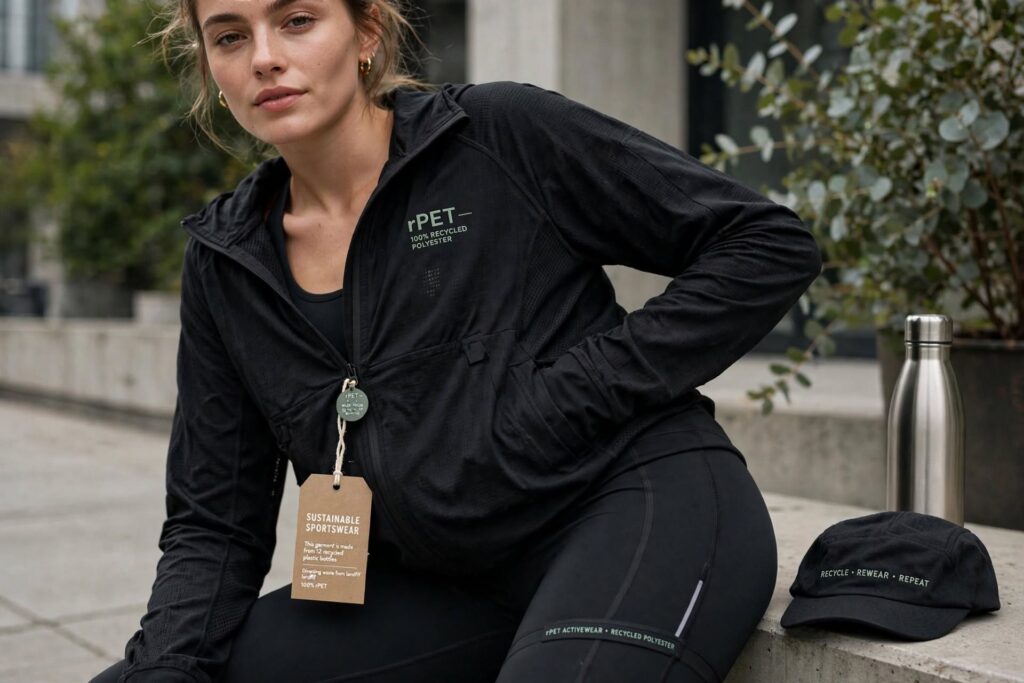
Recycled polyester, commonly called rPET, takes existing plastic and textile waste and turns it into new fiber.
Post-consumer plastic bottles are a common source, although some manufacturers also use textile offcuts and other industrial waste.
The finished material can perform much like virgin polyester, but the key difference is that manufacturers don’t have to start with new petroleum-based raw materials.
That matters because virgin polyester production depends heavily on fossil fuels and requires significant energy.
Using recycled polyester can reduce the demand for new petroleum-derived material while giving existing plastic waste another use. It can also help divert waste away from landfill and, in some cases, prevent plastic from entering waterways and oceans.
There are still some important limitations.
rPET is a synthetic fiber, so it can release microfibers during washing. Some of these tiny particles can pass through standard wastewater treatment systems and eventually make their way into waterways.
Laundry bags designed to capture microfibers can help reduce that release.
Another challenge appears at the end of the garment’s life. Recycling polyester again is not always straightforward, especially when the fabric has been blended with other fibers.
Even with those limitations, rPET can be a useful alternative to virgin polyester, particularly for activewear, sportswear, and outerwear where polyester’s performance characteristics are important.
4. Piñatex
Piñatex takes a very different approach to sustainable materials.
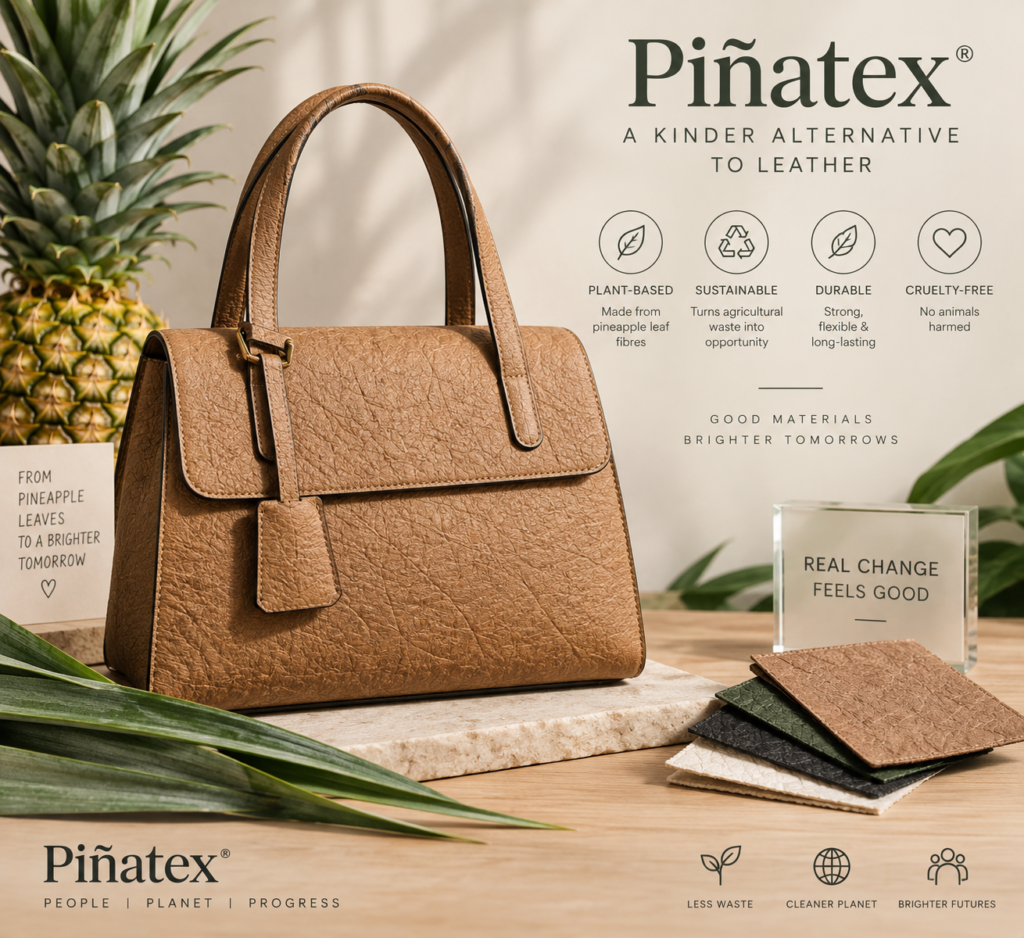
It is made from pineapple leaf fibers, specifically the long fibers left behind after pineapple harvesting. Instead of treating those leaves as agricultural waste, the material uses them as a raw resource.
This creates several potential benefits.
First, the pineapple leaves already exist as part of the farming process, so producing Piñatex does not require additional land simply to grow another crop for textile production.
It also offers an alternative to conventional animal leather. That avoids some of the environmental issues linked to leather production, including the land requirements associated with cattle farming and the chemicals used during tanning.
There is another useful part of the process. The biomass left after extracting the fibers can be used as natural fertilizer, allowing some of the agricultural material to return to the farming system.
Piñatex is not completely free from synthetic materials. Some versions use a synthetic coating, which affects how easily the finished material can biodegrade.
Bio-based versions are being developed, and the material itself continues to evolve.
Today, Piñatex is most commonly associated with bags, shoes, and other accessories. For brands looking for a leather alternative with an agricultural waste story behind it, it remains one of the more interesting materials available.
5. Organic Hemp
Hemp has been used as a textile fiber for centuries, and its environmental advantages have helped bring it back into the spotlight.
The plant grows quickly and generally requires much less water than many other fiber crops. It is also naturally resistant to a number of pests, which means synthetic pesticides are often unnecessary.
Hemp is also known for its ability to store carbon and can contribute to healthier soil in certain agricultural systems. This is sometimes discussed in the context of phytoremediation.
For brands that want third-party verification, GOTS-certified organic hemp provides a useful standard for sustainable farming and processing practices.
The fiber itself has another major advantage: durability.
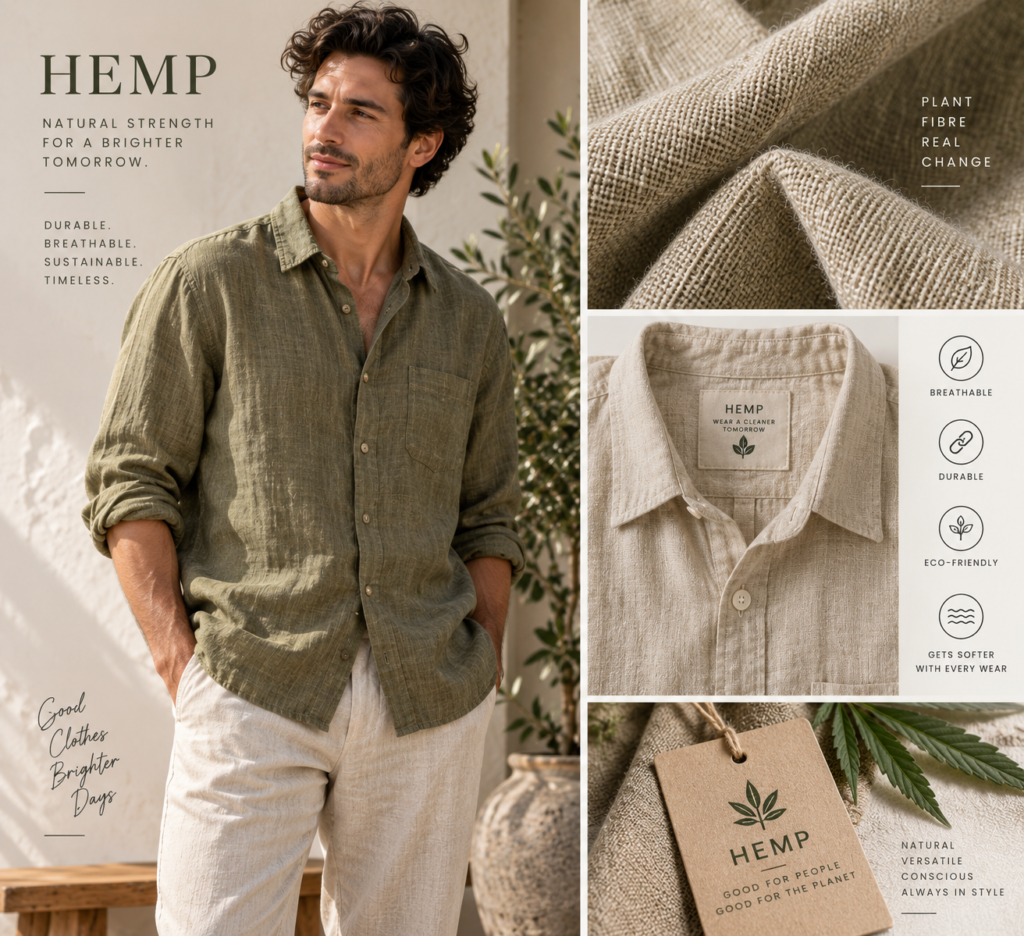
Hemp clothing can last for a long time and often becomes softer with repeated use. That makes it a natural fit for a more longevity-focused approach to fashion.
Processing is where some of the challenges appear. Raw hemp fiber can be more difficult to turn into a very soft, fine textile than materials such as cotton or lyocell.
Retting and other softening processes can also have different environmental impacts depending on how they are carried out. Water retting is generally considered one of the cleaner approaches.
As processing methods improve, hemp has more potential to become a mainstream option for sustainable clothing, particularly workwear, outerwear, and durable everyday garments.
6. Recycled Wool
Wool recycling is not a new idea. Textile recyclers have been working with old wool garments and manufacturing scraps for many years.
The basic process is fairly straightforward. Existing wool clothing or offcuts are collected, sorted, shredded back into fibers, and then spun into new yarn.
This avoids much of the resource demand associated with producing new wool from sheep.
Virgin wool is a natural and biodegradable fiber, but that does not make its production impact-free. Raising sheep requires land, feed, and water, and livestock farming also produces methane emissions.
Using recycled wool reduces the need for additional virgin fiber and gives existing textile waste another use.
The biggest limitation is fiber length.
Shredding wool shortens the fibers, which can affect the strength, feel, and performance of the finished material. Because of this, recycled wool is often blended with a smaller amount of new fiber or another material to improve durability.
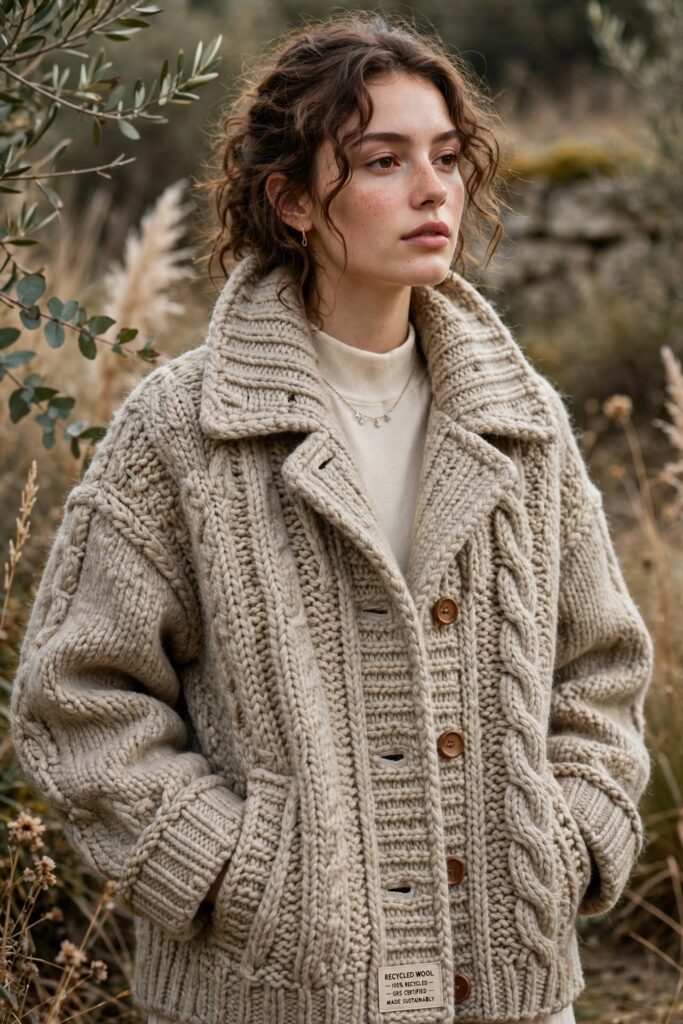
Despite that limitation, recycled wool can work extremely well for knitwear, outerwear, blankets, and other products where warmth and texture are important.
7. Cork Fabric
Cork is one of the more unusual materials used in fashion, and its sustainability story starts with the tree itself.
Cork is harvested from the bark of cork oak trees without cutting the trees down. The bark can then grow back, and harvesting can be repeated roughly every nine years.
That makes cork a renewable material with a very different production cycle from many conventional fashion materials. Cork oak trees can live for several centuries, allowing the harvesting process to continue throughout the life of the tree.
To make cork fabric, harvested bark is cut into thin sheets and generally attached to a textile backing. This creates a material that is lightweight, flexible, and naturally water-resistant.
Cork is commonly used for bags, belts, wallets, and other accessories. Its distinctive surface also gives products a recognizable natural appearance.
Because cork is plant-based, it can biodegrade under suitable conditions. Cork oak forests are also important ecosystems in the Mediterranean, so responsible harvesting can support rather than destroy the wider forest environment.
The limitation is versatility. Cork fabric is excellent for accessories but is not suitable for most types of clothing.
Within its category, though, it is one of the more interesting renewable alternatives available.

8. Bamboo Lyocell
Bamboo has many qualities that make it attractive as a raw material. It grows quickly, can regenerate from its roots, and often requires little fertilizer under natural growing conditions.
But there is an important distinction to make when talking about bamboo fabric.
The plant itself may have a relatively low agricultural impact, but turning bamboo into textile fiber can involve significant chemical processing.
Standard bamboo viscose is the most common example. The process can involve chemicals that create environmental concerns when they are not recovered and managed properly.
Bamboo lyocell takes a different route.
Like Tencel, it uses a closed-loop production approach that recovers and reuses the solvents involved in manufacturing. This can significantly reduce the chemical impact compared with conventional bamboo rayon.
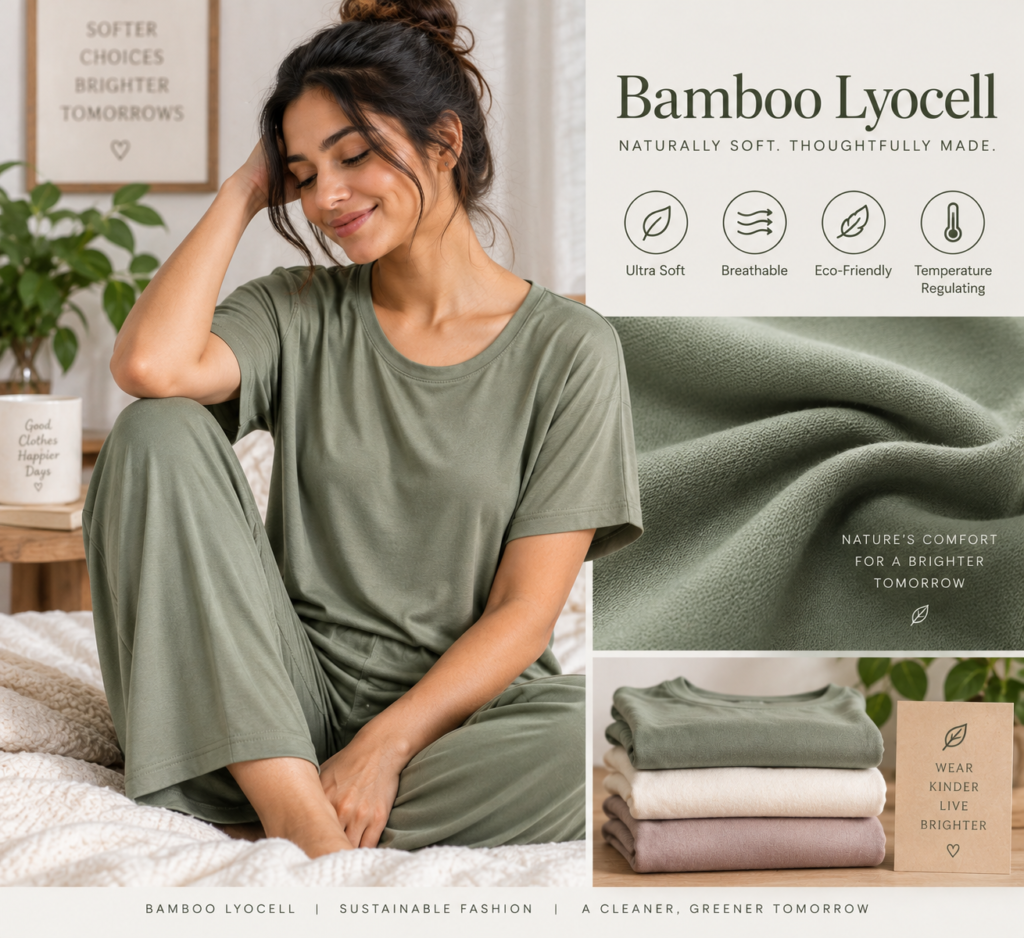
The finished fiber is soft and has good moisture-wicking properties, which makes it useful for loungewear, activewear, and everyday basics.
The main lesson with bamboo is that the word “bamboo” alone doesn’t tell you enough. It is worth checking how the plant was turned into fabric.
Certifications and transparent supply-chain information can help you determine whether you’re looking at a genuinely more responsible bamboo textile or simply a conventional rayon product marketed around the plant’s natural image.
9. Deadstock Fabric
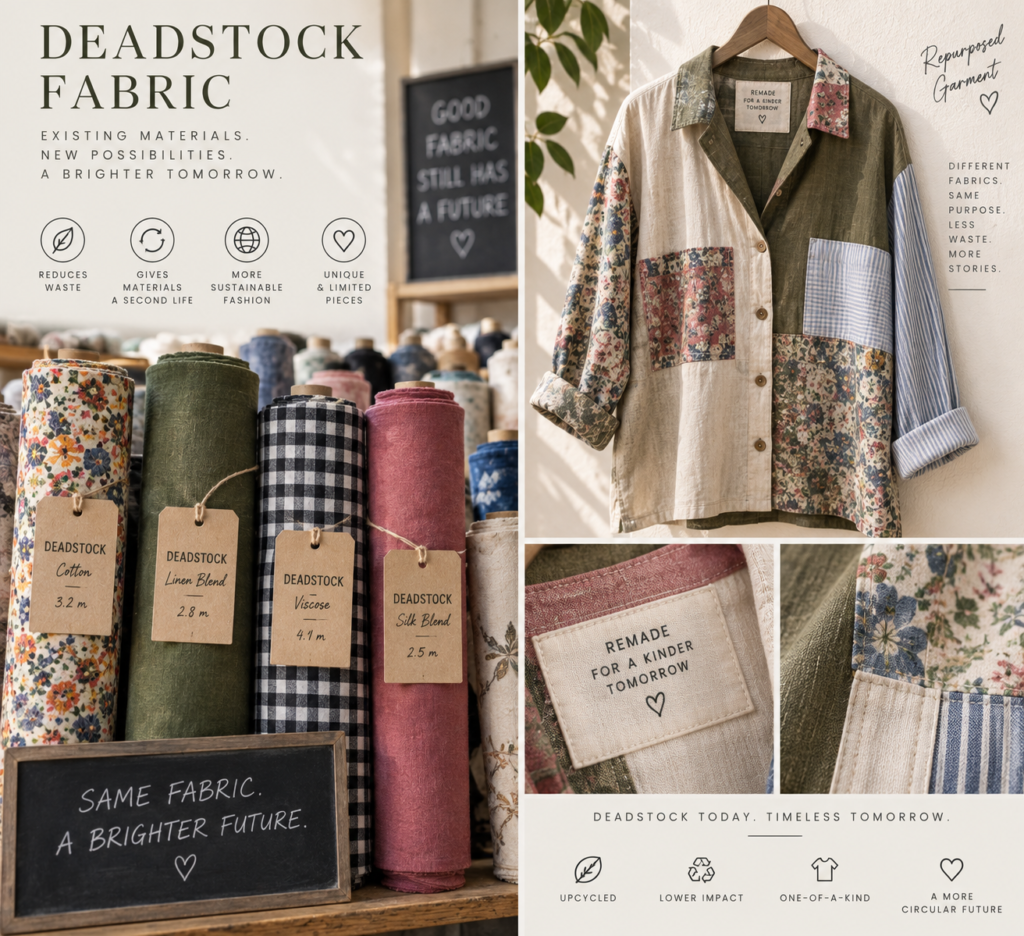
Deadstock fabric is material that has already been produced but was never used.
It can come from textile mills, fashion companies, or clothing manufacturers that have surplus rolls left over after a production run.
Instead of producing new fiber and fabric, designers working with deadstock use what already exists.
The sustainability argument here is fairly simple. There is no need to grow another crop, produce another batch of synthetic fiber, or use additional resources to manufacture new material when suitable fabric is already sitting in storage.
That makes deadstock particularly appealing to independent designers and smaller fashion labels that can work with limited quantities.
There is a catch, though.
Deadstock supplies are unpredictable. A designer might find a fabric they love but only have enough material for a limited number of garments. Colors and quantities can vary, and the same fabric may never become available again.
That makes large-scale production difficult.
There is also a transparency issue. “Deadstock” is not a tightly regulated term, so consumers cannot automatically assume that every fabric described this way is genuine surplus.
Brands that provide information about where the fabric came from are easier to assess.
10. Regenerated Nylon (Econyl)
Econyl is a regenerated nylon fiber made from waste materials such as discarded fishing nets, industrial nylon scraps, carpet waste, and other plastic waste.
The material goes through a chemical regeneration process that breaks the waste down and turns it back into nylon fiber.
According to the manufacturer, the resulting fiber is functionally comparable to virgin nylon and can be recycled within the same system.
The environmental benefit comes largely from what the material replaces.
Traditional nylon is made using petrochemical feedstocks and has a relatively resource-intensive manufacturing process. Using waste-derived nylon reduces the need for new fossil-based raw materials.
Recovering discarded fishing nets also has an additional environmental benefit because abandoned fishing gear is an important source of marine plastic pollution.
Econyl is commonly used for swimwear, activewear, and hosiery because nylon provides the stretch and durability those products require.
Like rPET, it still has some limitations. Synthetic fibers can shed microplastics during washing, and recycling at the end of a garment’s life can become more difficult when the nylon has been mixed with other materials.
Take-back and recycling programs can help address some of those challenges.
Even so, regenerated nylon is one of the more significant examples of circular material development in fashion.

Frequently Asked Questions
What makes a fabric sustainable?
A sustainable fabric is generally one that reduces environmental harm across as much of its lifecycle as possible.
That means looking at where the raw material comes from, how it is grown or harvested, how much water and energy are involved, what chemicals are used during processing, and what happens when the garment is no longer wanted.
No fabric is completely impact-free.
The useful comparison is between the different environmental costs associated with each material and production method.
What are the most eco-friendly fabrics available today?
There is no single fabric that is automatically the most sustainable in every situation.
Tencel lyocell is often considered a strong option because of its closed-loop production process. Recycled polyester can reduce the need for virgin petroleum-based material by using existing waste.
Organic cotton and organic hemp are useful natural-fiber choices, particularly when supported by certifications such as GOTS.
Recycled wool reduces demand for new wool, while Econyl offers a recycled alternative to virgin nylon.
The right choice depends on the product being made, how it will be used, and what happens to it at the end of its life.
How can I tell if a “sustainable” fabric claim is genuine?
Third-party certification is one of the most useful things to look for.
GOTS covers organic fibers and processing standards. OEKO-TEX focuses on testing for harmful substances in textiles. FSC can help verify responsible forestry in relevant supply chains, while Bluesign addresses aspects of chemical management and production.
Transparency matters too.
A brand that names its suppliers, provides audit information, publishes impact reports, or explains where its fibers come from gives you more to evaluate than one that simply uses broad phrases such as “eco-friendly” or “green.”
Are recycled synthetic fabrics actually better for the environment?
In many cases, yes, but there are still trade-offs.
Materials such as rPET and Econyl can reduce the need for virgin fossil-based resources and make use of waste that might otherwise end up in landfill or the environment.
The main issue is that recycled synthetics are still synthetic fibers. They can release microfibers during washing and may be difficult to recycle again once they have been blended with other materials.
Using a microfiber-catching laundry bag and washing clothes at lower temperatures can help reduce some of the impact associated with microfiber shedding.
The Right Sustainable Fabric Depends on What You’re Making
There isn’t one material that wins every sustainability debate.
A closed-loop lyocell can make sense for a soft, flowing dress. Recycled nylon is a practical choice for swimwear. Deadstock fabric can be an excellent solution for a small collection when suitable surplus material is already available.
The better way to think about sustainable fashion is to look at the specific product and consider the trade-offs involved.
What is the fabric made from? How was it processed? How long is the garment likely to last? Can it be repaired, recycled, or safely disposed of later?
Those questions are usually more useful than simply asking whether a fabric is “sustainable.”
The good news is that the range of better material choices continues to grow. Organic fibers, recycled materials, regenerated synthetics, and newer plant-based alternatives are all becoming part of the conversation.
The most responsible choice will depend on the situation, but understanding the options makes it easier to make a better one.
For more information about choosing fabrics for different climates and uses, explore our guide to [Breathable Fabrics]. You can also read our guide to [Affordable Sustainable Fashion Brands] for more practical ideas on building a wardrobe that lasts.