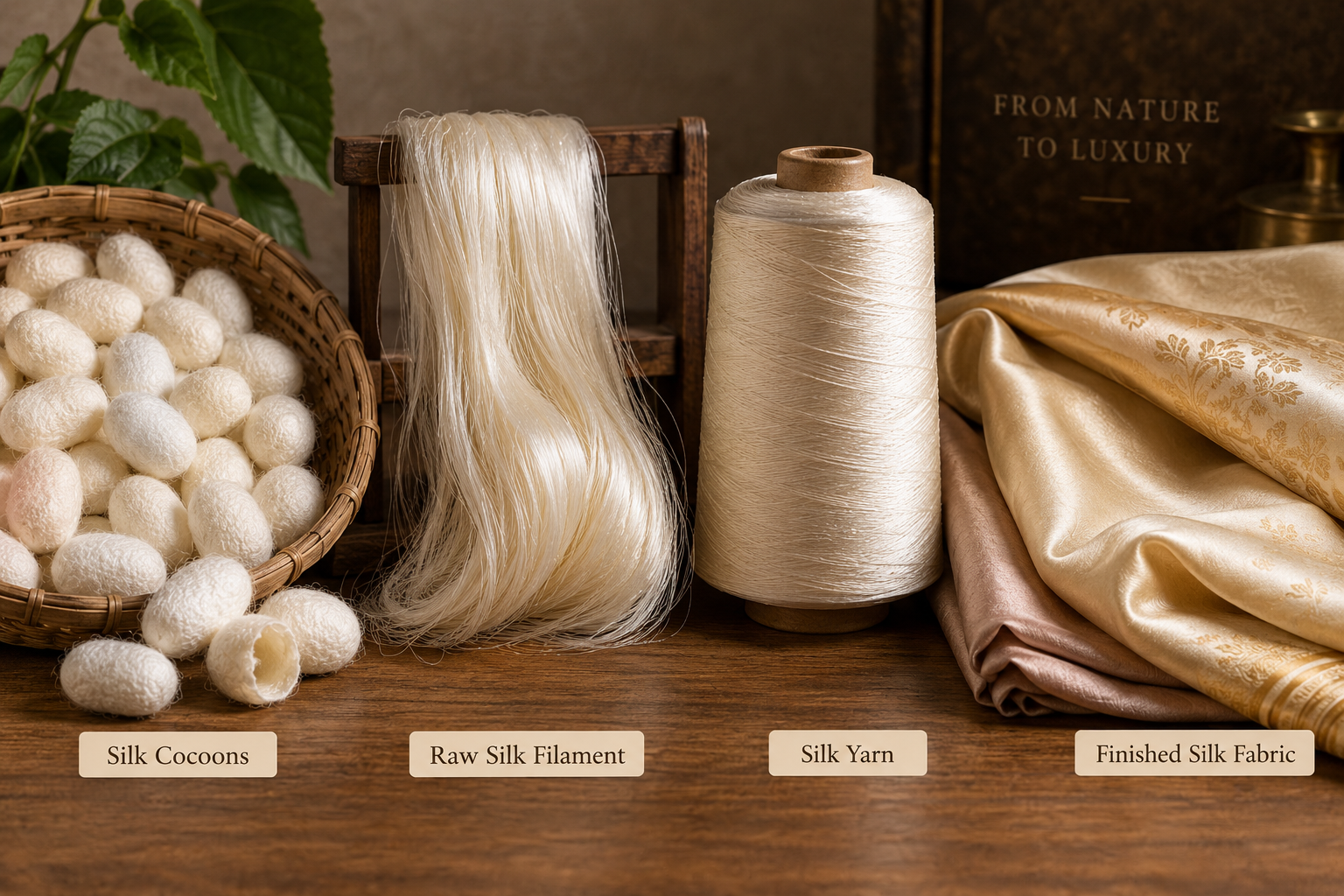
Quick Facts About Silk Fabric
| Fabric characteristic | Silk |
|---|---|
| Fabric name | Silk |
| Fiber type | Natural protein fiber |
| Main protein | Fibroin |
| Common source | Silkworm cocoons |
| Most widely produced type | Mulberry silk |
| Breathability | Generally breathable |
| Moisture absorption | Good |
| Stretchability | Generally low |
| Common characteristics | Soft, smooth, lightweight, and lustrous |
| Common uses | Clothing, lingerie, scarves, bedding, curtains, and medical sutures |
| Historical origin of cultivated silk | China |
| Major producer | China |
1. What Is Silk Fabric?
Silk fabric is a textile made from natural protein fibers produced by certain insects, especially silkworms. The fiber is primarily composed of fibroin, a protein that gives silk its strength and distinctive feel.
Unlike cotton or linen, which are plant-based fibers, silk is an animal-derived natural fiber. The most common commercial silk comes from the domesticated silkworm, Bombyx mori, which is generally raised on mulberry leaves.
One of silk’s most recognizable features is its natural sheen. The surface of the fiber has a structure that reflects light at different angles, creating the soft, shimmering appearance associated with silk.
Silk is also known for its combination of softness and strength. Although it feels delicate, the underlying fiber has high tensile strength. This makes silk suitable for both lightweight clothing and certain specialized applications.
What Makes Silk Different From Other Fabrics?
Silk is different from many other fabrics because it combines several characteristics that are difficult to achieve in one material:
- Smooth, soft texture
- Natural luster
- Lightweight feel
- Good moisture absorption
- Breathability
- High tensile strength
- Ability to take dyes well
However, silk is not automatically the strongest or most durable fabric in every application. Its performance depends on the type of silk, fabric construction, finishing, and how the textile is used and cared for.
A Brief History of Silk
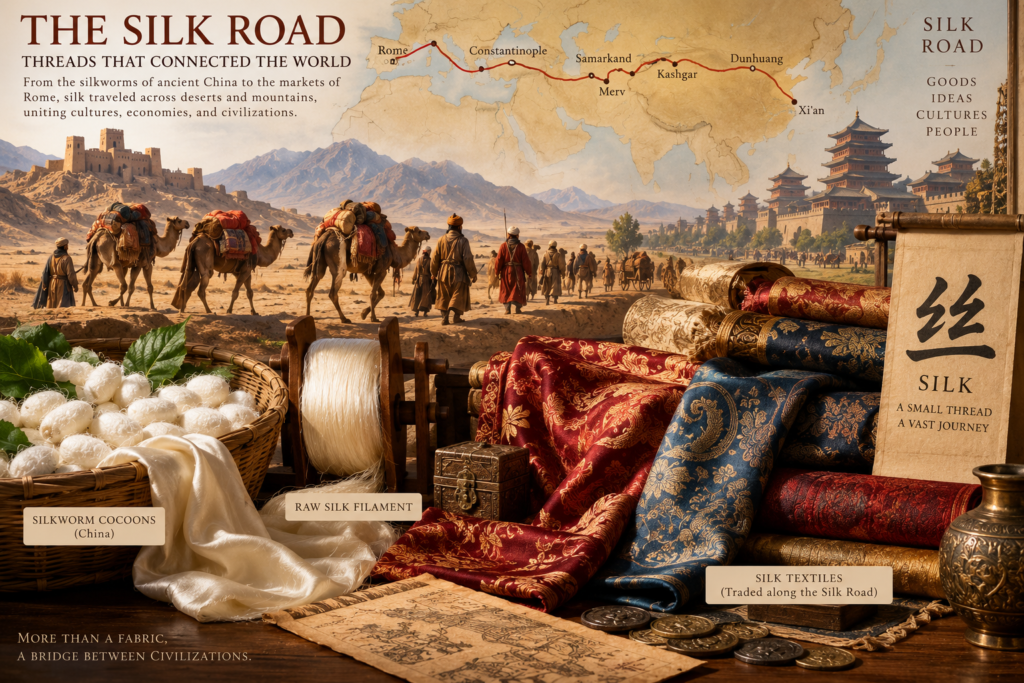
Silk has been used for thousands of years. Cultivated silk production originated in China, where silk textiles were being made in ancient times.
Over the centuries, silk became an important trade commodity. The Silk Road connected China with Central Asia, the Middle East, and Europe, helping silk spread across different regions and cultures.
Silk production later developed in other parts of Asia and Europe. Today, silk remains an important natural textile, particularly in premium apparel, home furnishings, and specialized products.
Cotton is another natural fiber that differs from silk in texture, weight, and breathability.
2. How Is Silk Fabric Made?
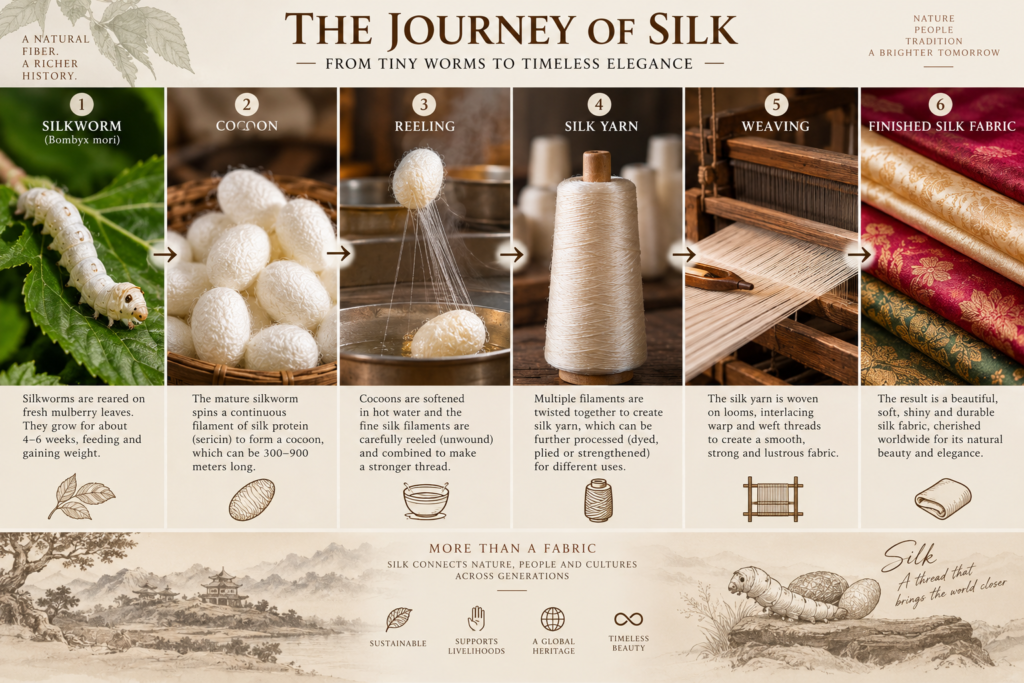
Silk fabric is produced through a process called sericulture, which involves raising silkworms and collecting the silk fibers they produce.
The exact process varies depending on the type of silk, but conventional cultivated silk generally follows these stages.
Step 1: Raising Silkworms
The most common commercial silkworm is Bombyx mori. These silkworms are generally raised in controlled conditions and fed mulberry leaves.
As the larvae grow, they produce silk to form a cocoon around themselves.
Step 2: Cocoon Formation
A silkworm creates its cocoon by secreting a continuous silk filament. The filament is held together by sericin, a natural protein that acts as a glue-like substance.
A single cocoon can contain a long, continuous filament, although the exact length varies.
Step 3: Cocoon Harvesting
Once the cocoons are ready, they are collected.
In conventional silk production, cocoons are generally treated with heat before the adult moth emerges. This helps preserve the continuous filament needed for reeled silk.
Some alternative silk-production methods collect cocoons after the moth has emerged. These methods can produce different fiber characteristics and are often associated with terms such as peace silk, although the exact meaning depends on the producer.
Step 4: Removing Sericin
The cocoons are softened in warm water, which helps loosen the sericin.
This makes it easier to unwind the silk filament from the cocoon.
Step 5: Reeling the Silk
The silk filament is carefully unwound from the cocoon and combined with other filaments to create a continuous strand.
Several fine filaments may be combined to produce the desired yarn thickness.
Step 6: Spinning and Yarn Preparation
Depending on the type of silk, the fibers may be reeled, spun, or processed into different yarn structures.
The yarn is then prepared for weaving or knitting.
Step 7: Weaving or Knitting
Silk yarn is converted into fabric through weaving or knitting.
- Woven silk is commonly used for shirts, scarves, dresses, and bedding.
- Knitted silk may be used for garments that require more flexibility.
Step 8: Dyeing and Finishing
The fabric may be dyed, printed, washed, softened, or finished to achieve a particular appearance and feel.
Finishing can influence the fabric’s sheen, drape, softness, and performance.
Linen fabric provides a more crisp and breathable alternative to the smooth feel of silk.
3. How Is Silk Fabric Used?
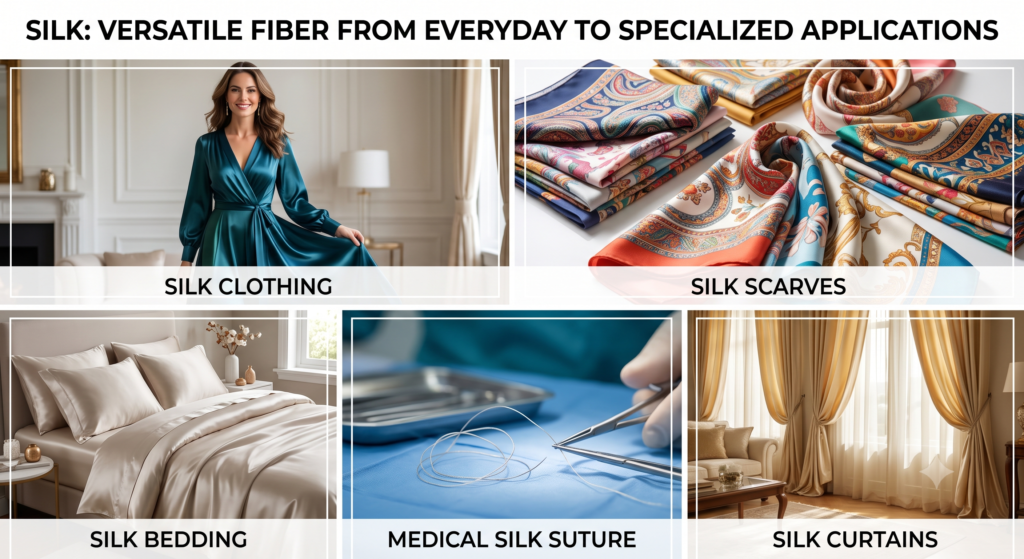
Silk is used in a wide range of consumer and industrial applications. Its softness, appearance, strength, and ability to absorb dyes make it suitable for both decorative and functional textiles.
3.1 Consumer Uses
Clothing and Apparel
Silk is commonly used in:
- Shirts
- Blouses
- Dresses
- Scarves
- Ties
- Eveningwear
- Lingerie
- Underwear
- Sleepwear
- Robes
- Suits and jackets
Silk is especially popular in garments that benefit from a smooth surface, lightweight feel, and elegant drape.
Home Textiles
Silk can also be used in:
- Curtains
- Decorative pillows
- Pillowcases
- Bedding
- Wall hangings
- Upholstery accents
Its natural sheen makes it particularly attractive for decorative interiors.
3.2 Industrial and Specialized Uses
Silk has also been used in specialized applications because of its strength and biocompatibility.
Examples include:
- Surgical sutures
- Medical textiles
- Certain technical textiles
- Historical parachute materials
Silk sutures are still used in some medical applications, although many modern medical products use other materials depending on the required performance.
4. Where Is Silk Fabric Produced?
Silk production has a long history in Asia and remains concentrated in a relatively small number of countries.
China is the world’s largest silk producer, while India is another major producer. Other important silk-producing countries include Uzbekistan, Thailand, Vietnam, Brazil, and several European countries.
The exact production rankings and volumes vary by year and by whether the figures refer to raw silk, silk cocoons, or finished silk textiles.
China
China has been associated with silk production for thousands of years and remains the leading producer of silk.
The country has a large sericulture industry and produces both raw silk and finished silk textiles.
India
India is one of the world’s major silk-producing countries. It produces several types of silk, including mulberry, eri, tasar, and muga.
Uzbekistan
Uzbekistan is an important silk-producing country in Central Asia, with a long history of sericulture.
Thailand
Thailand is known for its silk production, including traditional handwoven silk textiles.
Other Producing Countries
Silk is also produced in countries such as:
- Vietnam
- Brazil
- Japan
- Italy
- France
- South Korea
Some countries are more strongly associated with silk cultivation, while others are known for weaving, dyeing, finishing, and luxury textile manufacturing. Silk requires careful washing, drying, and storage to maintain its appearance and texture.
5. How Much Does Silk Fabric Cost?
Silk is generally more expensive than many common natural fabrics, but its price varies considerably.
There is no single price for silk fabric because different silk types, yarn qualities, fabric constructions, and finishing methods can have very different costs.
Factors That Affect Silk Fabric Cost
- Type of silk
- Fiber quality
- Yarn thickness
- Fabric weight
- Weave or knit construction
- Dyeing and finishing
- Country of production
- Organic or specialty certification
- Brand
- Wholesale or retail quantity
Why Is Silk Expensive?
Silk production involves raising silkworms, collecting cocoons, extracting the fibers, preparing yarn, and producing the finished textile.
Some types of silk are also produced in relatively small quantities, which can increase their price.
Is All Silk Expensive?
No. Silk prices vary widely.
Mulberry silk is generally more widely available than specialty silks such as muga, certain wild silks, or sea silk. Finished products can also vary significantly depending on the quality of the fabric and the brand.
Silk Fabric Pricing
For accurate pricing, it is better to compare specific fabric types and specifications rather than use one average price for all silk.
For example, a lightweight silk scarf, a heavy silk charmeuse fabric, and a handwoven silk sari may have very different prices.
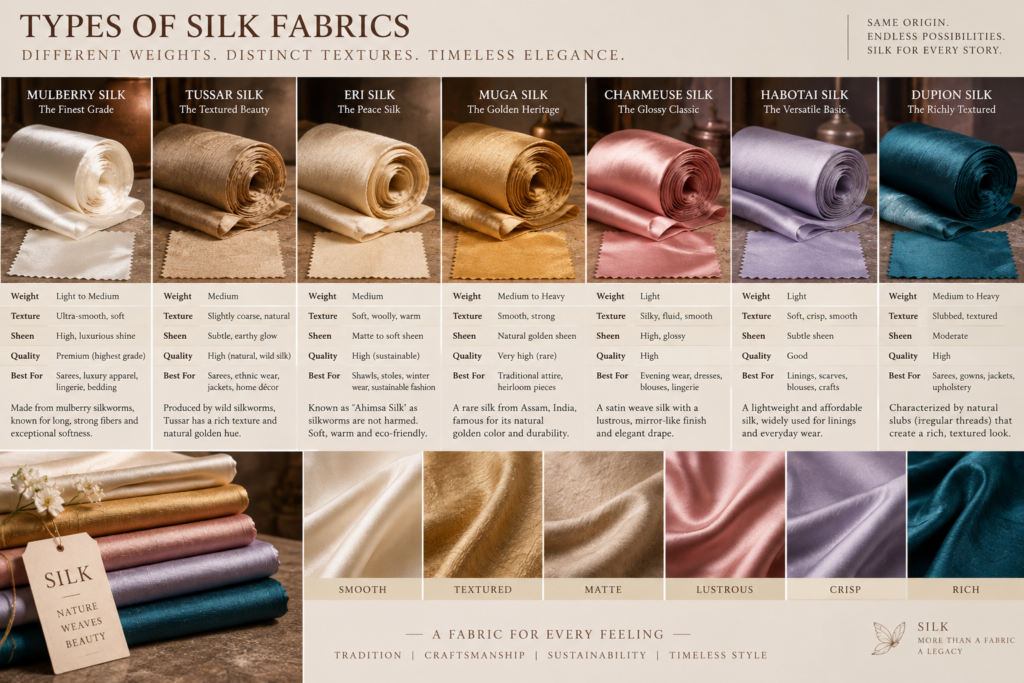
6. What Different Types of Silk Fabric Are There?
Silk can be classified by the insect that produces it, the way it is cultivated, and the type of fabric made from the resulting yarn.
6.1 Mulberry Silk
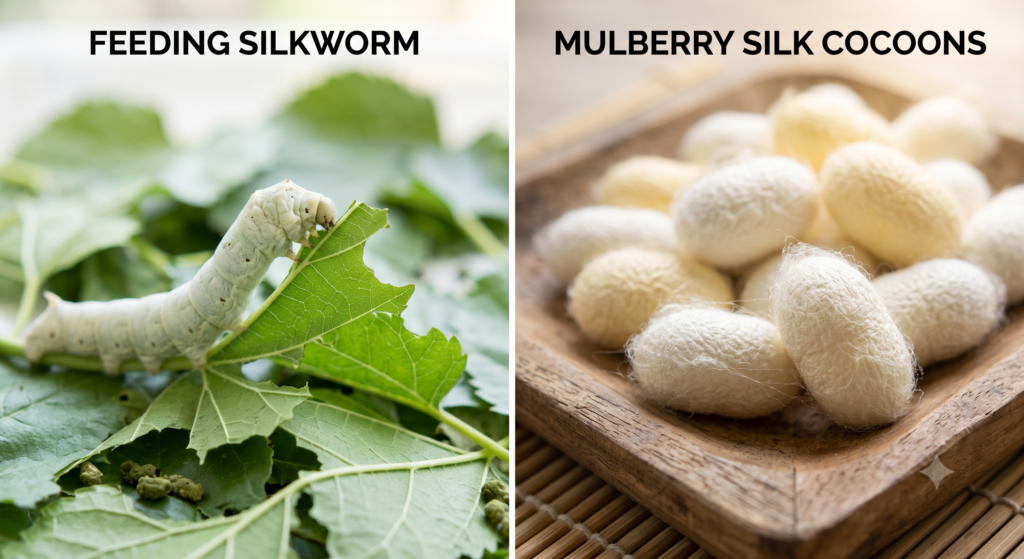
Mulberry silk is the most widely produced type of silk.
It is generally produced by the domesticated silkworm Bombyx mori, which feeds mainly on mulberry leaves.
Mulberry silk is known for its smooth texture, softness, strength, and consistent quality.
It is commonly used in:
- Luxury clothing
- Bedding
- Scarves
- Lingerie
- Premium home textiles
6.2 Eri Silk
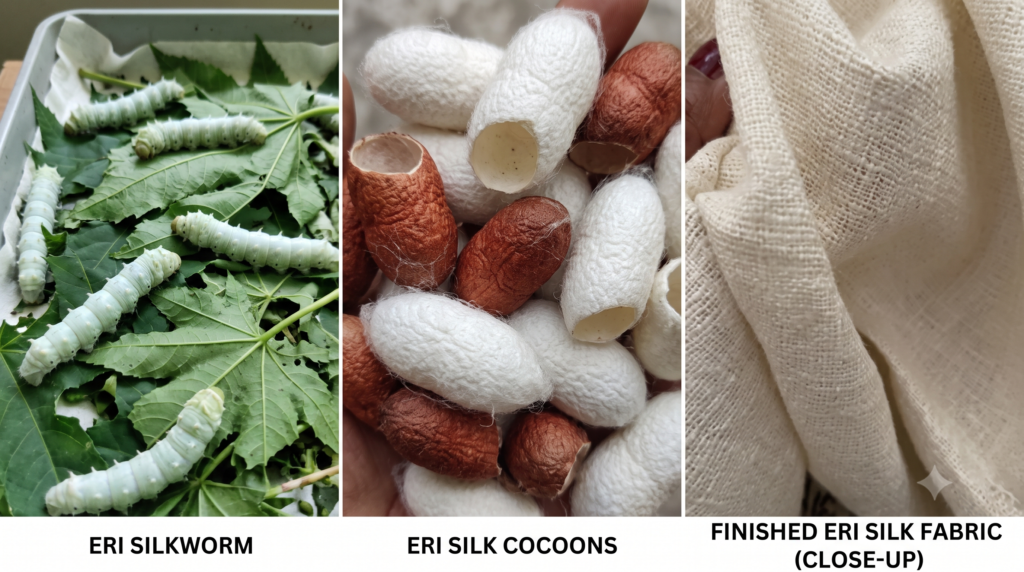
Eri silk is produced by silkworms that feed on plants such as castor and cassava.
It is sometimes called peace silk because certain production methods collect the cocoons after the moth emerges.
Eri silk is generally known for its soft, warm, and slightly textured feel. It is often used in shawls, scarves, and other textiles.
6.3 Tasar Silk
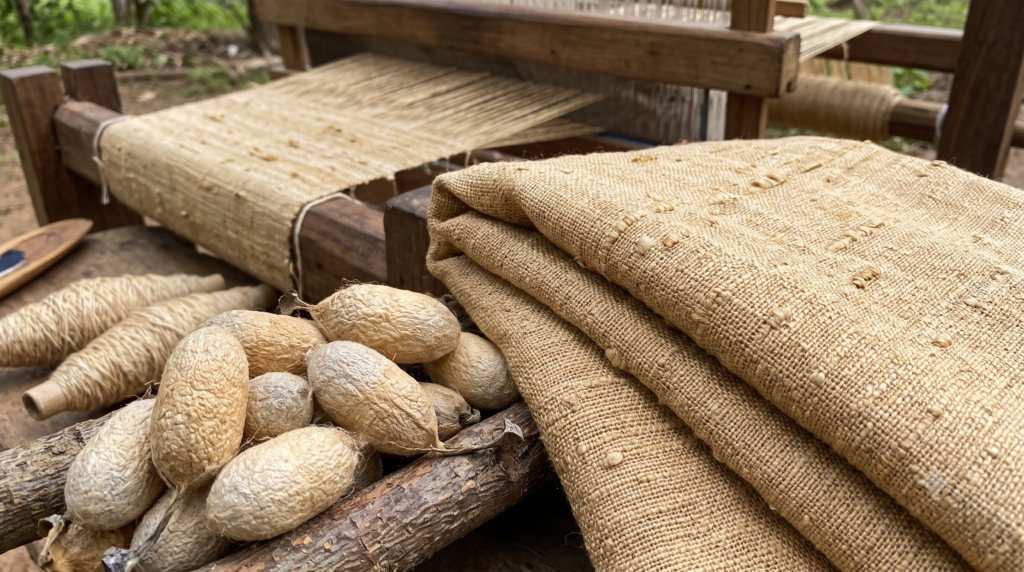
Tasar silk is produced by wild or semi-domesticated silkworms, particularly in India.
It is often associated with a more textured appearance and a natural, earthy sheen.
Tasar silk is used in:
- Sarees
- Shawls
- Dresses
- Home textiles
- Handwoven fabrics.
6.4 Spider Silk
Spider silk is a natural protein fiber produced by spiders.
Some spider silk types have remarkable strength and elasticity, but spiders are difficult to raise commercially in the same way as silkworms.
As a result, spider silk is not widely used for conventional textile production. It is mainly studied for specialized materials and biotechnology applications.
6.5 Muga Silk
Muga silk is produced in Assam, India.
It is traditionally associated with the Antheraea assamensis silkworm and is known for its natural golden appearance.
Muga silk is used in traditional Assamese garments and other premium textiles.
6.6 Sea Silk
Sea silk is a rare, silk-like fiber historically produced from the byssus of certain Mediterranean mussels.
It is sometimes called mussel silk.
Sea silk is not produced on the same commercial scale as conventional silkworm silk, and its production is highly limited.
6.7 Coan Silk
Coan silk is a historical type of silk associated with silkworms that fed on trees such as pine, juniper, and oak.
It was used in parts of the ancient Mediterranean world, but its production today is extremely limited.
Image suggestion:
A historical illustration of Coan silk production or ancient silk textiles, with a small explanatory label.
6.8 Common Silk Fabric Constructions
Silk fiber can be used to make many different fabric constructions.
Common examples include:
- Silk charmeuse
- Silk chiffon
- Silk crepe
- Silk satin
- Silk organza
- Silk georgette
- Silk taffeta
- Silk twill
- Silk velvet
- Silk jersey
These are fabric constructions, not separate silk species. Their appearance and performance depend on the weave, knit, yarn, and finishing.
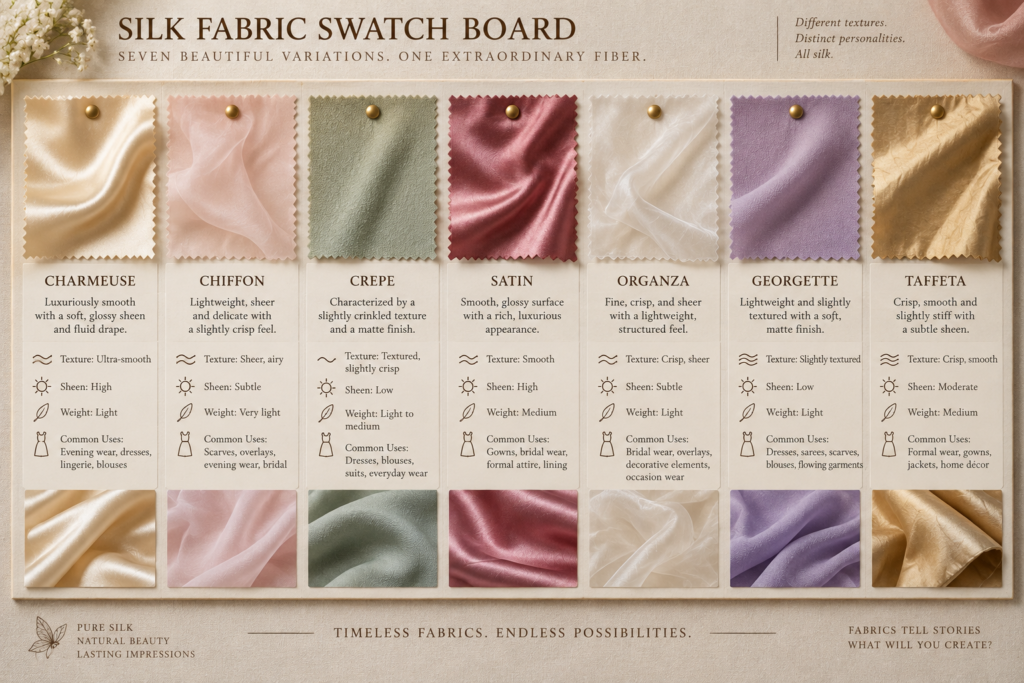
Silk is sometimes considered when selecting soft fabrics for people with sensitive skin.
7. How Does Silk Fabric Impact the Environment?
Silk is a natural, biodegradable fiber, but that does not mean every silk product has a low environmental impact.
Its footprint depends on how the silk is produced, how much land and water are used, what agricultural inputs are involved, how the fabric is processed, and how long the finished product remains in use.
Silk Cultivation
Silk production requires raising silkworms and growing the plants they feed on.
Mulberry cultivation can require land, water, and agricultural inputs, depending on the location and farming practices.
Water and Agricultural Inputs
Silk production may involve water for growing feed plants, cleaning cocoons, dyeing, and finishing.
The environmental impact varies depending on the production system and local conditions.
Processing and Dyeing
Silk requires energy and resources for:
- Cocoon processing
- Reeling
- Spinning
- Weaving
- Dyeing
- Finishing
- Transportation
Dyeing and finishing can contribute to water and chemical impacts if not properly managed.
Animal Welfare Considerations
Conventional silk production generally involves treating cocoons before the adult moth emerges.
Some consumers prefer alternative production methods that allow the moth to emerge before the silk is collected. These methods are often marketed as peace silk, although the exact practices vary.
Durability and Product Lifespan
Silk can be durable when properly made and cared for. A long-lasting silk garment or textile may reduce the need for frequent replacement.
However, durability depends on the specific silk type, fabric construction, finishing, and care.
Is Silk Biodegradable?
Silk is a natural protein fiber and can biodegrade under suitable environmental conditions.
The rate of biodegradation depends on factors such as temperature, moisture, microorganisms, and the presence of dyes or finishes.
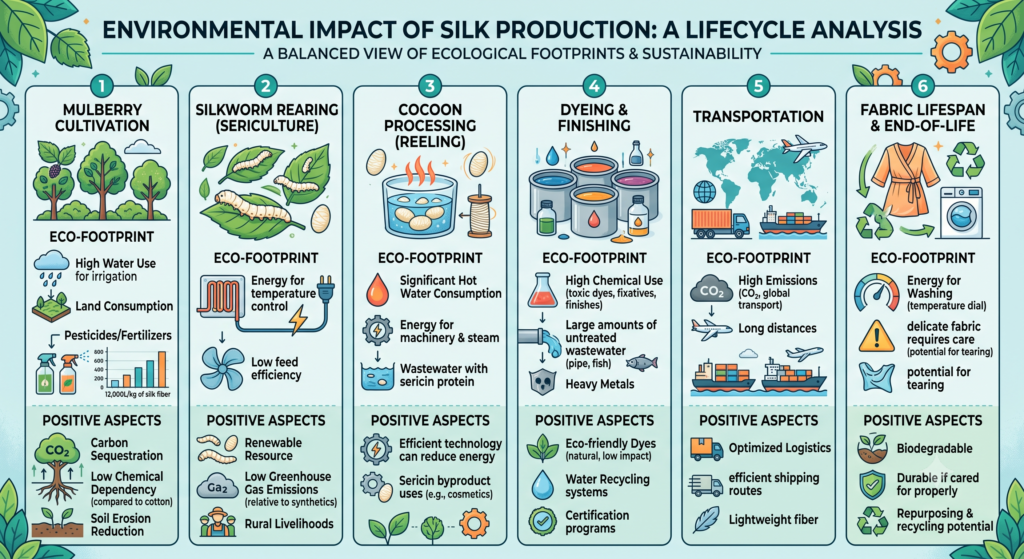
Cashmere and silk are both associated with premium fabrics, although they have very different fiber structures.
8. Silk Fabric Certifications Available
Silk certifications and standards can help identify different aspects of production, processing, and supply-chain claims.
However, not all certifications cover the same things.
Silk Mark
Silk Mark is an Indian certification and authentication system associated with genuine silk products.
It is intended to help identify products that meet the relevant requirements of the Silk Mark Organisation of India.
GOTS
The Global Organic Textile Standard (GOTS) can apply to qualifying organic textile products.
Its requirements cover more than just the fiber and may include processing, manufacturing, and environmental and social criteria.
OEKO-TEX
OEKO-TEX certifications can be relevant to finished textiles and chemical safety, depending on the specific standard.
USDA Organic
USDA Organic certification may apply to qualifying organic agricultural production, including certain silk-related supply chains where the applicable requirements are met.
Fairtrade
Fairtrade certification can apply to qualifying cotton and other agricultural supply chains. Its relevance to silk depends on the specific product and certification scope.
What Should Buyers Check?
When purchasing silk, buyers should check:
- The exact certification name
- What the certification covers
- Whether it applies to the fiber or finished product
- Whether the certification is current
- Whether the claim is independently verified
Read also :
9. FAQ
What is silk fabric made from?
Silk fabric is made from natural protein fibers, most commonly obtained from silkworm cocoons.
Is silk a natural fabric?
Yes. Silk is a natural animal-derived fiber.
Is silk breathable?
Silk is generally breathable and can help regulate comfort in different conditions, although the final performance depends on the fabric construction and weight.
Is silk durable?
Silk can be strong and durable, but its durability depends on the type of silk, fabric construction, finishing, and care.
Is silk expensive?
Silk is generally more expensive than many common natural fabrics, but prices vary widely by type and quality.
What is the difference between mulberry silk and wild silk?
Mulberry silk is generally produced by domesticated silkworms, while wild silk comes from silkworms that live in more natural conditions.
Is silk biodegradable?
Silk is a natural protein fiber and can biodegrade under suitable environmental conditions.
Is silk sustainable?
Silk is a natural fiber, but its sustainability depends on cultivation, processing, dyeing, transportation, and product lifespan.
What is peace silk?
Peace silk generally refers to silk-production methods that collect the silk after the moth has emerged from the cocoon. The exact practices vary by producer.
How should silk fabric be washed?
Care instructions depend on the specific silk fabric. Always follow the manufacturer’s care label.