Quick Facts About Pima Cotton Fabric
| Fabric characteristic | Pima Cotton |
|---|---|
| Fabric name | Pima cotton |
| Fiber type | Extra-long-staple (ELS) cotton |
| Botanical species | Gossypium barbadense |
| Common association | American Pima cotton |
| Fiber characteristics | Long, fine, strong and soft |
| Breathability | High |
| Moisture absorption | High |
| Durability | High |
| Resistance to pilling | Generally high |
| Common uses | Apparel, bedding, towels and premium textiles |
| Main production region for American Pima | Southwestern United States |
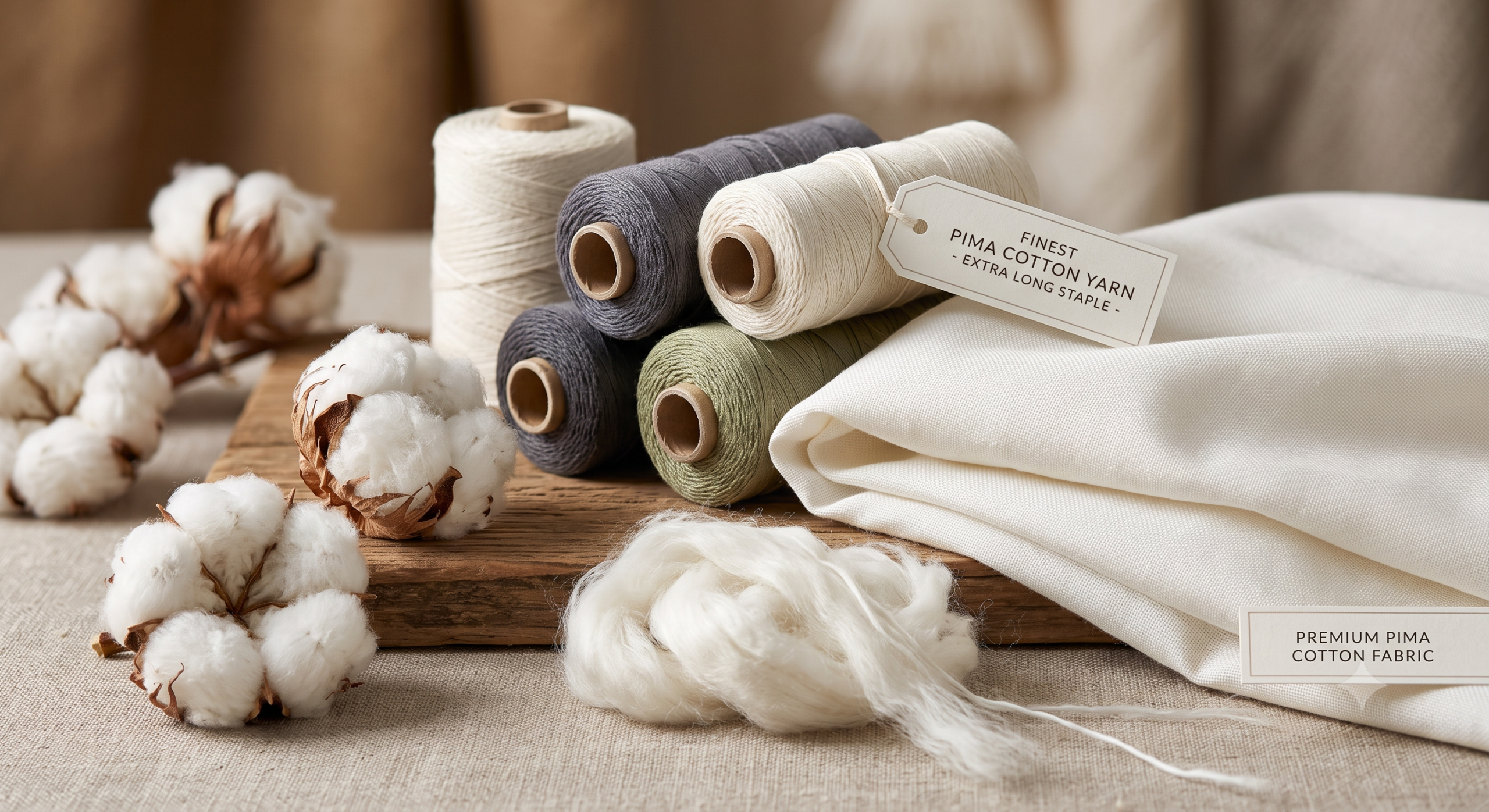
Pima cotton is an extra-long-staple cotton known for its combination of softness, strength, smoothness and color retention. The U.S. Department of Agriculture identifies Gossypium barbadense as the species associated with American Pima cotton, while Supima describes its U.S.-grown cotton as extra-long staple and representing less than 1% of global cotton production.
Browse all fabric guides
1. What Is Pima Cotton Fabric?
Pima cotton fabric is a textile made from the fibers of Pima cotton, an extra-long-staple form of cotton belonging to the species Gossypium barbadense. The unusually long fibers can be spun into smooth, strong yarns, which contribute to the softness and durability associated with Pima cotton.
The term Pima cotton is generally associated with high-quality Gossypium barbadense cotton. American Pima is particularly associated with cotton grown in the southwestern United States.
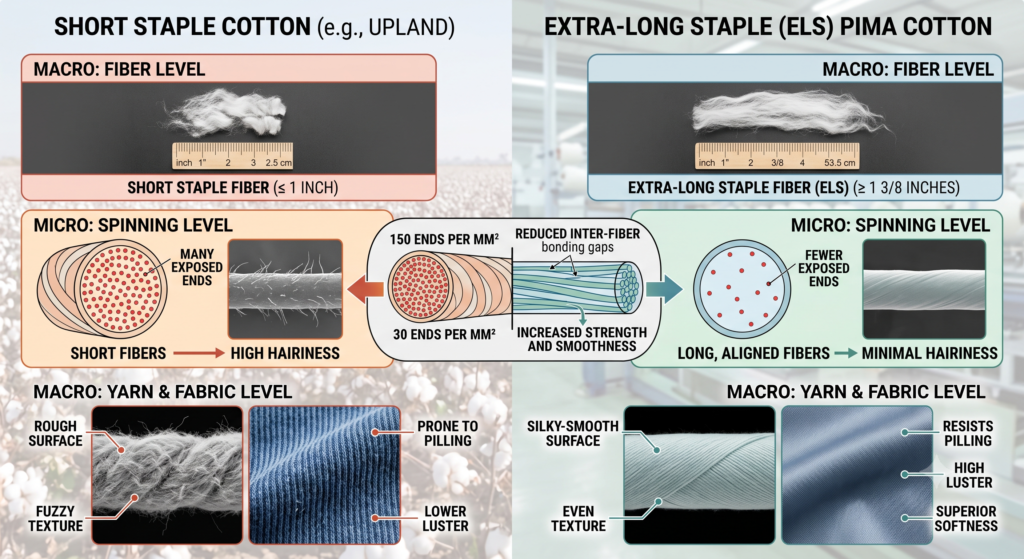
The long fibers are one of the most important characteristics of Pima cotton. Longer fibers can produce yarn with fewer exposed fiber ends, helping create a smoother fabric surface and reducing the tendency for loose fibers to form pills.
Pima cotton is therefore commonly used for products where softness and durability are important, including premium shirts, T-shirts, underwear, sleepwear, bedding and towels.
It is important to distinguish Pima cotton from Supima cotton. Supima is a registered brand associated with American-grown Pima cotton that meets the requirements of the Supima organization. Not every product described as Pima cotton is necessarily Supima.
What Makes Pima Cotton Different From Regular Cotton?
The main difference is fiber length and quality characteristics.
Many commonly used regular cotton fabric varieties are shorter-staple cottons, while Gossypium barbadense produces extra-long fibers. The longer fibers can be spun into finer, stronger yarns, which can result in smooth and durable fabrics.
Pima cotton is not a completely different plant from other cotton species. Rather, it is associated with a particular group of high-quality cottons derived from Gossypium barbadense.
2. How Is Pima Cotton Fabric Made?
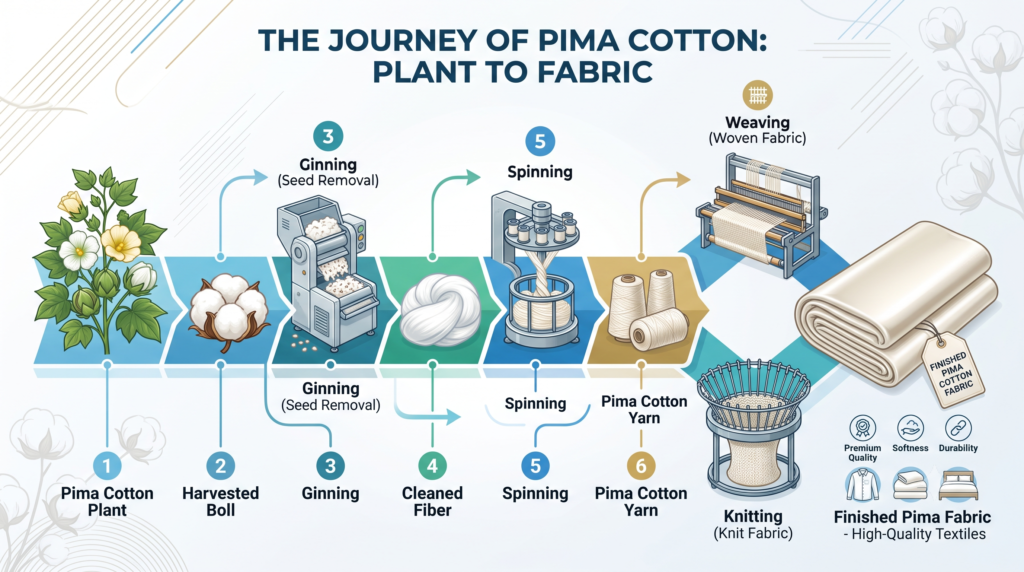
The production of Pima cotton fabric follows the general cotton-to-textile process, but extra care can be taken during harvesting and ginning to preserve the quality of the longer fibers.
Step 1: Growing Pima Cotton
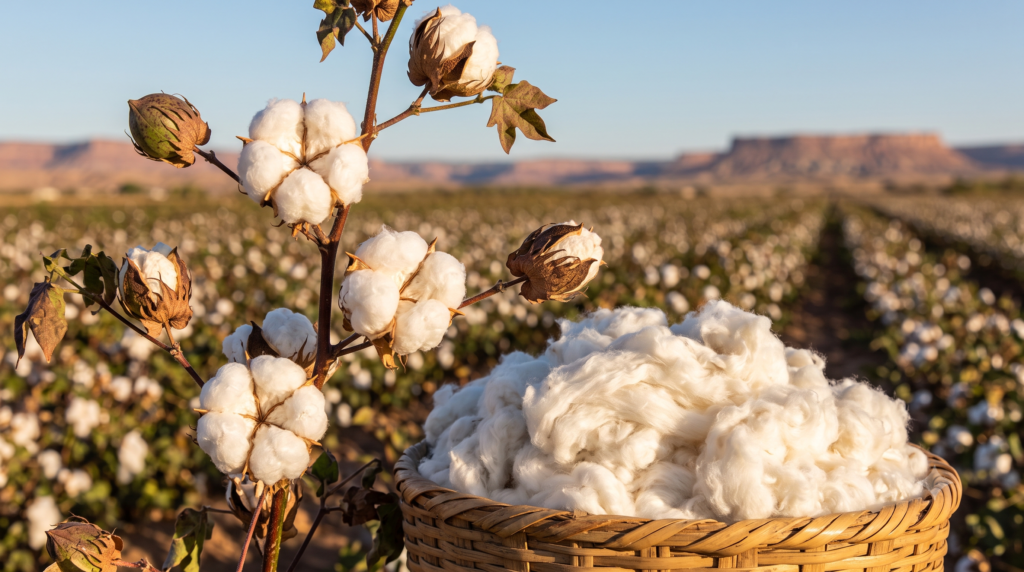
Pima cotton plants are cultivated in suitable warm climates. American Pima is grown primarily in the southwestern United States, where irrigation is important because of the region’s generally dry conditions.
The cotton plant produces bolls containing seeds surrounded by soft cotton fibers.
Step 2: Harvesting
Once the cotton bolls mature, the crop is harvested.
The exact harvesting method can vary by producer and region. Modern commercial cotton production commonly uses mechanical harvesting, so it would be inaccurate to claim that all Pima cotton is handpicked.
Step 3: Ginning
Ginning separates the cotton fibers from the seeds.
For premium American Pima, specialized roller gins are used to gently separate fiber from seed at relatively low speeds, helping preserve the characteristics of the extra-long fibers.
Step 4: Cleaning and Preparation
The separated fibers are cleaned and prepared for spinning. Processes such as opening, carding and, depending on the yarn specification, combing help organize the fibers and remove unwanted material.
Step 5: Spinning
The prepared cotton fibers are spun into yarn.
The length and fineness of Pima fibers allow manufacturers to produce smooth, fine yarns suitable for premium textiles.
Step 6: Weaving or Knitting
The yarn is then converted into fabric through either:
- Weaving, which produces fabrics such as woven shirts and sheets
- Knitting, which produces fabrics such as jersey used in T-shirts and other stretchable garments
Step 7: Dyeing and Finishing
Finally, the fabric may be dyed, printed, washed, softened or otherwise finished according to its intended application.
3. How Is Pima Cotton Fabric Used?
Pima cotton is used in many of the same applications as other cotton fabrics, but its softness, strength and smooth surface make it particularly attractive for premium products.
Clothing
Pima cotton is commonly used for:
- T-shirts
- Dress shirts
- Polo shirts
- Underwear
- Dresses
- Sleepwear
- Loungewear
- Hoodies
- Baby clothing
Bedding
Pima cotton is also used in:
- Bedsheets
- Pillowcases
- Duvet covers
- Blankets
Its smooth and soft feel makes it particularly suitable for products that remain in contact with the skin for long periods.
Towels
Pima cotton can be used for towels and other absorbent products because cotton fibers naturally absorb moisture.
Premium Home Textiles
Other applications include:
- Bathrobes
- Premium towels
- Household textiles
- Luxury textile products
The material’s premium positioning can make it less attractive for applications where the lower cost of standard cotton is more important than softness or fiber quality.

4. Where Is Pima Cotton Fabric Produced?
Pima cotton has historical connections with the United States, particularly the southwestern region. American Pima cotton is currently cultivated in states including California, Arizona, New Mexico and Texas.
The U.S. Department of Agriculture maintains specific grading standards for American Pima cotton, reflecting its distinct classification within the U.S. cotton system.
The underlying species, Gossypium barbadense, is not restricted to the United States. It has a much broader history and distribution and is associated with South America, the Caribbean and other suitable growing regions.
This distinction is important because Pima cotton and American Pima are not interchangeable terms in every context.
Where Is American Pima Cotton Grown?
American Pima is primarily grown in the irrigated agricultural regions of the southwestern United States.
Supima states that its cotton is grown in the USA and represents less than 1% of cotton grown globally.
Pima Cotton vs. Supima
| Pima Cotton | Supima | |
|---|---|---|
| Meaning | Type of extra-long-staple cotton | Registered brand for qualifying American-grown Pima cotton |
| Fiber | Gossypium barbadense | American-grown Gossypium barbadense |
| U.S. origin required? | Not necessarily for every product using the term | Yes |
| Traceability | Depends on supplier | Supima has an authentication and traceability system |
| Brand certification | Not necessarily | Required for use of the Supima brand |
Supima states that its authentication system is designed to verify American-grown extra-long-staple cotton through the supply chain.
5. How Much Does Pima Cotton Fabric Cost?
Pima cotton generally commands a premium price compared with many conventional cotton fabrics because of its fiber quality and limited production.
However, there is no single standard price for Pima cotton fabric. The final cost depends on several factors:
- Fiber quality
- Staple length
- Yarn count
- Fabric construction
- GSM or fabric weight
- Weaving or knitting method
- Dyeing and finishing
- Organic certification
- Country of production
- Order quantity
- Brand
- Retail or wholesale market
Supima’s limited global production and premium positioning also contribute to its higher-value market position.
What Makes Pima Cotton More Expensive?
Longer fibers require suitable cultivation, harvesting, ginning and processing practices. The resulting yarn can provide characteristics that are desirable in premium apparel and home textiles.
However, higher thread count does not automatically mean higher-quality Pima cotton. Fiber quality, yarn construction, finishing and fabric construction all influence the final textile.
6. What Different Types of Pima Cotton Fabric Are There?
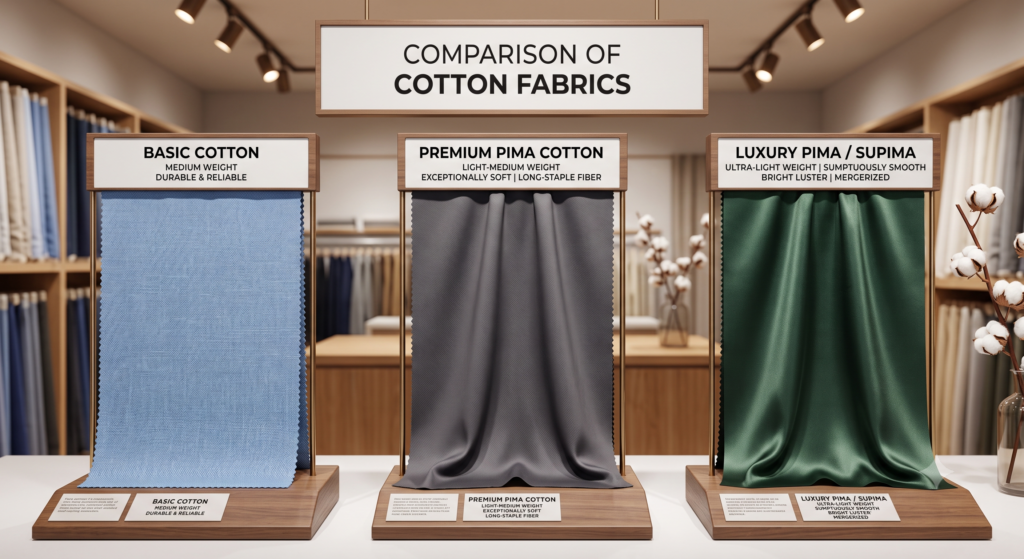
Pima cotton is best understood as a cotton type/fiber category rather than a single finished fabric construction. The same Pima fiber can be turned into different fabrics depending on how the yarn is woven or knitted.
6.1 American Pima Cotton
American Pima is extra-long-staple cotton grown in the United States and is closely associated with the U.S. Pima cotton industry.
USDA maintains dedicated standards for grading American Pima cotton.
6.2 Supima Cotton
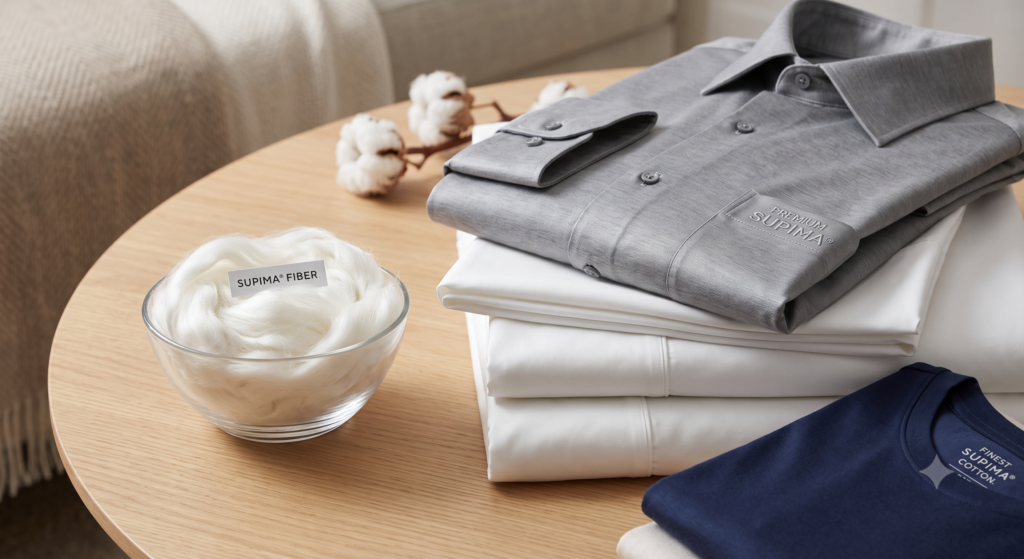
Supima is a trademarked brand associated with American-grown Pima cotton. The organization describes Supima cotton as an extra-long-staple cotton valued for strength, softness and color retention.
6.3 Sea Island Cotton
Sea Island cotton is another historical form of Gossypium barbadense. The term is associated with cotton historically grown in areas around the Caribbean and southeastern United States.
It is closely related botanically to the cotton species from which Pima developed, but it should not simply be treated as another name for all Pima cotton. USDA sources list Sea Island cotton among the common names associated with Gossypium barbadense.
6.4 Pima Cotton Fabric Constructions
Pima fiber can be used to create different fabric constructions, including:
- Pima cotton jersey
- Pima cotton poplin
- Pima cotton sateen
- Pima cotton twill
- Pima cotton lawn
- Pima cotton flannel
These are not separate cotton species. They are different fabric constructions made using Pima cotton yarn.
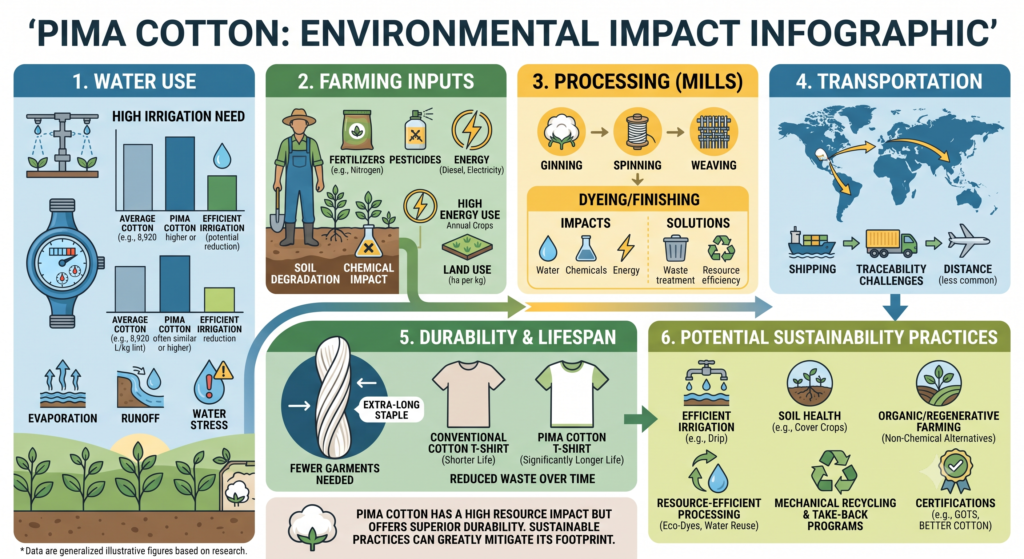
7. How Does Pima Cotton Fabric Impact the Environment?
Pima cotton is a natural, plant-derived fiber, but that does not automatically make every Pima cotton product environmentally sustainable.
Its environmental impact depends on the entire production chain, including cultivation, irrigation, harvesting, ginning, spinning, dyeing, finishing, transportation and product lifespan.
Water Use
Cotton cultivation can require significant water, particularly in areas where rainfall is insufficient.
American Pima is primarily grown in irrigated regions, making water management an important environmental consideration.
Agricultural Inputs
Cotton farming can involve fertilizers, pesticides and other agricultural inputs. Their environmental effects depend on farming practices and local conditions.
Processing
After cultivation, cotton requires energy and resources for:
- Ginning
- Spinning
- Weaving or knitting
- Dyeing
- Finishing
- Transportation
Dyeing and finishing can also contribute to water and chemical impacts if not properly managed.
Durability and Product Life
One potential advantage of high-quality Pima cotton is durability. Longer-lasting clothing and home textiles can potentially reduce how frequently products need to be replaced.
Supima highlights the strength and durability associated with its extra-long-staple fibers.
Organic Pima Cotton
Organic certification can address how cotton is grown, but Pima cotton itself is not automatically organic.
Consumers looking for organic Pima cotton should look for an appropriate organic certification rather than assuming that the Pima label indicates organic cultivation.
8. Pima Cotton Certifications Available
Several types of certification, standards and verification systems can be relevant to Pima cotton products, but they serve different purposes.
Supima Brand Verification
Supima has systems designed to authenticate American-grown Pima cotton throughout the supply chain. Its current traceability approach combines supply-chain records with physical verification.
USDA Organic
Pima cotton can also be grown under organic agricultural standards where the producer meets the applicable requirements.
However, USDA Organic certification relates to organic production, not simply to whether the cotton is Pima.
OEKO-TEX
OEKO-TEX standards can be relevant to finished textiles and chemical safety, depending on the specific certification used.
GOTS
The Global Organic Textile Standard can apply to qualifying organic textile products and covers broader processing and manufacturing criteria beyond the fiber itself.
Fairtrade
Fairtrade certification can apply to qualifying cotton supply chains and addresses social and economic criteria in addition to production requirements.
Also see What Is Cotton Fabric? A Complete Guide
9. FAQ
Is Pima cotton better than regular cotton?
Pima cotton is generally considered a premium cotton because its extra-long fibers can produce soft, strong and smooth yarns. Whether it is “better” depends on the intended use, price and desired characteristics.
Is Pima cotton the same as Egyptian cotton?
No. Pima cotton and Egyptian cotton are not automatically the same. Both can involve extra-long-staple cotton, but the terms refer to different origins and classifications.
Is Pima cotton the same as Supima cotton?
Not exactly. Supima is a specific trademarked brand associated with qualifying American-grown Pima cotton.
Is Pima cotton breathable?
Yes. Like other cotton fabrics, Pima cotton can be breathable and comfortable, although the final breathability also depends on fabric construction, weight and finishing.
Does Pima cotton pill?
Pima cotton is generally resistant to pilling because its longer fibers can produce smoother and stronger yarns. However, fabric construction, friction, washing and finishing also affect pilling.
Is Pima cotton durable?
Yes. The long, strong fibers associated with Pima cotton can contribute to durable textiles. Supima specifically highlights strength and resistance to breaking and tearing.
Is Pima cotton expensive?
Pima cotton generally costs more than many conventional cotton fabrics because of its premium fiber characteristics and limited availability.
Is Pima cotton sustainable?
Pima cotton is not automatically sustainable. Its environmental impact depends on farming practices, water use, processing, dyeing, transportation and how long the finished product remains in use.
How should Pima cotton fabric be washed?
Care instructions depend on the finished textile. In general, consumers should follow the manufacturer’s care label because shrinkage, dyeing, finishing and fabric construction can affect the appropriate washing method.
Where is Pima cotton grown?
American Pima is primarily grown in the southwestern United States, including California, Arizona, New Mexico and Texas.