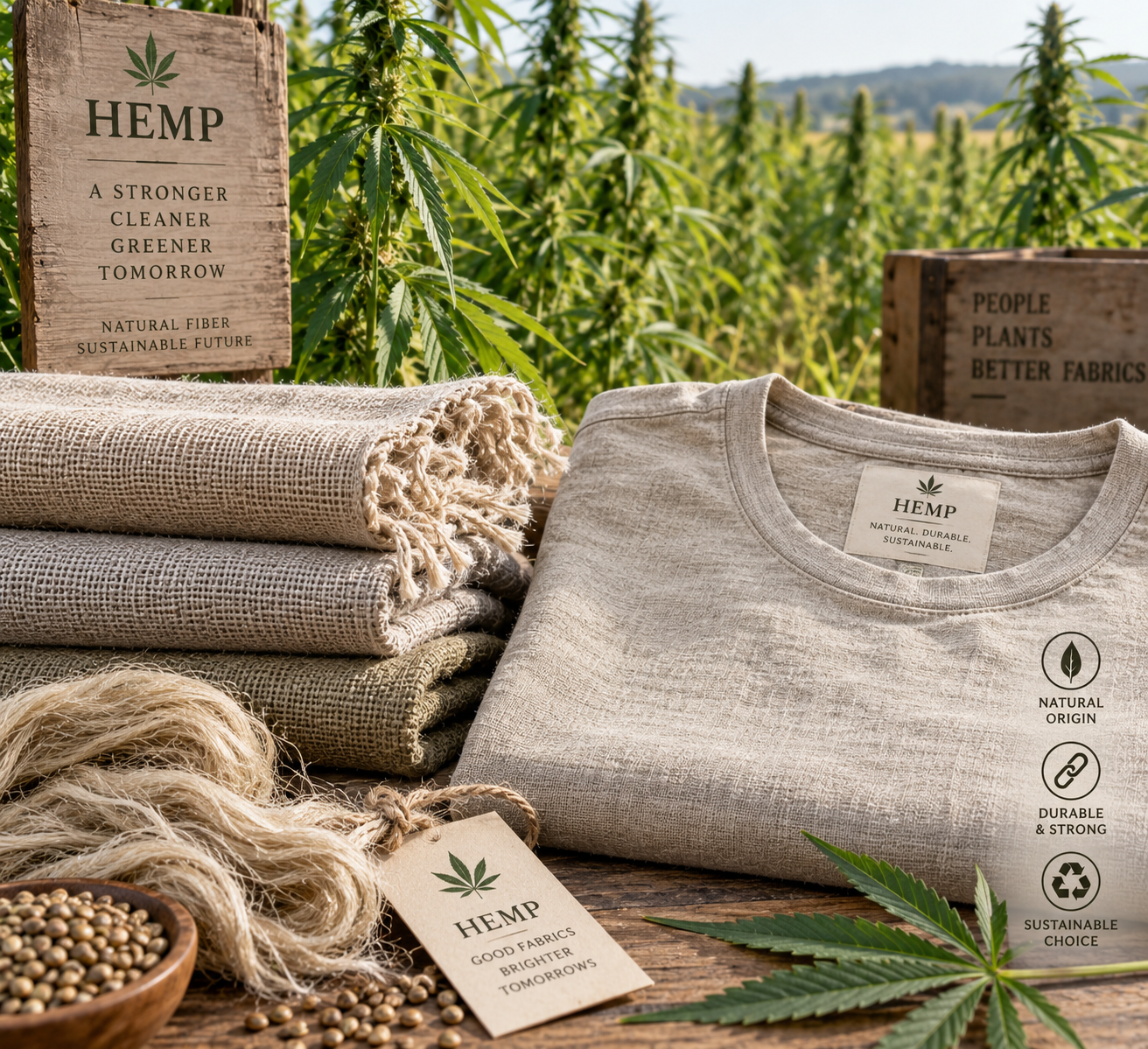
Hemp fabric is a natural textile made from the fibers of the stalks of the industrial hemp plant, a low-THC variety of Cannabis sativa. It is known for its strength, durability, breathability, absorbency, and resistance to pilling.
Hemp has been used for thousands of years to make rope, sails, clothing, and household products. Today, it is becoming increasingly popular as an alternative to cotton and synthetic textiles, particularly among brands interested in natural and potentially lower-impact materials.
Although hemp and marijuana come from the same plant species, they are different in purpose and composition. Industrial hemp is cultivated mainly for its strong fibers and contains very low levels of tetrahydrocannabinol, or THC, the compound associated with marijuana’s psychoactive effects.
Quick Facts About Hemp Fabric
| Feature | Details |
|---|---|
| Fabric name | Hemp |
| Also known as | Industrial hemp |
| Composition | Fibers from the stalks of Cannabis sativa |
| Fiber type | Natural plant-based fiber |
| Typical thread count | Approximately 250–300 |
| Breathability | Very high |
| Moisture-wicking ability | High |
| Heat retention | Low |
| Stretchability | Medium |
| Pilling tendency | Generally low |
| Historical origin | Asia and the Middle East |
| Largest producer/exporter | China |
| Common uses | T-shirts, dresses, hoodies, underwear, socks, bags, towels, and household textiles |
| Recommended washing | Warm water, depending on the care label |
What Is Hemp Fabric?
Hemp fabric is made from the long, strong fibers found in the outer layer of the hemp plant’s stalk. The stalk has two main sections: an outer layer of rope-like bast fibers and an inner woody core.
Only the outer bast fibers are generally used to make textiles. The woody core, often called hurd or shiv, may be used for fuel, construction materials, paper, and animal bedding.
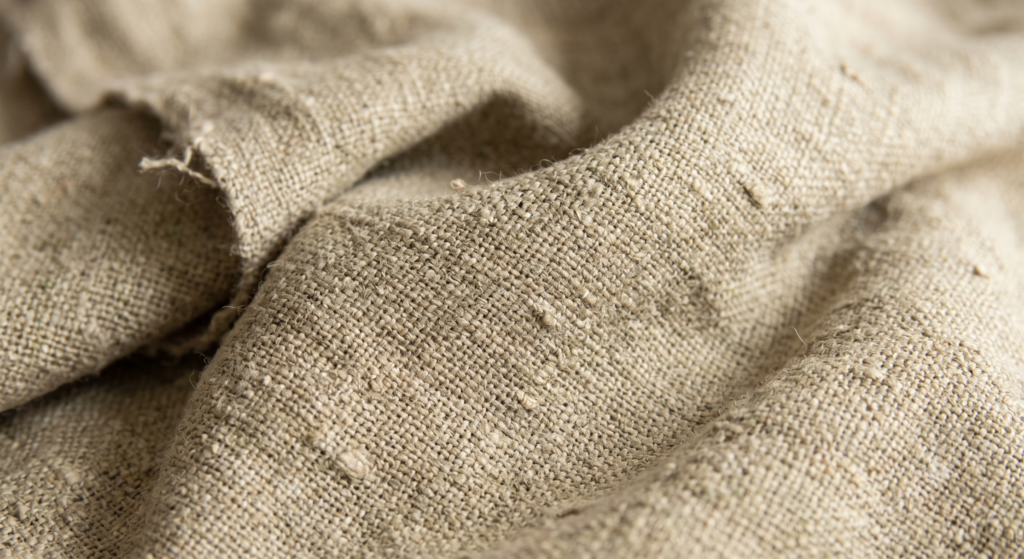
Hemp fibers are naturally strong and durable. The finished fabric has a texture that can resemble cotton but may also feel slightly like canvas, especially in heavier weights. Modern processing techniques can make hemp fabric much softer than traditional hemp textiles. See our Fabric Wikipedia hub
Hemp fabric is:
- Lightweight
- Breathable
- Absorbent
- Durable
- Resistant to pilling
- Relatively resistant to mold and mildew
- Easy to dye
- Capable of becoming softer with washing
Hemp fibers are also long and sturdy, allowing garments to retain their shape and strength over time. Some estimates suggest that hemp fabric can be several times stronger than cotton, although actual performance depends on fiber quality, yarn construction, fabric weight, and finishing.
Hemp fabric generally has low shrinkage when properly processed and cared for. However, the exact shrinkage level depends on the manufacturing method and whether the fabric has been pre-shrunk. Hemp is commonly included among sustainable fabric options for fashion and textiles.
Hemp and Marijuana: What Is the Difference?
Hemp and marijuana belong to the same plant species, but they have been selectively cultivated for different purposes.
Marijuana varieties are generally bred for higher levels of THC and other cannabinoids. Industrial hemp varieties are bred for strong fibers, seeds, or other industrial uses and contain very low levels of THC.
It is also incorrect to say that hemp comes only from male plants while marijuana comes from female plants. Most hemp crops are grown from female plants. The important difference is the plant’s breeding, intended use, and chemical composition—not simply its sex.
Because hemp has often been confused with marijuana, legislation and public misunderstanding have restricted its cultivation in some regions. Many countries are now developing clearer rules for industrial hemp, allowing textile production to expand.
History of Hemp Fabric
Hemp is one of the oldest cultivated plants in human history. Evidence suggests that it has been used for thousands of years in Asia and the Middle East for rope, textiles, paper, medicine, and other purposes.
The plant became especially important because its fibers are strong enough for demanding applications. Hemp rope was once widely used for ship rigging and sails, and it remained an important maritime material for centuries.
Hemp cultivation spread across Europe and Asia before reaching the Americas during the colonial period. It was cultivated in parts of South America as early as the 16th century.
Several well-known figures in early American history, including George Washington, Thomas Jefferson, and Andrew Jackson, grew hemp for industrial purposes. However, hemp cultivation became increasingly restricted and stigmatized in the United States during the 20th century as laws began treating industrial hemp and marijuana as closely related substances.
In recent decades, changes in legislation have encouraged the return of industrial hemp farming. The United States began permitting wider research and commercial cultivation through changes introduced in the 2014 and 2018 farm legislation, although specific rules vary by state and country.
How Is Hemp Fabric Made?
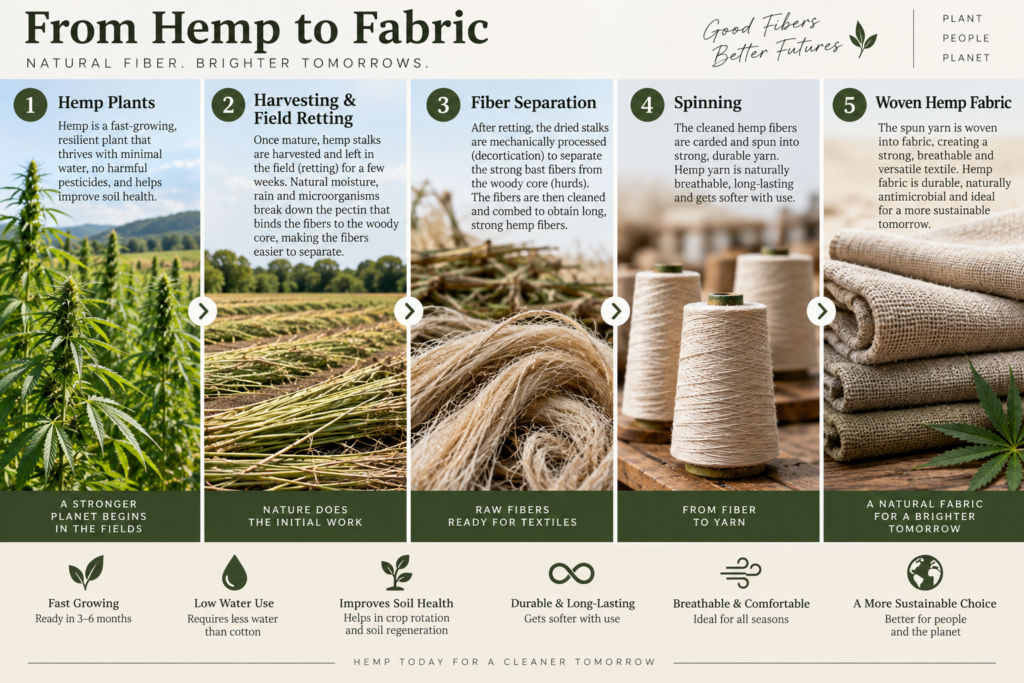
Hemp fabric production involves several stages that separate the useful bast fibers from the woody center of the plant.
1. Growing the Hemp Crop
Industrial hemp grows well in mild climates and can tolerate a range of soil conditions. It is commonly harvested after several months of growth, depending on the variety, climate, and intended use.
Hemp plants are often grown densely to encourage tall stalks and long fibers.
2. Harvesting
Hemp is usually harvested using specialized agricultural machinery. The stalks are cut and left in the field for a process known as field retting.
3. Retting
Retting allows natural moisture, microorganisms, and weather exposure to break down the pectin that binds the bast fibers to the woody core.
Field retting may take approximately four to six weeks. The stalks are periodically exposed to the elements until the fibers can be separated more easily.
Other retting methods may use water, enzymes, or chemicals. Each method affects the processing time, fiber quality, water use, and environmental impact.
4. Breaking and Fiber Separation
After retting, the stalks are dried and gathered into bundles or bales. Machines called breakers or hammermills crush the stalks and separate the fibrous outer layer from the woody inner core.
The woody material may be used for fuel, paper, building products, or animal bedding.
5. Carding and Cleaning
The separated bast fibers are carded into aligned strands. Carding removes impurities and prepares the fibers for further processing.
Depending on the desired product, manufacturers may also use pulping to make paper, matting to produce mats and fleeces, or steam explosion to soften and prepare the raw fibers for textile production.
6. Spinning
Once processed, hemp fibers are spun into yarn. The yarn’s thickness and twist influence the strength, softness, and appearance of the final fabric.
Hemp may also be blended with cotton, silk, linen, or other fibers to improve softness, drape, or stretch.
7. Weaving, Knitting, and Finishing
The yarn is woven or knitted into fabric. Manufacturers may then dye, soften, wash, or finish the textile to achieve the required appearance and performance.
Linen fabric provides another plant-based option with excellent breathability.
How Is Hemp Fabric Used?
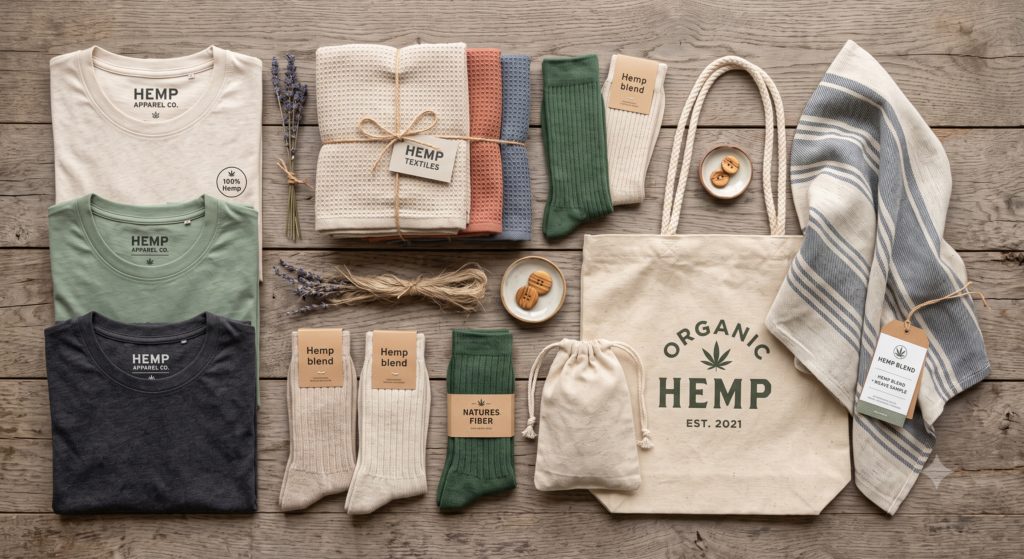
Hemp fabric is primarily used for clothing, but its strength and absorbency also make it suitable for household and technical textiles.
Apparel
Common hemp clothing products include:
- T-shirts
- Dresses
- Skirts
- Trousers
- Shorts
- Jackets
- Hoodies
- Shirts
- Children’s clothing
- Underwear
- Socks
- Lightweight outerwear
Hemp is particularly popular for T-shirts because it resists wear and can retain its shape over repeated washing. It is also suitable for warm climates because it allows air to circulate and helps move moisture away from the skin.
Household Textiles
Hemp fabric is used for:
- Towels
- Dish towels
- Tablecloths
- Napkins
- Upholstery
- Curtains
- Blankets
- Duvets
- Bed sheets
- Bags
- Aprons
Its absorbency and durability make it useful for towels and kitchen textiles. Hemp bedding can be long-lasting, although some people may find it less smooth than high-thread-count cotton when placed directly against the skin.
Blended Fabrics
Hemp is often blended with other fibers. Cotton-hemp blends are common because cotton adds softness while hemp contributes strength and durability.
Hemp may also be blended with silk to create a smoother, lighter textile with improved drape. Blending can make the fabric more comfortable while preserving many of hemp’s natural benefits.
Where Is Hemp Fabric Produced?
China is one of the world’s largest producers of industrial hemp and is estimated to account for a substantial share of global production. However, not all hemp grown in China is used for textiles. Much of it is processed into paper, fuel, building materials, and other industrial products.
Other hemp-producing countries include:
- France
- Austria
- Chile
- United Kingdom
- United States
- Canada
- Several European and Asian countries
More than 30 countries cultivate industrial hemp in some form. Production in the United States has also increased as federal and state regulations have become more supportive.
The country where hemp is grown may not be the same country where the fabric is manufactured. Hemp stalks may be harvested in one region, processed into fibers in another, and spun, woven, dyed, or finished elsewhere.
How Much Does Hemp Fabric Cost?
Hemp fabric does not necessarily cost more to produce than cotton. In some respects, hemp fiber production can be efficient because the plant grows quickly and generally requires fewer agricultural inputs than many conventional crops.
However, hemp fabric is often more expensive in the marketplace because:
- Cotton is produced on a much larger scale.
- Hemp processing infrastructure is less developed.
- Hemp textile supply chains are still expanding.
- Some manufacturers use more expensive finishing methods.
- Certified organic hemp may cost more.
- Retailers may position hemp as a premium or specialty textile.
The price depends on:
- Fiber quality
- Fabric weight
- Yarn thickness
- Weave or knit structure
- Percentage of hemp in a blend
- Dyeing and finishing
- Organic certification
- Country of origin
- Brand
- Order quantity
As production becomes more established, hemp fabric prices may become more competitive with cotton and other natural textiles.
Jute fabric is another plant-derived textile material with a long history of practical use.
What Different Types of Hemp Fabric Are There?
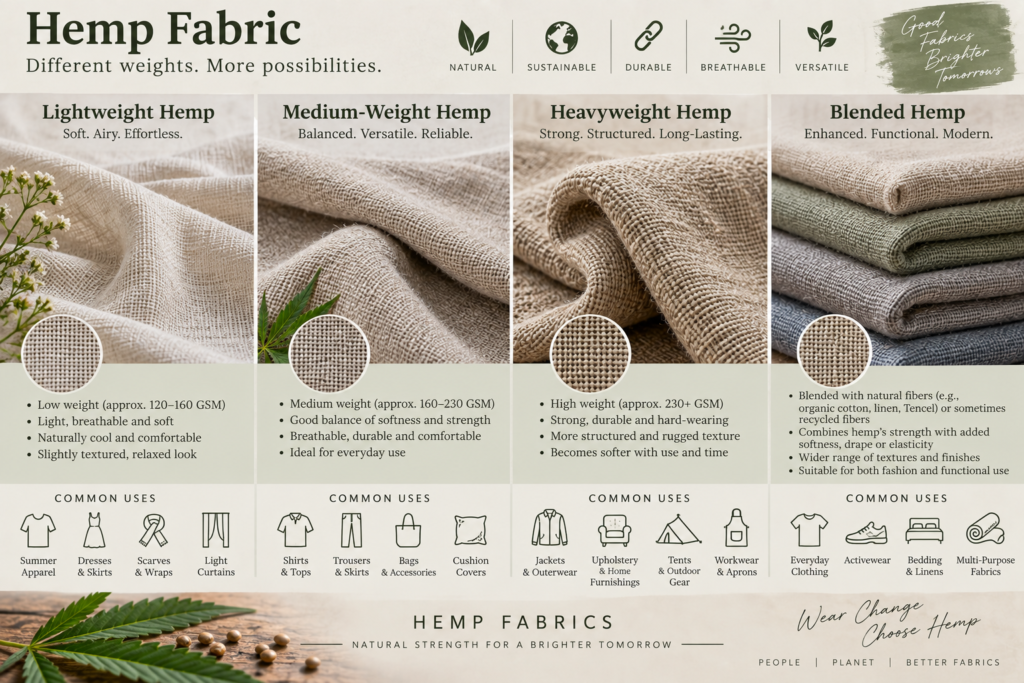
Unlike cotton, which has many widely recognized commercial varieties, hemp fabric does not have several major fabric types based on different plant species. Most hemp textiles are made using the same basic type of industrial hemp fiber.
However, hemp fabrics can differ considerably according to their construction and finishing.
1. Lightweight Hemp Fabric
Lightweight hemp is often used for:
- T-shirts
- Shirts
- Summer dresses
- Underwear
- Lightweight trousers
It is generally softer and more comfortable for direct contact with the skin.
2. Medium-Weight Hemp Fabric
Medium-weight hemp is suitable for:
- Hoodies
- Jackets
- Dresses
- Trousers
- Workwear
- Home textiles
It offers a balance between softness, structure, and durability.
3. Heavyweight Hemp Fabric
Heavy hemp fabric has a canvas-like texture and is commonly used for:
- Bags
- Upholstery
- Aprons
- Durable outerwear
- Blankets
- Workwear
4. Hemp Blends
Hemp may be blended with cotton, silk, linen fabric, recycled fibers, or other materials. These blends can improve softness, stretch, drape, or ease of care.
How Does Hemp Fabric Impact the Environment?
Hemp is often considered a potentially lower-impact textile crop because it grows quickly, produces substantial biomass, and generally requires fewer pesticides than many conventional crops.
Research has suggested that hemp can require less land than cotton for a comparable amount of fiber and may release fewer harmful substances into the soil. However, the environmental impact depends on the farming system, climate, irrigation, retting method, processing, and transportation.
Reduced Pesticide Use
Industrial hemp is naturally resistant to many pests and is commonly grown with limited pesticide use. It can also grow densely, which may help reduce weed competition.
However, hemp does not automatically require no pesticides or herbicides. Farming practices vary by region and certification system.
Land and Soil Considerations
Hemp can produce a large amount of fiber from relatively little land. Its roots may also help improve soil structure, depending on the variety and farming system.
Poorly managed cultivation can still cause soil erosion, nutrient depletion, or other agricultural problems. Crop rotation and responsible land management remain important.
Water and Agricultural Inputs
Hemp may require less irrigation than some crops, but water requirements vary according to climate and farming practices. It can also require significant nutrients, including nitrogen, depending on soil conditions and yield targets.
Processing Impact
Retting is one of the most important environmental stages in hemp production. Field retting can reduce the need for chemical processing, but it takes time and depends on suitable weather.
Water or chemical retting may be faster but can create wastewater and chemical-management concerns if not properly controlled.
Carbon and Biodegradability
Hemp plants absorb carbon dioxide while growing. Some sources describe hemp as a carbon-negative material, but the full environmental balance must also account for farming equipment, fertilizers, processing, transportation, and product disposal.
Hemp fabric is biodegradable under suitable conditions because it is made from natural plant fibers. Its environmental benefits are strongest when the fabric is produced responsibly and used for a long time.
Read also: jute, another eco-friendly plant fiber
Hemp Fabric Certifications Available
Several certifications may help buyers evaluate hemp products.
USDA Organic
Industrial hemp can qualify for USDA organic certification when it is grown and processed according to approved organic standards. These standards address farming practices, prohibited substances, and handling requirements.
European Union Organic Certification
Hemp products may also qualify for organic certification under European Union rules when the crop and processing meet the relevant requirements.
OEKO-TEX
OEKO-TEX certification may be available for finished hemp textiles that have been tested for certain harmful substances. It focuses on textile safety rather than proving that the hemp was organically grown.
Other Textile Standards
Depending on the product and supply chain, hemp textiles may also be assessed under standards relating to:
- Responsible chemical use
- Worker safety
- Traceability
- Recycled content
- Social compliance
- Environmental management
Buyers should check the exact certification name and determine whether it applies to the raw hemp fiber, the finished fabric, or the complete garment. Banana fabric is another plant-based textile made from fibers obtained from banana plants.
Frequently Asked Questions
Is hemp fabric made from marijuana?
No. Hemp fabric is made from industrial hemp, a low-THC variety of Cannabis sativa bred mainly for fiber and other industrial uses.
Is hemp fabric natural?
Yes. Hemp is a natural plant-based fiber made from the stalks of the hemp plant.
Is hemp fabric breathable?
Yes. Hemp fabric is highly breathable and is suitable for warm climates.
Is hemp fabric absorbent?
Yes. Hemp absorbs moisture effectively and is commonly used for towels, clothing, and other products that need absorbency.
Is hemp fabric durable?
Yes. Hemp is one of the stronger natural textile fibers and can remain durable through repeated use and washing.
Does hemp fabric become softer?
Yes. Hemp fabric generally becomes softer with washing and use while retaining much of its strength.
Does hemp fabric shrink?
Hemp has relatively low shrinkage when properly processed, but some shrinkage may occur depending on the fabric and washing conditions.
Is hemp fabric expensive?
Hemp fabric is often more expensive than cotton because it is produced on a smaller scale and has a less developed supply chain. Prices vary according to quality, construction, certification, and brand.
Is hemp fabric sustainable?
Hemp can be a relatively lower-impact textile because it is biodegradable and may require fewer pesticides and less land than some conventional fiber crops. However, its overall impact depends on cultivation, retting, processing, and transportation.
Can hemp fabric be blended with other fibers?
Yes. Hemp is commonly blended with cotton, silk, linen, and other fibers to improve softness, drape, stretch, or ease of care.
What is the difference between hemp and linen?
Hemp and linen are both natural bast fibers. Hemp comes from the stalks of the hemp plant, while linen comes from flax. Hemp is generally stronger and more durable, while linen is often lighter and has a more familiar smooth, crisp texture.