Wool is a natural animal fiber known for its warmth, softness, durability, and ability to regulate temperature. Although sheep are the most familiar source, wool and other animal-hair fibers are also obtained from goats, alpacas, camels, rabbits, and other animals.
This complete guide explains what wool fabric is, how it is made, its common uses, where it is produced, how much it costs, its different types, environmental impact, and the certifications available for wool products.
Quick Facts About Wool Fabric
| Fabric characteristic | Wool |
|---|---|
| Fabric name | Wool |
| Fiber type | Natural animal-hair fiber |
| Main composition | Keratin protein |
| Common source | Sheep |
| Other sources | Goats, alpacas, camels, rabbits, and other animals |
| Breathability | Generally breathable |
| Moisture absorption | Good |
| Heat retention | High |
| Stretch and recovery | Generally good |
| Common characteristics | Warm, resilient, insulating, and naturally crimped |
| Common uses | Sweaters, suits, coats, socks, blankets, carpets, and technical textiles |
| Historical origins | Ancient West Asia |
| Major wool-producing country | Australia |
Wool is primarily made of keratin, the same structural protein found in human hair. Its natural crimp, or waviness, helps trap air between fibers, contributing to its insulating properties. Different animal fibers vary in fineness, softness, strength, and warmth, so “wool” is not one uniform material.
Merino wool is a finer type of wool that is widely used in comfortable clothing.
1. What Is Wool Fabric?
Wool fabric is a textile made from the hair or fleece of animals. Sheep are the most common source, but several other animals produce fibers that are also used in woolen textiles.
The most important difference between wool and plant-based fibers such as cotton is their composition. Cotton is primarily cellulose, while wool is a protein fiber made mainly of keratin.
Wool is valued for its ability to provide warmth without necessarily feeling heavy. Its natural crimp creates small spaces that trap air, helping the fabric retain heat. The amount of crimp varies between animal breeds and fiber types, so some wools are warmer, softer, or more elastic than others.
What Makes Wool Different From Other Fabrics?
Wool has several characteristics that make it useful in clothing and home textiles:
- Warmth: Its structure helps trap insulating air.
- Moisture absorption: Wool can absorb moisture vapor while still feeling relatively dry.
- Breathability: It can help manage comfort across changing temperatures.
- Elasticity: Many wool fibers can bend and recover their shape.
- Durability: Strong wool fibers can withstand repeated use when properly processed and cared for.
- Flame resistance: Wool generally ignites less readily than many common textile fibers and tends to char rather than melt or continue burning.
However, wool is not automatically the best choice for every application. Some varieties are coarse, some are delicate, and some require special care to avoid shrinkage or felting.
A Brief History of Wool
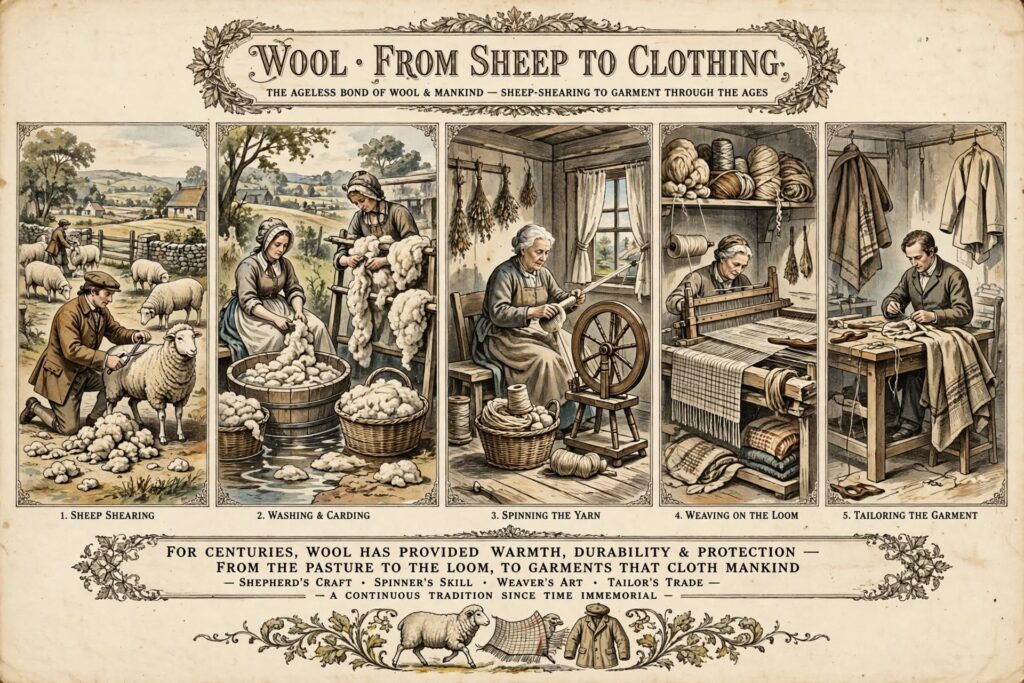
Wool has been used by humans for thousands of years. Sheep were domesticated in ancient West Asia, and selective breeding gradually produced animals with more useful fleece.
The earliest evidence of wool textiles dates back several thousand years. Wool later became an important material in Europe, the Mediterranean, and Asia, where it was used for clothing, blankets, and other everyday goods.
During the Middle Ages, wool production became a major part of the European economy. Italian textile centers became especially important, and wool trading helped support the growth of several influential commercial families.
The expansion of sheep farming into Australia and other regions later changed the global wool industry. Australia remains one of the world’s leading wool-producing countries.
Cashmere is another luxury animal fiber known for its exceptionally soft feel.
2. How Is Wool Fabric Made?
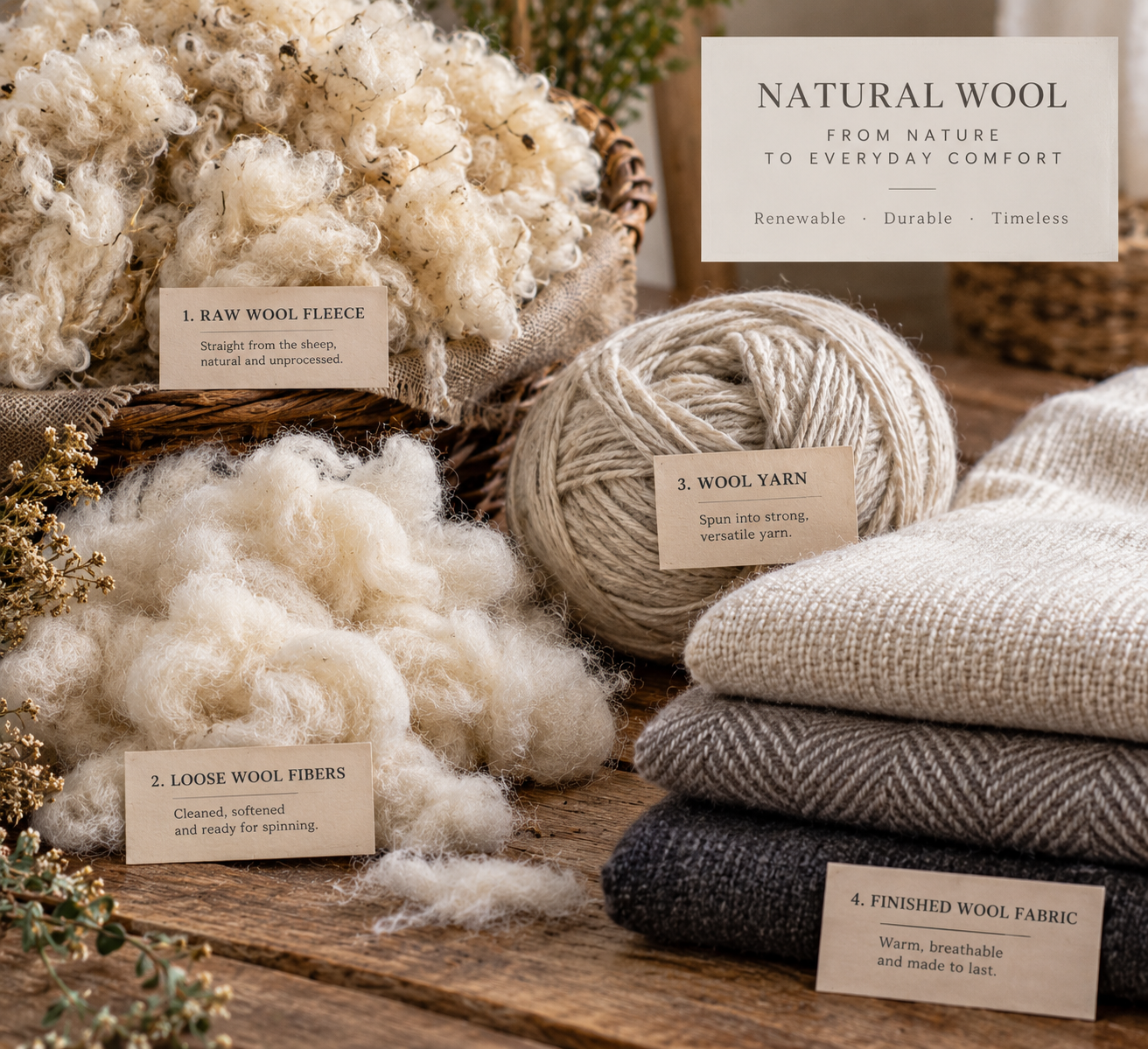
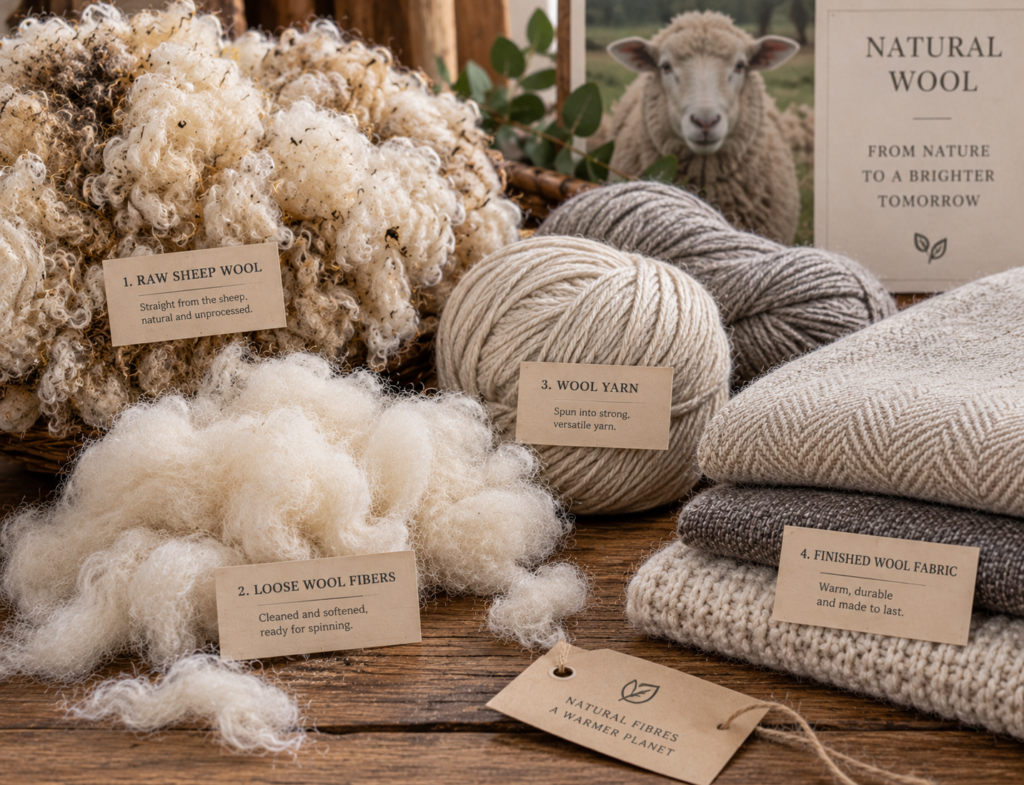
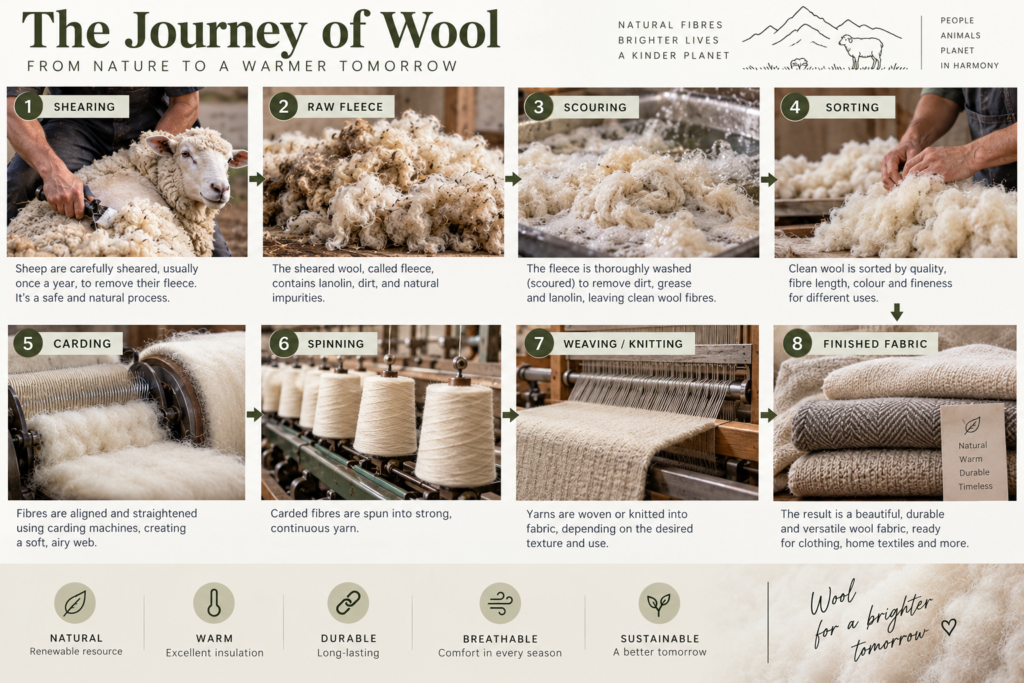
Wool fabric is produced through a series of steps that turn animal fleece into clean fibers, yarn, and finally textile fabric.
The exact process varies depending on the animal, fiber quality, and intended product.
Step 1: Shearing or Collecting the Fiber
For sheep, wool is usually obtained by shearing the fleece. Many sheep are sheared once a year, although the timing depends on the breed, climate, and farming system.
Other animal fibers may be collected through shearing, combing, or gathering naturally shed hair.
Step 2: Cleaning the Raw Wool
Freshly collected wool contains natural grease called lanolin, along with dirt, plant material, and other impurities.
The raw fiber is cleaned through a process called scouring. This removes unwanted material and prepares the wool for further processing.
Step 3: Sorting and Grading
The wool is sorted according to characteristics such as:
- Fiber diameter
- Fiber length
- Strength
- Color
- Cleanliness
- Crimp
- Overall quality
Different grades of wool are used for different products. Fine wool may be selected for garments worn next to the skin, while coarser wool may be used for carpets, upholstery, or other applications.
Step 4: Carding
Carding separates and aligns the fibers into a more organized form.
The fibers are converted into a continuous strand called a sliver, which can then be prepared for spinning.
Step 5: Spinning
The wool fibers are spun into yarn.
The spinning method and yarn structure influence the final fabric’s appearance, softness, strength, and warmth.
Step 6: Weaving or Knitting
The yarn is converted into fabric through weaving or knitting.
- Woven wool is commonly used for suits, coats, trousers, and blankets.
- Knitted wool is commonly used for sweaters, scarves, socks, and other flexible garments.
Step 7: Finishing
Wool fabric may undergo additional finishing processes to improve its appearance or performance.
Common finishing methods include:
- Fulling: Moisture, heat, and mechanical action cause the fibers to interlock, creating a denser fabric.
- Crabbing: A finishing process used to stabilize the fabric and reduce unwanted dimensional changes.
- Decating: A process used to improve fabric appearance, handle, and dimensional stability.
- Dyeing: Coloring the fibers, yarn, or finished fabric.
Some wool products are also treated to improve resistance to shrinkage or make them easier to care for. Alpaca wool offers a warm and soft alternative to traditional sheep’s wool.
3. How Is Wool Fabric Used?
Wool is used in a wide range of clothing, home textiles, and technical products.
Its warmth, resilience, and natural flame resistance make it useful for applications where comfort and performance are important.
Clothing and Apparel
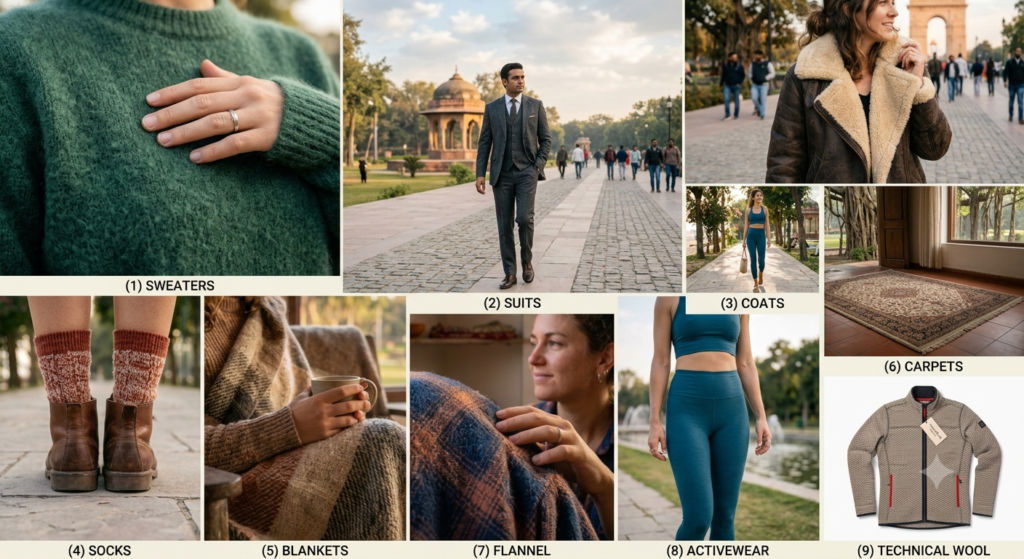
Wool is commonly used for:
- Sweaters
- Suits
- Coats
- Jackets
- Trousers
- Skirts
- Dresses
- Socks
- Scarves
- Hats
- Gloves
- Underwear
- Other cold-weather clothing
Fine wool varieties are more suitable for garments worn directly against the skin, while coarser wool is often used for outerwear and heavier textiles.
Home Textiles
Wool is also used for:
- Blankets
- Rugs
- Carpets
- Upholstery
- Curtains
- Mattress materials
- Decorative textiles
Its insulating properties make it useful in products designed to retain warmth or provide comfort.
Industrial and Technical Uses
Wool is used in some specialized applications because of its durability, moisture-management properties, and flame resistance.
Examples include:
- Fire-resistant clothing
- Protective textiles
- Insulation materials
- Technical felt
- Certain industrial fabrics
The suitability of wool depends on the specific application and the performance requirements of the finished product.
Camel wool is another natural animal fiber valued for warmth and insulation.
4. Where Is Wool Fabric Produced?
Wool production is concentrated in countries with suitable climates, grazing land, and established sheep-farming industries.
Australia is one of the world’s leading wool producers and exporters. China is also a major producer and has a large textile-manufacturing industry. Other important wool-producing countries include New Zealand, the United States, Argentina, South Africa, and the United Kingdom.
Australia
Australia is particularly well known for its fine wool production, including Merino wool.
Its large sheep-farming industry and established wool-export market make it one of the most important countries in the global wool supply chain.
China
China is a major wool producer and an important center for wool processing and textile manufacturing.
It is also a significant market for imported wool used in finished textile products.
New Zealand
New Zealand is known for its wool production, particularly strong wool used in carpets, rugs, and other home textiles.
United States
The United States produces several types of wool, including fine and medium wool used in clothing and other textile applications.
Other Producing Countries
Wool is also produced in countries such as:
- Argentina
- South Africa
- Uruguay
- The United Kingdom
- Turkey
- India
The country where wool is grown is not always the country where the finished fabric is manufactured. Wool may be exported as raw fiber, processed into yarn in another country, and then woven or knitted into fabric elsewhere.
Wool is frequently included among the warmest fabrics used for winter clothing.
5. How Much Does Wool Fabric Cost?
Wool fabric prices vary widely depending on the type of wool, fiber quality, fabric construction, and finishing.
There is no single standard price for wool because a fine Merino fabric, a heavy coating wool, and a luxury cashmere textile can have very different costs.
Factors That Affect Wool Fabric Cost
- Animal fiber type
- Fiber diameter
- Fiber length
- Yarn quality
- Fabric weight
- Weave or knit construction
- Dyeing and finishing
- Country of production
- Brand
- Certification
- Wholesale or retail quantity
Why Is Wool More Expensive Than Some Other Fabrics?
Wool production involves raising animals, collecting fleece, cleaning and processing the fibers, and manufacturing the finished textile.
Fine and specialty fibers are often more expensive because they are produced in smaller quantities or require more selective processing.
Is All Wool Expensive?
No. Wool prices vary considerably.
Standard sheep wool is generally more widely available than specialty fibers such as cashmere, vicuña, or qiviut.
The final price also depends on whether the product is made from pure wool, a wool blend, or a specialty fiber.
Wool Fabric Pricing
For accurate pricing, it is better to compare specific wool types and fabric specifications rather than use one average price for all wool.
For example, a lightweight wool suiting fabric, a heavy wool coating, and a cashmere-blend sweater may have very different prices.
6. What Different Types of Wool Fabric Are There?
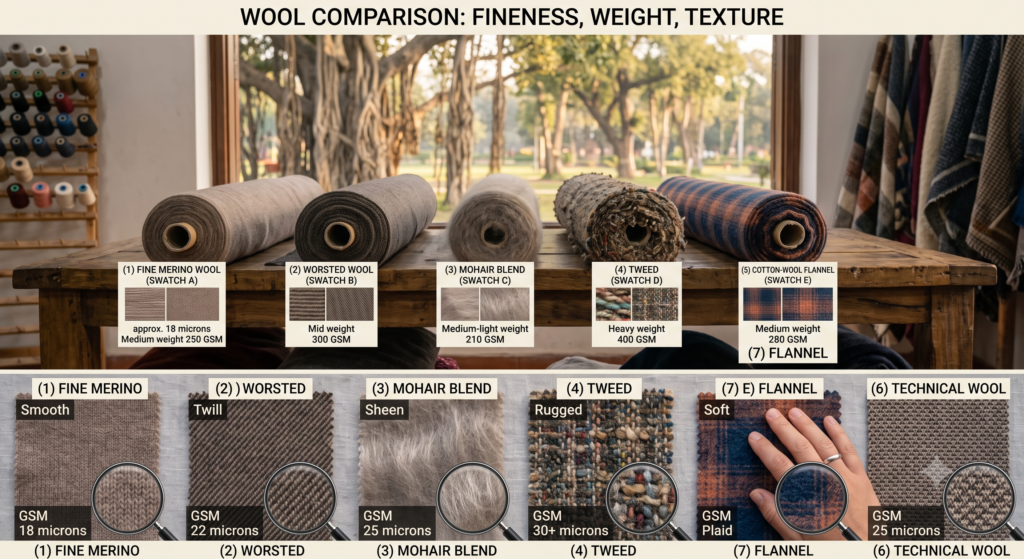
Wool can be classified by the animal that produces the fiber, the fiber’s characteristics, and the way the yarn is made into fabric.
Some names refer to specific animal fibers, while others describe the quality or processing of the wool.
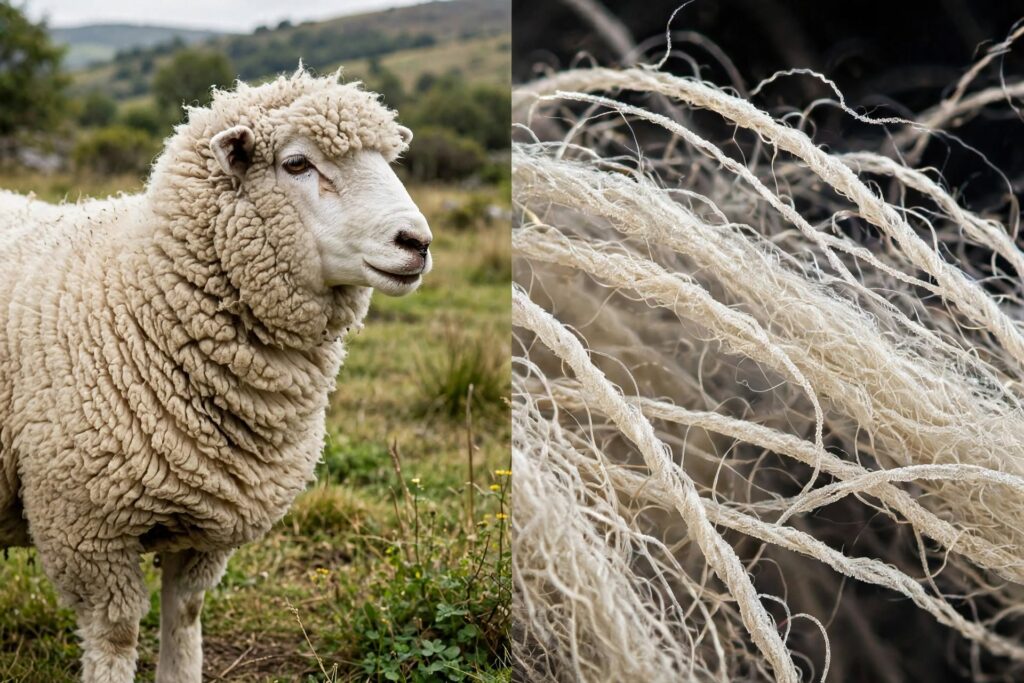
6.1 Merino Wool
Merino wool comes from Merino sheep and is one of the most widely recognized fine wool types.
It is valued for its softness, warmth, moisture-management properties, and ability to be used in garments worn close to the skin.
Fine Merino fibers can be less than 20 microns in diameter, although the exact fineness varies by grade.
Merino wool is commonly used in:
- Base layers
- Sweaters
- Socks
- Suits
- Activewear
- Outdoor clothing
Proper fabric care is especially important for wool garments because excessive heat and agitation can damage the fibers.
6.2 Cashmere
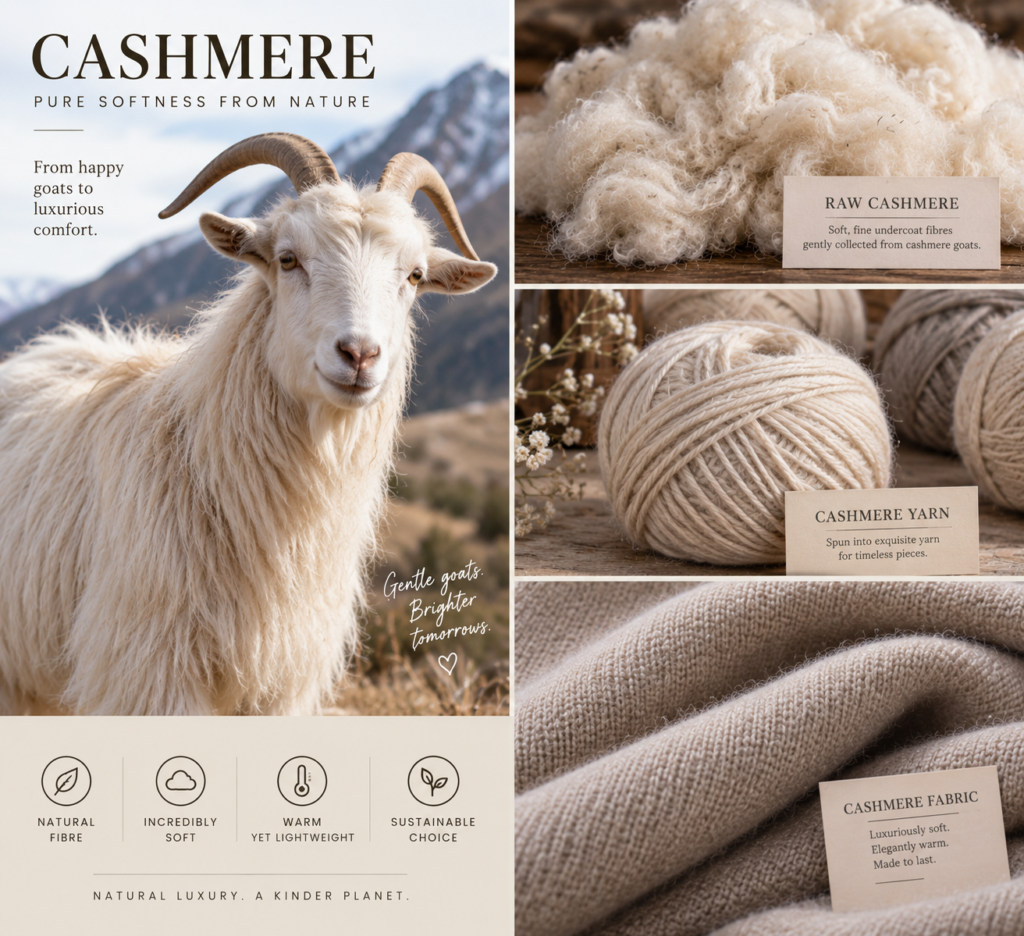
Cashmere is a fine animal fiber obtained from certain goats, particularly those associated with the Kashmir region and other cold-climate areas of Asia.
It is known for its softness, lightweight warmth, and luxurious feel.
Cashmere is generally more expensive than standard sheep wool because the usable fiber is fine and the amount collected from each animal is relatively limited.
It is commonly used in:
- Sweaters
- Scarves
- Shawls
- Coats
- Luxury knitwear
6.3 Mohair
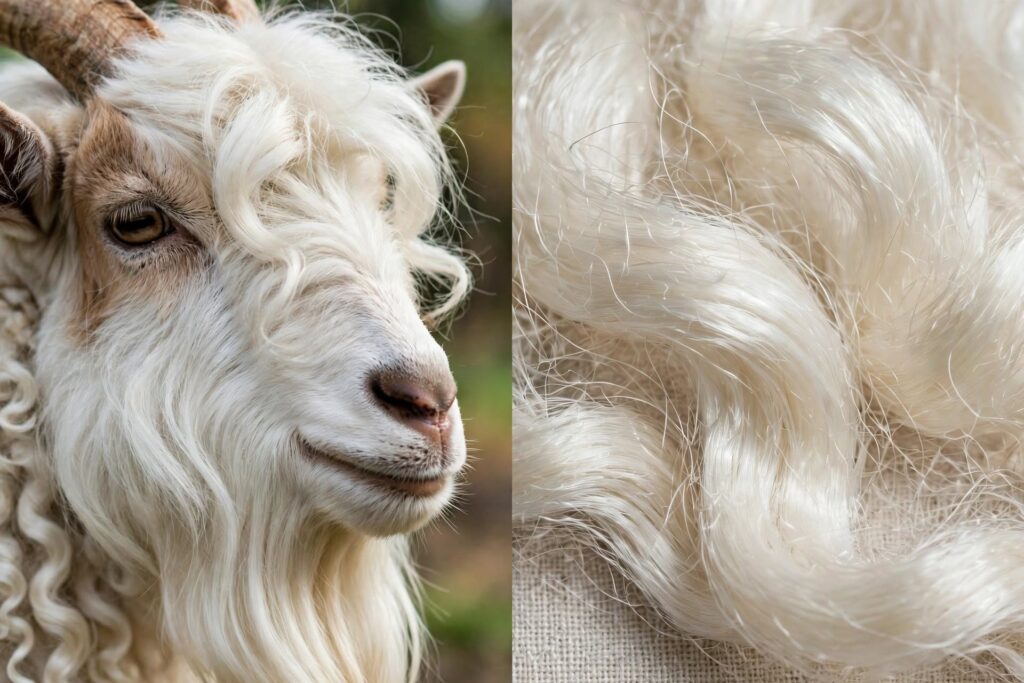
Mohair comes from Angora goats.
It is known for its luster, strength, and distinctive wavy appearance. Mohair fibers can be used alone or blended with other fibers.
Mohair is commonly used in:
- Sweaters
- Coats
- Suits
- Scarves
- Upholstery
- Specialty textiles
Animal-welfare practices vary across the industry, so buyers interested in mohair should look for transparent sourcing and relevant standards.
6.4 Alpaca Wool
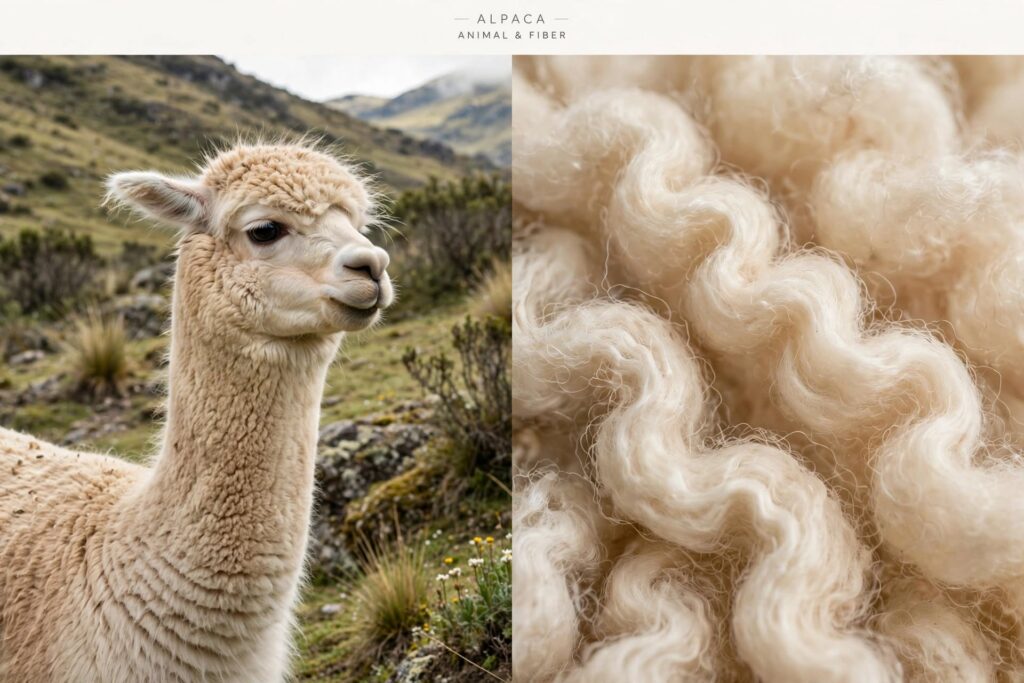
Alpaca fiber comes from alpacas, which are native to South America.
It is valued for its softness, warmth, and drape. Alpaca fiber is available in different grades, and its characteristics vary depending on the animal and fiber quality.
Alpaca is commonly used in:
- Sweaters
- Coats
- Scarves
- Blankets
- Shawls
- Blended fabrics
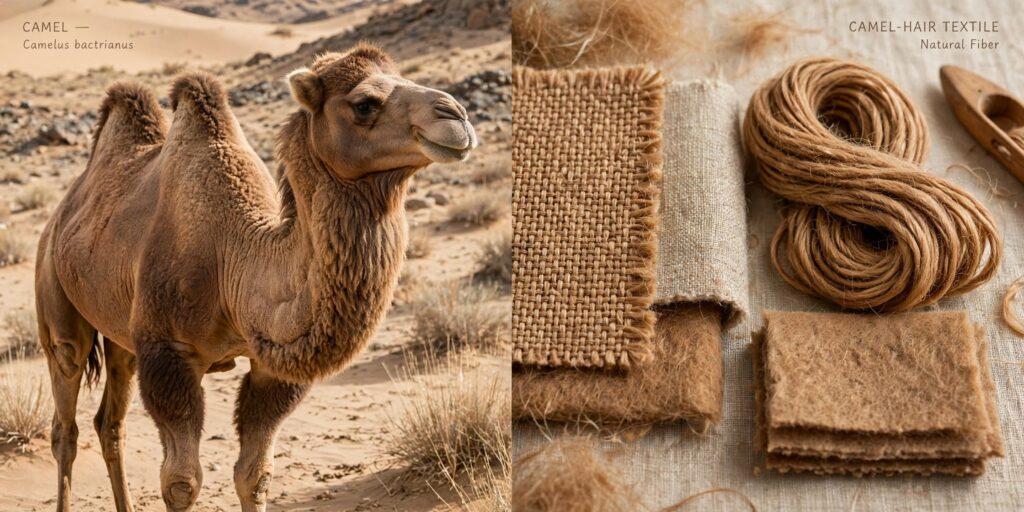
6.5 Camel Hair
Camel hair is obtained from camels and is known for its warmth and insulating properties.
It is often used in coats, blankets, and other cold-weather textiles.
Camel hair can be relatively coarse, so it is frequently blended with other fibers or used in products where direct skin contact is less important.
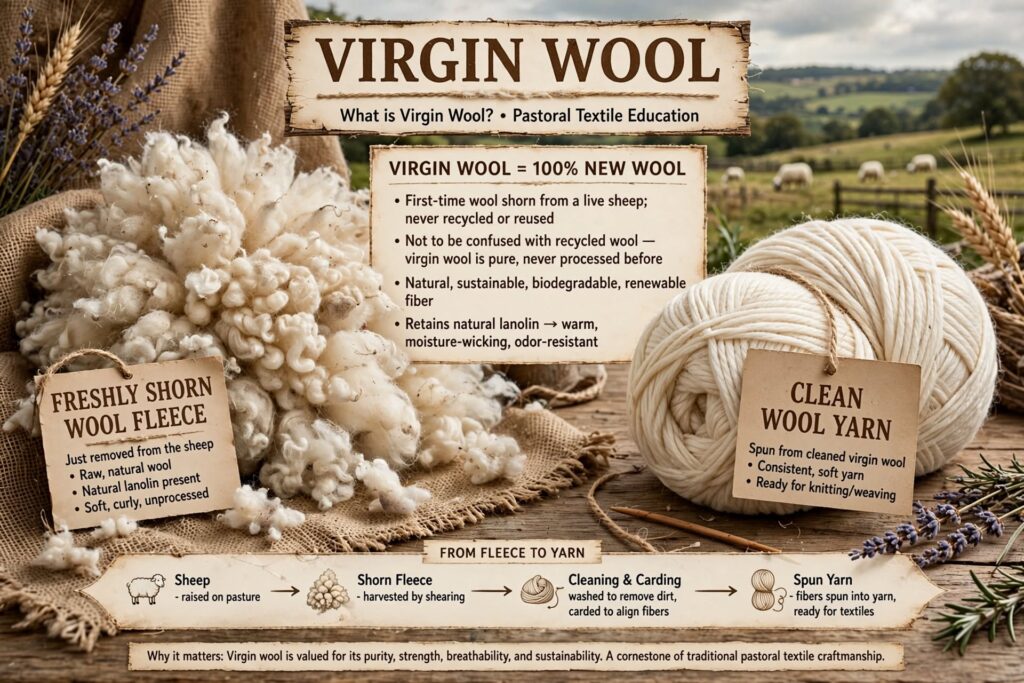
6.6 Virgin Wool
Virgin wool generally refers to wool that has not previously been used in a textile product.
The term is also commonly associated with wool obtained from a lamb’s first shearing, although the exact meaning can vary by product labeling.
Virgin wool is used in a wide range of garments and home textiles.
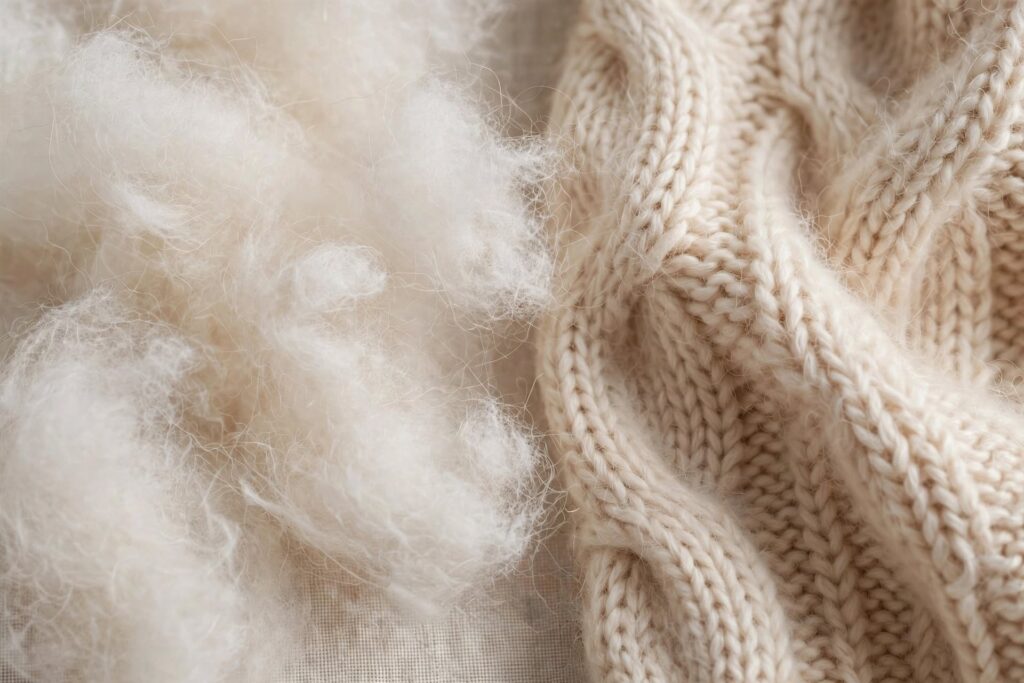
6.7 Angora
Angora fiber comes from Angora rabbits.
It is extremely soft and lightweight, but it is also delicate and often blended with other fibers to improve durability.
Angora is used in:
- Sweaters
- Scarves
- Gloves
- Hats
- Luxury knitwear
Animal-welfare concerns have been associated with some angora production practices, so responsible sourcing is important.
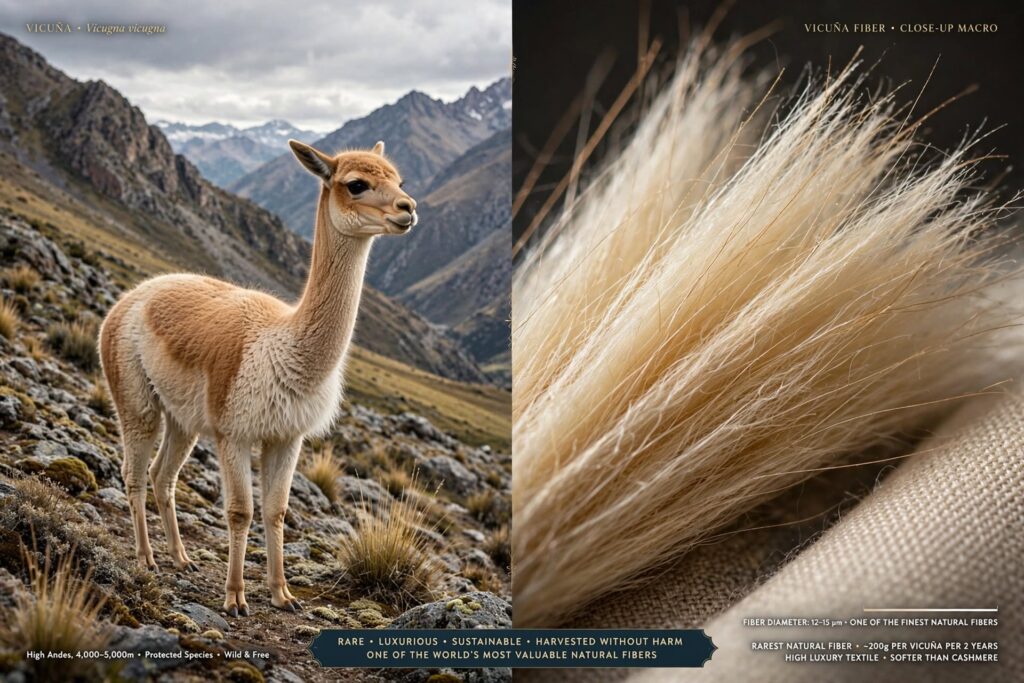
6.8 Vicuña
Vicuña fiber comes from vicuñas, wild camelids native to the Andes.
It is one of the rarest and most expensive animal fibers because of its limited supply and the need to protect wild populations.
Vicuña is used in luxury textiles such as:
- Coats
- Scarves
- Shawls
- Premium suiting
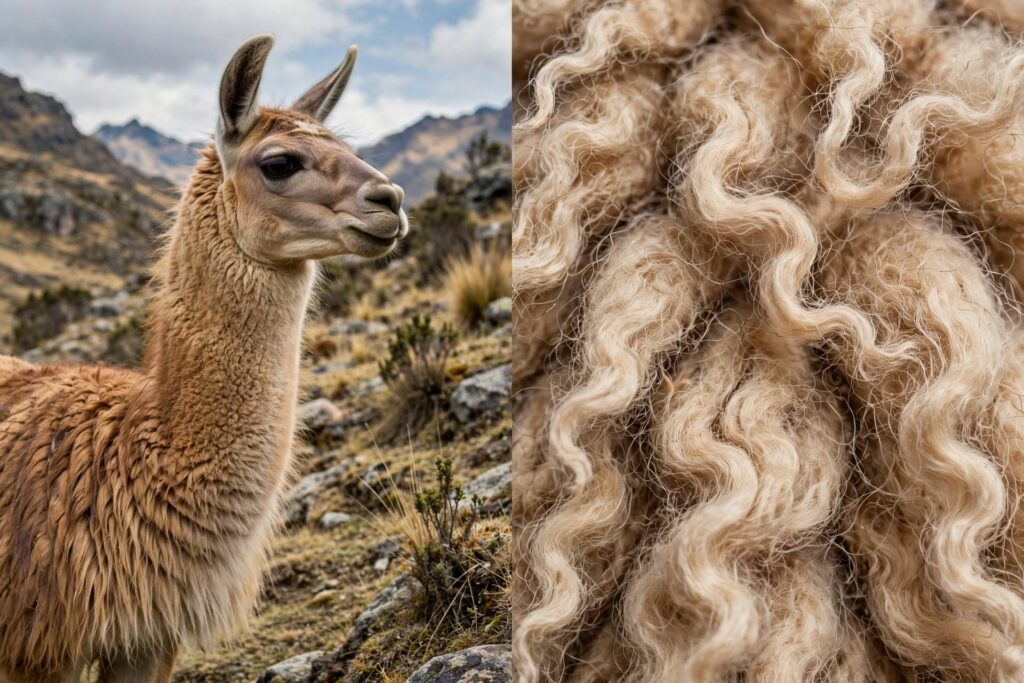
6.9 Llama Wool
Llama fiber comes from llamas, which are also native to South America.
It varies in softness and fineness. Some llama fibers are suitable for clothing, while coarser fibers are better suited to outerwear and home textiles.
Llama fiber is commonly used in:
- Sweaters
- Coats
- Blankets
- Scarves
- Rugs
6.11 Common Wool Fabric Constructions
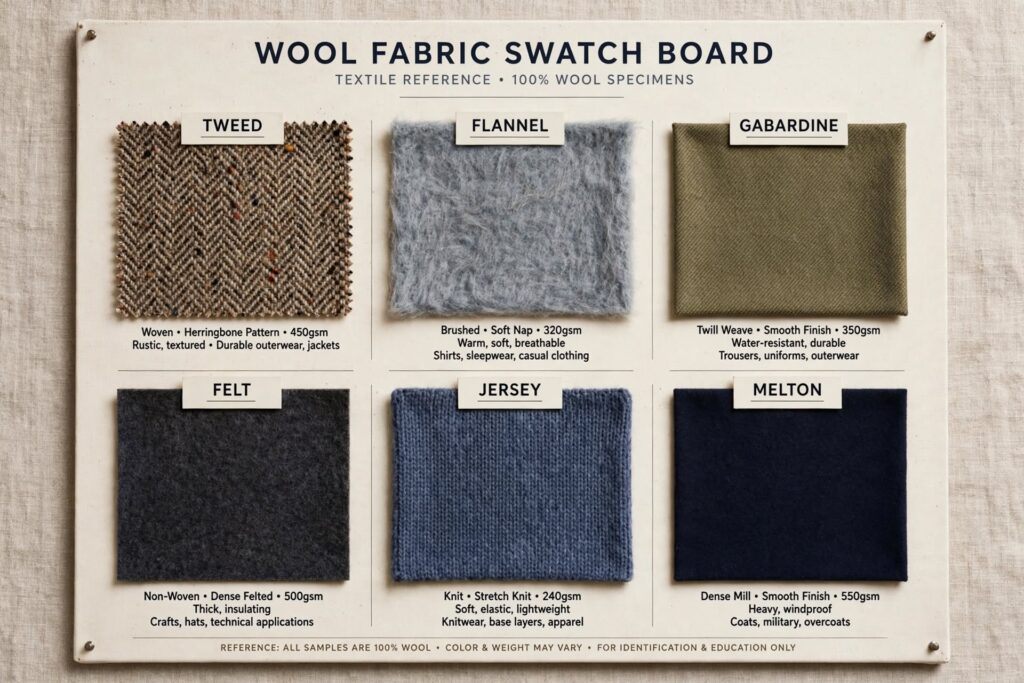
Wool fibers can be made into many different fabric constructions.
Common examples include:
- Wool jersey
- Wool flannel
- Wool tweed
- Wool gabardine
- Wool serge
- Wool felt
- Wool bouclé
- Wool crepe
- Wool melton
- Wool suiting
These are fabric constructions, not separate animal species. Their appearance and performance depend on the fiber, yarn, weave, knit, and finishing.
7. How Does Wool Fabric Impact the Environment?
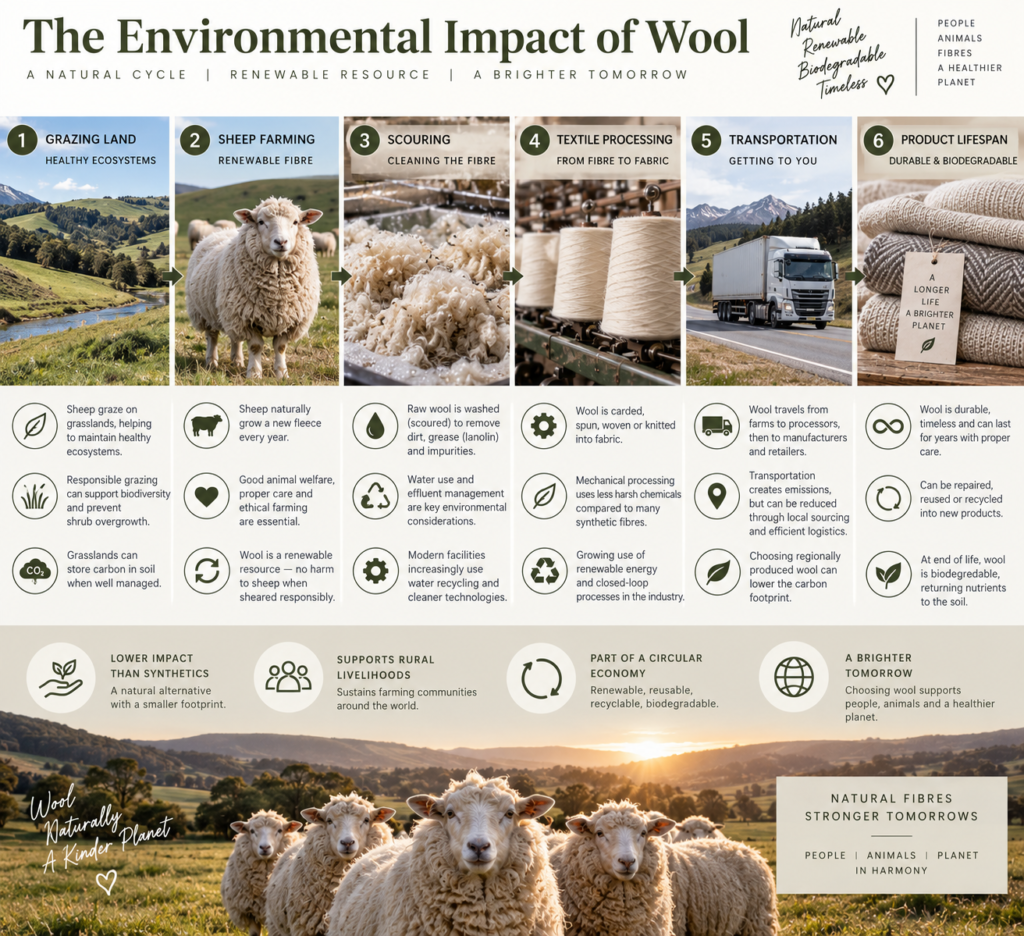
Wool is a natural, renewable fiber, but that does not mean every wool product has a low environmental impact.
Its footprint depends on animal husbandry, land use, feed production, water use, processing, dyeing, transportation, and product lifespan.
Animal Agriculture
Wool production depends on raising animals, which requires land, water, and feed.
The environmental impact varies by animal species, farming system, climate, and land-management practices.
Land Use and Soil Health
Grazing animals can affect soil and vegetation.
Well-managed grazing systems may support soil health in some environments, while poorly managed grazing can contribute to erosion, vegetation loss, and land degradation.
Water and Agricultural Inputs
Water may be used for animal production, feed cultivation, cleaning raw wool, and processing the finished textile.
The amount varies depending on the production system and local conditions.
Processing and Dyeing
Wool requires energy and resources for:
- Shearing
- Scouring
- Carding
- Spinning
- Weaving or knitting
- Dyeing
- Finishing
- Transportation
Scouring removes lanolin and other impurities, while dyeing and finishing can contribute to water and chemical impacts if not properly managed.
Animal Welfare
Animal welfare is an important consideration in wool production.
Practices vary by country, farm, and animal species. Buyers who want to support responsible wool should look for transparent sourcing and relevant animal-welfare standards.
Durability and Product Lifespan
Wool can be durable and long-lasting when properly made and cared for.
A wool garment or textile that remains in use for many years may reduce the need for frequent replacement.
However, durability depends on the fiber type, fabric construction, finishing, and care.
Is Wool Biodegradable?
Wool is a natural protein fiber and can biodegrade under suitable environmental conditions.
The rate of biodegradation depends on factors such as temperature, moisture, microorganisms, and the presence of dyes or finishes.
8. Wool Fabric Certifications Available
Wool certifications and standards can help identify different aspects of production, animal welfare, processing, and supply-chain claims.
However, not all certifications cover the same things.
Responsible Wool Standard (RWS)
The Responsible Wool Standard is a widely recognized standard that addresses animal welfare and land-management practices in wool production.
It is intended to help identify wool from farms that meet specific requirements.
Woolmark
The Woolmark brand is associated with wool quality and product testing.
The Woolmark Company works with wool producers and manufacturers and offers testing and certification services for qualifying wool products.
International Wool Textile Organisation (IWTO)
The International Wool Textile Organisation represents the global wool industry and provides technical standards, testing, and certification-related services.
What Should Buyers Check?
When purchasing wool, buyers should check:
- The exact certification name
- What the certification covers
- Whether it applies to the fiber or finished product
- Whether the certification is current
- Whether the claim is independently verified
9. FAQ
What is wool fabric made from?
Wool fabric is made from natural animal-hair fibers, most commonly obtained from sheep.
Is wool a natural fabric?
Yes. Wool is a natural animal-derived fiber.
Is wool breathable?
Wool is generally breathable and can help manage comfort across changing temperatures.
Is wool durable?
Wool can be durable, but its performance depends on the fiber type, fabric construction, finishing, and care.
Is wool expensive?
Wool prices vary widely. Standard sheep wool is generally more affordable than specialty fibers such as cashmere, vicuña, or qiviut.
What is the difference between wool and cashmere?
Wool is a broad category of animal-hair fibers, while cashmere is a specific fine fiber obtained from certain goats.
What is Merino wool?
Merino wool comes from Merino sheep and is known for its fine fibers, softness, warmth, and moisture-management properties.
Is wool biodegradable?
Wool is a natural protein fiber and can biodegrade under suitable environmental conditions.
Is wool sustainable?
Wool is a renewable natural fiber, but its sustainability depends on animal husbandry, land management, processing, dyeing, transportation, and product lifespan.
How should wool fabric be washed?
Care instructions depend on the specific wool fabric. Always follow the manufacturer’s care label.
What is the difference between virgin wool and recycled wool?
Virgin wool generally refers to wool that has not previously been used in a textile product, while recycled wool is recovered from existing wool textiles or manufacturing waste.