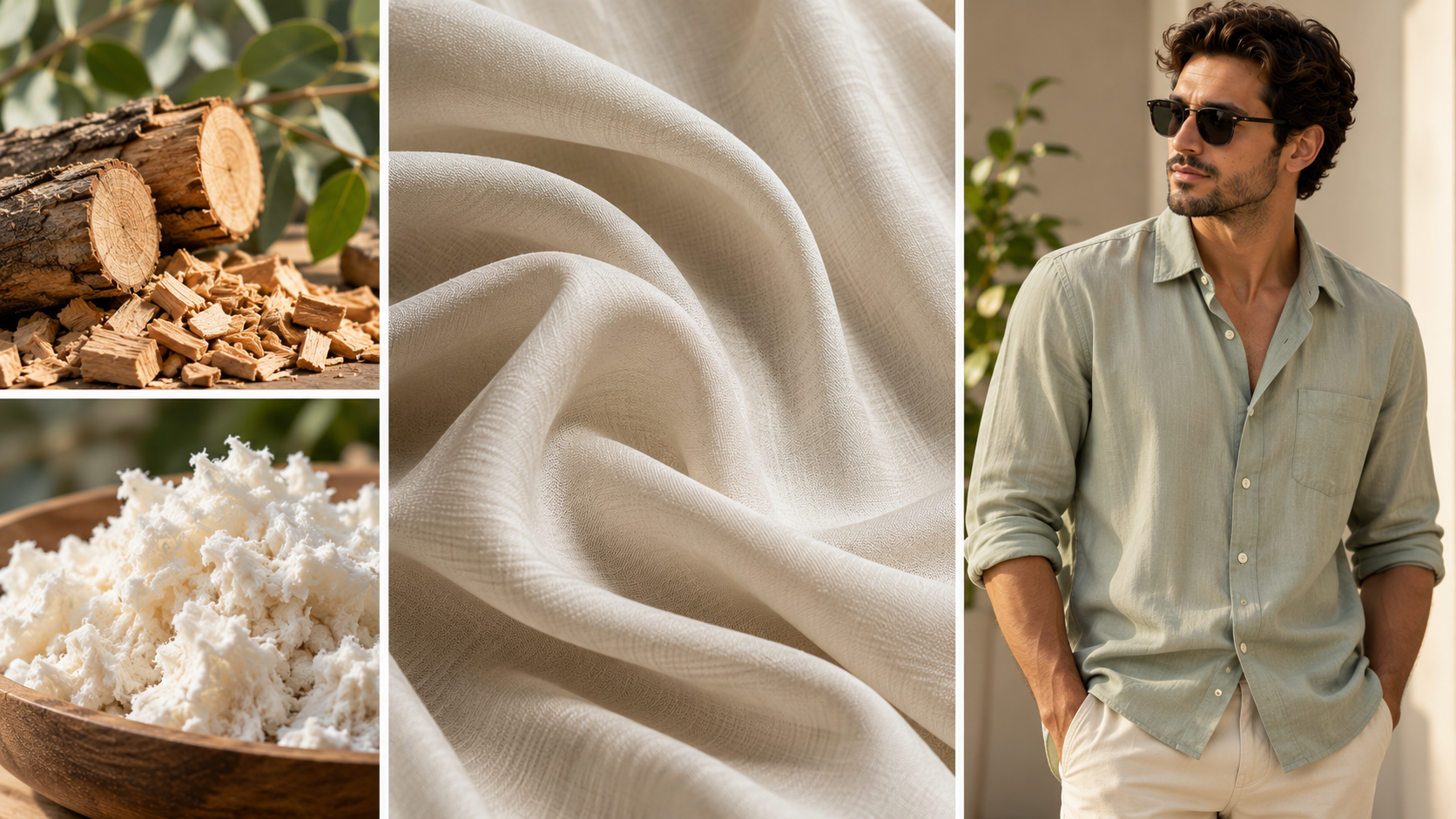
Viscose is a soft, lightweight textile fiber made by regenerating cellulose obtained from plant-based materials, most commonly wood pulp. It is often grouped with rayon and is widely used because it can combine a fluid drape and smooth hand feel with good absorbency and breathability.
Unlike cotton, linen, or wool, viscose does not come directly from a natural fiber that can simply be spun into yarn. The cellulose has to be chemically processed and regenerated into a new fiber. For this reason, viscose is generally classified as a regenerated cellulosic or man-made cellulosic fiber rather than a conventional natural fiber.
Viscose is used extensively in clothing, home textiles and other applications. It remains the largest category within man-made cellulosic fibers: Textile Exchange estimates that about 6.7 million tonnes of viscose were produced globally in 2024, representing roughly 80% of total man-made cellulosic fiber production.
Quick Facts About Viscose Fabric
| Feature | Details |
|---|---|
| Fabric name | Viscose |
| Also known as | Rayon |
| Fiber category | Regenerated cellulosic / man-made cellulosic |
| Primary raw material | Cellulose, commonly from wood pulp |
| Feel | Soft, smooth and lightweight |
| Breathability | Generally high |
| Moisture absorption | High |
| Drape | Excellent |
| Stretch | Low in its basic form; depends on construction and blends |
| Wet strength | Lower than dry strength |
| Common uses | Dresses, shirts, skirts, linings, scarves, home textiles |
| Major producing regions | Asia is the dominant manufacturing region |
| Typical care | Follow the garment label; gentle washing is often recommended |
What Is Viscose Fabric?
Viscose is produced from cellulose, a structural material found in plants. Wood is the most common feedstock, although other cellulose sources can also be used.
The defining feature of viscose is not simply where its cellulose comes from, but what happens to that cellulose afterward. Manufacturers dissolve and chemically transform the cellulose into a spinnable solution before regenerating it as continuous filaments or staple fibers.
This gives viscose a useful combination of properties. The resulting textile can feel smooth against the skin, absorb moisture readily and form the flowing silhouettes associated with lightweight fashion fabrics.
The terms viscose and rayon are closely related. In everyday textile terminology, they are often used interchangeably, although naming conventions vary by market. Textile Exchange describes viscose/rayon as a regenerated cellulose fiber produced through a process in which dissolved cellulose is extruded and converted back into cellulose fiber.
What Does Viscose Feel Like?
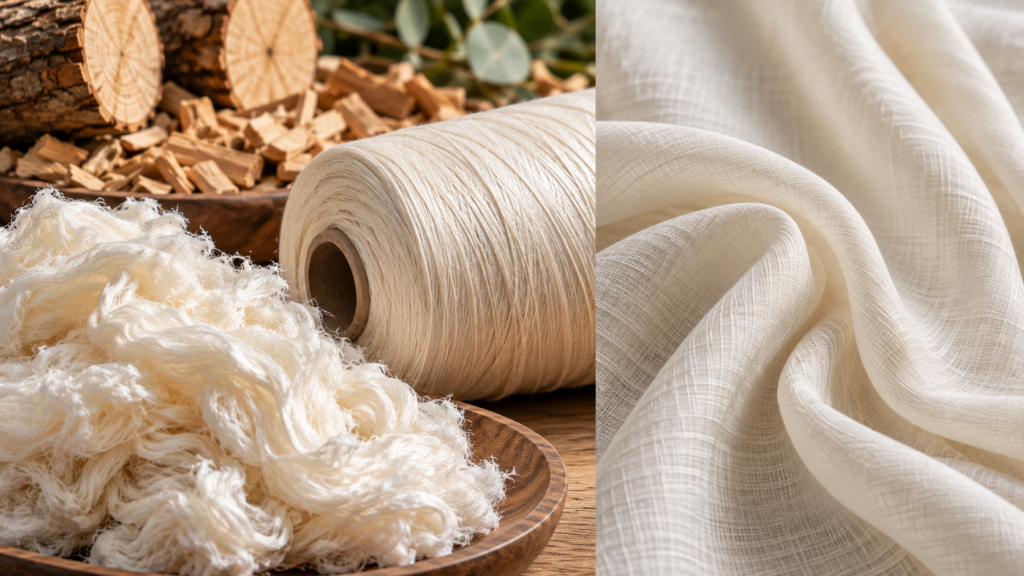
Viscose is usually valued for its soft, smooth hand and fluid drape. Depending on the yarn, weave or knit, it can resemble the feel of silk or cotton without being chemically identical to either.
Its ability to absorb moisture also makes it comfortable in many warm-weather garments. However, conventional viscose can become considerably weaker when wet, so the fabric may require more careful handling during washing.
History of Viscose Fabric
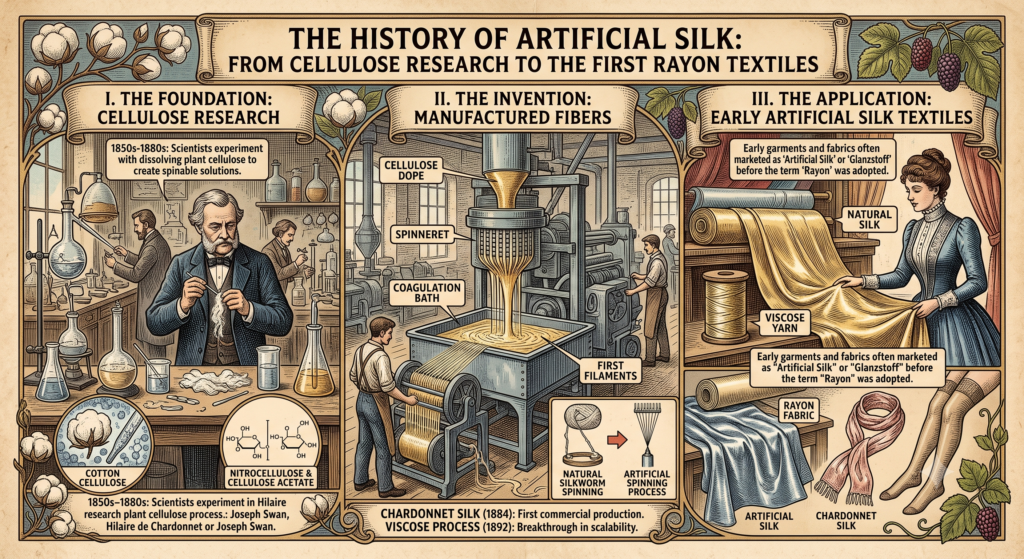
The development of viscose belongs to the late-19th-century search for manufactured alternatives to expensive natural silk.
British chemists Charles Frederick Cross, Edward John Bevan and Clayton Beadle patented the viscose process in Britain in 1892. Their work provided the technological foundation for producing regenerated cellulose fibers on a commercial scale.
Commercial production followed in Britain. Courtaulds began producing viscose textile fibers in 1905, helping move the material from laboratory development into the growing manufactured-fiber industry.
Early rayon was frequently promoted as an alternative to silk because it could provide softness, sheen and attractive drape at a lower cost. Over time, improvements in fiber engineering and manufacturing expanded its applications beyond silk substitutes.
The broader regenerated-cellulose family subsequently developed into several related materials, including modal, lyocell and cupro. These fibers use different chemical processes and therefore should not automatically be treated as identical to conventional viscose.
How Is Viscose Fabric Made?
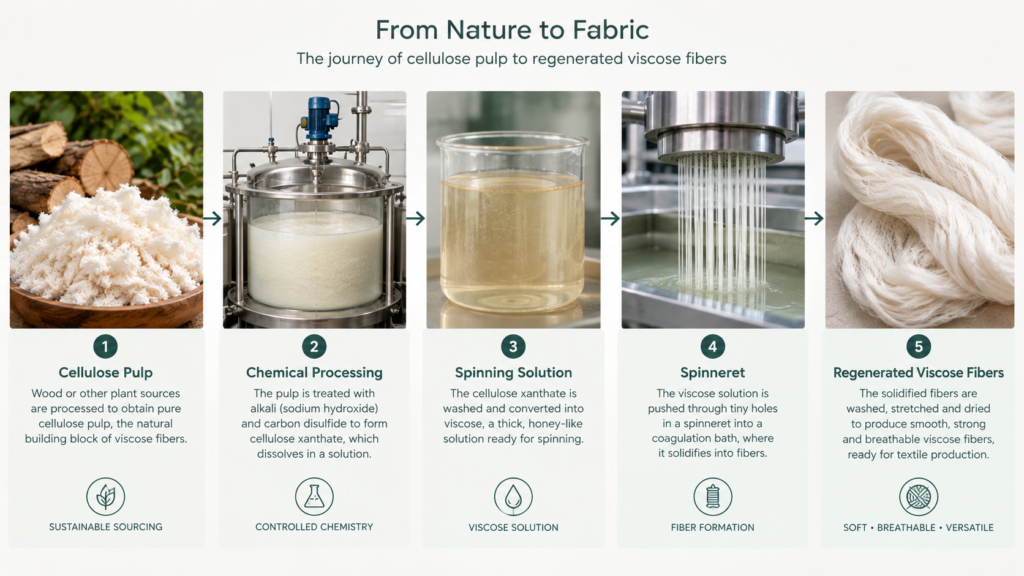
Viscose production begins with cellulose rather than with a ready-made textile fiber. The manufacturing process converts that cellulose into a solution and then regenerates it as fiber.
1. Preparing the Cellulose
Wood or another cellulose-containing feedstock is processed to obtain a suitable cellulose pulp. The objective is to remove unwanted components and produce cellulose of sufficient purity for fiber production.
Responsible sourcing matters at this stage because the environmental impact of wood-based fibers depends partly on where and how the raw material is obtained.
2. Chemically Modifying the Cellulose
In the conventional viscose process, purified cellulose is treated with chemicals including sodium hydroxide. Further chemical treatment involving carbon disulfide converts the cellulose into a soluble form known as cellulose xanthate.
This produces the viscous spinning solution from which the material gets its name.
3. Preparing the Spinning Solution
The solution is conditioned, filtered and prepared so that it has the consistency required for spinning. Controlling impurities and removing air are important because defects at this stage can affect the final fiber.
4. Regenerating the Fiber
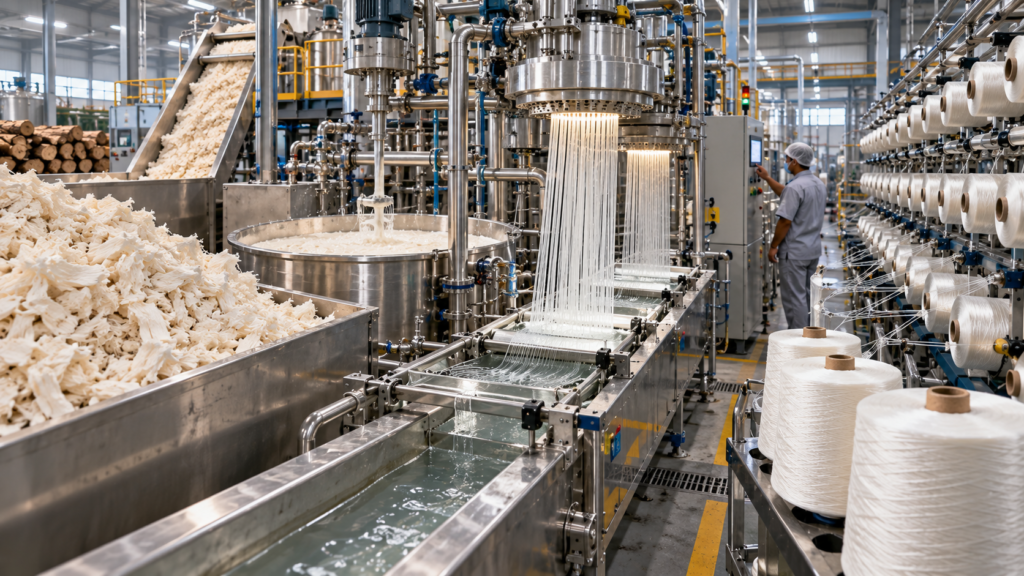
The prepared solution is pushed through extremely small openings in a spinneret into a chemical bath. The cellulose is regenerated as fine filaments.
Those filaments can then be washed and processed into either continuous filament yarns or staple fibers.
5. Finishing and Spinning
The regenerated fibers are stretched, washed and treated to achieve the required characteristics. Staple fibers can be cut to length and spun into yarn, while continuous filaments can be processed directly into filament yarn.
The precise process varies between producers and fiber specifications.
How Is Viscose Fabric Used?
Viscose is particularly useful when designers want softness, absorbency and flowing movement.
Apparel
Viscose is widely used for:
- Dresses
- Shirts and blouses
- Skirts
- Trousers
- Lightweight jackets
- Tunics
- Scarves
- Linings
- Loungewear
Its fluid drape makes it particularly suitable for garments designed to move rather than hold a rigid shape.

Home Textiles
Viscose fibers and fabrics are also used in selected household textiles, including decorative fabrics, bedding-related products and other soft furnishings.
Blends are common because combining viscose with cotton, polyester, wool or elastane can alter durability, stretch, structure and care requirements.
Industrial Applications
Regenerated cellulose fibers are not limited to fashion. Specialized rayon fibers can be engineered for technical applications where strength and other performance characteristics are important.
This is quite different from the lightweight viscose fabric commonly found in apparel.
Where Is Viscose Fabric Produced?
Viscose is manufactured on a large industrial scale, with Asia playing a dominant role in modern production.
China is particularly important in the global man-made cellulosic fiber industry, while significant production and processing capacity also exists in countries such as India and Indonesia.
Production geography can change over time as textile manufacturing investment, raw-material supply and environmental regulations evolve. It is therefore more useful to think of viscose as a global supply-chain material rather than a fabric associated with one particular country.
Textile Exchange’s latest market data shows that viscose remains by far the largest man-made cellulosic fiber category, reaching approximately 6.7 million tonnes of production in 2024.
How Much Does Viscose Fabric Cost?
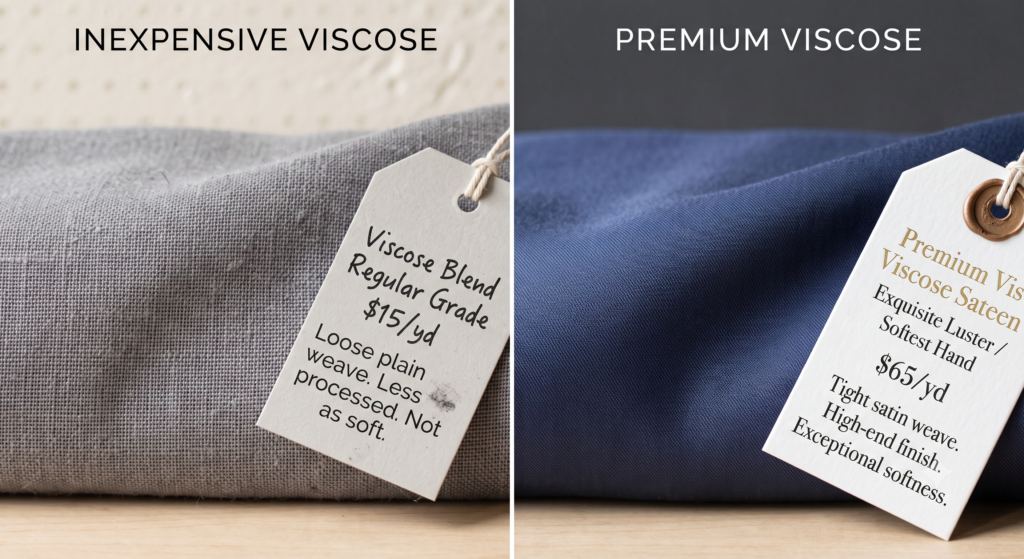
Viscose occupies a broad price range rather than having one fixed market value.
Basic viscose fabrics can be relatively affordable because the material can be manufactured at industrial scale. More refined fabrics can cost considerably more depending on yarn quality, fabric construction, finishing, weight and the source of the fiber.
Price is also influenced by whether the material is:
- 100% viscose
- A viscose blend
- Filament or staple fiber
- Printed or specially finished
- Branded or certified
- Made from a specialized viscose formulation
Viscose is generally positioned below silk in price, although premium viscose fabrics can overlap with higher-priced natural and regenerated fibers.
What Different Types of Viscose Fabric Are There?
“Viscose” can refer both to the conventional fiber and, more broadly, to a family of regenerated cellulosic materials. Several related fibers deserve separate treatment.
Standard Viscose Rayon
This is the conventional viscose fiber produced through the established viscose process. It is widely used in apparel and home textiles because of its softness, absorbency and drape.
Modal
Modal is a regenerated cellulosic fiber related to viscose. It is engineered to provide particular performance characteristics, including softness and improved strength in certain applications.
It is especially common in underwear, T-shirts, tops and other next-to-skin garments.
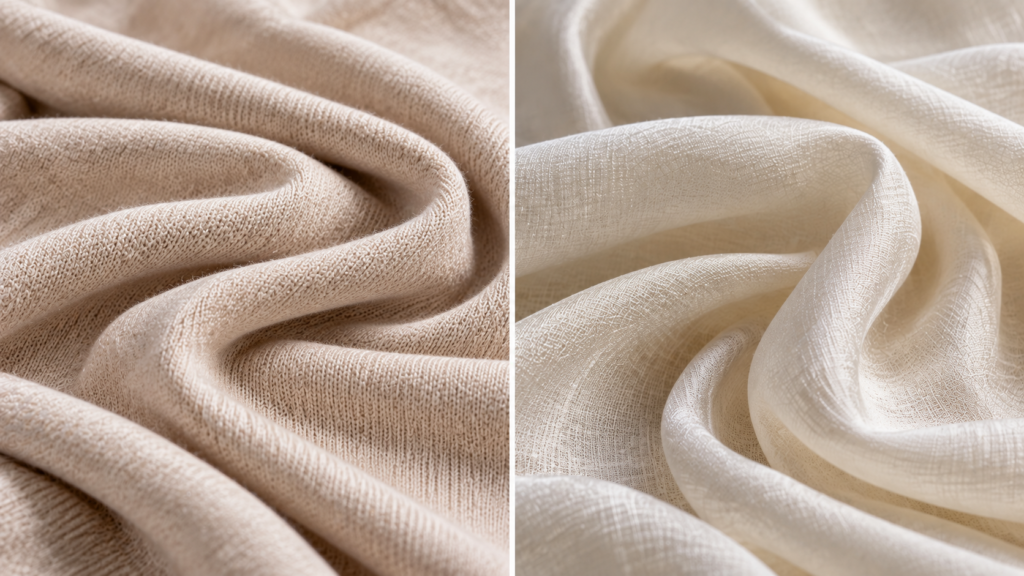
Lyocell
Lyocell is another regenerated cellulosic fiber, but its manufacturing chemistry differs from conventional viscose. It uses a different solvent system and is commonly associated with closed-loop production in which the solvent is recovered and reused.
Lyocell is valued for its softness, strength and moisture-management characteristics.
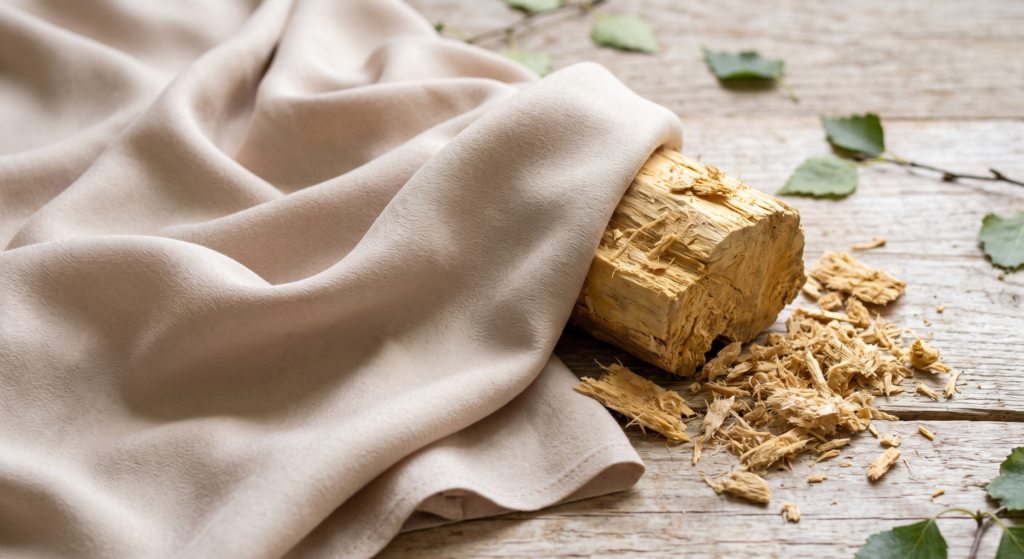
Cupro
Cupro is another regenerated cellulose fiber, traditionally made using a cuprammonium process. It is known for its fine, smooth filament and silk-like hand.
Although related to rayon, cupro has a distinct manufacturing route and should not simply be described as conventional viscose.
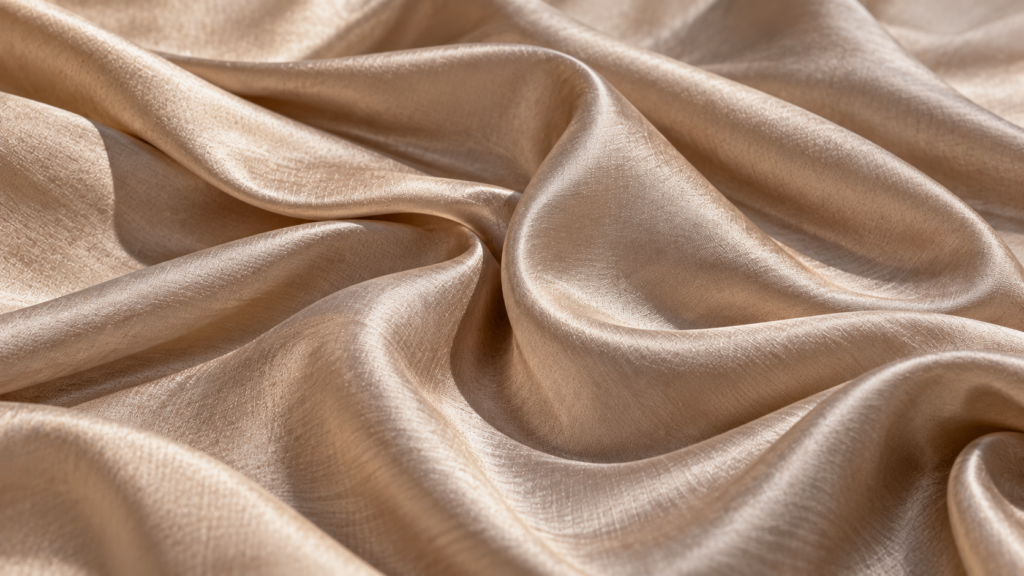
Acetate
Cellulose acetate is chemically distinct from viscose even though both belong to the wider family of manufactured cellulose-based fibers. It has historically been used in textiles and is particularly associated with linings and fabrics requiring a smooth hand.
It is therefore better understood as a related regenerated/modified cellulose fiber rather than simply another form of standard viscose.
How Does Viscose Fabric Impact the Environment?
The environmental story of viscose is more complicated than simply calling it either “natural” or “synthetic.”
The cellulose used to make viscose generally originates from renewable biological material, especially wood. However, converting that cellulose into a textile fiber requires industrial processing, and the environmental performance can vary significantly between producers and production systems.
Forest Sourcing
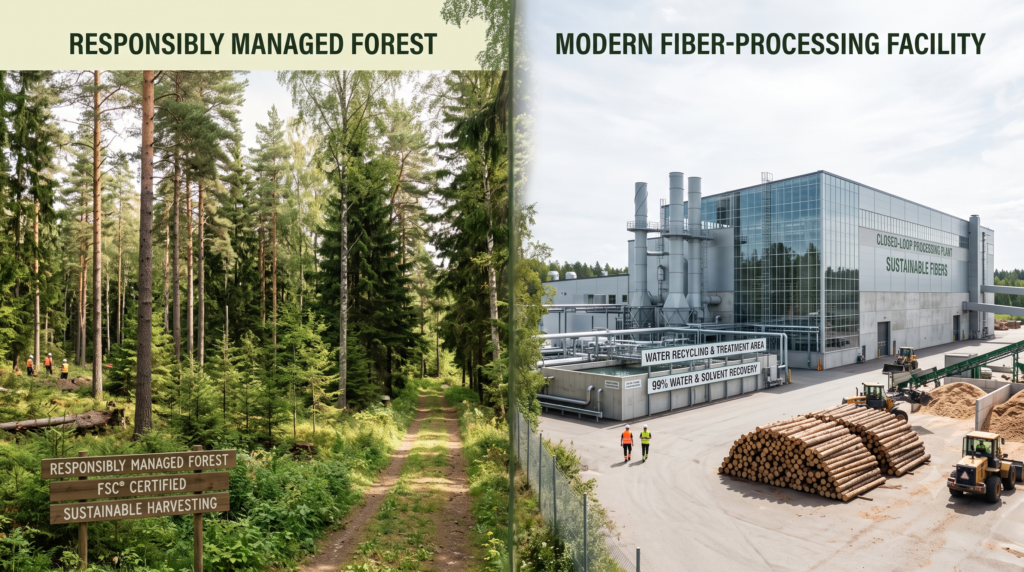
Wood sourcing is one of the major considerations. Poorly managed forestry can contribute to forest degradation, biodiversity loss and other ecological problems.
Responsible sourcing systems can help reduce these risks by providing greater control over the origin of wood and pulp. Textile Exchange recommends attention to certified or otherwise responsibly managed sources.
Chemical Processing
Conventional viscose production involves chemicals such as sodium hydroxide and carbon disulfide. Poorly controlled emissions or wastewater can create environmental and occupational-health concerns.
For this reason, the environmental performance of viscose depends heavily on factory controls, chemical recovery, wastewater treatment and overall process management.
Newer Production Approaches
Some producers have invested in technologies intended to reduce water use, emissions and resource consumption.
For example, LENZING™ ECOVERO™ viscose uses certified or controlled wood sources and has received the EU Ecolabel. Lenzing reports at least 50% lower carbon emissions and water consumption compared with generic viscose under the company’s stated comparison methodology. These figures apply to that specific branded fiber and should not be generalized to all viscose.
Lyocell is another example of a regenerated-cellulose approach that uses a closed-loop solvent system, making it a frequently considered alternative where lower chemical-loss production is a priority.
Viscose Fabric Certifications Available
There is no single universal certification that automatically applies to every viscose fabric. Certification depends on the fiber producer, raw-material source, manufacturing process and finished textile.
Common standards and certifications relevant to viscose supply chains include:
FSC and PEFC
These forestry systems can help verify responsible sourcing of wood used as a cellulose feedstock.
For example, Lenzing states that wood used for LENZING™ ECOVERO™ fibers comes from certified or controlled sources meeting FSC or PEFC requirements.
EU Ecolabel
The EU Ecolabel evaluates environmental criteria across multiple stages of a product’s life cycle. Certain specialty viscose products, including LENZING™ ECOVERO™, have received the label.
OEKO-TEX STANDARD 100
OEKO-TEX certification concerns harmful substances in tested textile products. It is different from forestry certification and should not be interpreted as proof that the fiber was sustainably sourced.
Recycled Content Certifications
Where viscose or related cellulosic fibers incorporate recycled material, relevant recycled-content standards may apply. Certification should always be checked against the specific fiber or finished product rather than assumed from the word “viscose.”
Frequently Asked Questions
Is viscose a natural or synthetic fabric?
Viscose begins with natural cellulose but is chemically processed and regenerated into fiber. It is therefore generally classified as a regenerated cellulosic or man-made cellulosic fiber, rather than a conventional natural fiber or a fully synthetic petroleum-based fiber.
Is viscose the same as rayon?
Viscose is a type of rayon and the terms are frequently used interchangeably. Naming conventions differ between markets, so the exact terminology can depend on the country and textile context.
Is viscose breathable?
Yes. Viscose is generally considered breathable and has good moisture absorption, which is one reason it is widely used in lightweight apparel.
Is viscose good for summer?
It can be. Its lightweight construction, absorbency and fluid drape make viscose a popular choice for warm-weather clothing. The actual comfort also depends on fabric weight, weave, garment design and climate.
Does viscose shrink?
Viscose can shrink or change shape when improperly washed or dried. Always follow the garment’s care instructions because finishing treatments and fabric construction affect its stability.
Is viscose durable?
Viscose can be sufficiently durable for everyday clothing, but conventional viscose has relatively low strength when wet. Careful laundering is therefore important.
Is viscose biodegradable?
Cellulose-based fibers can biodegrade under appropriate conditions, but biodegradability of a finished textile depends on the fiber, dyes, finishes, blends and disposal environment. A viscose garment containing significant amounts of synthetic fibers should not be treated the same way as an unblended cellulosic textile.
Is viscose environmentally friendly?
Not automatically. Viscose is plant-cellulose based, but its environmental impact depends on forestry practices, chemical management, energy, water use, emissions and wastewater treatment. Better-performing viscose systems and alternative regenerated-cellulose technologies can reduce particular impacts, but the specific product and supply chain should be examined.
What is the difference between viscose and lyocell?
Both are regenerated cellulosic fibers, but their manufacturing processes differ. Conventional viscose uses the viscose process, while lyocell uses a different solvent system that can operate in a closed-loop process with high solvent recovery.
What is viscose fabric used for?
Viscose is commonly used for dresses, shirts, skirts, trousers, scarves, linings and other apparel. It is also used in selected home-textile and technical applications.
Is viscose better than cotton?
Neither is universally better. Cotton is a natural staple fiber with different durability and moisture characteristics, while viscose is regenerated from cellulose and is often chosen for its softness and drape. The better option depends on the intended garment, performance requirements and sourcing considerations.