ECONYL is a regenerated nylon 6 (polyamide 6) made from recovered nylon waste. Developed by the Italian company Aquafil, it is designed to replace virgin nylon made from newly extracted fossil-based raw materials while maintaining the performance characteristics associated with conventional nylon 6.
Unlike cotton, wool or viscose, ECONYL is not a generic fabric or fiber category. ECONYL is a registered brand and material system developed by Aquafil. It is supplied as regenerated nylon polymer and yarn, which manufacturers can then turn into fabrics, carpets, industrial textiles and other products.
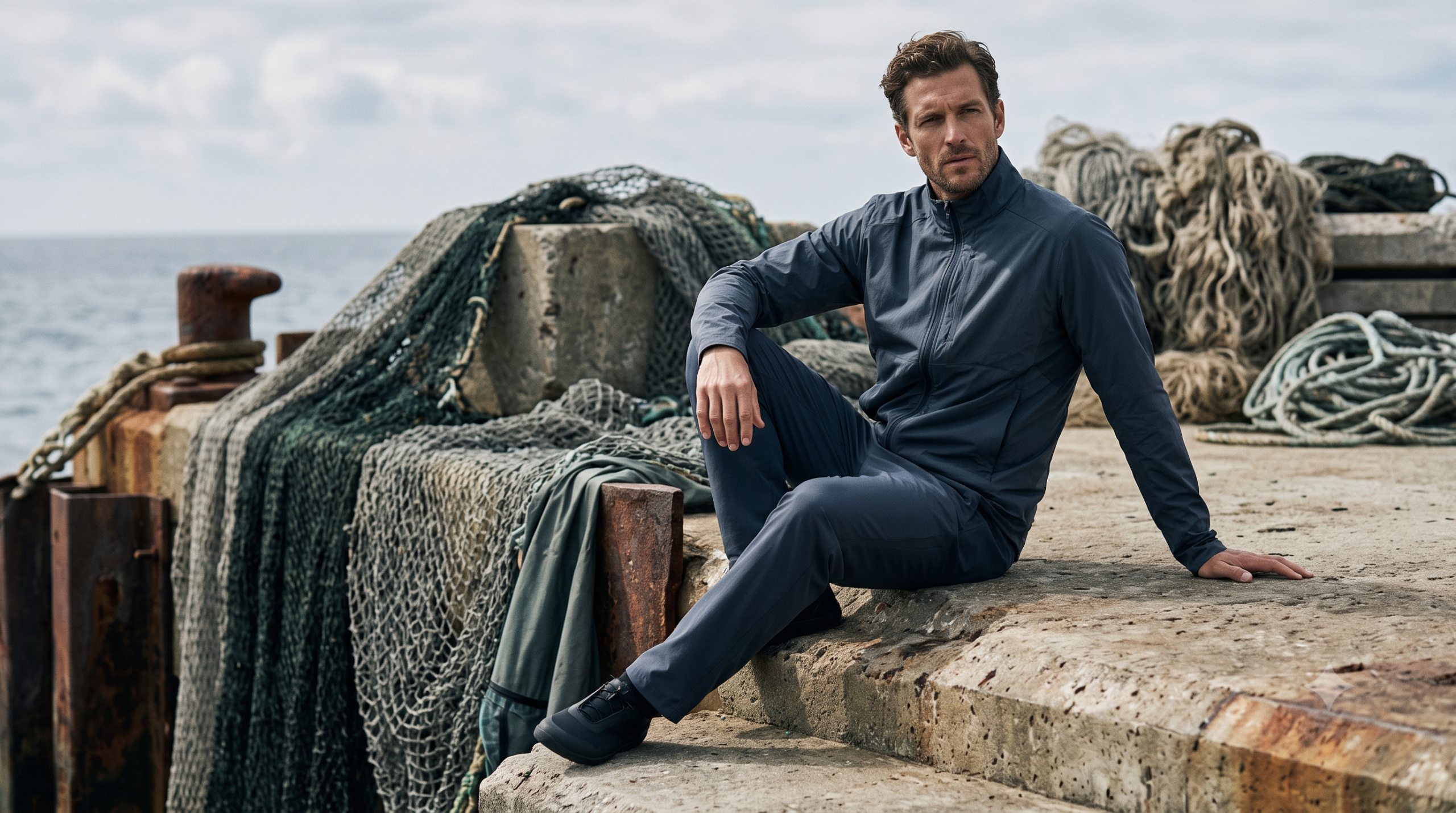
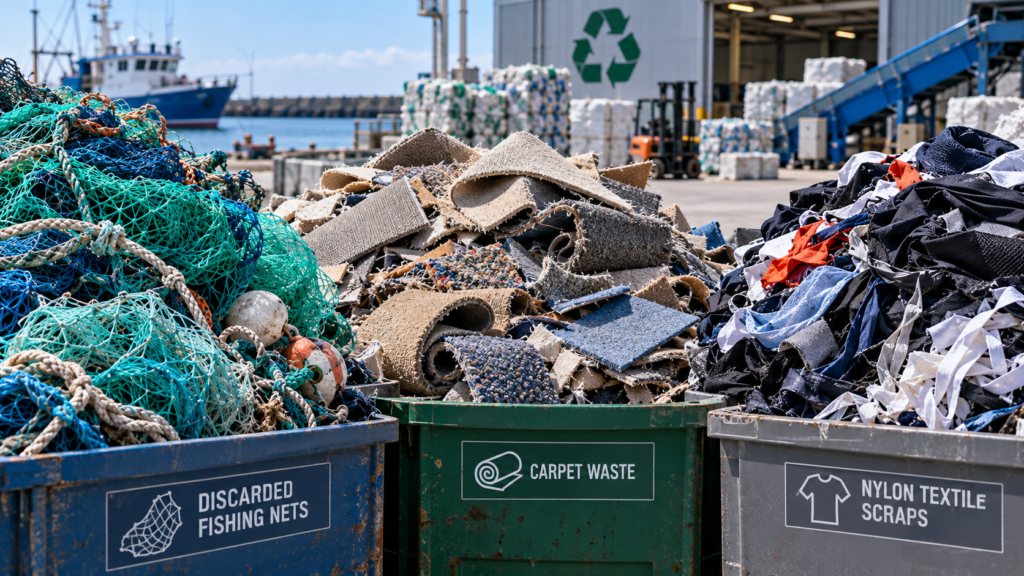
The material is made by recovering nylon waste—including sources such as discarded fishing nets, used carpets, textile waste and industrial nylon—and chemically regenerating it back into nylon’s basic building blocks. The resulting nylon 6 is designed to have the same fundamental material properties as virgin nylon 6.
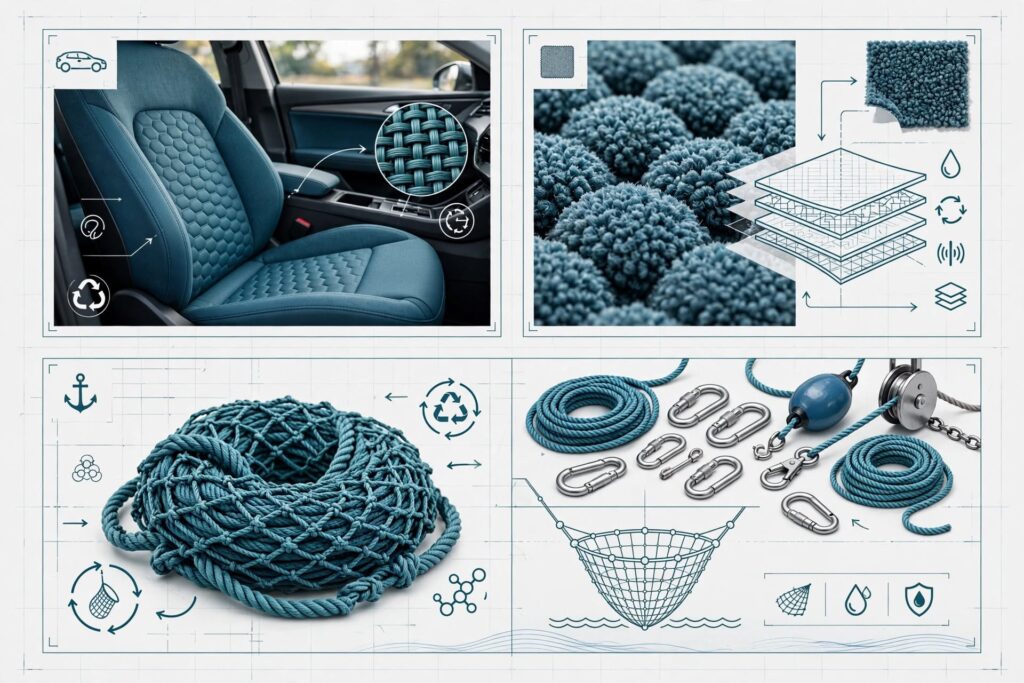
ECONYL has become particularly visible in swimwear, sportswear, activewear and fashion, but its applications extend well beyond clothing. Aquafil also supplies ECONYL for flooring, automotive components, interiors, maritime applications and other industrial products.
Quick Facts About ECONYL Fabric
| Feature | Details |
| Material name | ECONYL regenerated nylon |
| Generic fiber | Nylon 6 / Polyamide 6 |
| Material category | Regenerated/recycled synthetic fiber |
| Manufacturer/brand owner | Aquafil |
| Main raw material | Pre- and post-consumer nylon 6 waste |
| Examples of waste sources | Fishing nets, carpets, textile waste, industrial nylon |
| Fiber feel | Depends on yarn and fabric construction |
| Moisture absorption | Relatively low, typical of nylon |
| Strength | High |
| Abrasion resistance | High |
| Stretch | Depends on fabric construction and blends |
| Common apparel uses | Swimwear, activewear, sportswear, leggings |
| Other uses | Carpets, automotive textiles, interiors, industrial products |
| Original commercial development | Italy / Aquafil |
| Major regeneration center | Ljubljana, Slovenia |
| Typical care | Follow the garment care label |
What Is ECONYL Fabric?
The phrase “ECONYL fabric” is commonly used in fashion and consumer discussions, but technically the material is ECONYL regenerated nylon.
It is a branded form of nylon 6 made using recovered nylon waste instead of relying entirely on newly extracted fossil-based feedstocks.
This distinction matters because ECONYL is not a completely new type of synthetic polymer. Chemically, it is regenerated nylon 6. Aquafil’s process takes nylon waste apart at the molecular level, purifies the resulting material and uses it to create new nylon 6.
The resulting material can be converted into polymer, yarn or other forms and then processed using many of the same textile technologies used for conventional nylon.
What Does ECONYL Fabric Feel Like?
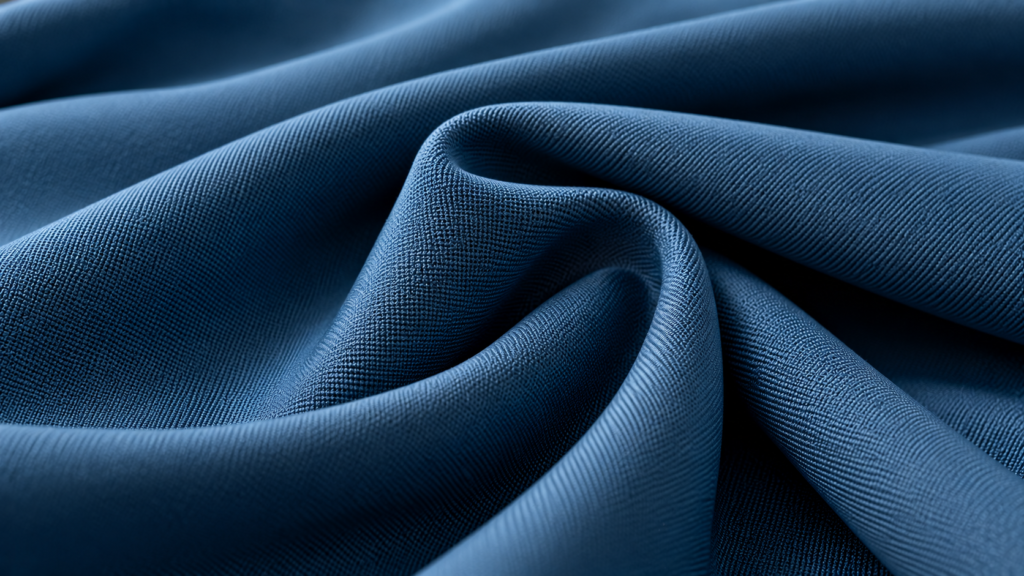
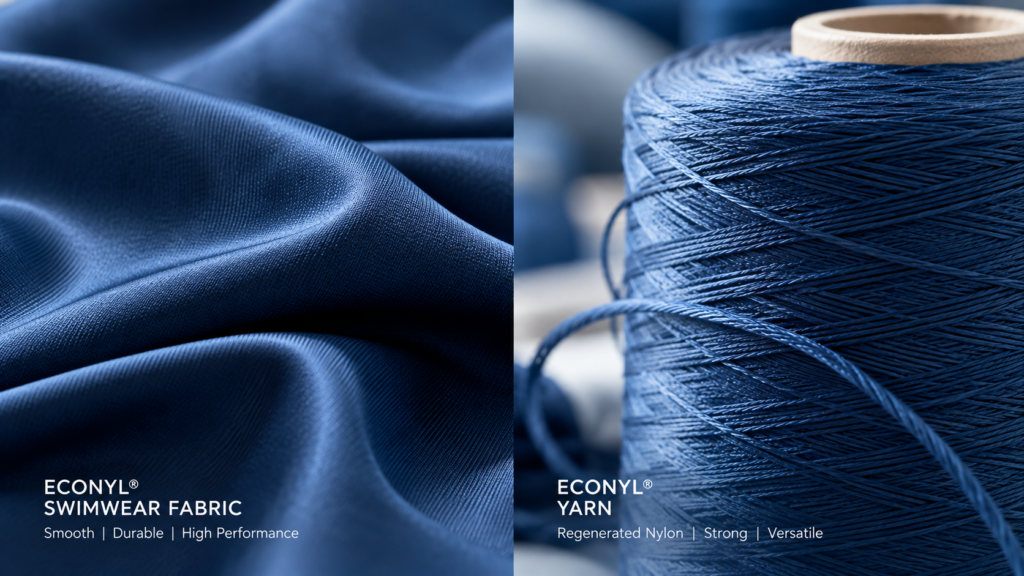
There is no single ECONYL texture.
A lightweight swimwear fabric may feel smooth and stretchy, while an ECONYL carpet yarn can be substantially different. The final hand depends on:
- Yarn construction
- Fiber thickness
- Knitting or weaving
- Fabric weight
- Finishing
- Blending with elastane or other fibers
In clothing, ECONYL is often used in constructions designed to feel similar to conventional performance nylon.
Is ECONYL Nylon or Polyester?
ECONYL is nylon 6 (polyamide 6), not polyester.
This is one of the most important distinctions when discussing the material. Aquafil specifically describes ECONYL as regenerated PA6 and states that its polymer and yarn are chemically regenerated from nylon waste.
History of ECONYL
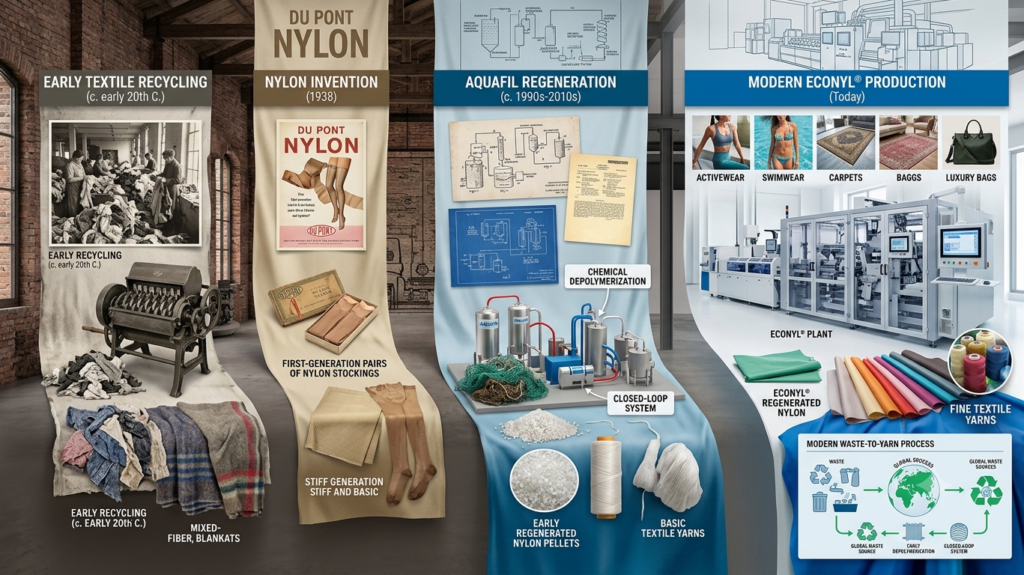
The story of ECONYL is closely connected to the development of nylon recycling rather than the invention of a new synthetic fiber.
Aquafil, the Italian company behind ECONYL, was founded in 1965 and had already been manufacturing nylon-based materials before developing its regeneration system.
The company developed the ECONYL Regeneration System, which became operational at its Ljubljana, Slovenia facility in 2011. The system was designed to transform recovered nylon 6 waste into new nylon while retaining the material’s useful technical properties.
The development represented a shift from treating nylon waste as an end-of-life problem toward treating it as a source of new raw material.
Fishing nets became one of the most recognizable examples because abandoned or discarded nylon nets can persist in marine environments. However, ECONYL is not limited to fishing nets. Aquafil’s current system also works with waste from carpets, textiles and industrial nylon products.
The system has continued to evolve. In 2025, Aquafil announced a pilot-scale technology at its Slovenian facility designed to chemically separate nylon from elastane in blended post-use textiles—an important development because fiber blends are traditionally difficult to recycle.
How Is ECONYL Fabric Made?
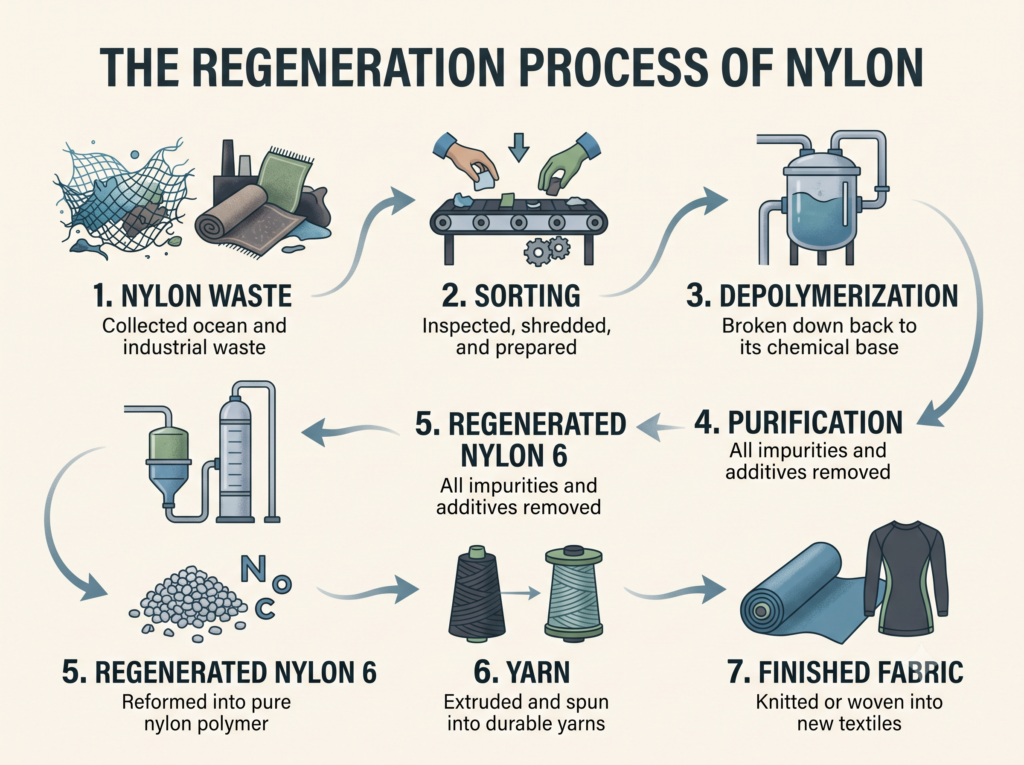
The ECONYL process differs fundamentally from simply melting old nylon and spinning it again.
Aquafil describes its system as a chemical recycling and regeneration process that takes nylon waste back toward its original molecular building blocks.
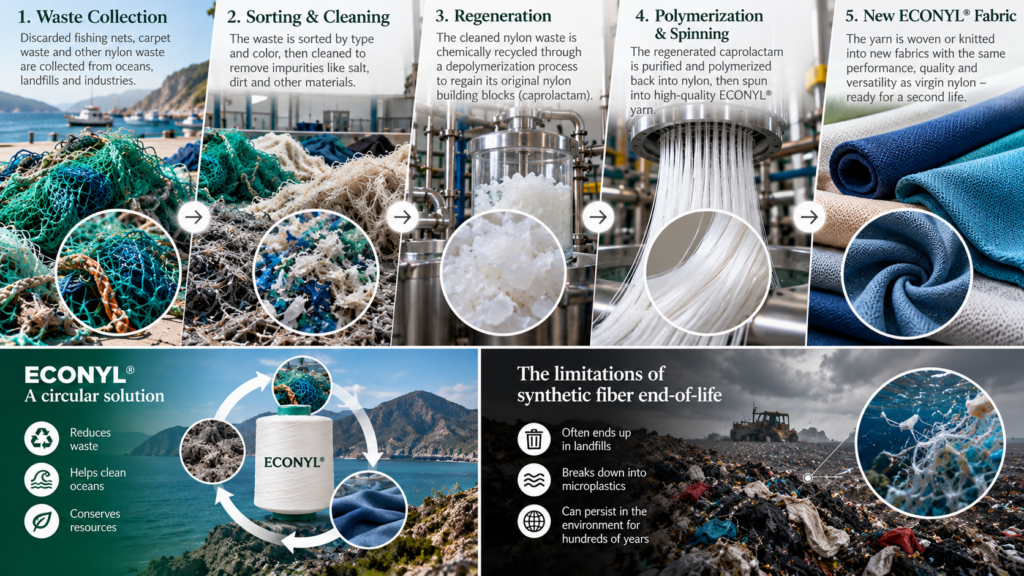
1. Nylon Waste Is Collected
The process starts with suitable nylon 6 waste.
Sources can include:
- Discarded fishing nets
- Old carpets
- Textile production waste
- Post-consumer nylon products
- Industrial nylon waste
Aquafil currently describes the system as recovering both pre-consumer and post-consumer nylon waste.
2. Waste Is Sorted and Prepared
Recovered material must be sorted and prepared before regeneration.
Foreign materials and unsuitable components need to be removed or separated so that the nylon feedstock is appropriate for the chemical recycling process.
This preparation stage becomes particularly important when dealing with complex waste streams containing coatings, dyes, finishes or other fibers.
3. Nylon Is Depolymerized
The prepared nylon 6 is chemically broken down through depolymerization.
Instead of merely changing the physical form of the old nylon, the process takes the polymer back toward its constituent chemical building blocks.
This is what allows the resulting material to be purified before being turned into new nylon.
4. The Material Is Purified
The recovered chemical feedstock is purified to remove contaminants from the original waste.
This is an important difference from simple mechanical recycling, where the recycled material retains more of the original polymer’s physical history.
5. New Nylon 6 Is Regenerated
The purified material is converted back into nylon 6.
Aquafil describes the resulting ECONYL as having the same fundamental quality and performance as conventional nylon 6.
6. Polymer Becomes Yarn
The regenerated nylon can be converted into polymer chips and then processed into filaments or yarn.
The yarn can subsequently be dyed, textured, knitted or woven into the fabric required for a particular application.
How Is ECONYL Fabric Used?
ECONYL is used across a much broader range of products than its association with sustainable swimwear might suggest.
Swimwear
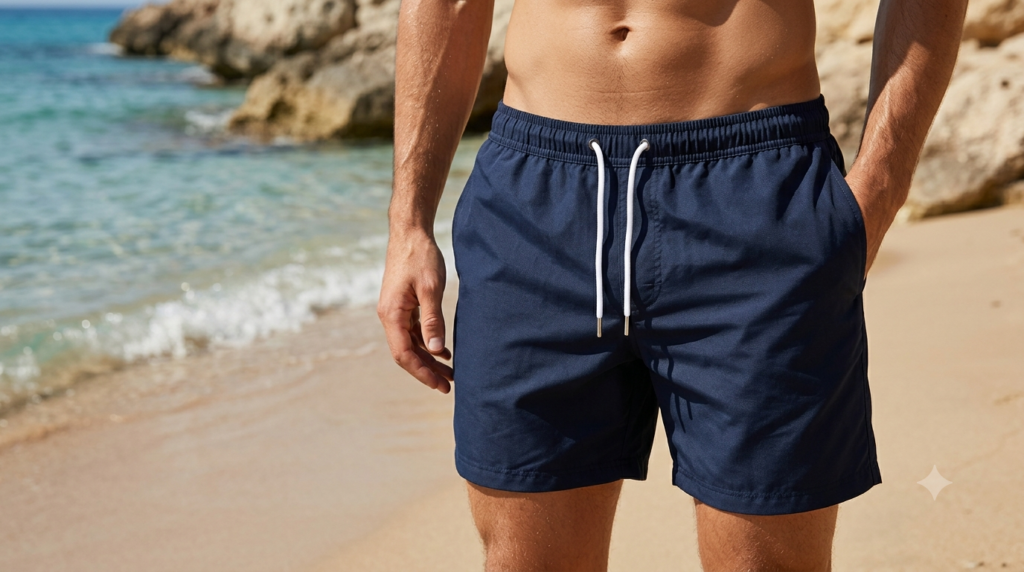
Swimwear is one of the best-known applications for ECONYL.
The material can be engineered into lightweight, close-fitting fabrics with the strength and stretch characteristics required for swimsuits and beachwear.
Sportswear and Activewear
ECONYL is used in leggings, cycling apparel, running clothing and other performance-oriented garments.
It is particularly useful where manufacturers want nylon’s abrasion resistance, strength and smooth surface while incorporating recycled feedstock.

Hosiery and Form-Fitting Clothing
The material can be processed into fine yarns for stockings, tights and other close-fitting garments.
Carpeting
Carpet is a major non-apparel application for ECONYL.
Aquafil produces ECONYL yarn for textile flooring, where nylon’s durability and abrasion resistance are particularly valuable. Current Aquafil documentation lists ECONYL production across carpet-yarn facilities in Europe, China and the United States.
Automotive Textiles
ECONYL is also used in selected automotive interior applications, including carpeting and other textile components.
Aquafil identifies automotive as one of the material’s major application areas.
Maritime and Industrial Products
Regenerated nylon can also be used for ropes, nets and other industrial applications where nylon 6’s mechanical properties are useful.
Where Is ECONYL Produced?
ECONYL has Italian origins, but its manufacturing network is international.
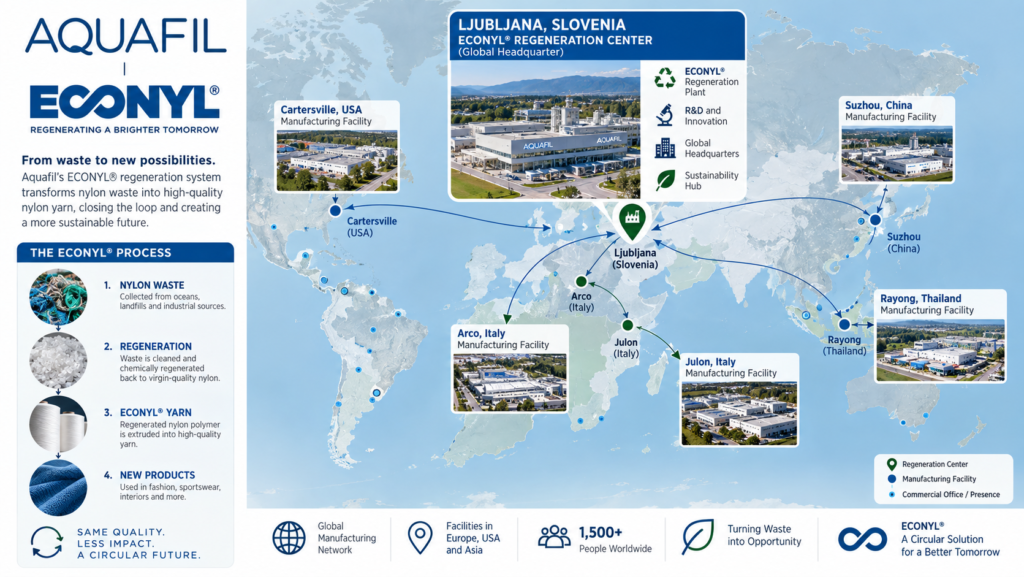
One of the most important sites is AquafilSLO in Ljubljana, Slovenia, where the ECONYL regeneration system was inaugurated in 2011. The facility handles nylon waste regeneration as well as nylon 6 polymerization and yarn production.
Aquafil’s current production documentation also identifies ECONYL yarn-related operations in locations including:
- Ljubljana, Slovenia
- Ajdovščina, Slovenia
- Arco, Italy
- Jiaxing, China
- Phoenix, United States
The exact locations involved depend on the particular ECONYL product and manufacturing stage.
This is more accurate than describing Slovenia as the only country where ECONYL products are made.
The distinction between regeneration and final textile production is also important. ECONYL polymer or yarn may be produced in one location and subsequently woven, knitted, dyed and manufactured into finished products somewhere else.
How Much Does ECONYL Fabric Cost?
There is no single retail price for ECONYL because it is a branded raw material rather than a finished fabric sold at one universal price.
The cost of an ECONYL fabric depends on:
- Yarn specification
- Denier
- Fabric construction
- Stretch content
- Dyeing
- Finishing
- Order quantity
- Manufacturing country
- Certification
- Whether the fabric is for apparel, flooring or technical use
Finished ECONYL garments can range from mainstream to premium depending on the brand.
A swimsuit made from ECONYL may command a premium because of its brand positioning, design and sustainability story, but that does not mean the fiber itself always costs a fixed percentage more than virgin nylon.
The economics also depend on the supply of suitable waste, collection costs, sorting, chemical regeneration and manufacturing efficiency.
What Different Types of ECONYL Fabric Are There?
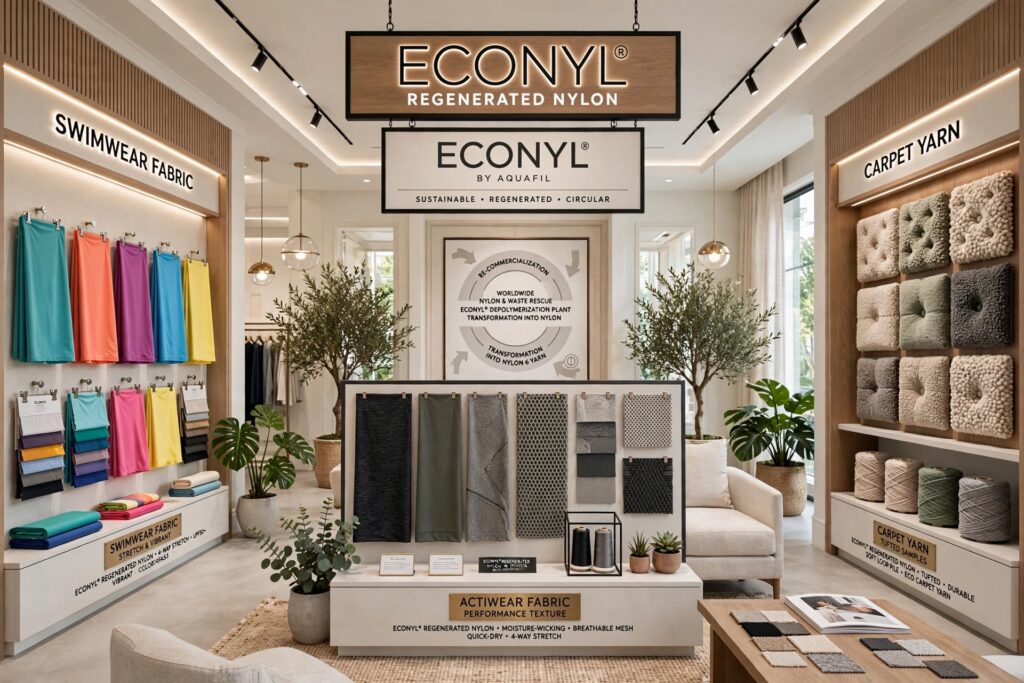
Because ECONYL is a branded regenerated nylon material rather than a generic fabric category, its variations are better understood through applications and yarn formats.
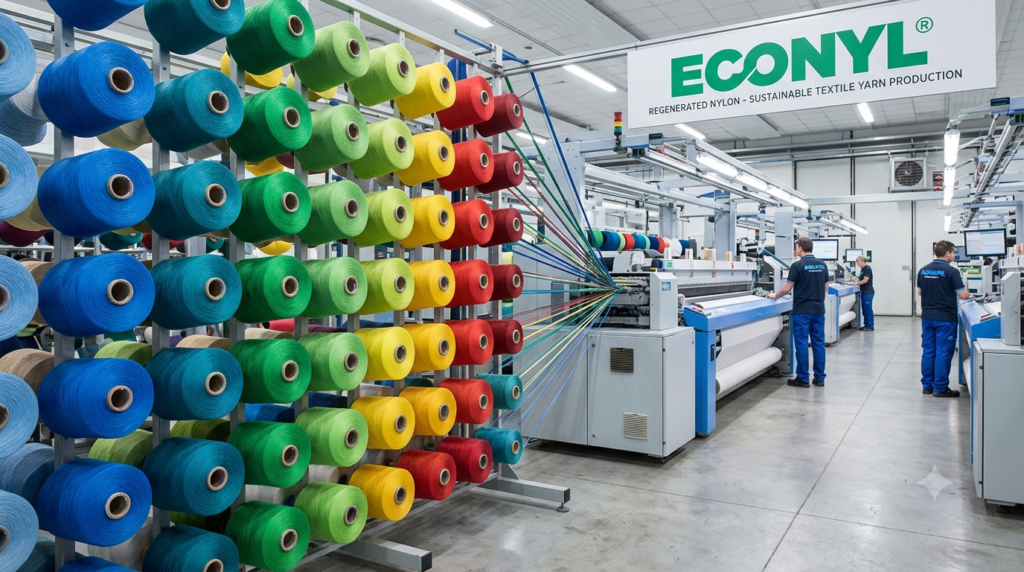
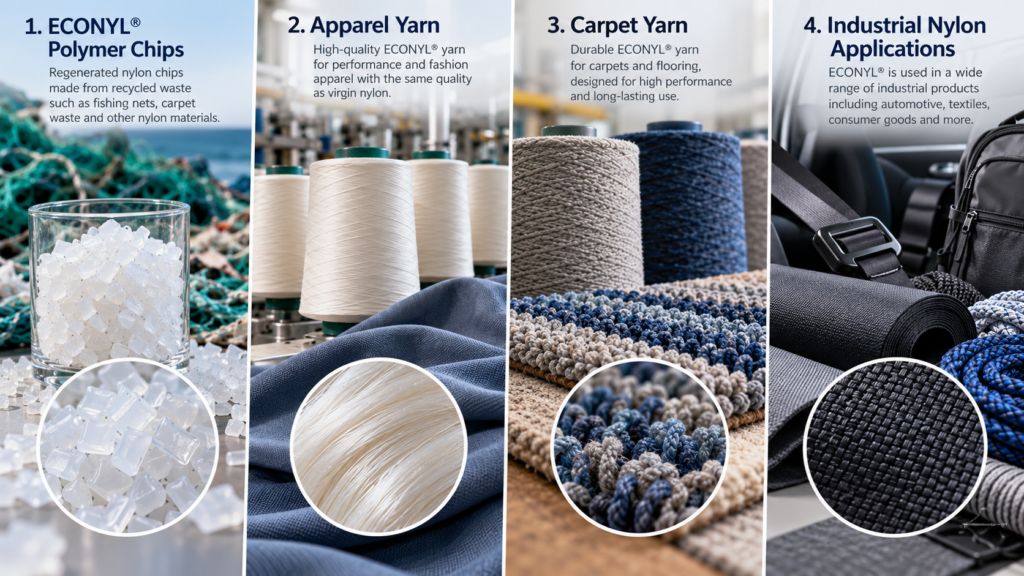
ECONYL Textile Yarn
Textile yarn is designed for apparel and other soft-goods applications.
It can be processed into fabrics for:
- Swimwear
- Sportswear
- Activewear
- Hosiery
- Fashion apparel
- Accessories
ECONYL Carpet Yarn
Carpet yarn is engineered for flooring and interior applications.
These yarns take advantage of nylon’s abrasion resistance and durability while using regenerated nylon as the raw material.
ECONYL Polymer
ECONYL is also supplied as regenerated nylon 6 polymer rather than only as yarn.
The polymer can be processed into different forms for applications outside conventional textiles.
ECONYL Industrial Materials
The material can be adapted for applications including industrial components, maritime products, automotive materials and other technical uses.
Aquafil currently describes ECONYL as suitable for a wide range of industrial applications while maintaining the performance characteristics of nylon 6.
How Does ECONYL Fabric Impact the Environment?
ECONYL was specifically developed around the idea of reducing waste and dependence on virgin fossil-based nylon feedstocks.
That gives it environmental advantages over conventional virgin nylon in certain areas, but it does not make the material impact-free.
It Uses Existing Nylon Waste
The clearest advantage is feedstock.
Instead of relying entirely on newly extracted fossil resources to make nylon 6, the ECONYL system uses recovered nylon waste.
Aquafil lists discarded fishing nets, carpets, textile waste and industrial nylon among its feedstocks.
This can divert useful nylon from disposal while reducing demand for new fossil-derived raw material.
Chemical Recycling Preserves Material Quality
Because ECONYL uses chemical recycling, nylon is broken down and purified at the molecular level rather than simply being mechanically reprocessed.
This allows the regenerated nylon to retain the performance characteristics associated with nylon 6. Aquafil states that its regenerated material has the same quality and technical performance as virgin nylon 6.
It Can Reduce the Carbon Footprint Compared With Virgin Nylon
Aquafil reports that producing ECONYL from waste results in fewer CO₂ emissions than conventional virgin nylon production, based on a Life Cycle Assessment conducted under ISO 14040/44 methodology and independently verified.
This is an important distinction:
ECONYL can have a lower environmental impact than virgin nylon, but that does not mean it has zero environmental impact.
Chemical recycling still requires energy, transport, processing infrastructure and chemicals.
It Is Not Biodegradable
ECONYL is still nylon 6.
That means it does not become biodegradable simply because the raw material has been recycled.
This is one of the major limitations of the material. If an ECONYL garment is discarded rather than recovered for recycling, its synthetic nylon components can persist in the environment.
Microfiber Shedding Remains Relevant
Because ECONYL is a synthetic textile fiber, fabrics made from it can release textile microfibers during use and laundering.
Recycling the raw material addresses the origin of the nylon but does not eliminate all issues associated with synthetic textile use.
Recycling Depends on Collection
ECONYL has strong circularity potential when nylon products can be collected and returned to appropriate recycling systems.
However, a theoretical closed loop is not the same as every garment actually being collected.
Aquafil itself is working on technologies to improve recovery from blended textiles. In 2025, the company announced a pilot system designed to separate nylon from elastane in textile waste—a significant challenge because many swimwear and sportswear products contain both fibers.
The Most Accurate Way to Describe ECONYL
ECONYL is best described as a recycled and regenerable nylon material designed to support more circular nylon production.
It can reduce the need for virgin fossil-based nylon and provide a productive use for nylon waste, but it remains a synthetic material with environmental impacts associated with production, use and end-of-life.
ECONYL Fabric Certifications Available
Because ECONYL is a branded material used across many industries, different certifications apply to different products and production stages.
ECONYL Product Certification
Aquafil reports certifications verifying recycled content in its ECONYL polymers and yarns, including an ECONYL product certificate identifying 100% recycled PA6 for qualifying products.
Environmental Product Declarations
Aquafil publishes Environmental Product Declarations (EPDs) for selected ECONYL polymer and yarn products.
EPDs provide quantified environmental information based on Life Cycle Assessment methodology rather than simply making a general sustainability claim. Current Aquafil documentation includes EPDs for ECONYL yarn products.
OEKO-TEX®
Selected Aquafil products carry OEKO-TEX® certifications relating to harmful substances.
This evaluates the relevant product against specified chemical-safety requirements and should not be interpreted as proof that the entire material supply chain is environmentally sustainable.
ISO Standards
Aquafil’s production and environmental-management systems include relevant ISO certifications and methodologies. Some production facilities are certified under ISO 14001 environmental-management standards.
Cradle to Cradle
Aquafil reports Cradle to Cradle Material Health certifications for selected ECONYL carpet yarn products. Again, this applies to specific products rather than automatically to every material sold under the ECONYL name.
What Should Buyers Check?
When buying an ECONYL product, check:
- Whether the product actually contains ECONYL regenerated nylon
- Recycled-content documentation
- The specific yarn or polymer used
- OEKO-TEX® or other product certifications
- Environmental Product Declarations where available
- Whether the finished product is designed for future recycling
The ECONYL name alone should not be treated as a universal certification for every environmental claim.
Frequently Asked Questions
Is ECONYL a fabric?
Technically, no. ECONYL is a branded regenerated nylon 6 material supplied as polymer and yarn. Those materials can then be made into fabrics and other products.
Is ECONYL the same as recycled nylon?
ECONYL is a specific branded form of regenerated nylon 6 made from recovered nylon waste. “Recycled nylon” is a broader generic term that can refer to many different recycling technologies and products.
Is ECONYL nylon?
Yes. ECONYL is regenerated nylon 6, also known as polyamide 6.
What is ECONYL made from?
It can be made from various forms of nylon 6 waste, including discarded fishing nets, carpet waste, textile waste and industrial nylon.
Is ECONYL made from fishing nets?
Fishing nets are one of the feedstocks used in the ECONYL regeneration system, but they are not the only source. The system also uses carpet, textile and industrial nylon waste.
Is ECONYL better than regular nylon?
ECONYL can have environmental advantages because it uses recovered nylon and reduces dependence on virgin fossil-based feedstock. In terms of core nylon 6 performance, Aquafil states that regenerated ECONYL is designed to match virgin nylon 6.
Is ECONYL biodegradable?
No. ECONYL is regenerated nylon 6 and remains a synthetic, non-biodegradable material.
Is ECONYL recyclable?
Yes, nylon 6 can be chemically regenerated, and Aquafil designed the ECONYL system around this principle. However, practical recycling depends on collection systems and the composition of the finished product.
Is ECONYL sustainable?
ECONYL can offer environmental benefits compared with virgin nylon, particularly by using waste and reducing reliance on new fossil-based feedstocks. However, it still requires industrial processing and remains a synthetic material. It is more accurate to describe it as a lower-impact or circularity-oriented alternative to virgin nylon in appropriate applications rather than simply calling it “sustainable.”
Is ECONYL good for swimwear?
Yes. Swimwear is one of its major fashion applications because regenerated nylon can provide the strength, stretch and smooth surface required for swim fabrics.
Is ECONYL good for sportswear?
Yes. It is used in activewear and sportswear where nylon’s strength, abrasion resistance and performance characteristics are desirable.
Does ECONYL contain plastic?
Yes. Nylon is a type of plastic polymer. ECONYL is regenerated nylon 6, so it remains a synthetic polymer even though its feedstock is recovered waste rather than entirely new fossil-based material.
Where is ECONYL made?
ECONYL has production operations in multiple countries. Aquafil’s Ljubljana, Slovenia facility is a major regeneration center, while current product documentation also identifies ECONYL yarn production and processing in locations including Slovenia, Italy, China and the United States.
Who makes ECONYL?
ECONYL was developed and is produced by Aquafil, an Italian company specializing in nylon and regenerated nylon technologies.
Does ECONYL shed microfibers?
Like other synthetic textile fibers, fabrics made from ECONYL can release microfibers through wear and washing. Recycling the nylon feedstock does not eliminate this characteristic of synthetic textiles.
Can ECONYL be blended with elastane?
Yes. ECONYL fabrics are frequently combined with elastane to provide additional stretch and recovery, particularly in swimwear and fitted sportswear. Recycling such blends is more complicated, which is why Aquafil has been developing technologies to separate nylon from elastane.
Is ECONYL more expensive than nylon?
The price varies by yarn, fabric, manufacturer and application. ECONYL can carry a premium in some markets, but the final cost of a garment depends on much more than the fiber itself.