What Is Mohair Wool Fabric?
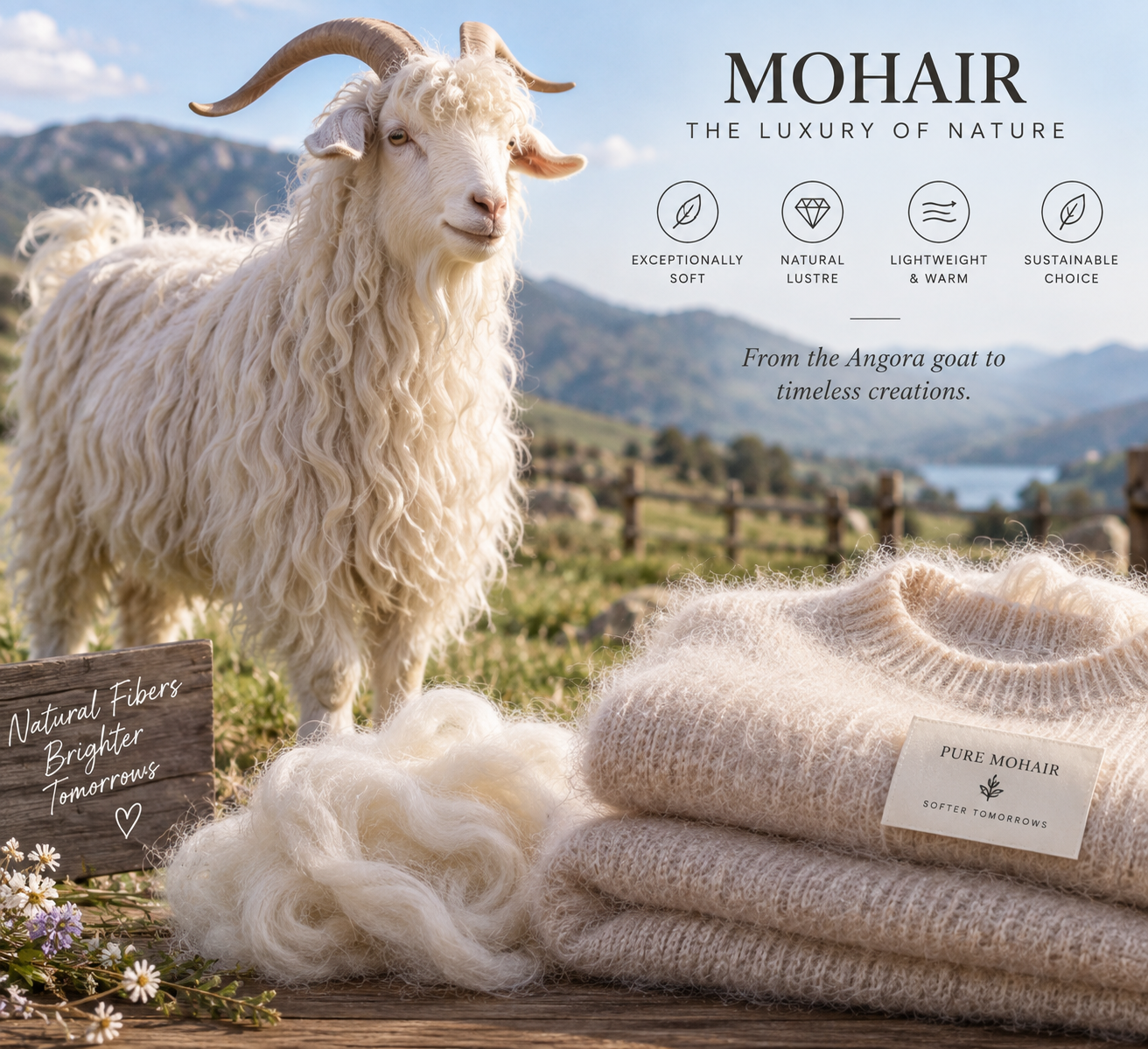
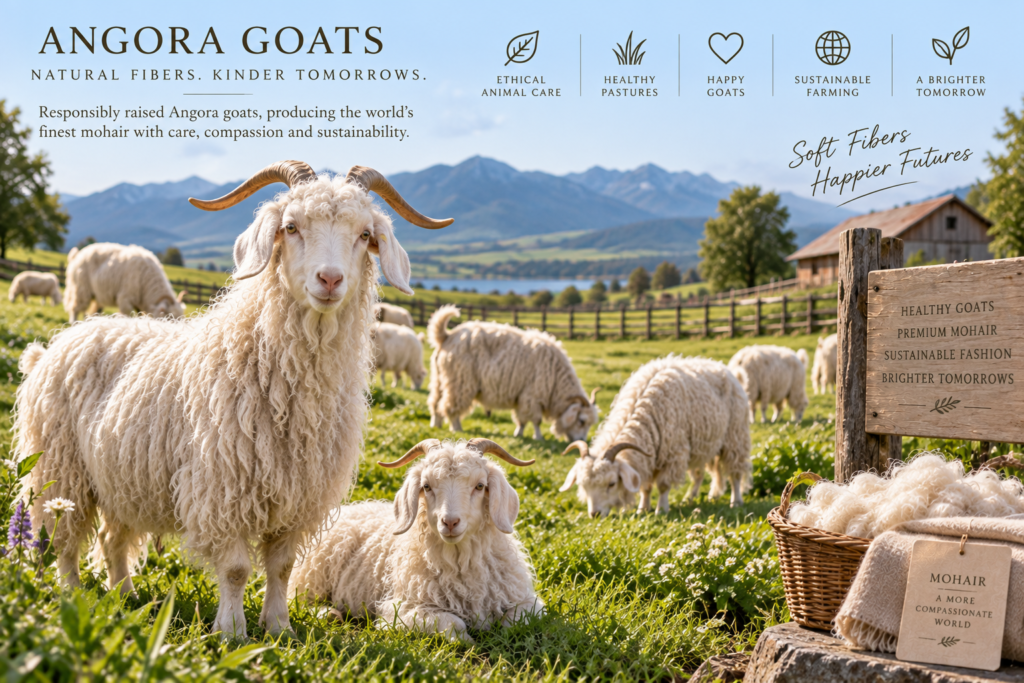
Mohair wool is a natural textile fiber made from the hair of the Angora goat. Unlike ordinary goats, Angora goats have a distinctive shaggy coat that produces long, lustrous fibers prized by the textile industry.
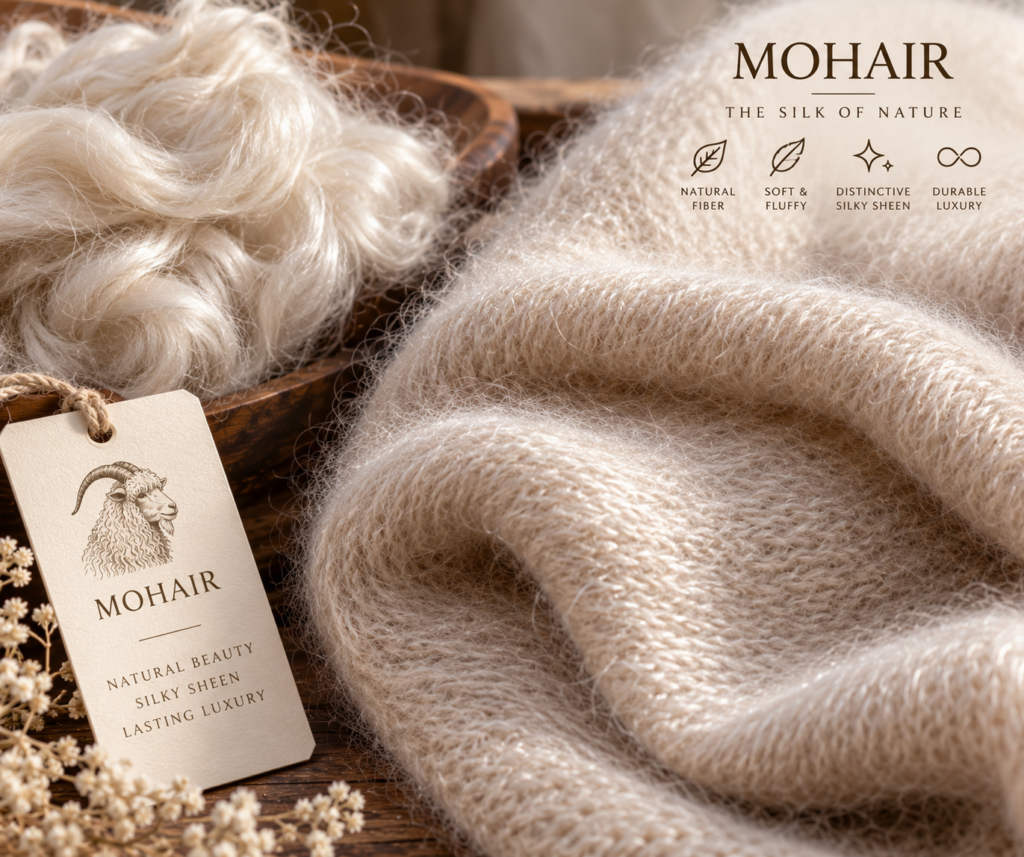
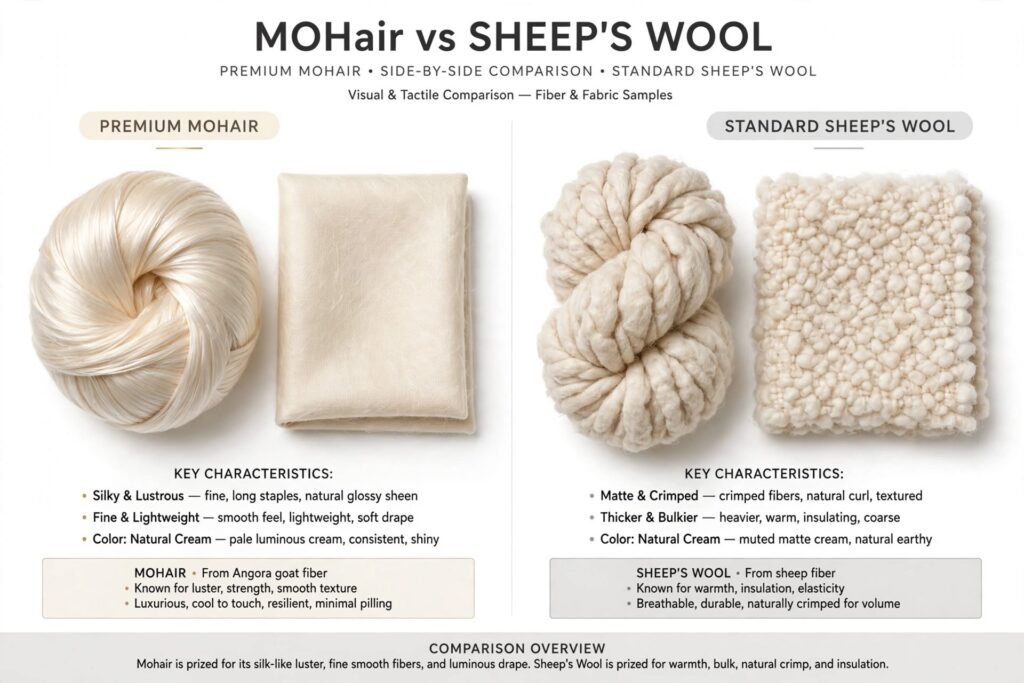
Mohair is sometimes called the “diamond fiber” because of its noticeable sheen, smooth appearance, durability, and ability to take dyes exceptionally well. Compared with traditional sheep’s wool, mohair is generally more lustrous, elastic, and resistant to creasing.
Mohair is also relatively resistant to felting. The surface scales on its fibers are less developed than those found on many other types of wool, reducing the tendency of the fibers to lock together during washing.
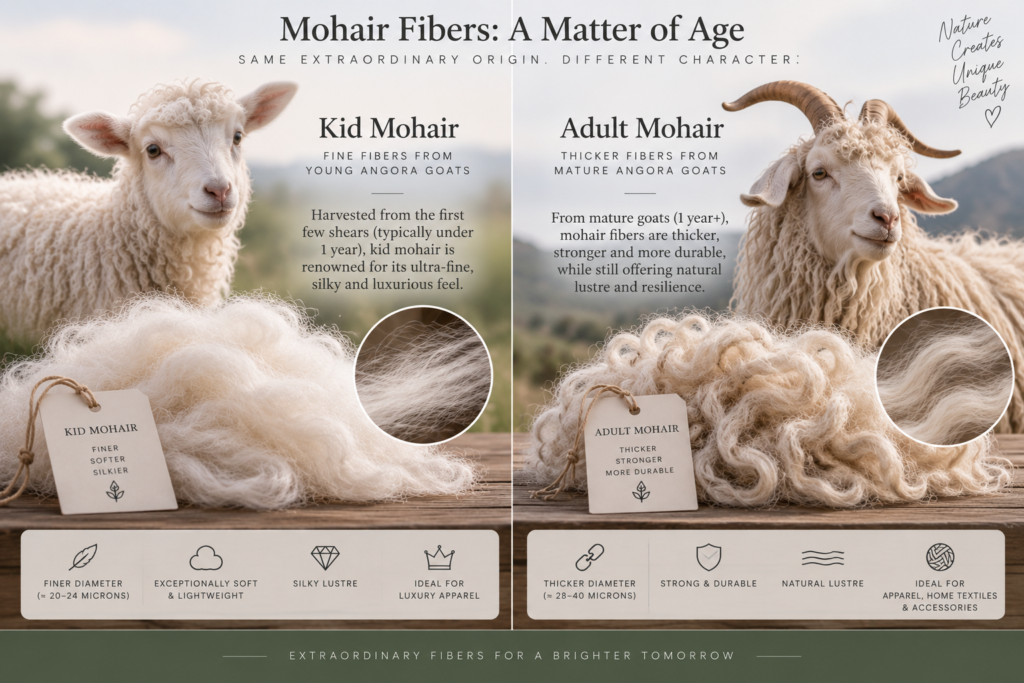
The quality of mohair changes as Angora goats grow older. Younger goats produce finer and silkier fibers, while the fibers of older goats become thicker and coarser.
Mohair is considered a luxury textile and is often blended with wool, silk, or synthetic fibers. Even when used in relatively small quantities, mohair can add softness, shine, elasticity, durability, and texture to a fabric.
Mohair should not be confused with Angora wool, which comes from Angora rabbits. The word “mohair” is also sometimes used for the material covering convertible-car roofs, but that material is a type of canvas rather than goat fiber.
Quick Facts About Mohair Wool Fabric
| Property | Details |
|---|---|
| Fabric name | Mohair wool |
| Also known as | The “diamond fiber” |
| Fiber source | Hair fibers from Angora goats |
| Breathability | Reasonably breathable |
| Moisture-wicking ability | Medium |
| Heat retention | High |
| Stretchability | High |
| Pilling tendency | Medium |
| Historical production | Turkey |
| Largest producer today | South Africa |
| Recommended washing | Cold hand wash |
| Common uses | Sweaters, suits, scarves, hats, coats, socks, carpets, and home furnishings |
How Is Mohair Wool Fabric Made?
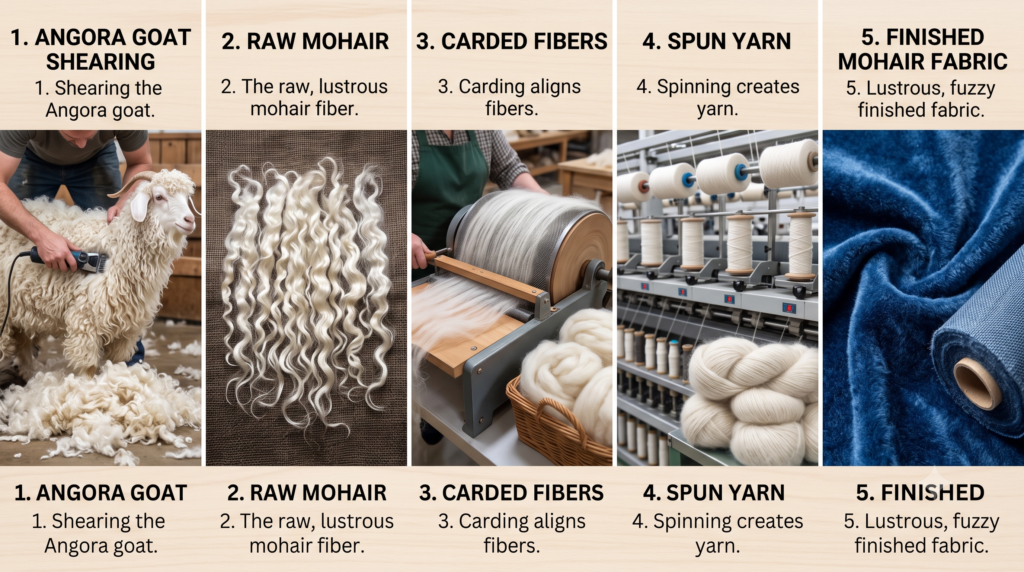
Mohair production begins with Angora goats and has developed from traditional hand-processing methods into a combination of small-scale and industrial production.
1. Shearing the Angora Goats
Angora goats grow their hair relatively quickly and are generally sheared twice a year, usually in spring and fall.
During shearing, the goats need to be properly restrained so they are not injured. Responsible producers use careful handling practices to protect the animals during the process.
Animal-welfare concerns have been raised about some mohair farms, particularly where rough handling or inadequate shearing practices have caused injuries. These concerns have contributed to increased demand for responsibly sourced and certified mohair.
2. Washing
After shearing, the raw mohair is carefully washed to remove dirt, plant material, and other impurities.
3. Carding
The cleaned fibers are carded, which separates and aligns the fibers into organized strands.
Because mohair fibers are relatively uniform in length, they can be efficiently carded and prepared for spinning.
4. Spinning
The prepared fibers are spun into yarn. Depending on the producer, traditional spinning methods or modern automated machinery may be used.
5. Final Washing
The yarn is washed again before being prepared for textile production.
6. Weaving or Knitting
The finished yarn can then be woven or knitted into fabric. Many mohair producers sell their yarn to textile manufacturers, while some farms and smaller producers make finished textile products themselves.
How Is Mohair Wool Fabric Used?
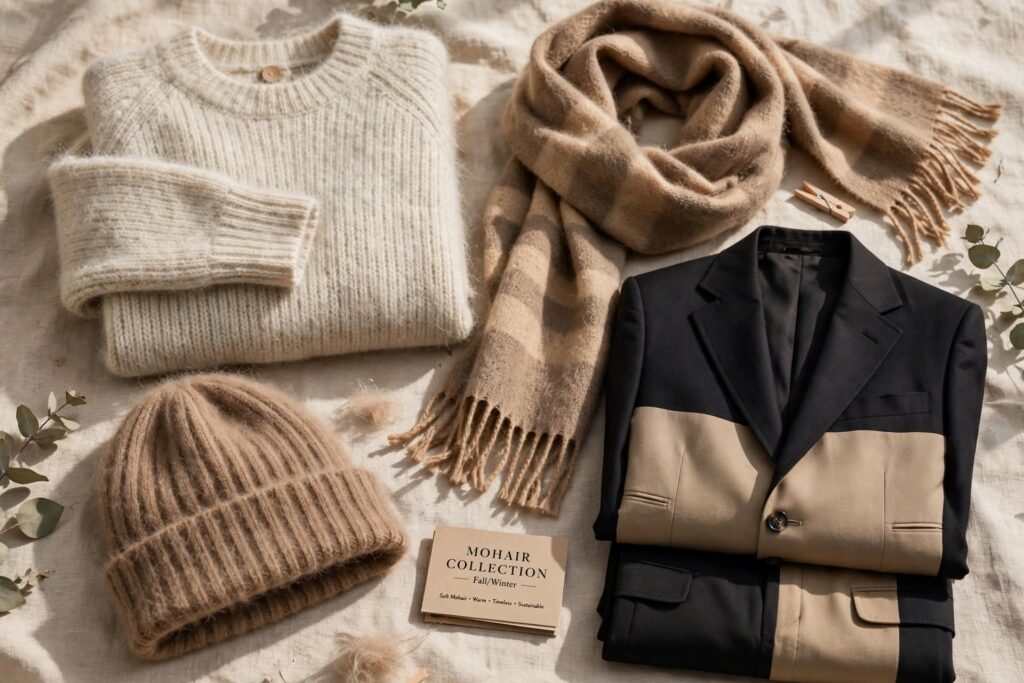
Mohair is valued for its combination of softness, shine, elasticity, warmth, and durability. It is therefore used in both clothing and household textiles.
Clothing
Common clothing applications include:
- Sweaters
- Coats
- Suits
- Scarves
- Winter hats
- Socks
- Jackets
- Knitwear
Mohair is particularly useful for winter clothing because it provides warmth without necessarily producing an excessively heavy fabric.
Two-Tone Suits
One distinctive historical application of mohair is the two-tone suit, which became particularly fashionable in the United Kingdom during the 1960s.
Because of mohair’s reflective surface, the fabric can appear to change color depending on the viewing angle and lighting. The style became popular among musicians and later spread internationally.
Home Furnishings
Mohair is also used in:
- Carpets
- Rugs
- Upholstery
- Wall hangings
- Decorative textiles
Mohair carpets experienced a period of popularity during the 1970s. Although less common today, mohair remains suitable for premium rugs and furnishings.
Other Uses
The fiber is also used for:
- Craft yarns
- Doll wigs
- Decorative textiles
Where Is Mohair Wool Produced?
South Africa is the world’s largest producer of mohair, accounting for approximately half of global production.
The United States, particularly Texas, is another important producer. China has also increased its involvement in mohair production in recent years.
Mohair production historically expanded beyond Turkey during the British Empire. Angora goats were introduced to South Africa, Australia, New Zealand, and the United States as demand for mohair increased.
Much of South Africa’s mohair is exported as raw or semi-processed fiber to Europe and Asia, where it is turned into finished yarns and textile products.
Global mohair production has declined significantly from its historical peak. Production reached its highest levels in the 1990s, but concerns about animal welfare and changing consumer attitudes contributed to lower demand and reduced production.
How Much Does Mohair Wool Fabric Cost?
Mohair is considered one of the more expensive animal fibers. Its price can be comparable to other luxury fibers such as cashmere and Suri alpaca.
The price depends on:
- Fiber quality
- Age of the Angora goat
- Fiber fineness
- Processing method
- Percentage of mohair in a blend
- Yarn quality
- Fabric construction
- Country of production
- Whether the product is handmade or industrially manufactured
Fine mohair from younger goats generally commands higher prices because it is softer, shinier, and more suitable for premium apparel.
Mohair can also be significantly more expensive than ordinary sheep’s wool. The reference article notes an example producer price of around $10 per pound for mohair, compared with approximately $0.40 per pound for sheep’s wool, although actual prices vary according to market conditions and fiber quality.
What Different Types of Mohair Wool Are There?
Mohair is produced specifically from Angora goats, but its quality varies mainly according to the age of the goat.
Mohair From Younger Goats
Younger Angora goats produce finer, softer, and more lustrous fibers.
This type of mohair is often called kid mohair and is highly valued for premium clothing. High-end sweaters and other luxury garments frequently use finer fibers from younger goats.
Mohair From Older Goats
As Angora goats age, their hair becomes thicker and coarser.
Although older-goat mohair may not be as desirable for garments worn directly against the skin, its additional strength and texture make it useful for products such as:
- Upholstery
- Rugs
- Carpets
- Heavy textiles
The distinction between young- and mature-goat mohair is therefore important when evaluating softness, appearance, and price.
How Does Mohair Wool Fabric Impact the Environment?
Mohair is a natural animal fiber and is biodegradable, which gives it an advantage over many synthetic textiles that can persist in the environment for long periods.
However, assessing mohair’s sustainability requires looking beyond biodegradability.
Animal Welfare
Animal welfare is one of the most significant concerns associated with mohair production.
Reports from animal-rights organizations have documented cases of rough handling, inadequate conditions, and painful procedures on some Angora goat farms. These practices are not an unavoidable part of producing mohair, but they demonstrate why responsible sourcing is important.
Production standards vary between farms, so buyers should look for suppliers that provide transparent information about animal welfare and fiber sourcing.
Land and Feed Requirements
Raising Angora goats requires grazing land and feed. The amount of land required depends on farming practices, climate, stocking density, and local conditions.
Poorly managed grazing can put pressure on ecosystems, while responsible pasture management can reduce environmental impacts.
Chemical Use
Mohair is a natural fiber and does not inherently require the types of petroleum-derived raw materials used to manufacture synthetic textiles.
However, processing and dyeing can involve chemicals, and the environmental impact depends on how those substances are managed and whether wastewater is properly treated.
Biodegradability
Pure mohair is biodegradable and can naturally break down at the end of its useful life under suitable conditions.
For consumers concerned about both environmental and animal-welfare issues, certified and traceable mohair is generally a better choice than material with an unclear supply chain.
Mohair Wool Certifications Available
Certification can help buyers identify mohair sourced from producers following defined animal-welfare and environmental standards.
Responsible Wool Standard (RWS)
The Responsible Wool Standard is a widely recognized animal-fiber certification system. Although its primary focus is sheep’s wool, the reference identifies it as relevant to responsible mohair sourcing as well.
When evaluating a certified product, buyers should verify the specific scope of certification and whether the certification applies to the mohair component.
Wildlife Friendly Enterprise Network (WFEN)
The Wildlife Friendly Enterprise Network is another organization involved in certifying products connected with responsible wildlife and livestock management.
Its standards can help identify mohair producers that follow requirements intended to protect Angora goats and promote more responsible production practices.
Certification alone does not guarantee that every aspect of a textile’s environmental footprint is minimal. Buyers should also consider fiber content, processing, dyeing, transportation, and supply-chain transparency.
Frequently Asked Questions
What is mohair wool made from?
Mohair is made from the hair of Angora goats. The finest fibers generally come from younger goats.
Is mohair the same as Angora wool?
No. Mohair comes from Angora goats, while Angora wool comes from Angora rabbits.
Is mohair soft?
Yes. Fine mohair is soft, silky, and lustrous. Mohair from younger goats is generally softer and finer than fiber from older goats.
Is mohair warm?
Yes. Mohair has high heat-retention properties and is commonly used in sweaters, coats, hats, and other winter clothing.
Is mohair stretchy?
Mohair has relatively high elasticity compared with many other wool fibers. This is one reason it is useful in knitwear and blended fabrics.
Is mohair expensive?
Yes. Mohair is considered a luxury fiber and can cost considerably more than ordinary sheep’s wool.
Does mohair pill?
Mohair has a medium tendency to pill. The amount of pilling depends on fiber quality, fabric construction, blending, and friction during use.
Is mohair sustainable?
Mohair is a natural and biodegradable fiber, but sustainability depends on farming, animal-welfare practices, land management, processing, and transportation. Responsibly sourced and certified mohair can provide a better option.
Where is most mohair produced?
South Africa is the world’s largest mohair producer, while the United States, China, Turkey, Australia, and New Zealand also have production.
How should mohair fabric be washed?
Cold hand washing is generally recommended. Always follow the manufacturer’s care instructions and avoid excessive heat or aggressive agitation.