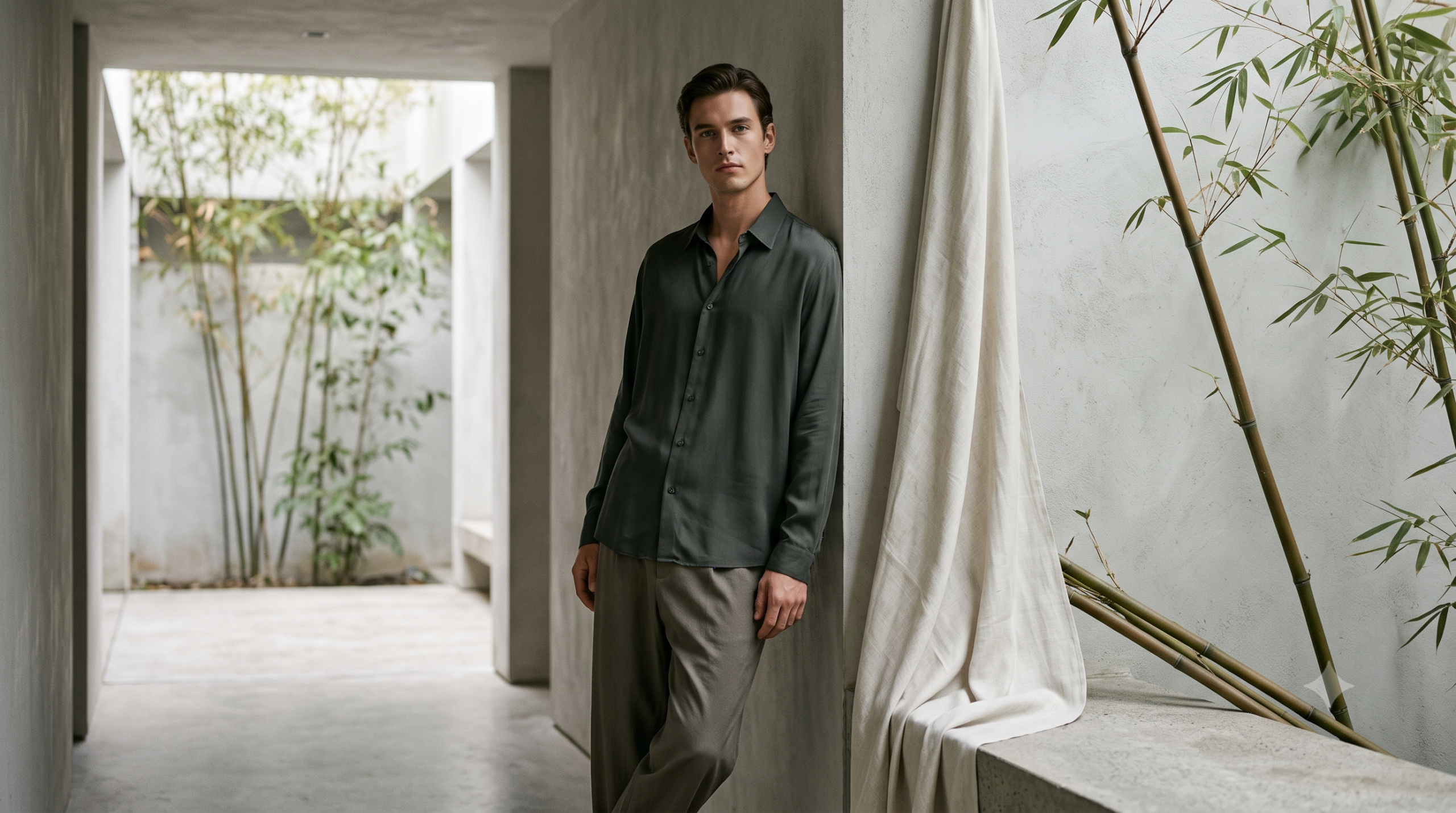
Bamboo fabric is a broad term used for textiles made using bamboo as a raw material. However, the term can describe very different materials, and understanding the manufacturing method is essential.
Most textiles marketed commercially as “bamboo fabric” are actually rayon or viscose made from bamboo-derived cellulose. In this process, bamboo is broken down into cellulose and chemically regenerated into a new fiber. The finished material is therefore not mechanically preserved bamboo fiber.
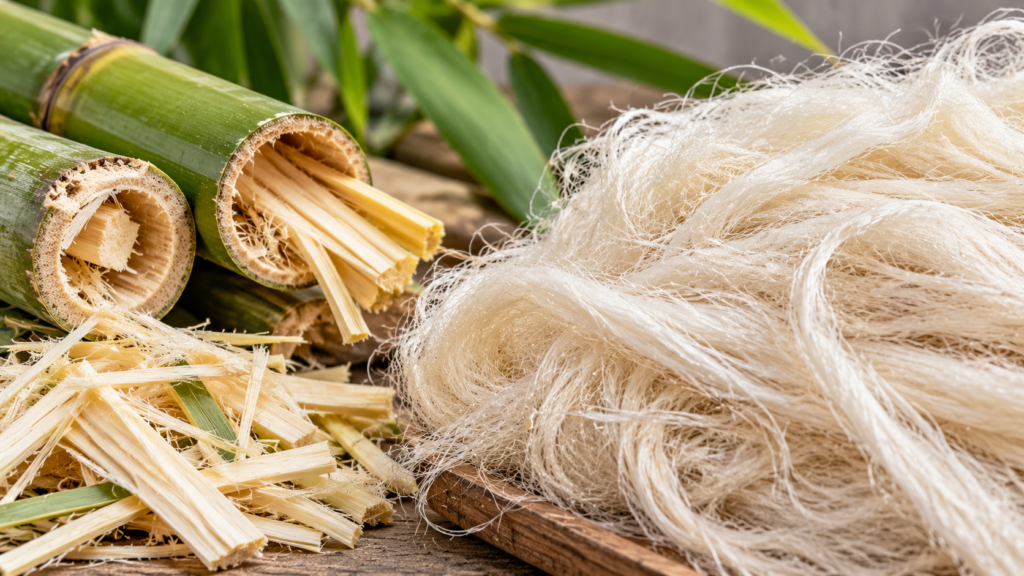
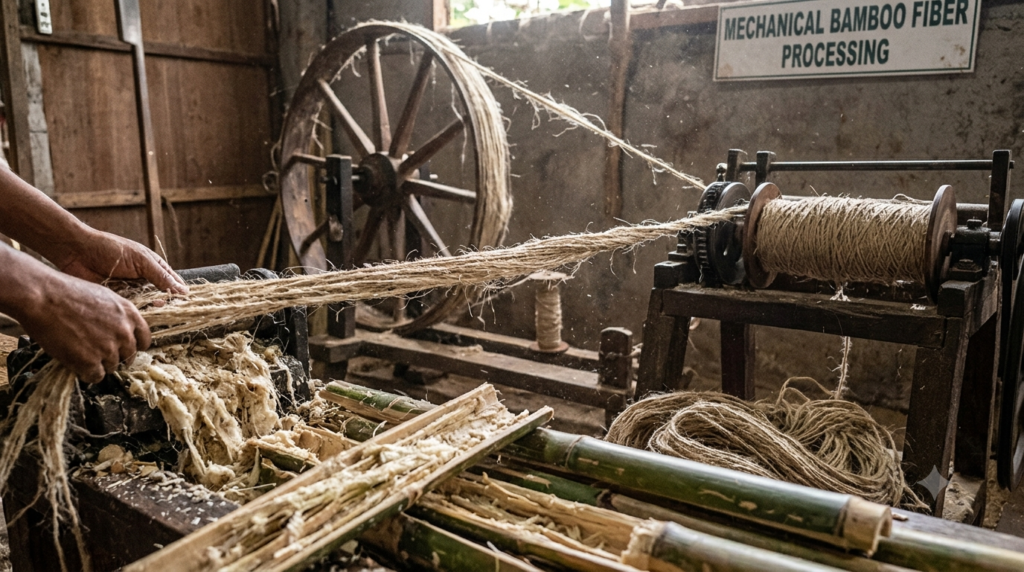
A much smaller category uses bamboo more directly through mechanical processing. This approach can produce a genuine bamboo-derived fiber, but it is considerably less common and is more difficult to turn into the soft, fine fabrics typically associated with bamboo clothing and bedding.
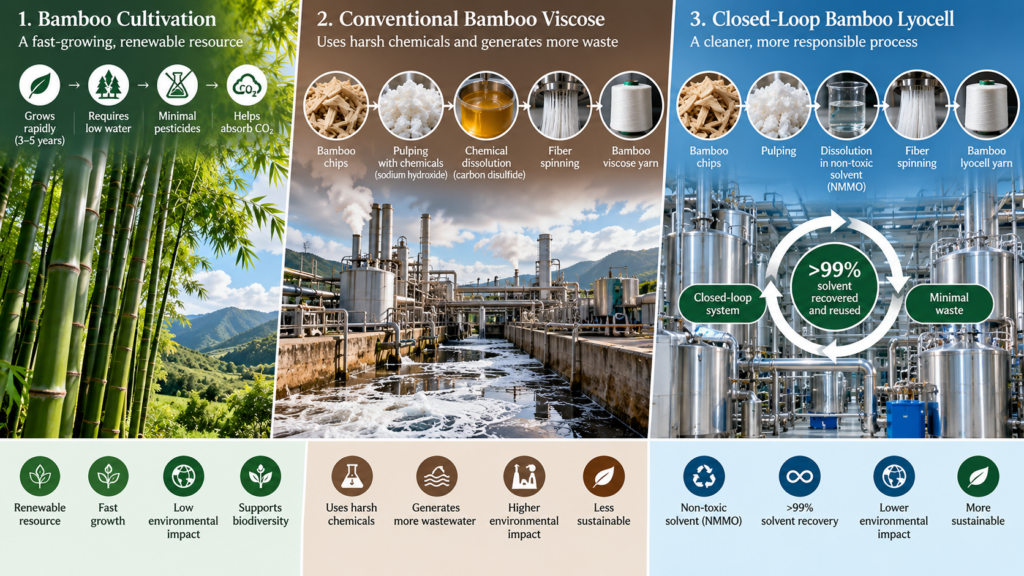
There is also a third route: bamboo-derived lyocell, where bamboo cellulose is processed using a lyocell-type solvent system. This is chemically different from conventional bamboo viscose and should be evaluated separately.
This distinction is important not only for understanding the fabric but also for sustainability claims. The Federal Trade Commission (FTC) states that textiles made from rayon using bamboo as the plant source should be identified as “rayon” or “rayon made from bamboo,” rather than simply being advertised as bamboo.
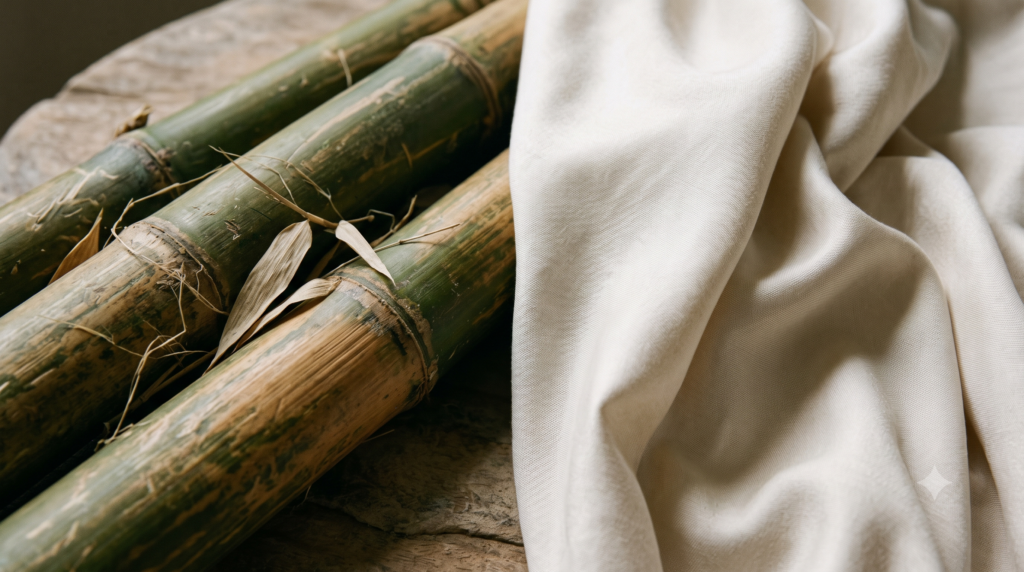
Quick Facts About Bamboo Fabric
| Feature | Details |
|---|---|
| Fabric name | Bamboo fabric |
| Common commercial descriptions | Bamboo rayon, bamboo viscose, bamboo lyocell |
| Main raw material | Bamboo cellulose |
| Fiber category | Depends on manufacturing method |
| Most common commercial form | Rayon/viscose made from bamboo |
| Typical feel | Soft and smooth, depending on processing |
| Breathability | Generally good in lightweight constructions |
| Moisture absorption | Generally good for regenerated cellulose fibers |
| Stretch | Depends on fabric construction and blends |
| Common uses | Clothing, underwear, socks, towels, bedding |
| Major production region | China and other Asian textile-producing countries |
| Care | Follow the garment’s care label |
What Is Bamboo Fabric?
Unlike cotton or linen, “bamboo fabric” does not identify one specific fiber.
The phrase describes a group of textiles in which bamboo serves as the original plant material or cellulose source.
The most common commercial route is to convert bamboo into cellulose pulp and then manufacture rayon or viscose from that cellulose. Chemically, the finished fiber is rayon/viscose rather than a piece of bamboo that has simply been spun into yarn.
The FTC makes this distinction particularly clear: a textile can only be labeled as bamboo in the United States when it is made directly from actual bamboo fiber. When bamboo is converted into rayon, the appropriate description is rayon or viscose made from bamboo.
Why Is Bamboo Used as a Textile Raw Material?
Bamboo is a fast-growing plant that produces substantial biomass and can be cultivated in a range of environments. These characteristics make it an attractive source of cellulose.
But the environmental benefits of the plant itself should not automatically be transferred to the finished textile.
Once bamboo is converted into rayon, the environmental profile is determined largely by the chemical process used to turn cellulose into fiber.
What Does Bamboo Fabric Feel Like?
Most commercially available bamboo rayon fabrics are soft, smooth and comfortable against the skin.
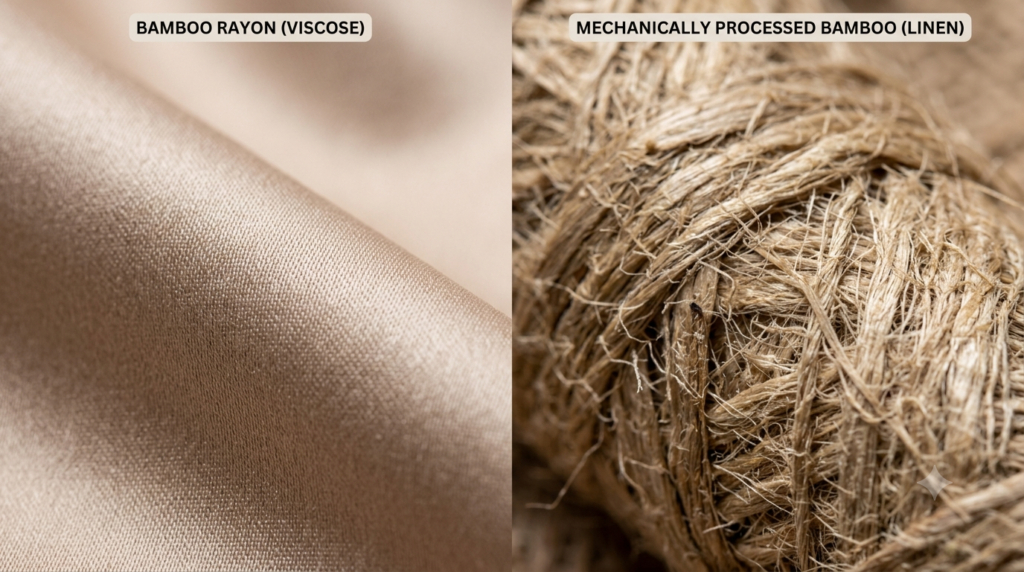
Their final characteristics depend on the fiber process and fabric construction. Bamboo-derived rayon can resemble other soft regenerated-cellulose fabrics, while mechanically processed bamboo fibers tend to have a different, more natural and sometimes coarser character.
History of Bamboo Textiles
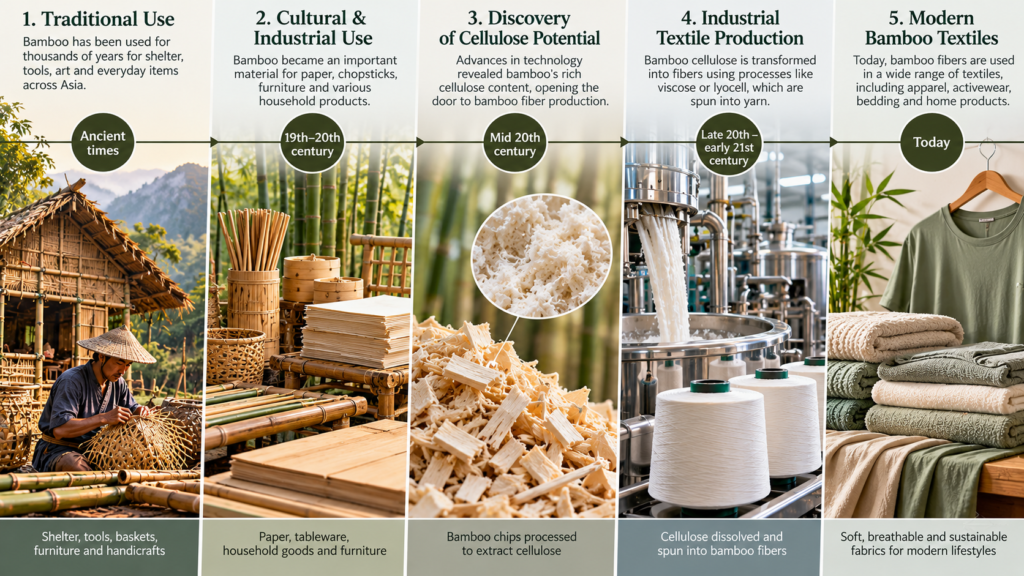
Bamboo has been used as a material for centuries across parts of Asia, particularly for household goods, tools, paper and other applications.
Its development as a modern textile material is more recent.
Traditional bamboo fiber was difficult to turn into the fine, soft yarns required for conventional clothing. Modern textile technology changed this by allowing manufacturers to use bamboo as a cellulose feedstock for regenerated fibers.
The commercial growth of bamboo-derived rayon accelerated as textile manufacturers and brands searched for alternative cellulose sources and consumers became increasingly interested in plant-based materials.
This created a terminology problem that still exists today: garments made from bamboo-derived rayon are frequently marketed simply as “bamboo,” even though the manufacturing process has transformed the original bamboo cellulose into regenerated rayon.
The FTC has repeatedly taken action against misleading bamboo textile labeling and environmental claims. In 2022, for example, the agency announced enforcement actions involving major retailers that had marketed rayon textiles as bamboo and made unsupported environmental claims.
How Is Bamboo Fabric Made?
There is no single manufacturing method for bamboo fabric.
The three approaches most useful for understanding the market are:
- Bamboo viscose/rayon
- Bamboo lyocell
- Mechanically processed bamboo fiber
Bamboo Viscose or Rayon
This is by far the most common type of bamboo-derived textile.
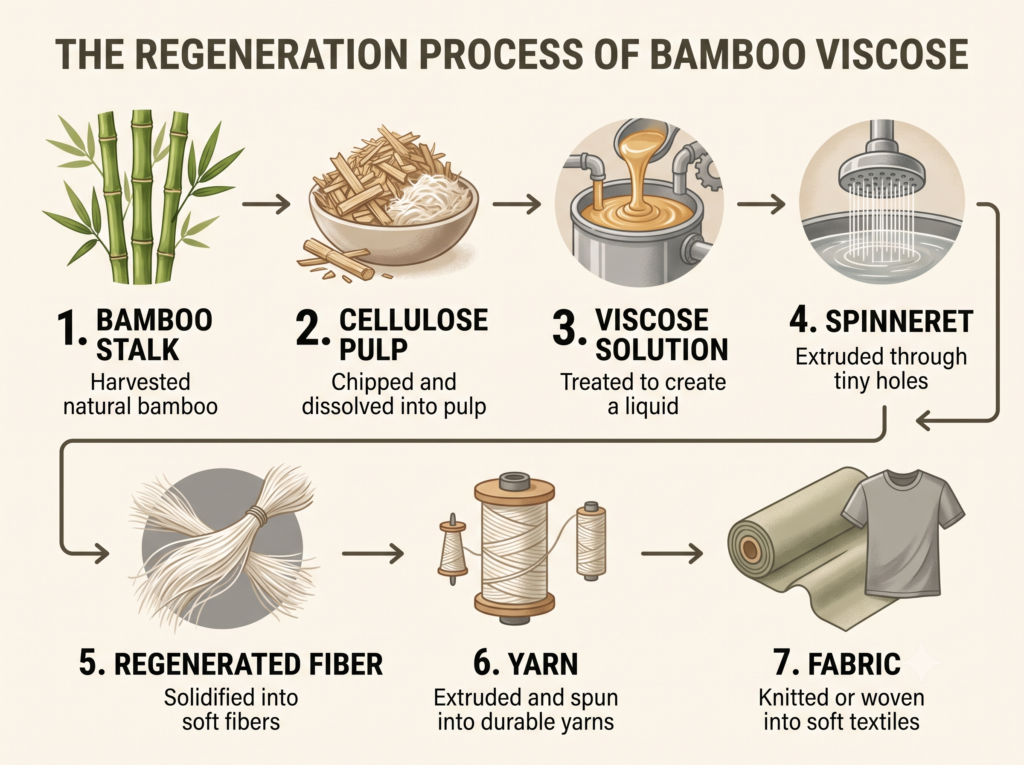
1. Bamboo Is Harvested
Bamboo stalks are harvested and transported for processing.
The bamboo is broken down into smaller pieces before being processed to separate its cellulose from other plant components.
2. Cellulose Is Extracted
The bamboo is treated to produce cellulose pulp suitable for fiber manufacturing.
This stage can involve alkaline chemicals and other processing agents.
3. Cellulose Is Chemically Converted
For conventional viscose production, the cellulose undergoes several chemical transformations before becoming a solution that can be spun.
Carbon disulfide is one of the chemicals associated with conventional viscose production.
4. The Solution Is Spun Into Fiber
The prepared cellulose solution is forced through a spinneret to form extremely fine filaments.
These filaments are regenerated, washed and processed into textile fibers.
5. Yarn and Fabric Are Produced
The resulting fiber is spun into yarn and then woven or knitted.
The finished material may be used for clothing, towels, sheets and other textile products.
The important point is that the finished material is rayon/viscose, even though bamboo was the original cellulose source.
Bamboo Lyocell
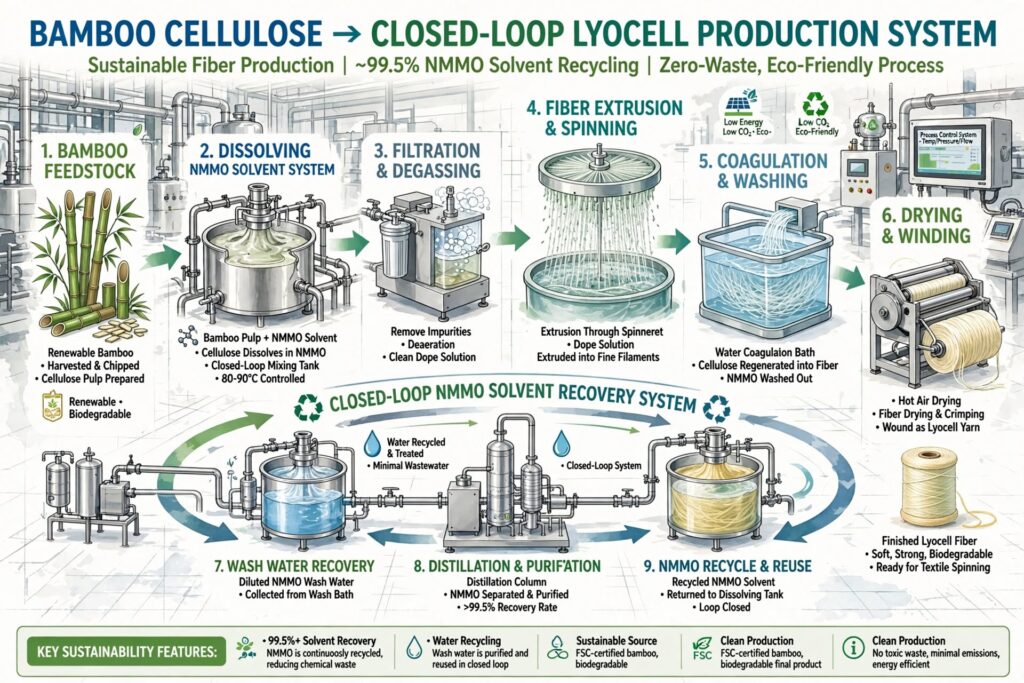
Bamboo can also be used as the cellulose source for a lyocell-type fiber.
Lyocell uses a different solvent system from conventional viscose and can be produced using a closed-loop process in which the solvent is recovered and reused.
The resulting fiber should therefore be described as lyocell made from bamboo cellulose, rather than simply assuming it is conventional bamboo viscose.
Mechanically Processed Bamboo Fiber
A much less common approach attempts to retain more of the original bamboo fiber structure.
The bamboo is mechanically crushed, processed and separated into fibers rather than being completely dissolved and regenerated as rayon.
This method can produce a genuine bamboo-derived textile fiber, but it is technically more challenging and generally results in a different texture from the exceptionally soft bamboo rayon commonly sold today.
The FTC identifies mechanically processed bamboo as the type that can appropriately be described as bamboo fiber.
How Is Bamboo Fabric Used?
Bamboo-derived textiles are used in many of the same applications as cotton and other soft cellulosic fabrics.
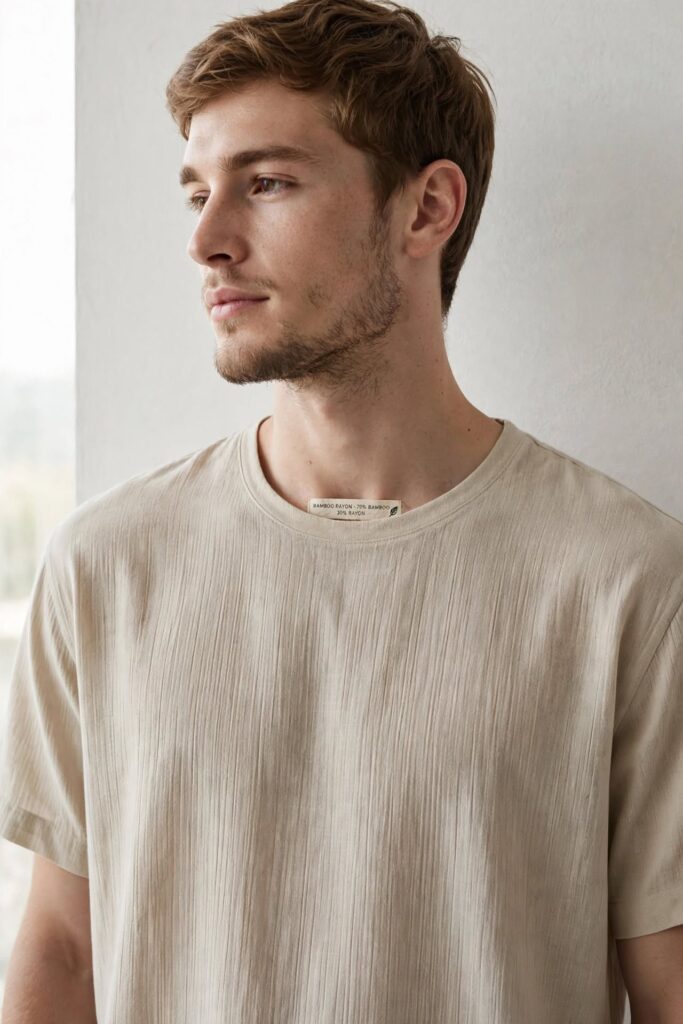
Clothing
Bamboo rayon is widely used for:
- T-shirts
- Underwear
- Socks
- Tops
- Dresses
- Loungewear
- Sleepwear
- Lightweight trousers
Its softness makes it especially popular for garments worn directly against the skin.
Underwear and Base Layers
Bamboo-derived rayon is frequently marketed for underwear because it can produce a smooth, soft and lightweight fabric.
However, claims that bamboo-derived rayon automatically retains the antibacterial properties of the bamboo plant are not supported simply by the fact that bamboo was the original raw material. The FTC specifically warns against unsupported antibacterial claims for processed bamboo textiles.
Socks
Bamboo-derived rayon is also common in socks.
It can provide a soft hand and good moisture absorption, although the actual performance depends on the fiber blend and sock construction.
Towels
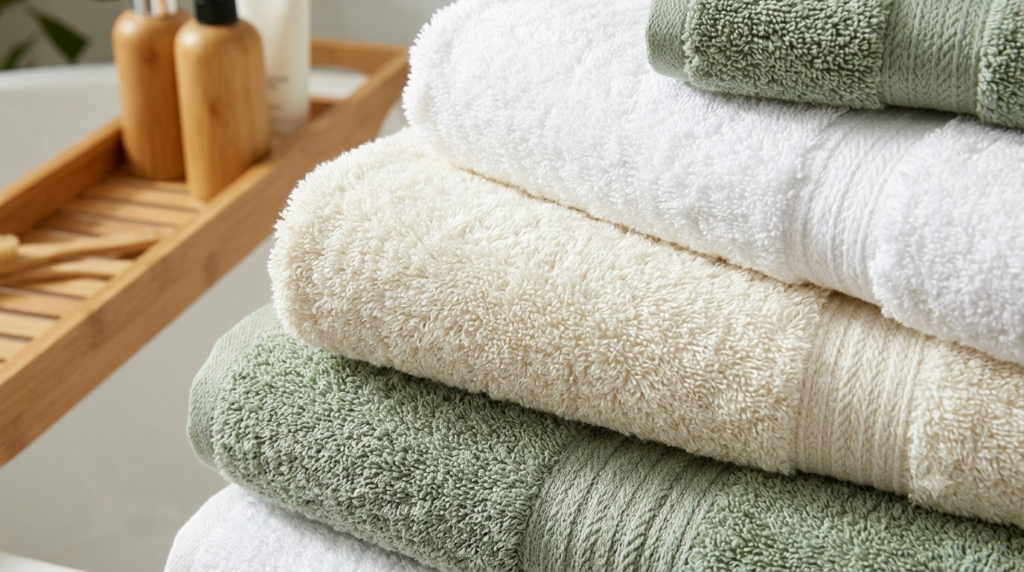
Bamboo-derived rayon can be blended with cotton or used in other towel constructions where softness and absorbency are desirable.
Bedding
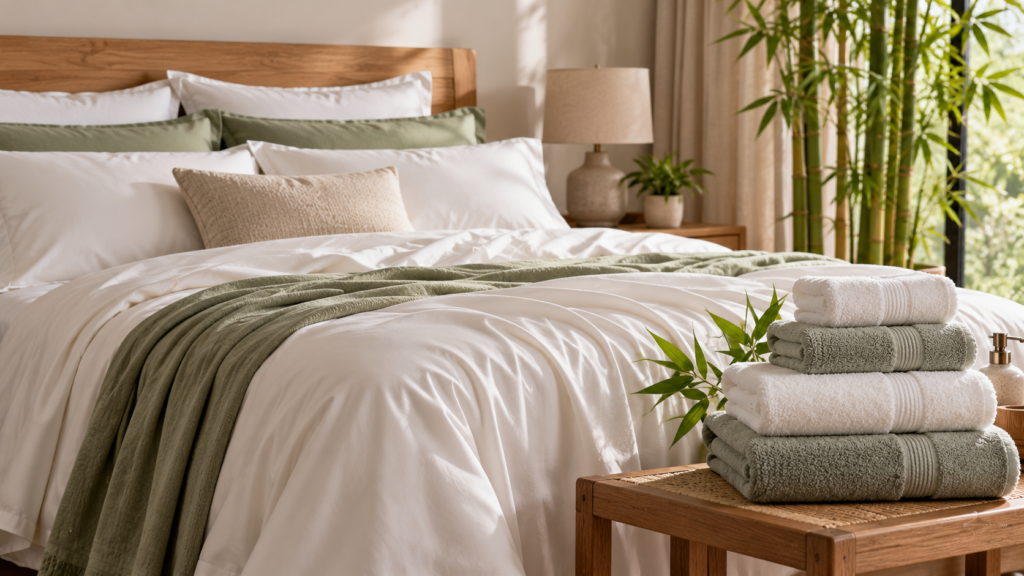
Sheets, pillowcases, blankets and other bedding products are another major application.
The smooth hand and moisture absorption associated with regenerated cellulose make bamboo-derived fabrics attractive for bedding.
Home Textiles
Bamboo-derived textiles can also be found in bathrobes, household fabrics and selected decorative products.
Where Is Bamboo Fabric Produced?
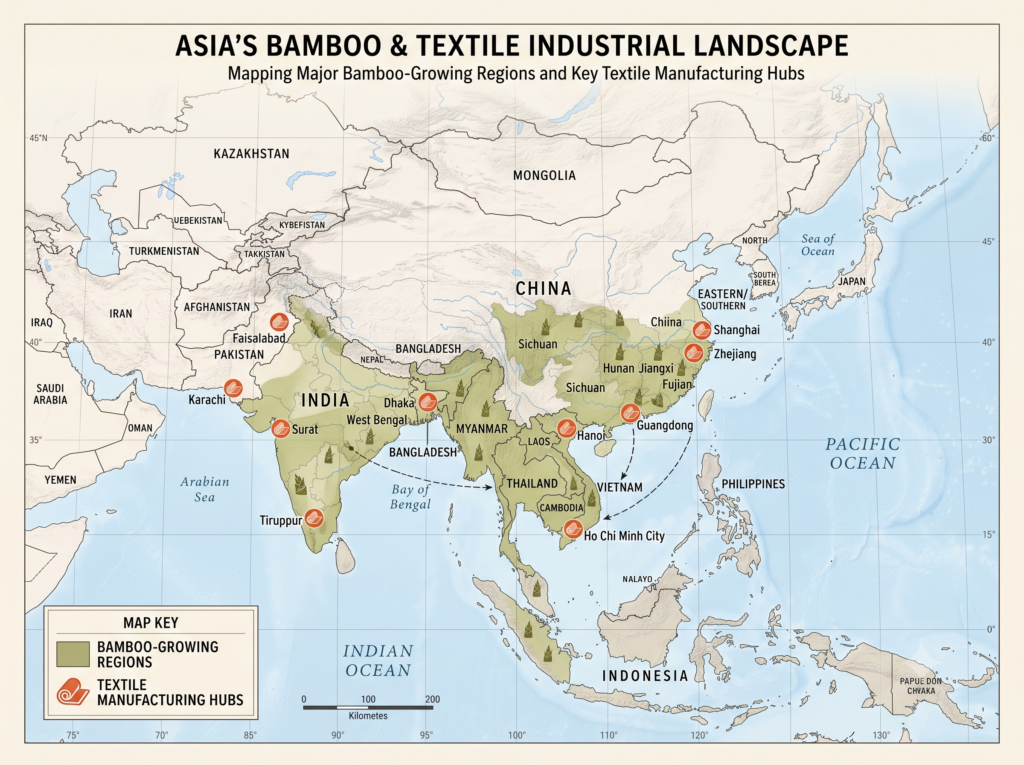
Bamboo itself is cultivated widely across Asia and other parts of the world, but textile production is concentrated in countries with established fiber and garment manufacturing industries.
China is particularly important in the bamboo-derived textile supply chain, both because it is a major bamboo-producing country and because it has extensive rayon, yarn and textile manufacturing capacity.
India, Pakistan, Indonesia and other Asian textile-producing countries also participate in bamboo-derived textile production and garment manufacturing.
It is important to distinguish where bamboo is grown from where bamboo fabric is manufactured.
A garment may use bamboo grown in one region, convert the bamboo into cellulose in another, regenerate it into fiber somewhere else, and finally be woven, dyed and sewn in a fourth country.
The country printed on a garment therefore does not necessarily identify the origin of its bamboo feedstock.
How Much Does Bamboo Fabric Cost?
Bamboo-derived fabrics cover a wide price range.
Conventional bamboo rayon can be relatively affordable because it can be manufactured using established large-scale viscose technology.
Premium bamboo fabrics may cost more because of:
- Higher-quality yarn
- Fine fiber construction
- Specialized finishing
- Blending
- Certification
- Organic or controlled raw-material sourcing
- Smaller production volumes
- Branded fiber technologies
Mechanically processed bamboo fiber is generally more specialized and can be substantially more expensive than conventional bamboo rayon.
Bamboo-derived lyocell can also occupy a higher price segment because of its different manufacturing technology and supply-chain requirements.
For consumers, the word “bamboo” alone does not tell you the price or quality of the underlying fiber.
What Different Types of Bamboo Fabric Are There?
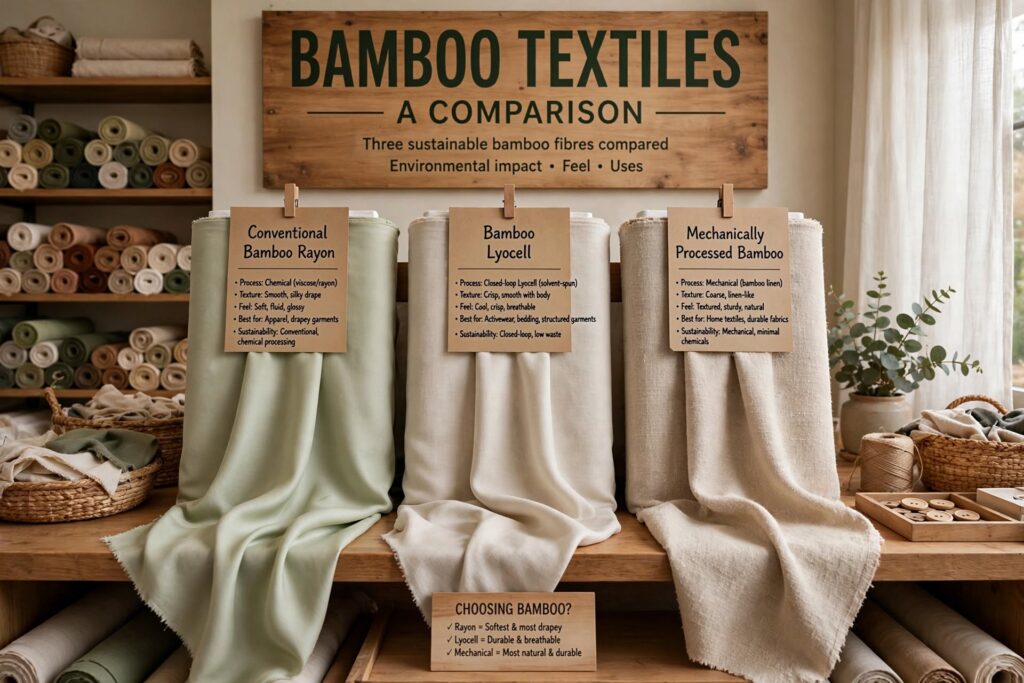
The term bamboo fabric covers several substantially different textile routes.
Bamboo Viscose
Bamboo viscose is made by converting bamboo cellulose into regenerated viscose rayon.
It is the most common type of bamboo-derived textile and is widely used in clothing and household products.
The finished fiber should technically be described as rayon or viscose made from bamboo rather than simply “bamboo fiber.”
Bamboo Lyocell
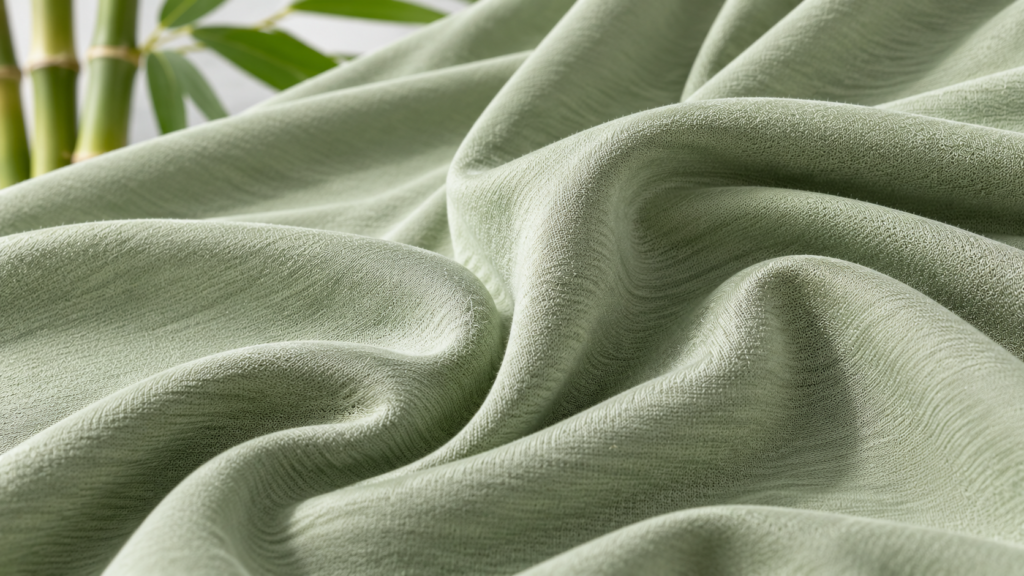
Bamboo lyocell uses bamboo-derived cellulose in a lyocell-type manufacturing process.
Its solvent system differs from conventional viscose, and closed-loop recovery can reduce solvent losses.
It should not be treated as interchangeable with bamboo viscose.
Mechanically Processed Bamboo
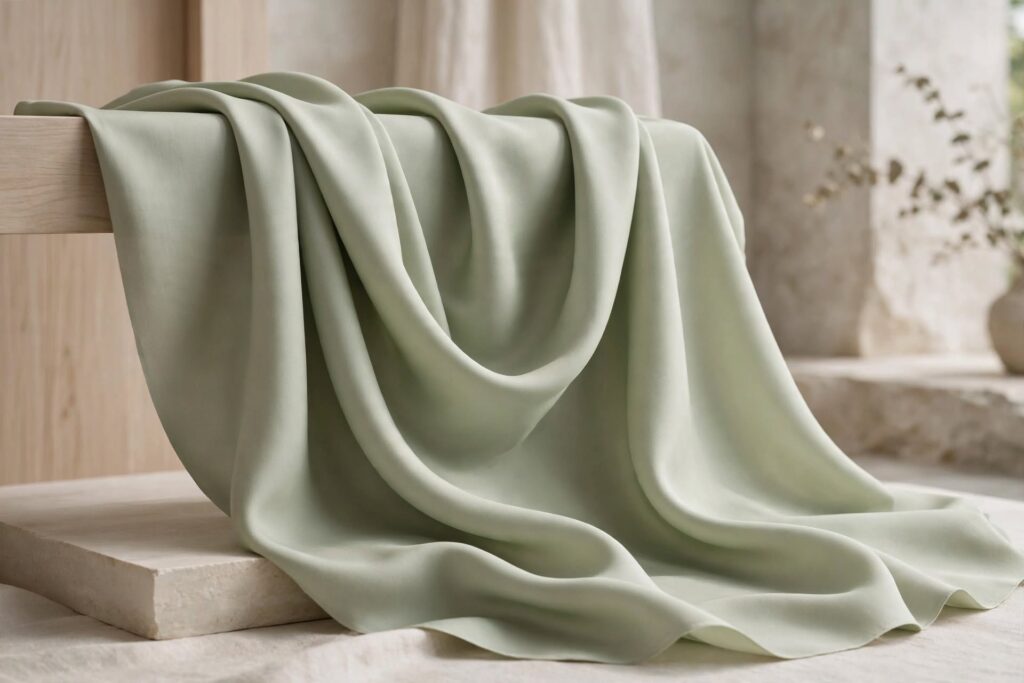
Mechanically processed bamboo attempts to produce fiber more directly from the bamboo plant rather than completely dissolving the cellulose and regenerating it.
It is much less common in mainstream apparel because producing fine, comfortable textile fibers mechanically is difficult.
Bamboo Blends
Bamboo-derived rayon and other bamboo-based fibers can be blended with:
- Cotton
- Linen
- Hemp
- Polyester
- Elastane
- Wool
- Other regenerated cellulose fibers
Blending can change softness, stretch, durability, cost and care requirements.
How Does Bamboo Fabric Impact the Environment?
Bamboo is often marketed as an environmentally friendly textile material because the plant itself grows quickly and can produce substantial biomass.
But the environmental performance of bamboo fabric depends heavily on what happens after harvesting.
This is the most important distinction in evaluating bamboo textiles.
Growing Bamboo Is Only One Part of the Story
Bamboo can be a productive crop and may require fewer agricultural inputs than some conventional crops in particular growing systems.
But these advantages cannot automatically be attributed to every bamboo textile.
Land-use changes, fertilizer and pesticide use, irrigation, biodiversity impacts and harvesting practices can all influence the environmental footprint.
A bamboo plant being fast-growing does not by itself make a finished bamboo garment sustainable.
Bamboo Viscose Requires Chemical Processing
Conventional bamboo viscose uses chemical processing to turn bamboo cellulose into regenerated rayon.
The FTC warns that converting bamboo into rayon can involve toxic chemicals and hazardous pollutants.
This means that the environmental footprint of bamboo viscose depends substantially on the factory’s chemical recovery, emissions control, wastewater treatment and overall process management.
Does Bamboo Viscose Retain Bamboo’s Natural Properties?
Generally, no.
Once bamboo cellulose has been chemically converted into rayon, the finished fiber does not simply retain all the characteristics of the original bamboo plant.
This is particularly important for marketing claims about antibacterial properties. The FTC states that there is no basis for assuming that rayon made from bamboo retains the plant’s natural antibacterial properties.
Bamboo Lyocell Can Follow a Different Route
Bamboo cellulose can also be used in lyocell-type production.
A closed-loop lyocell process can recover and reuse the solvent, potentially reducing chemical losses compared with conventional viscose.
However, the sustainability of a particular bamboo lyocell product still depends on the actual manufacturer, energy sources, raw-material sourcing and production controls.
It should not be considered automatically sustainable simply because the word “lyocell” appears on the label.
Mechanically Processed Bamboo
Mechanically processed bamboo avoids the same type of chemical regeneration used to produce bamboo viscose.
However, mechanical processing has its own practical challenges, particularly in producing soft, fine fibers suitable for modern clothing.
Consequently, genuine mechanically processed bamboo textile remains a niche material compared with bamboo-derived rayon.
The Most Accurate Sustainability Question
Instead of asking:
“Is bamboo fabric eco-friendly?”
a better question is:
“What type of bamboo fiber is this, and how was it produced?”
A bamboo viscose garment and a mechanically processed bamboo textile may have very different environmental profiles even though both are marketed using the word “bamboo.”
Bamboo Fabric Certifications Available
Certification for bamboo textiles can be complicated because different certifications address different parts of the supply chain.
Organic Certification
A bamboo crop can potentially be certified under agricultural organic standards where it meets the applicable requirements.
However, that does not automatically mean that a finished bamboo rayon fabric is an “organic bamboo fiber.”
Once bamboo is chemically transformed into regenerated rayon, the textile fiber is a manufactured fiber. Claims need to be evaluated against the specific certification standard.
FSC Certification
Forest certification systems such as FSC can be relevant to cellulose-based textile supply chains when certified forest material is used.
However, FSC certification does not automatically apply simply because bamboo was used.
OEKO-TEX®
OEKO-TEX certifications can assess harmful substances in textile products.
This can provide useful information about the finished fabric but does not establish that the bamboo was organically grown or that the entire manufacturing process was environmentally sustainable.
Global Organic Textile Standard
GOTS can apply to certain textile products and supply chains when all relevant requirements are met.
However, a product described casually as “organic bamboo rayon” should not automatically be assumed to meet GOTS requirements.
FTC Fiber-Labeling Requirements
In the United States, accurate fiber labeling is particularly important.
The FTC states that rayon or viscose made from bamboo must be identified using the appropriate generic fiber name rather than simply being called bamboo.
What Should Buyers Check?
When buying bamboo fabric, look for:
- The actual generic fiber name
- Whether it says rayon/viscose made from bamboo
- Whether it is bamboo lyocell
- Whether it is mechanically processed bamboo
- The raw-material certification
- The finished-product certification
- Chemical-management information
- Blend composition
This gives a much more accurate picture than the word “bamboo” alone.
Frequently Asked Questions
Is bamboo fabric really made from bamboo?
It depends on the product. Most commercial bamboo textiles are made by converting bamboo into cellulose and then producing rayon or viscose. A smaller number are mechanically processed into genuine bamboo fiber.
Is bamboo fabric the same as bamboo viscose?
Not necessarily. “Bamboo fabric” is a broad marketing term, while bamboo viscose specifically refers to regenerated rayon/viscose made using bamboo-derived cellulose.
Is bamboo rayon actually bamboo?
The original raw material is bamboo, but the finished textile fiber is rayon. The bamboo cellulose has been chemically transformed during production.
Is bamboo fabric natural?
It depends on what is meant by “bamboo fabric.” Mechanically processed bamboo is a plant-derived fiber, while bamboo viscose and bamboo lyocell are regenerated cellulosic fibers made through industrial processing.
Is bamboo fabric breathable?
Many lightweight bamboo-derived rayon fabrics are breathable and comfortable, but breathability depends on the fiber, fabric construction, weight and finishing.
Is bamboo fabric soft?
Yes, bamboo-derived rayon is generally known for its soft, smooth feel. Mechanically processed bamboo fibers can have a substantially different texture.
Is bamboo fabric antibacterial?
You should not assume so. The FTC specifically warns that rayon made from bamboo does not automatically retain the bamboo plant’s natural antibacterial properties. Any antibacterial claim should be supported by appropriate testing.
Is bamboo fabric sustainable?
Not automatically. Bamboo cultivation may have certain advantages, but conventional bamboo viscose requires chemical processing. The environmental impact depends on the specific production system, chemical management, energy use, land management and wastewater treatment.
Is bamboo viscose environmentally friendly?
It can have some advantages because bamboo is a renewable cellulose source, but conventional viscose production involves significant chemical processing. The FTC has specifically warned against unsupported environmental claims about bamboo rayon.
Is bamboo lyocell better than bamboo viscose?
Potentially, depending on the production system. Lyocell uses a different solvent process and can operate with high solvent recovery. But the specific manufacturer and supply chain still need to be evaluated.
Is bamboo fabric better than cotton?
Neither is universally better. Bamboo-derived rayon can be softer and more fluid, while cotton has different durability, processing and sourcing characteristics. Environmental performance depends on how both materials are produced.
Is bamboo fabric durable?
Durability varies considerably. Bamboo rayon can provide good everyday performance, but the final durability depends on fiber quality, yarn construction, fabric weight and blends.
Does bamboo fabric shrink?
It can. Shrinkage depends on the fiber, fabric construction, finishing and washing method. Always follow the garment’s care instructions.
Is bamboo fabric expensive?
Conventional bamboo rayon can be competitively priced, while bamboo lyocell and mechanically processed bamboo fibers can be more expensive because of their specialized production methods.
Can bamboo fabric be blended with cotton?
Yes. Bamboo-derived rayon is frequently blended with cotton, elastane and other fibers to modify softness, strength, stretch and cost.
Is bamboo fabric good for summer?
Lightweight bamboo-derived fabrics can be comfortable in warm weather because of their softness and moisture absorption. The actual performance depends on fabric weight and construction.
What is the difference between bamboo linen and bamboo rayon?
“Bamboo linen” is generally used for mechanically processed bamboo fibers, while bamboo rayon is produced by chemically regenerating bamboo-derived cellulose. The two materials have substantially different manufacturing processes.
How should bamboo fabric be washed?
Care requirements vary by fabric construction and blend. Gentle washing and avoiding excessive heat are often sensible, but the manufacturer’s care label should always take priority.
Is bamboo fabric biodegradable?
Cellulose-based bamboo rayon can be biodegradable under suitable conditions, but the finished textile’s behavior depends on dyes, finishes and synthetic fibers in the garment. A bamboo-polyester or bamboo-elastane blend should not be treated the same way as a pure cellulosic textile.