What Is Angora Wool Fabric?
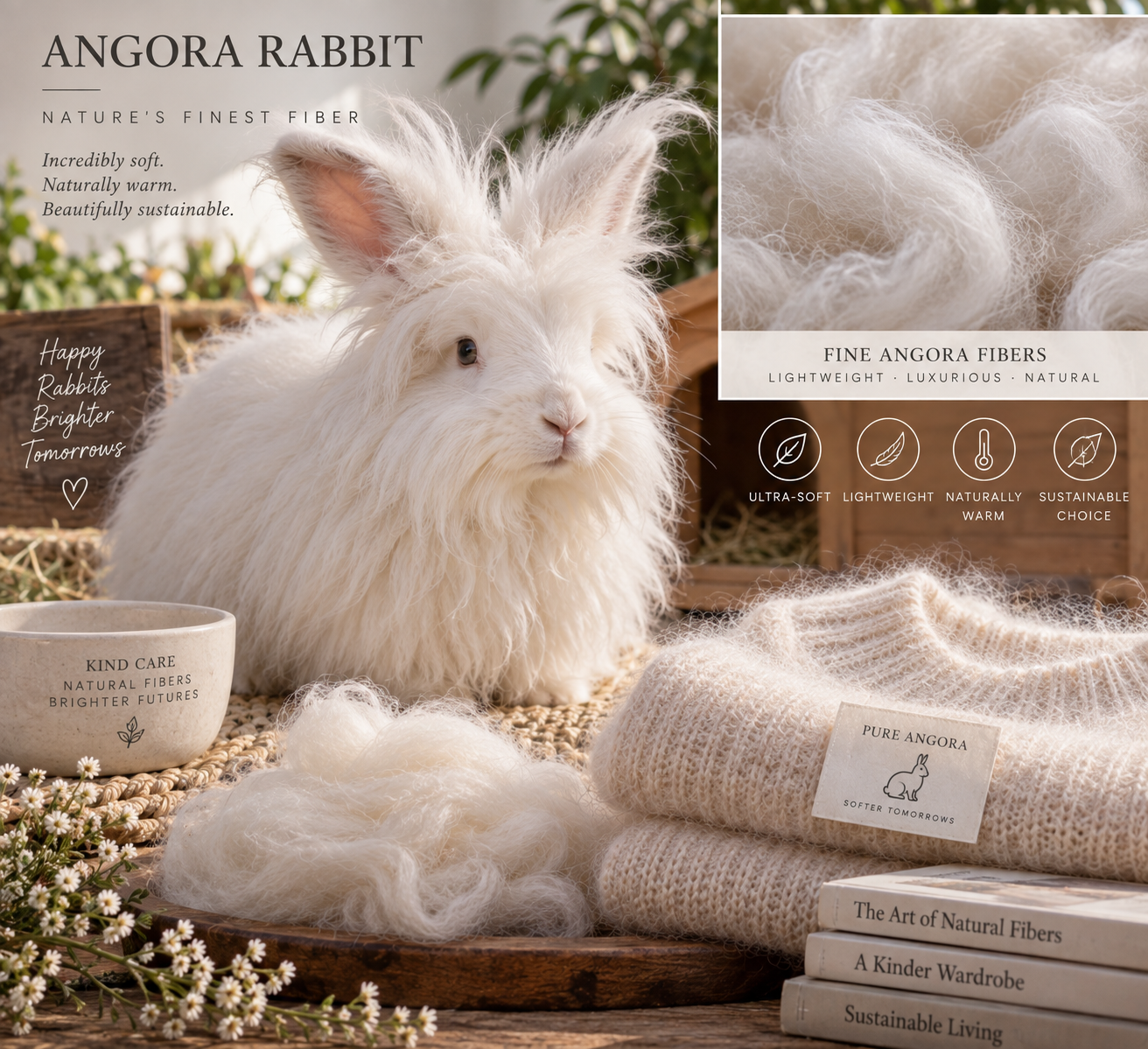
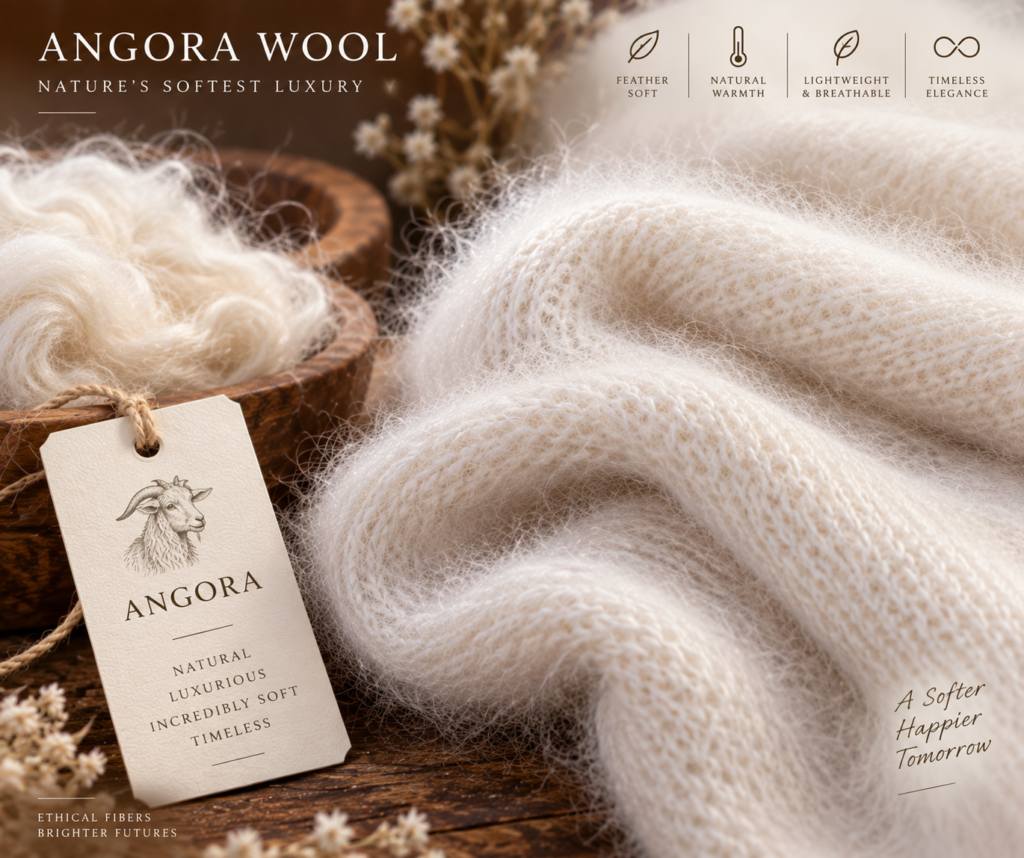
Angora wool fabric is a luxurious natural textile made from the fine fibers of Angora rabbits. It is known for being exceptionally soft, lightweight, fluffy, and warm.
Angora fibers are among the finest animal fibers used in textiles, generally measuring around 12–16 microns in diameter. Their exceptionally fine structure gives Angora wool its silky feel, while the hollow cores of the rabbit’s hairs provide excellent insulation.
Angora wool is also highly elastic and breathable. Compared with many other types of animal wool, it is less likely to cause allergic reactions, making it an alternative for some people who are sensitive to other animal fibers.
However, Angora wool has attracted significant controversy because of animal-welfare concerns. The quality and ethics of production depend heavily on how rabbits are housed, groomed, and handled during fiber collection.
Quick Facts About Angora Wool Fabric
| Property | Details |
|---|---|
| Fabric name | Angora wool |
| Also known as | Rabbit wool |
| Fiber source | Angora rabbits |
| Typical fiber diameter | 12–16 microns |
| Breathability | High |
| Moisture-wicking ability | Medium |
| Heat retention | High |
| Stretchability | High |
| Pilling tendency | Medium |
| Historical origin | Turkey |
| Major producer today | China |
| Recommended washing | Cold machine wash or dry cleaning, depending on product instructions |
| Common uses | Sweaters, cardigans, coats, jackets, gloves, scarves, suits, underwear, and T-shirts |
History of Angora Wool
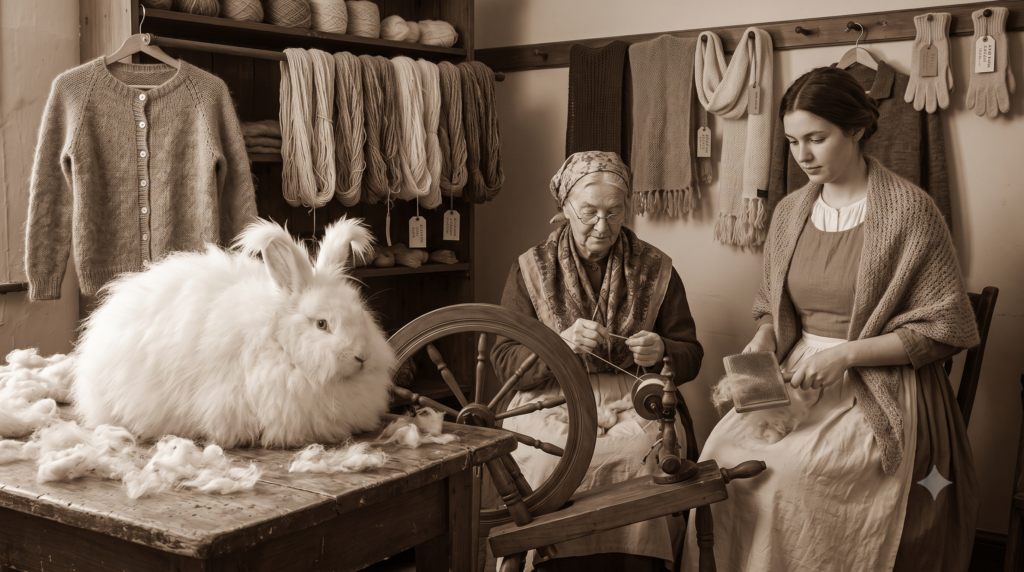
Angora rabbits originated in the region surrounding Ankara, Turkey, which was historically known in Europe as Angora.
The exact date when these rabbits were first bred is unclear, but by the 18th century they had become established in Europe. Angora rabbits were introduced to France in 1723 and quickly became popular among the French aristocracy.
At first, Angora rabbits were primarily kept as pets rather than being raised for textile production. Their unusually fluffy coats made them especially attractive to wealthy European households.
Large-scale Angora wool production emerged much later. During the early 20th century, producers in the United States began treating Angora fiber as a commercial textile material and established businesses producing scarves, sweaters, and other garments.
Angora Wool Today
Several Angora rabbit varieties are raised for fiber, including English, French, Giant, German, Korean, and Satin Angoras.
English Angoras are known for their exceptionally thick coats, while French Angoras have less facial hair and generally produce less wool. Giant Angoras are much larger and can produce substantial quantities of fiber.
Satin Angoras produce less wool than many other varieties, but their fibers are particularly fine and soft.
One challenge with Angora rabbits is that their long coats can easily become matted. Regular grooming is therefore essential to prevent discomfort and skin problems.
The modern Angora industry has also faced serious criticism because of reports of poor animal-welfare practices, particularly in large-scale production. Ethical producers can collect Angora fiber without causing unnecessary pain, but buyers need to pay close attention to sourcing and production standards.
How Is Angora Wool Fabric Made?
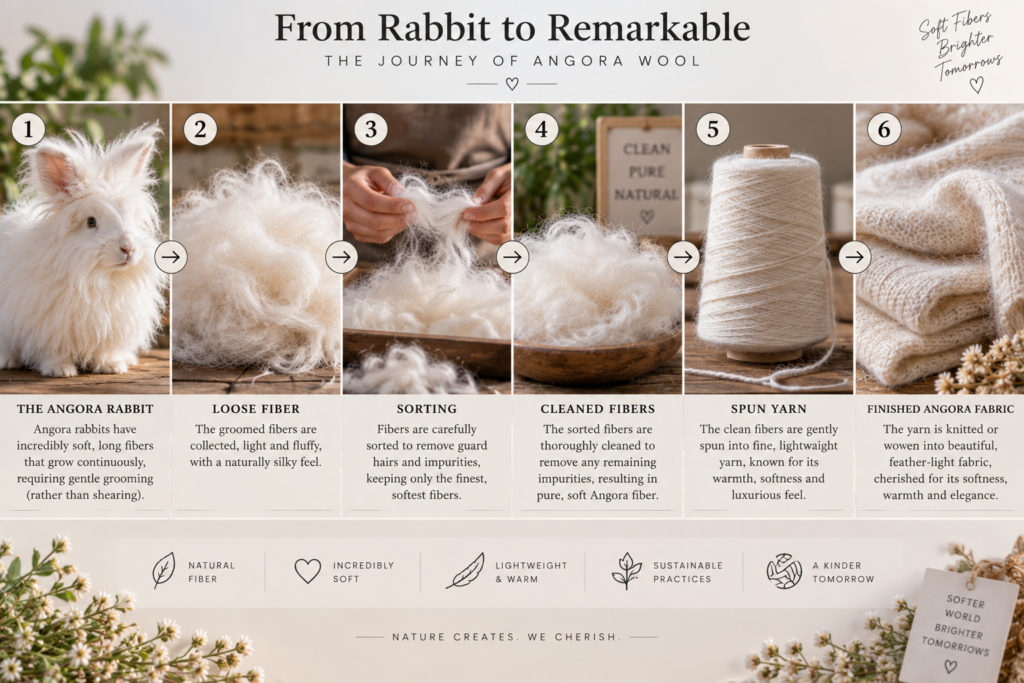
Producing Angora wool involves growing, collecting, cleaning, and spinning the rabbit’s fine coat.
1. Growing the Angora Coat
Most Angora rabbits develop a full coat within approximately three to four months.
During this period, rabbits need regular grooming to prevent their long fibers from becoming tangled or matted. The ideal time for harvesting depends on the particular rabbit breed and its rate of fiber growth.
2. Shearing or Plucking
Some Angora rabbits naturally begin shedding their old coat after around four to five months.
When the rabbit is naturally shedding, experienced breeders may gently remove loose fibers before they fall away. This process is often called plucking.
Ethical plucking should involve only loose, naturally shed fibers and should not cause the rabbit pain.
For rabbits that do not shed as frequently, breeders may carefully shear the coat. Responsible shearing involves appropriate equipment and careful handling, including avoiding cuts and leaving enough protection close to the skin.
Animal welfare is particularly important during this stage because careless handling or aggressive fiber removal can cause significant stress, injuries, and skin problems.
3. Sorting and Cleaning
After the fiber is collected, it is sorted to remove mats, coarse guard hairs, and other unwanted material.
The fibers may also be separated into different quality grades according to their softness and fineness.
The cleaned Angora fiber is generally washed before spinning.
4. Spinning and Dyeing
The cleaned fibers are spun into yarn.
Natural Angora fiber is generally white, cream, or light brown, but it can also be dyed into a wide range of colors.
The finished yarn can then be knitted or woven into fabric and garments.
How Is Angora Wool Fabric Used?
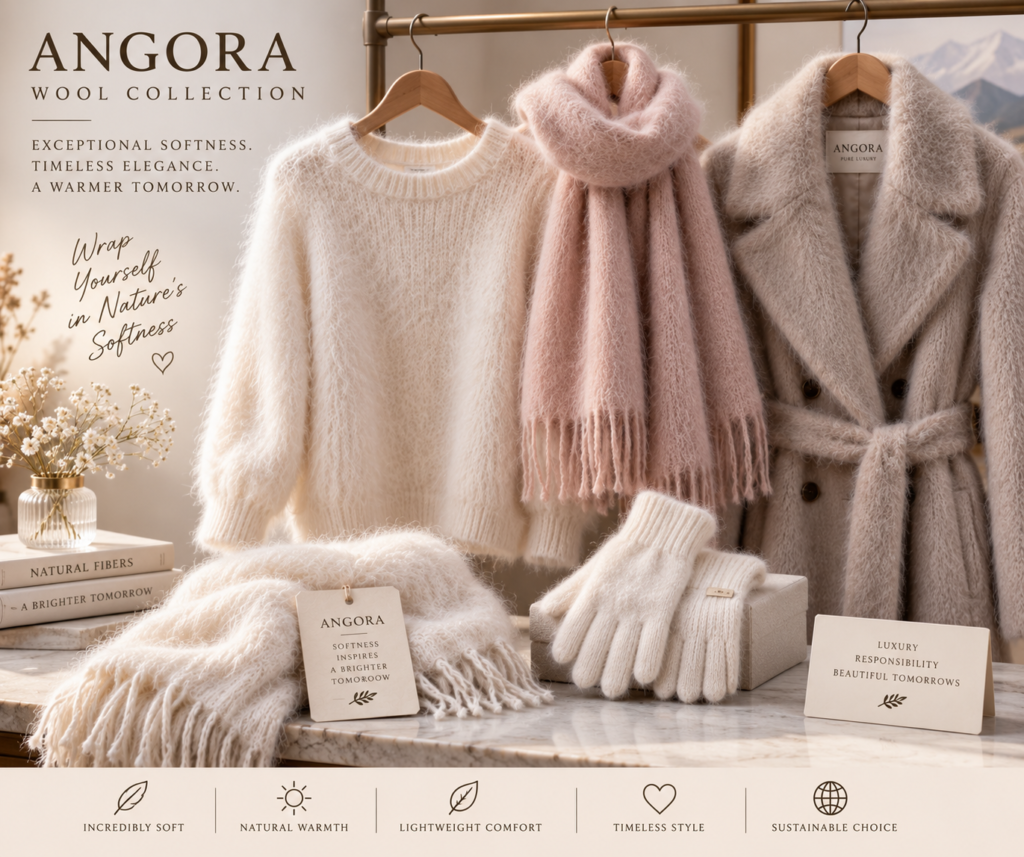
Angora wool is primarily used in apparel because of its exceptional softness, warmth, and lightweight feel.
Common applications include:
- Sweaters
- Cardigans
- Coats
- Jackets
- Pea coats
- Suit jackets
- Scarves
- Gloves
- T-shirts
- Underwear
- Knitwear
Angora is also popular among knitters and other textile crafters because its fine fibers can create soft, fluffy yarns.
Less commonly, Angora wool is used for small home-textile products such as:
- Throw blankets
- Pillow covers
- Decorative textiles
Because Angora is expensive and relatively delicate, it is more commonly used in premium products or blended with other fibers rather than used alone in large quantities.
Where Is Angora Wool Fabric Produced?
China is currently the largest producer and exporter of Angora wool.
Large-scale production has expanded significantly in China, although animal-welfare concerns surrounding some production facilities have resulted in criticism from animal-rights organizations and brands.
Angora wool is also produced on a smaller scale in the United States and other Western countries, where some producers focus on more humane rabbit-care and fiber-collection practices.
Because production standards vary considerably, the country of origin alone does not necessarily determine whether an Angora product has been ethically produced. Buyers should look for transparent information about the farm, fiber collection method, and applicable certifications.
How Much Does Angora Wool Fabric Cost?
Angora wool is among the most expensive natural textile fibers.
The reference source gives a price of up to £15 per ounce for Angora fiber, although actual prices can vary substantially according to quality, processing, origin, and market conditions.
Finished garments are correspondingly expensive, particularly when they contain a high percentage of pure Angora fiber.
Ethically produced Angora can cost even more because responsible producers may have higher animal-care and labor costs.
Price alone, however, should not be treated as proof of ethical production. Buyers should verify the source and production practices rather than assuming that a more expensive product was necessarily made responsibly.
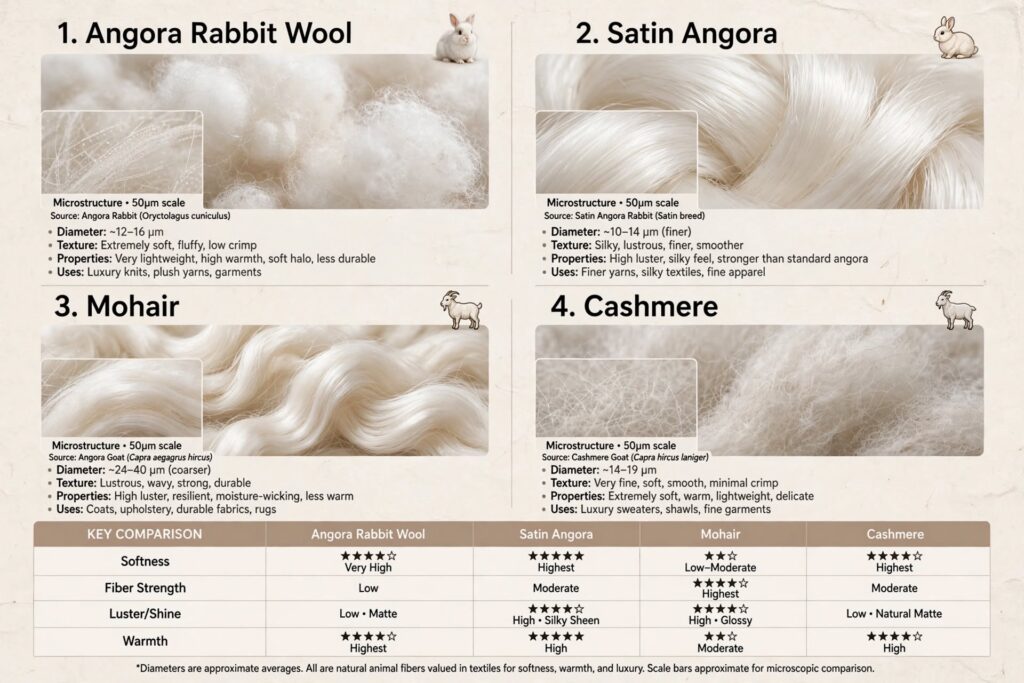
What Different Types of Angora Wool Fabric Are There?
The term “Angora” can create confusion because it is used in connection with both rabbit fiber and other luxury animal fibers.
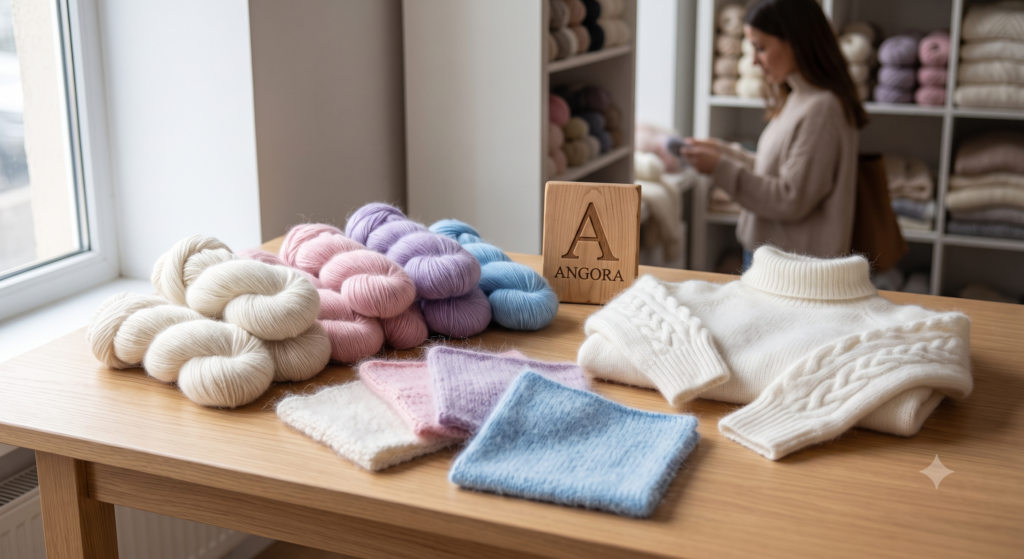
1. Angora Wool
Standard Angora wool comes from Angora rabbits.
Different Angora breeds produce fibers with slightly different characteristics, but once the fibers have been spun and processed, the differences between many breeds become less obvious.
English, French, Giant, German, and Korean Angora fibers can all produce exceptionally soft and fluffy textiles.
2. Satin Angora Wool
Satin Angora produces some of the finest Angora fibers, with individual fibers potentially measuring around 12 microns.
The resulting material is exceptionally soft and silky, although it can be slightly less fluffy than ordinary Angora.
Satin Angora rabbits also produce less fiber than many other Angora breeds, which contributes to its higher price.
3. Mohair Wool
Mohair is not made from rabbits.
It comes from Angora goats, which are named after the same Turkish region historically associated with Angora rabbits.
Mohair fibers are considerably coarser than Angora rabbit fibers but are known for their shine, strength, and lustrous appearance.
4. Cashmere Wool
Cashmere comes from specialized goats associated with the Kashmir and Central Asian regions.
Cashmere fibers can be as fine as approximately 18 microns, making them thicker than the finest Angora fibers but still exceptionally soft.
Cashmere is considered a luxury fiber partly because of its softness and because cashmere goats produce relatively small amounts of usable fiber.
How Does Angora Wool Fabric Impact the Environment?
The environmental footprint of Angora wool is relatively small compared with major mass-produced textile fibers because Angora represents only a small portion of global textile production.
Biodegradability
Angora is a natural animal fiber and is biodegradable under suitable conditions. Unlike petroleum-based synthetic fibers, it does not remain in the environment indefinitely.
Animal Farming
Angora rabbit farming can create environmental impacts through animal waste, housing, feed requirements, and land use.
Poorly managed housing can also contribute to sanitation problems and localized soil impacts.
The Bigger Concern: Animal Welfare
For Angora wool, animal welfare is generally a greater concern than the fiber’s direct environmental footprint.
Rabbits require regular grooming because their long coats can become severely matted. Poor grooming can cause discomfort, skin irritation, and infections.
Reports of unethical production have also described rabbits being kept in poor conditions, improperly groomed, malnourished, or subjected to painful fiber-removal practices.
Responsible Angora production is possible, but ethical sourcing requires careful attention to housing, grooming, handling, and fiber collection.
For consumers concerned about animal welfare, traceability and certification are particularly important when buying Angora products.
Angora Wool Fabric Certifications Available
Certification can help manufacturers and consumers identify Angora products that meet defined production and sourcing requirements.
Responsible Wool Standard (RWS)
The Responsible Wool Standard (RWS) is identified by the reference as the most significant certification option for responsibly produced Angora wool.
The standard focuses on responsible and sustainable production practices and requirements throughout the applicable supply chain.
OEKO-TEX
Angora products may also qualify for OEKO-TEX certification where the applicable requirements are met.
OEKO-TEX focuses primarily on testing textiles for harmful substances and product safety. It should not automatically be interpreted as proof that the animals were treated according to a specific welfare standard.
Organic Certifications
Depending on the production system and applicable requirements, organically produced Angora may also qualify for organic certification under systems such as the USDA or European Union organic framework.
When evaluating an Angora product, consumers should check exactly what the certification covers. A textile-safety or organic certification does not necessarily address every aspect of animal welfare.
For Angora specifically, animal-welfare requirements are an especially important part of responsible sourcing.
Frequently Asked Questions
What is Angora wool made from?
Angora wool is made from the fine fibers of Angora rabbits. It is one of the softest and finest animal fibers used in textiles.
Is Angora wool the same as mohair?
No. Angora wool comes from Angora rabbits, while mohair comes from Angora goats.
Is Angora wool soft?
Yes. Angora fibers are exceptionally fine, generally around 12–16 microns, which gives the material its characteristic softness and silky feel.
Is Angora wool warm?
Yes. Angora fibers have hollow cores that help trap air, giving the material excellent insulation and heat retention.
Is Angora wool breathable?
Yes. Angora wool has high breathability and can be comfortable in properly constructed garments.
Is Angora wool expensive?
Yes. Angora is one of the more expensive natural textile fibers because of its exceptional softness, limited production, and specialized processing.
Is Angora wool ethical?
It can be, but production practices vary significantly. Ethical Angora production requires proper rabbit care, regular grooming, humane handling, and pain-free fiber collection.
Where does most Angora wool come from?
China is currently the largest producer of Angora wool, although smaller-scale production also exists in the United States and other countries.
What is Satin Angora?
Satin Angora is produced by Satin Angora rabbits. Its fibers can be extremely fine and silky, but these rabbits generally produce less wool, making Satin Angora particularly expensive.
How should Angora wool fabric be washed?
Follow the manufacturer’s care label. Cold washing or professional dry cleaning may be recommended depending on the garment and fabric construction. Avoid excessive heat and agitation because fine Angora fibers can be delicate.