What Is Camel Wool Fabric?
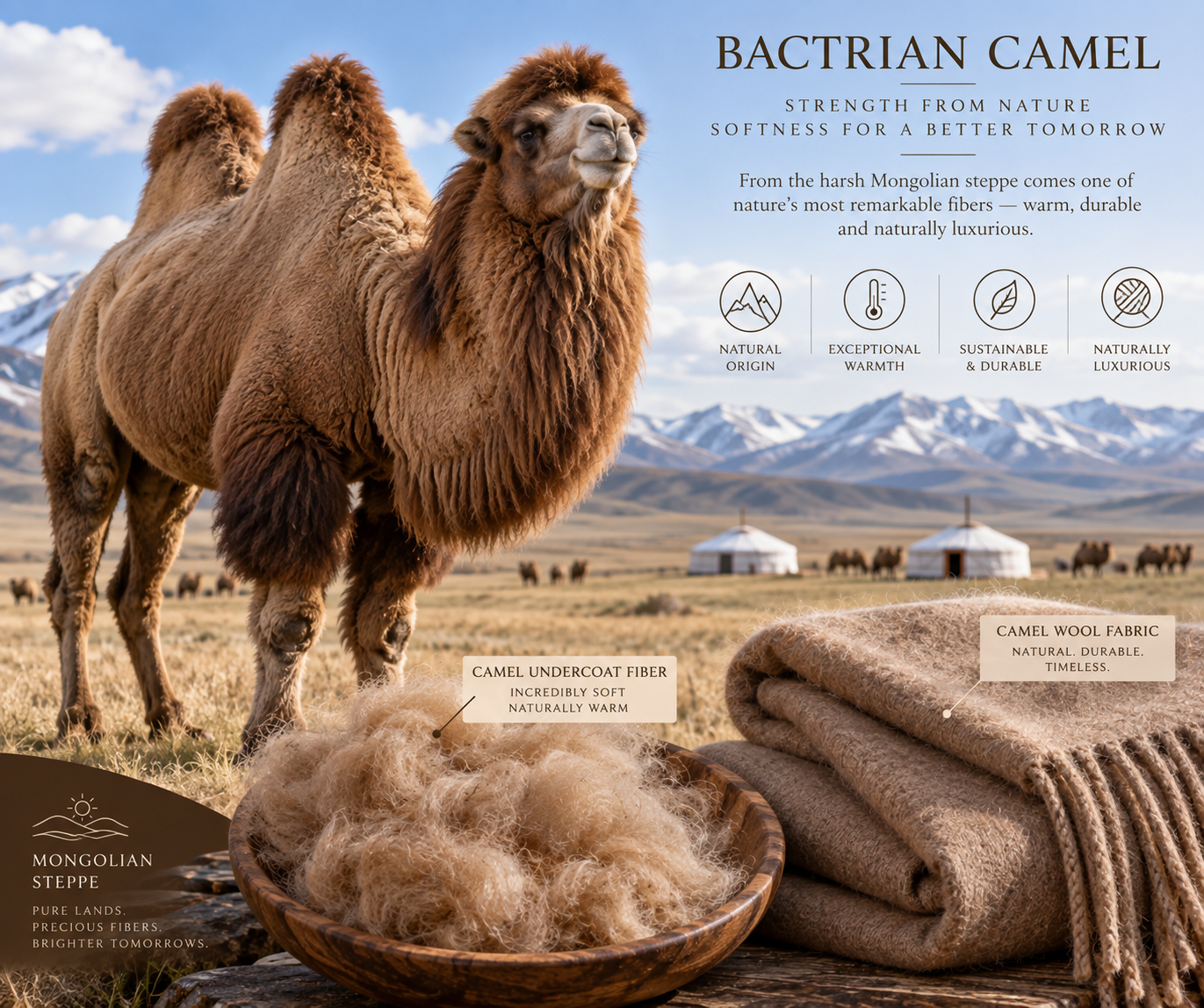
Camel wool fabric, also called camel hair or camel cashmere, is a natural textile made from the hair of camels. It is most commonly obtained from the Bactrian camel, a two-humped camel native to the cold regions of Central Asia.
Bactrian camels have a distinctive coat consisting of two types of hair: a coarse outer layer known as the guard coat and a soft inner layer known as the undercoat. The guard hair protects the animal from harsh weather but is generally too coarse for comfortable apparel unless blended with another fiber. The soft undercoat is the primary source of high-quality camel wool used in clothing.
Camel wool is valued for its warmth, lightweight feel, insulation, and soft texture. High-grade camel wool can be nearly as soft as cashmere and is sometimes blended with cashmere to produce luxury textiles.
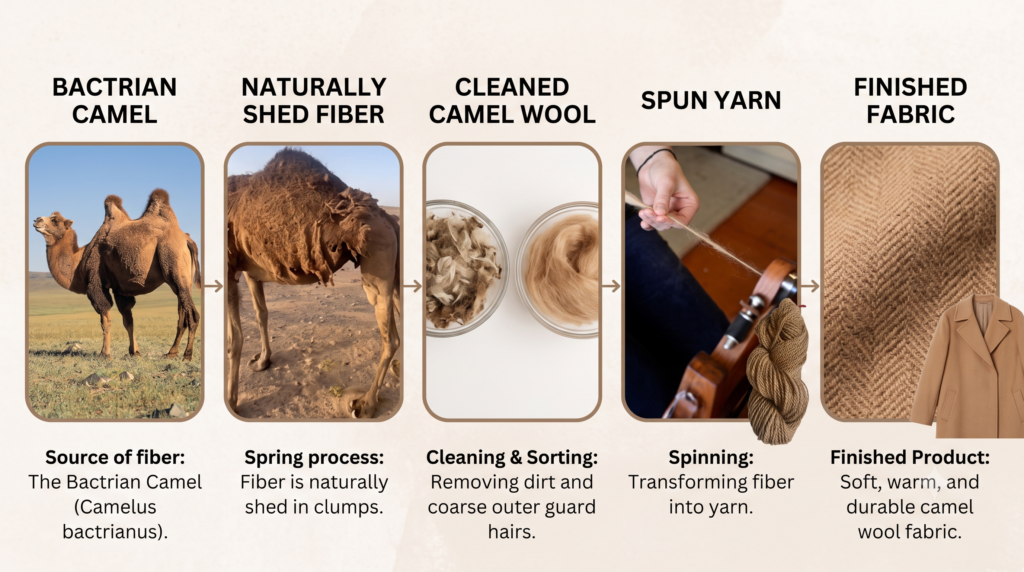
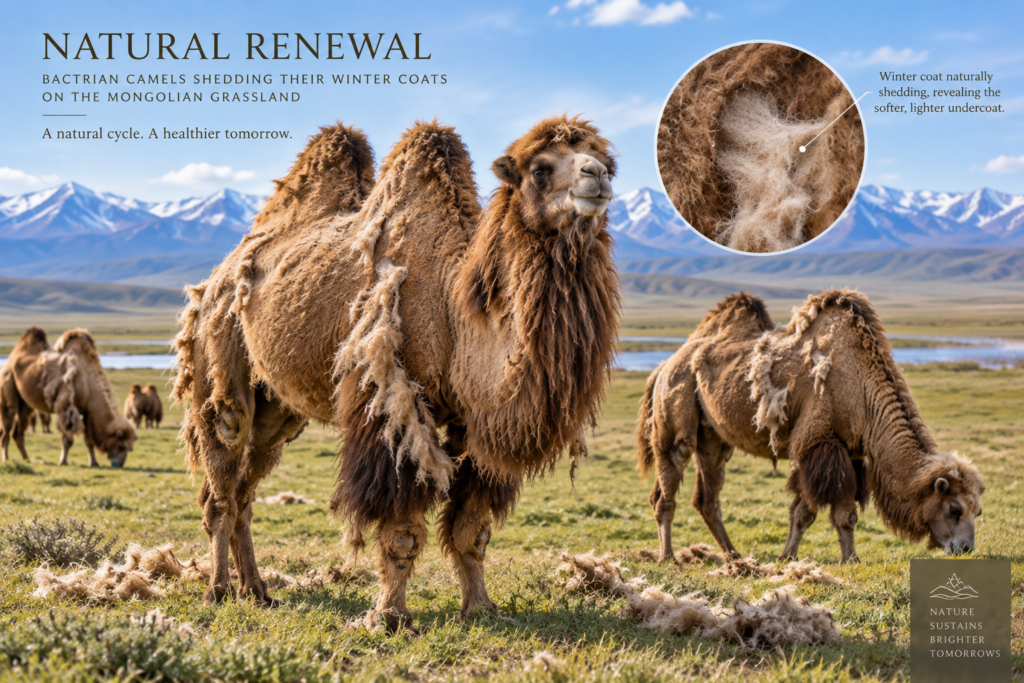
Unlike sheep, Bactrian camels naturally shed much of their winter coat in spring. This makes it possible to collect the fibers without routinely shearing the entire animal.
Quick Facts About Camel Wool Fabric
| Property | Details |
|---|---|
| Fabric name | Camel wool |
| Also known as | Camel hair, camel cashmere |
| Fiber source | Bactrian camel |
| Breathability | Medium |
| Moisture-wicking ability | Medium |
| Heat retention | High |
| Stretchability | Low |
| Pilling tendency | Low |
| Historical origin | Ancient cultures of the Mongol Steppes |
| Major producer today | Mongolia |
| Recommended washing | Cold hand wash |
| Common uses | Coats, sweaters, suits, underwear, tents, carpets |
Camel hair fibers have a structure similar to sheep’s wool, although their surface scales are less pronounced. The fibers also contain hollow, air-filled structures that contribute to their excellent insulating properties.
How Is Camel Wool Fabric Made?
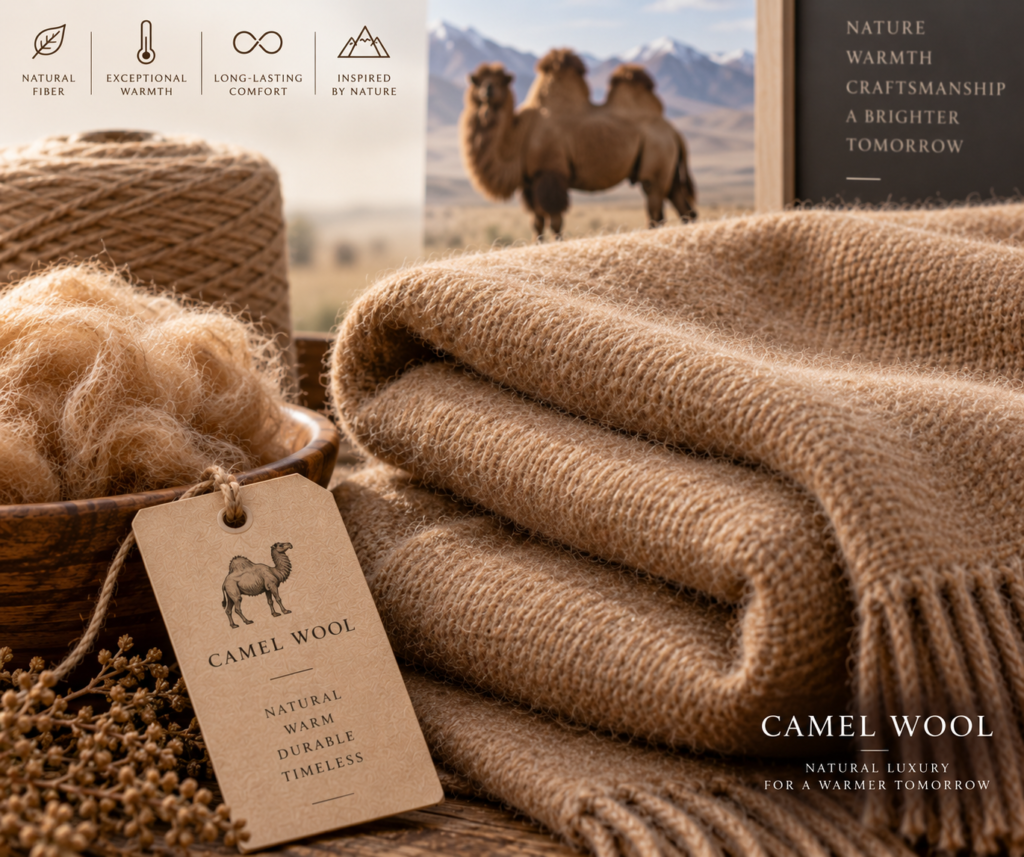
Camel wool production is closely connected to the natural seasonal cycle of the Bactrian camel.
1. Growing the Winter Coat
Bactrian camels begin developing a thick winter coat toward the end of summer. The coat becomes particularly dense during the colder months, protecting the animals from extremely low temperatures across Central Asia.
2. Natural Shedding
When winter ends and temperatures begin to rise, Bactrian camels naturally shed their winter coats.
Traditionally, camel herders collected the hair as it fell from the animals. Today, breeders may also gently collect or comb the loose fibers. In some cases, shearing is used when the coat does not shed evenly.
When shearing is necessary, responsible breeders avoid removing all the hair around the hump because this area can provide additional protection and may contribute to the animal’s resistance to disease.
3. Cleaning
The collected camel hair is cleaned to remove dirt, plant material, and other impurities.
4. Carding
The cleaned fibers are carded, meaning they are separated and aligned into organized strands. Traditional tools may still be used for this process in some Mongolian communities, although modern machinery is also available.
5. Spinning
The carded fibers are spun into yarn. Depending on the producer, this may be done using traditional hand tools or industrial spinning machinery.
6. Washing and Textile Production
The spun yarn is washed before being used to make textile products. Some producers manufacture finished goods themselves, while others sell the yarn to textile factories for further processing.
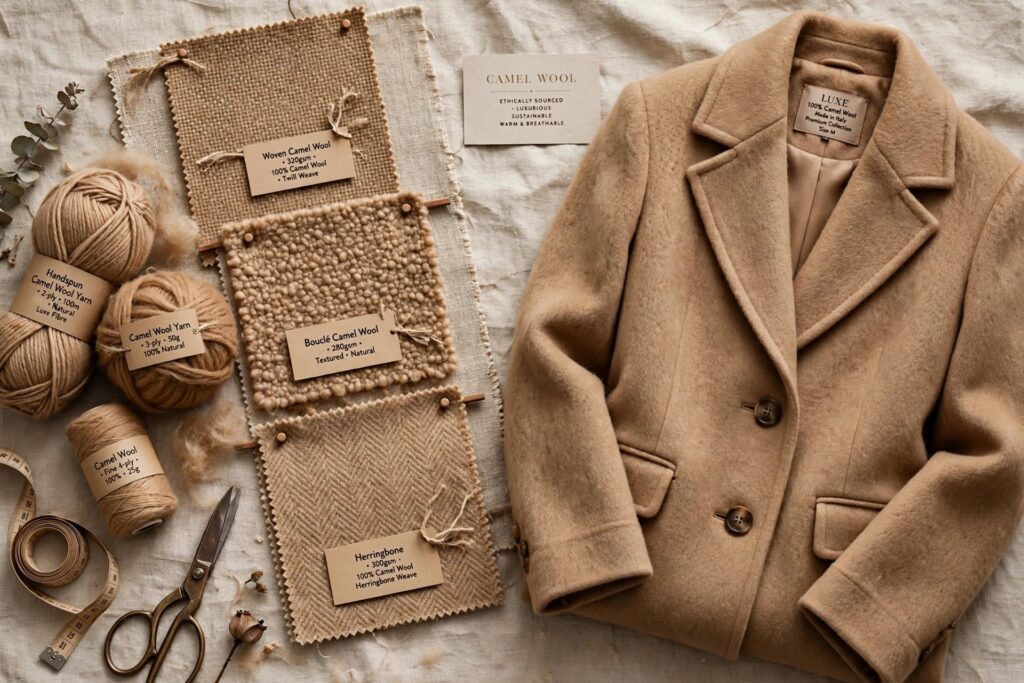
The yarn may then be woven or knitted into finished fabric.
How Is Camel Wool Fabric Used?
Camel wool has been used as a textile for centuries. Historical references associate camel hair with products such as tents, cloaks, and carpets.
In the West, camel wool became established as a textile by at least the 17th century and experienced a significant rise in popularity in England during the late 19th century.
Camel-hair jackets became especially fashionable among polo players during this period. The style later spread among upper-class British consumers, and vintage camel-wool polo jackets remain of interest to collectors.
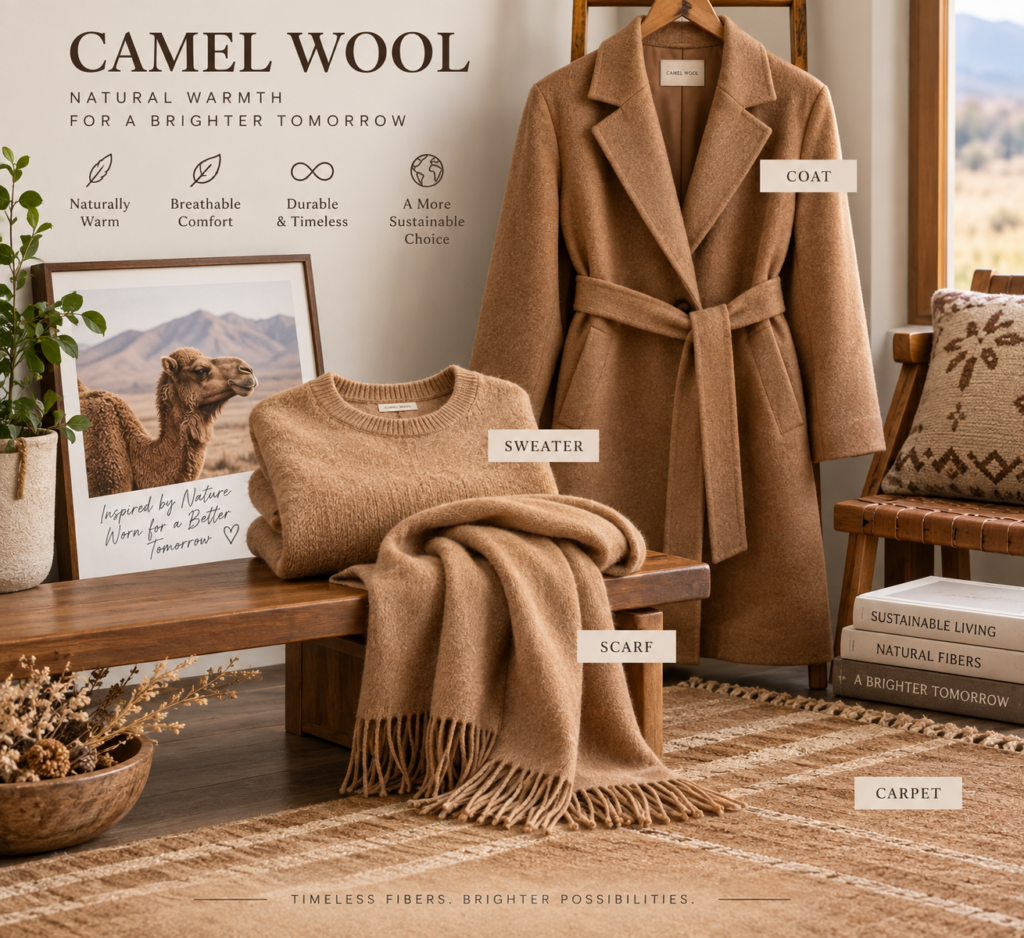
Today, camel wool is primarily used for clothing and home textiles.
Clothing
Common apparel applications include:
- Coats
- Sweaters
- Jackets
- Suits
- Scarves
- Lightweight sweaters
- Underwear
- Other cold-weather garments
High-quality camel wool is warm but lightweight, allowing manufacturers to create relatively thin garments that still provide significant insulation.
Home and Other Products
Coarser camel fibers are also used for:
- Carpets
- Rugs
- Tents
- Heavy textiles
- Traditional woven products
The strongest and roughest fibers are generally better suited to products where softness is less important.
Where Is Camel Wool Fabric Produced?
Mongolia is the world’s leading producer of camel wool. The country’s large population of Bactrian camels and long tradition of camel herding have made it the primary source of this specialty fiber.
Many Mongolian camel breeders continue to use traditional methods passed down through generations. Some herders remain nomadic, while others have established permanent settlements and use more modern methods of animal care and fiber collection.
Smaller quantities of raw or semi-processed camel wool are also produced in:
- China
- Tibet
- Afghanistan
- Iran
- Russia
- Australia
- New Zealand
- United States
- South Africa
The production of camel wool outside Central Asia remains relatively small compared with Mongolia.
How Much Does Camel Wool Fabric Cost?
Camel wool is considered a luxury wool fiber and can be relatively expensive compared with ordinary sheep’s wool.
Its price is influenced by the limited supply of the fiber, its specialized production process, and the fact that it is rarely manufactured on a large industrial scale.
Camel wool experienced a period of increased popularity between roughly 1880 and 1930, but demand subsequently declined. As a result, large international textile manufacturers have generally not developed extensive mass-production systems for camel wool.
Other factors affecting the price include:
- Fiber grade
- Softness
- Fiber fineness
- Percentage of camel hair in a blend
- Manufacturing method
- Country of origin
- Fabric construction
- Whether the product contains cashmere or another luxury fiber
High-grade camel wool intended for premium clothing can command prices comparable to other luxury animal fibers such as cashmere and mohair.
What Different Types of Camel Wool Fabric Are There?
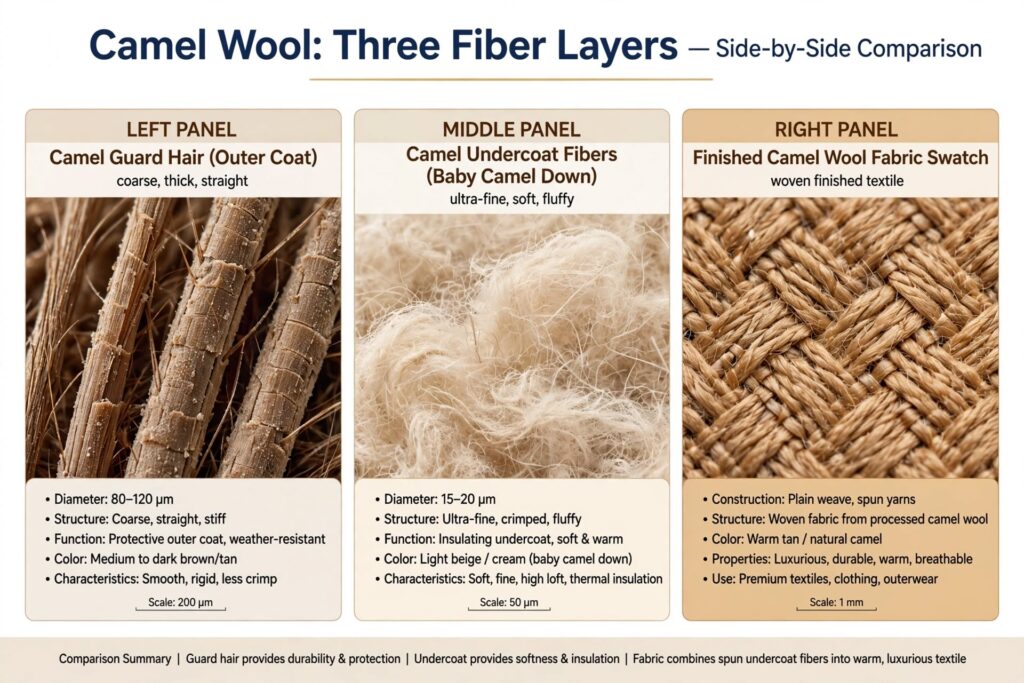
Camel wool is primarily obtained from the Bactrian camel, and the two major fiber types correspond to the two layers of its coat.
1. Camel Guard Hair
The guard coat consists of thick, coarse, and relatively inflexible fibers.
Because of their rough texture, these fibers are generally unsuitable for clothing worn directly against the skin. They may be blended with softer fibers or used for products such as carpets and other rigid textiles.
2. Camel Undercoat
The undercoat consists of fine, soft, fluffy fibers.
This is the most valuable portion of the camel’s coat and is the primary source of camel wool used for apparel.
High-grade undercoat fibers can produce exceptionally soft textiles and may be used alone or blended with cashmere and other luxury fibers.
Camel Wool Grades
Camel wool is also commonly divided into three broad grades:
- High-grade: Fine fibers from the best parts of the undercoat; primarily used for premium apparel.
- Medium-grade: Less refined undercoat fibers; suitable for clothing but generally rougher.
- Low-grade: Usually derived from the coarse guard coat; primarily suitable for carpets and other sturdy textiles.
How Does Camel Wool Fabric Impact the Environment?
Camel wool is often considered a relatively sustainable animal fiber because of the way Bactrian camels naturally shed their winter coats.
Natural Fiber Collection
Unlike sheep, Bactrian camels naturally shed their thick winter coat each spring. This means that much of the fiber can be collected without requiring the animals to undergo complete shearing.
Natural shedding can reduce the risk of injuries and stress associated with forced fiber removal.
Small-Scale Production
A large proportion of camel wool is produced by individual herders and families, particularly in Mongolia and other remote parts of Central Asia.
The relatively small scale of production also means that camel wool does not have the same industrial footprint as some mass-produced textiles.
Limited Chemical Processing
Camel wool generally does not require harsh chemicals during fiber collection. The raw fiber is primarily cleaned, carded, spun, and washed.
Camel wool is also often left in its natural color rather than heavily dyed. When dyeing is performed, some producers use natural dyes.
Biodegradability
Camel wool is a natural animal fiber and is biodegradable under suitable conditions. When discarded, it can eventually break down rather than remaining in the environment like many synthetic fibers.
However, the environmental impact of any camel-wool product can vary depending on transportation, dyeing, finishing, blending with synthetic fibers, and manufacturing practices.
Camel Wool Certifications Available
Camel wool does not have a certification system dedicated exclusively to camel fiber, but finished camel-wool products can be assessed through broader textile certification programs.
OEKO-TEX
OEKO-TEX testing can be used for raw, semi-finished, and finished textile products. It focuses on testing for harmful substances and can provide consumers with additional information about the safety of a textile product.
Woolmark
The Woolmark licensing program provides quality and certification services for wool-based products, including applicable camel-hair textiles.
When purchasing camel wool, buyers should check the exact certification, its scope, and the manufacturer’s supply-chain information rather than assuming that all camel wool has the same environmental or quality standards.
Frequently Asked Questions
What is camel wool made from?
Camel wool is made from the hair of camels, primarily the Bactrian camel. The soft undercoat provides the finest fibers used for apparel.
Is camel wool the same as camel hair?
The terms are often used interchangeably. Camel wool generally refers to textile fibers obtained from camel hair, especially the soft undercoat.
Is camel wool soft?
High-grade camel wool can be extremely soft and may have a texture comparable to cashmere. Lower-grade camel hair is considerably coarser.
Is camel wool warm?
Yes. Camel wool has excellent insulating properties because its fibers contain air-filled structures that help retain warmth.
Is camel wool breathable?
Camel wool has moderate breathability. Its ability to regulate temperature makes it useful for garments designed for cold weather.
Is camel wool expensive?
Yes. High-quality camel wool is considered a luxury fiber and can be priced similarly to other premium animal fibers such as cashmere and mohair.
Is camel wool sustainable?
Camel wool has several sustainability advantages, particularly because Bactrian camels naturally shed their winter coats. However, the complete environmental impact also depends on processing, transportation, dyeing, and manufacturing.
Where does most camel wool come from?
Most camel wool is produced in Mongolia, where Bactrian camel herding has been practiced for generations.
How should camel wool fabric be washed?
Cold hand washing is generally recommended. Always check the manufacturer’s care instructions because excessive heat or agitation can damage fine camel-wool fibers.
Does camel wool pill?
High-quality camel wool has a relatively low tendency to pill, although pilling can still occur depending on fiber quality, fabric construction, and friction.