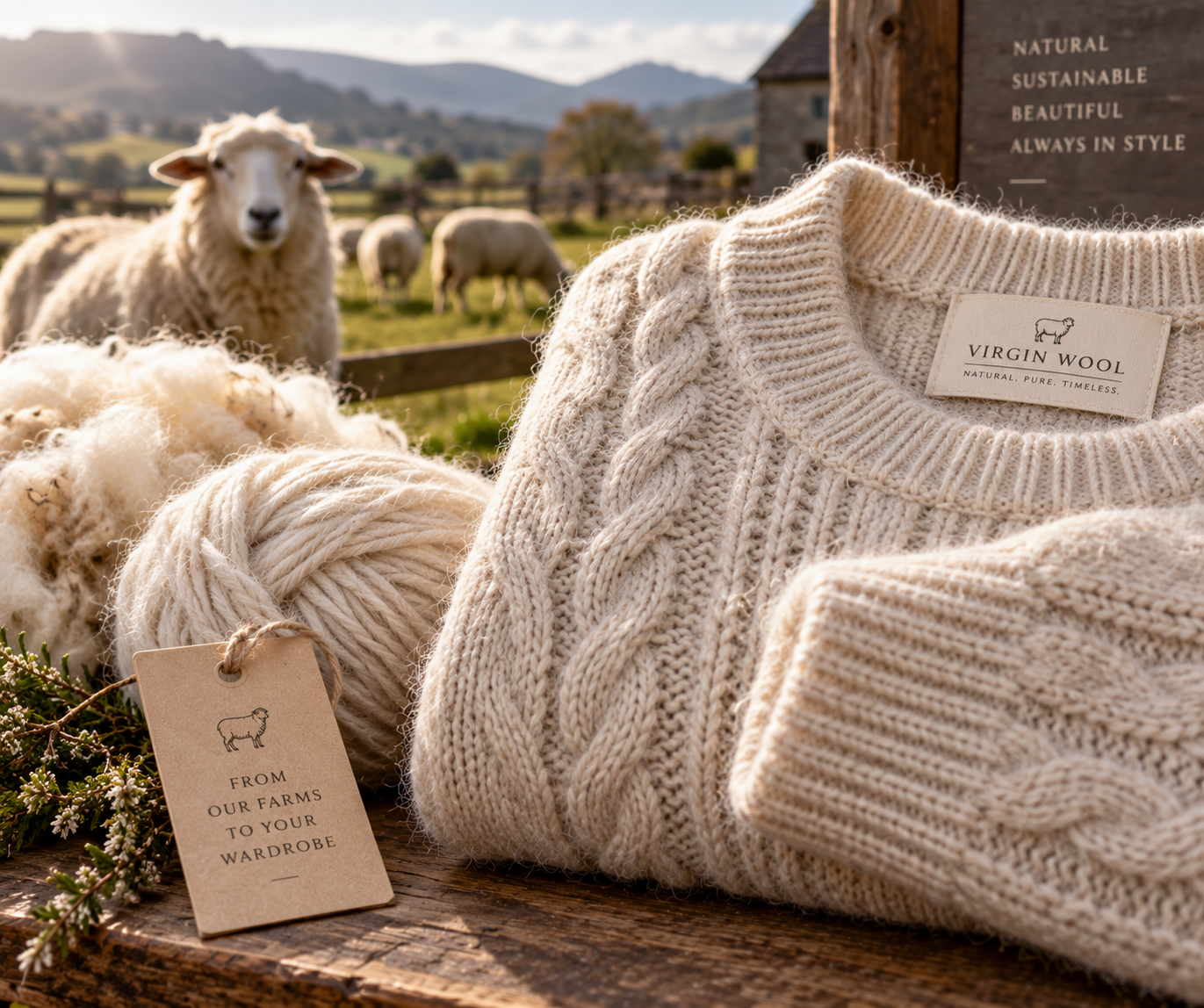
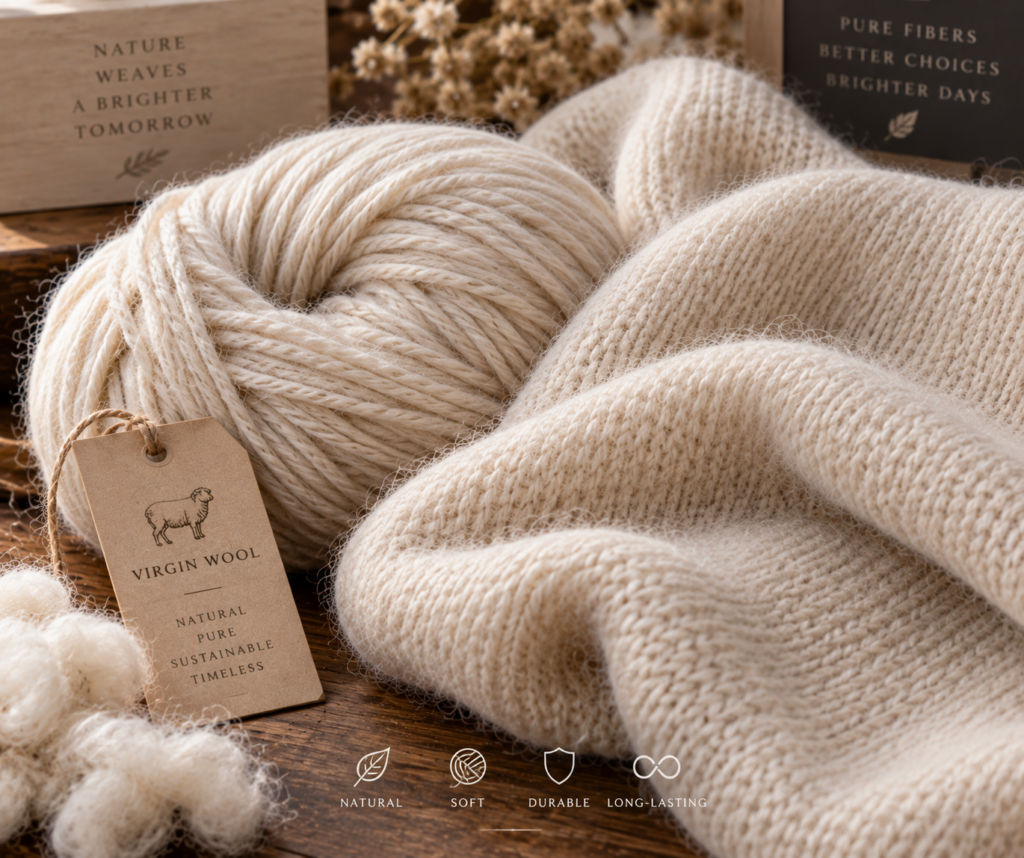
Virgin wool fabric is a natural textile made from wool that has not previously been used or recycled. The term can also refer specifically to wool collected from a lamb’s first shearing.
These two meanings are important because “virgin wool” is not always used in exactly the same way. In one context, it describes new, non-recycled wool. In another, it refers to particularly soft wool obtained from a young lamb during its first shearing.
Virgin wool is valued for its softness, strength, elasticity, breathability, moisture management, and ability to retain heat. Compared with recycled wool, its fibers have not been broken down and shortened through previous textile processing, so virgin wool generally provides greater strength and durability.
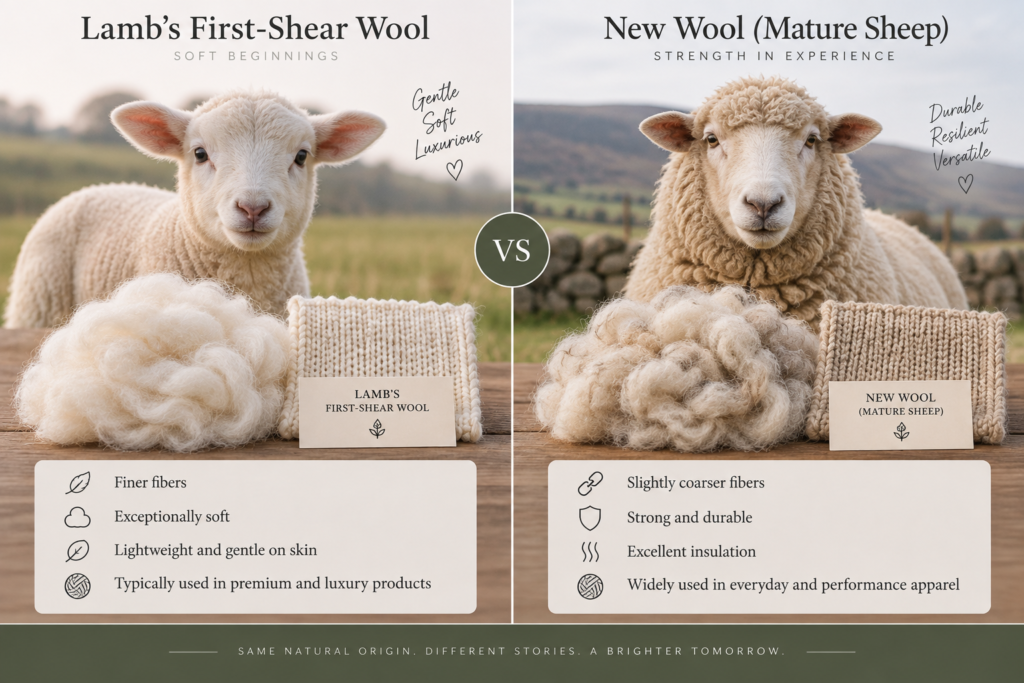
Wool from a lamb’s first shearing is especially fine because sheep’s wool tends to become coarser as the animal ages. Lamb’s first-shear wool is therefore considered a premium material and can have a softness comparable to some luxury fibers.
Quick Facts About Virgin Wool Fabric
| Property | Details |
|---|---|
| Fabric name | Virgin wool |
| Also known as | New wool, lamb’s wool |
| Composition | Wool from sheep; may specifically refer to first-shear lamb’s wool |
| Thread count | Approximately 100–200 |
| Breathability | Very high |
| Moisture-wicking ability | High |
| Heat retention | High |
| Stretchability | Medium |
| Pilling tendency | Relatively high |
| Historical origin | Mesopotamia |
| Major producer/exporter | Australia |
| Recommended washing | Cool or warm water, depending on care instructions |
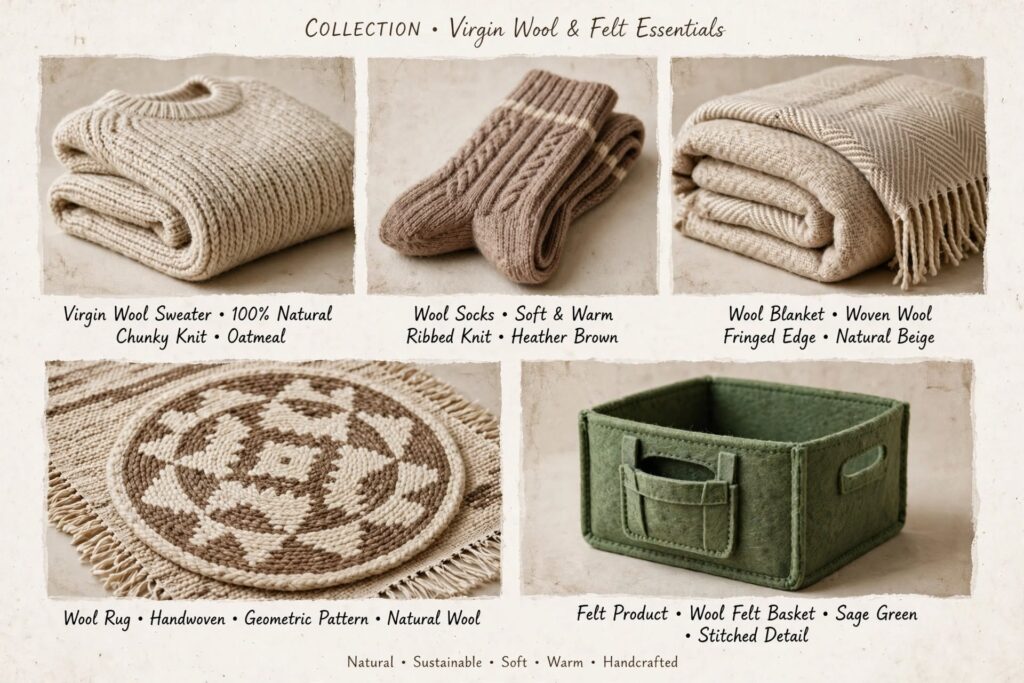
| Common uses | Socks, sweaters, jackets, trousers, blankets, rugs, diaper covers, infant swaddles, and felt products |
The term became especially important during periods when recycled wool was widely used. During World War II, shortages of textile fibers encouraged manufacturers to reuse existing wool garments and household textiles. Since recycled fibers were generally weaker and lower in quality, newly produced wool became known as “virgin wool.” Today, recycled wool is specifically identified as recycled, while most ordinary wool products are assumed to be made from new wool unless stated otherwise.
How Is Virgin Wool Fabric Made?
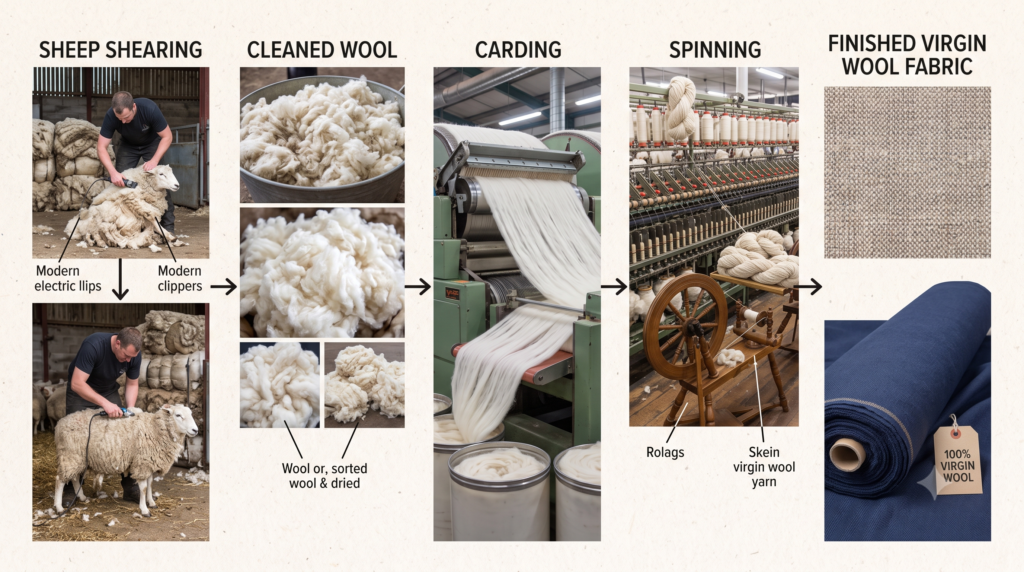
Virgin wool production begins with sheep and follows several stages before the fiber becomes fabric.
1. Shearing
Most sheep are sheared approximately once a year. Farmers determine when the animals are ready based on the condition and fullness of their coats.
Shearing can be performed by hand using large scissors, but electric shears are now much more common because they allow the process to be completed more efficiently.
When performed correctly and calmly, shearing does not need to cause significant harm or distress to the sheep.
2. Cleaning
Freshly sheared wool contains dirt, natural oils, plant material, and other impurities. It is cleaned before further processing.
3. Carding
The cleaned fibers are combed and aligned through a process called carding. This turns the loose wool into more organized strands that can be spun into yarn.
4. Spinning
The prepared fibers are spun into yarn. Spinning may be carried out using traditional equipment or modern automated machinery.
The thickness and construction of the yarn depend on the intended final product.
5. Washing and Dyeing
The yarn may be washed again after spinning and placed onto large spools.
It can then be dyed either at the spinning facility or after being transferred to a textile manufacturing facility. Additional treatments may also be applied depending on the desired properties of the final fabric.
6. Weaving or Knitting
The finished yarn is woven or knitted into fabric. Different constructions can create materials suitable for clothing, blankets, rugs, upholstery, and other products.
Virgin Wool vs. Recycled Wool
Virgin wool differs significantly from recycled wool in the way its fibers are prepared.
Recycled wool starts with existing wool garments or household textiles. These materials are sorted, cleaned, and shredded before the recovered fibers are spun into yarn again.
The shredding process damages and shortens the original fibers, making recycled wool generally less strong and less elastic than virgin wool. It can also be more prone to wrinkling, staining, and retaining odors.
When virgin wool comes from a lamb’s first shearing, the manufacturing process is essentially the same as that used for wool from mature sheep. The difference lies in the quality of the raw fiber: first-shear lamb’s wool is naturally finer and softer.
How Is Virgin Wool Fabric Used?
Wool has been used as a textile for thousands of years. It was valued historically for its ability to provide warmth, resist heat transfer, and withstand regular use.
Virgin wool continues to be used in many clothing and household products.
Clothing
Common clothing applications include:
- Sweaters
- Socks
- Jackets
- Trousers
- Hats
- Underwear
- Thermal clothing
- Infant clothing
Virgin wool is particularly useful for cold-weather garments because it can retain body heat while remaining breathable.
It can also absorb a significant amount of moisture without immediately feeling wet. This combination of warmth, breathability, and moisture management makes wool useful for socks, sweaters, and other thermal garments.
Blankets and Home Textiles
Virgin wool is also used for:
- Blankets
- Rugs
- Carpets
- Upholstery
- Throws
- Furniture coverings
Wool rugs and carpets are valued not only for their durability but also for their natural resistance to fire. Unlike many synthetic materials, wool does not readily support combustion and does not produce the same type of toxic fumes when burned.
Felt and Industrial Applications
Wool can be turned into felt through processes that cause the fibers to interlock.
Wool felt is used for both consumer and industrial products. One unusual application is piano hammer covers, where felt is used to control how the hammers strike the piano strings.
Wool has also historically been used for products such as tents and other protective textiles.
Where Is Virgin Wool Fabric Produced?
Australia is the world’s largest producer and exporter of wool. A significant portion of Australian wool production consists of merino wool, and wool remains one of the country’s important agricultural exports.
Large areas of Australia’s rural land are dedicated to sheep farming, and the wool industry supports a substantial number of people.
Other major wool-producing countries include:
- China
- United States
- New Zealand
- Argentina
- Turkey
Australia produces substantially more wool than most other individual producing countries, while China is another major producer and processor.
The location of wool production and the location of textile manufacturing do not necessarily have to be the same. Raw wool may be produced in one country, processed into yarn in another, and woven or knitted into finished fabric elsewhere.
How Much Does Virgin Wool Fabric Cost?
Wool is generally available across a wide range of price points. Basic wool products can be comparable in price to other natural and synthetic textiles, including cotton and polyester.
Virgin wool may cost more than recycled wool because it uses new fibers and generally offers better strength and performance. However, the price difference between recycled and virgin wool has become less pronounced over time.
The situation changes when “virgin wool” refers specifically to lamb’s first-shear wool. Because these fibers are exceptionally fine and soft, they are highly valued and can command premium prices.
The final price of virgin wool fabric depends on factors such as:
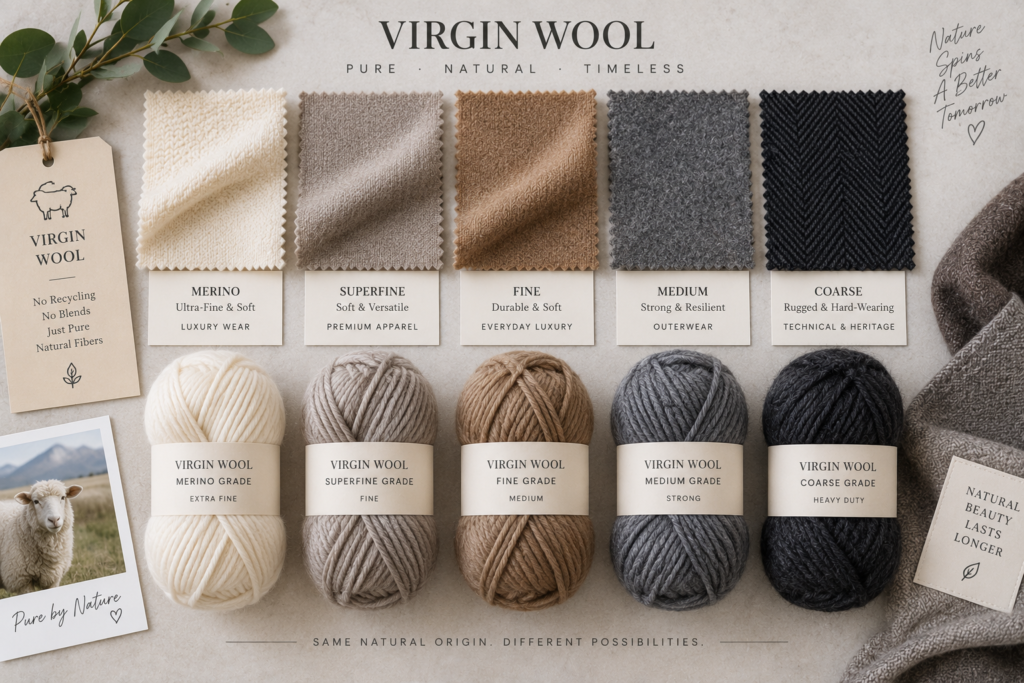
- Fiber fineness
- Wool grade
- Sheep breed
- Whether it is lamb’s wool
- Yarn quality
- Fabric weight
- Weave or knit construction
- Dyeing and finishing
- Country of production
- Brand
- Manufacturing volume
Premium virgin wool is frequently used in high-end garments, which can make the finished consumer product significantly more expensive than ordinary wool textiles.
What Different Types of Virgin Wool Fabric Are There?
The term “virgin wool” has two primary meanings.
1. Lamb’s First-Shear Wool
Traditionally, virgin wool refers to wool obtained from a lamb’s first shearing.
The fibers are particularly fine because the animal’s coat becomes coarser as it grows. This gives first-shear lamb’s wool its soft feel and premium reputation.
It is often used for high-quality clothing and other products where softness is especially important.
2. Non-Recycled Wool
Virgin wool can also simply mean wool that has never previously been used in a textile product.
In this sense, it includes new wool obtained from mature sheep as well as wool from lambs.
Non-recycled wool retains the strength and elasticity of newly harvested fibers and generally performs better than fibers recovered from old textiles.
How Does Virgin Wool Fabric Impact the Environment?
Virgin wool is a natural, biodegradable material, but its environmental impact is more complicated than simply classifying it as sustainable or unsustainable.
Biodegradability
Because wool is an animal-derived natural fiber, it can biodegrade under suitable environmental conditions. This distinguishes it from many petroleum-based synthetic fibers that can remain in the environment for much longer periods.
Sheep Farming
The largest environmental concerns associated with virgin wool generally occur before the fiber reaches the textile factory.
Sheep require land and feed, and large-scale sheep farming can place pressure on local ecosystems. Poorly managed grazing can contribute to:
- Soil degradation
- Overgrazing
- Loss of vegetation
- Water pollution
- Pressure on surrounding ecosystems
The environmental impact therefore depends heavily on how sheep are raised and how grazing land is managed.
Impact on Other Animals
Sheep farming can also affect wildlife. In some regions, pest-control practices associated with livestock farming can result in the killing of other animals. This has been an area of environmental and ethical concern, particularly in parts of Australia.
Textile Processing
Once the wool has been harvested, converting it into yarn is generally less environmentally intensive than many synthetic-fiber manufacturing processes.
However, dyeing and finishing can introduce environmental concerns. Toxic dyes or poorly managed wastewater can negatively affect water and surrounding ecosystems.
Virgin Wool vs. Recycled Wool
Recycled wool can reduce the need for new raw material, but recycling is not impact-free. Existing wool textiles must be collected, sorted, cleaned, and shredded before the fibers can be spun again. These processes require energy and labor.
For this reason, both virgin and recycled wool have environmental advantages and disadvantages. Responsible farming, processing, longevity, and proper care are all important when assessing the overall impact of a wool product.
Virgin Wool Fabric Certifications Available
Several certifications and standards can help consumers and manufacturers identify responsibly produced wool.
Responsible Wool Standard (RWS)
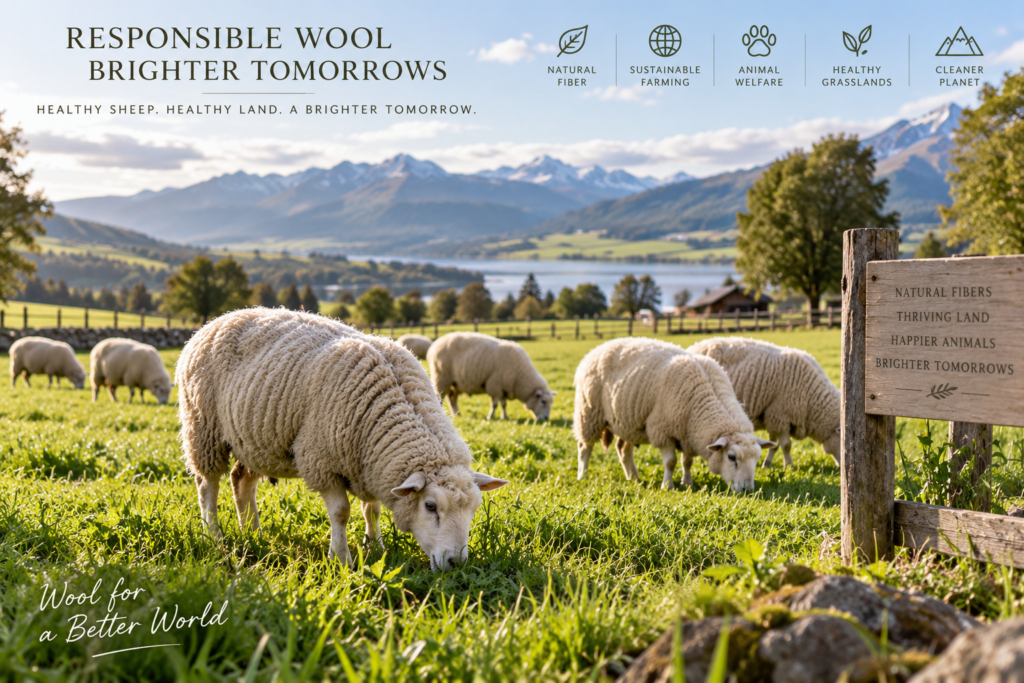
The Responsible Wool Standard (RWS) is an independent certification system covering wool production.
It addresses responsible practices such as animal welfare and land management and can apply to virgin wool from lambs, new wool from mature sheep, and recycled wool within the applicable supply chain.
Woolmark Certification
Woolmark provides certification services for wool products and is one of the best-known quality and certification systems in the wool industry.
Woolmark-certified products must meet defined requirements relating to wool content and product quality.
USDA Organic
USDA Organic certification may apply to wool produced under approved organic farming practices.
However, buyers should check exactly what the certification covers because certification of the agricultural production does not necessarily mean every stage of textile manufacturing is organic.
When purchasing virgin wool, it is useful to check the certification name, scope, and supply-chain documentation rather than relying only on claims such as “eco-friendly,” “natural,” or “sustainable.”
Frequently Asked Questions
What does virgin wool mean?
Virgin wool generally means wool that has never previously been used or recycled. Traditionally, the term can also refer specifically to wool obtained from a lamb’s first shearing.
Is virgin wool the same as lamb’s wool?
Not always. Lamb’s wool specifically comes from a lamb’s first shearing, while virgin wool can also mean any new, non-recycled wool.
Is virgin wool better than recycled wool?
Virgin wool generally has stronger, longer, and more elastic fibers because they have not previously been processed into another textile. Recycled wool can still be useful and more resource-efficient, but its fibers are typically shorter and weaker.
Is virgin wool soft?
Yes. Virgin wool can be very soft, especially when made from fine fibers. Lamb’s first-shear wool is particularly soft.
Is virgin wool warm?
Yes. Wool has excellent heat-retention properties and helps reduce heat transfer between the body and the surrounding environment.
Is virgin wool breathable?
Yes. Wool is naturally breathable and can absorb moisture while helping regulate body temperature.
Does virgin wool pill?
Yes. Virgin wool can be prone to pilling, particularly in areas exposed to repeated friction. Fiber quality and fabric construction influence how much pilling occurs.
Is virgin wool expensive?
Basic virgin wool can be reasonably priced, but premium grades—especially fine lamb’s wool—can be considerably more expensive.
Is virgin wool sustainable?
Virgin wool is natural and biodegradable, but its environmental impact depends on sheep farming, grazing practices, water use, processing, dyeing, and animal welfare. Responsible sourcing and certification can help reduce some of these concerns.
Where does most virgin wool come from?
Australia is the world’s largest wool-producing and exporting country. China, the United States, New Zealand, Argentina, and Turkey are also significant producers.
How should virgin wool fabric be washed?
Always follow the garment’s care label. Cool or warm water and gentle handling are generally preferable, as excessive heat and agitation can cause wool to shrink or lose its shape.