Quick answer: Some of the most breathable fabrics for hot weather are linen, lightweight cotton, rayon, and cotton gauze. Their ability to keep you comfortable comes from a combination of fiber properties and fabric construction. A loose weave can improve airflow, while the way a fiber handles moisture can determine whether fabric feels cool and dry or damp against the skin.
Anyone who has walked outside on a very hot day in the wrong clothes knows how quickly a fabric can make things uncomfortable.
Some materials seem to trap every bit of heat. Others feel light enough that even a small breeze makes a difference. What separates the two often comes down to a few things: the type of fiber, how tightly the fabric is woven, and what happens when the material comes into contact with sweat.
Linen and cotton have been popular choices in hot climates for a very long time, but they aren’t the only options. Fabrics made from processed plant cellulose, such as rayon and modal, can also offer useful breathability and a soft feel.
Understanding how these materials behave can make shopping for summer clothing much easier. It can also help when you’re packing for a warm-weather trip or simply trying to stay more comfortable during a particularly hot spell.
Here are ten breathable fabrics worth considering for hot weather, along with what makes each one useful and where it tends to work best.
1. Linen
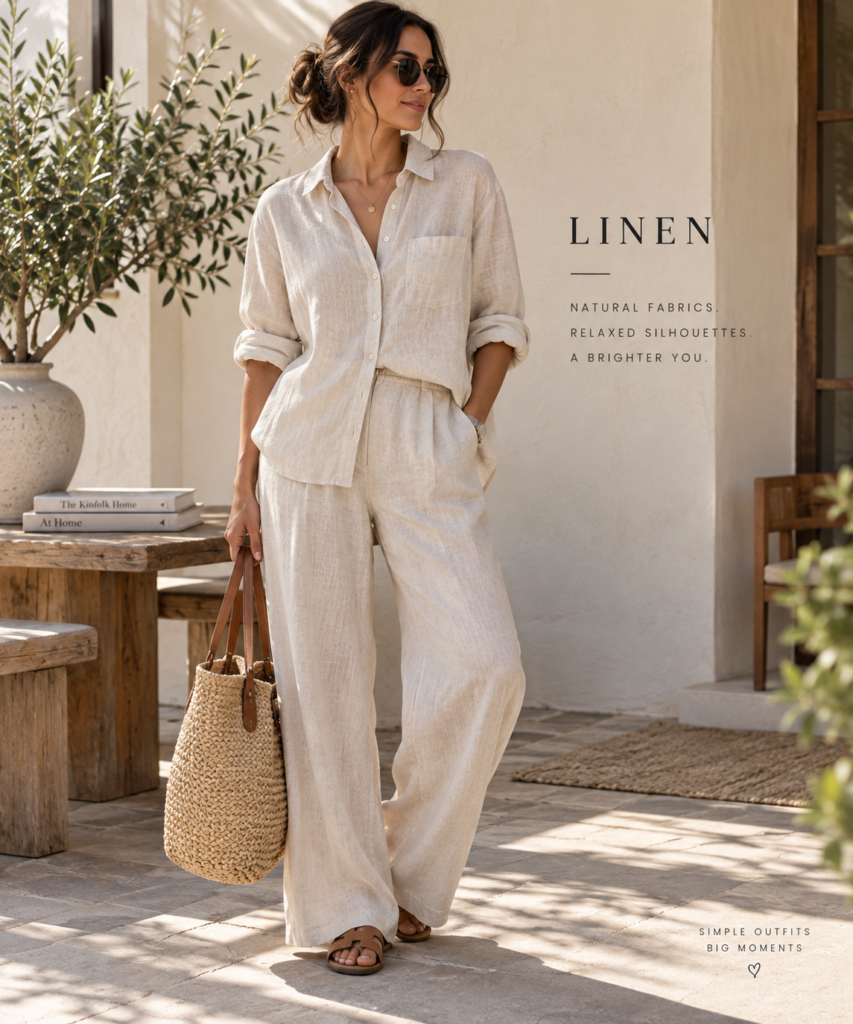
Linen has a long-standing reputation as one of the best fabrics for hot weather, and there is a good reason for it. Made from flax fibers, it is often woven loosely enough to allow air to move freely through the fabric.
That airflow is one of linen’s biggest advantages. Heat is less likely to become trapped close to the body, and the fabric allows air to circulate even when temperatures are high.
Linen also handles moisture well. It can absorb perspiration and release it into the air relatively quickly, which helps prevent the fabric from staying wet against your skin.
Another nice feature is that linen becomes softer with washing and regular wear. A piece that feels slightly firm when new can develop a much more relaxed texture over time.
The main drawback is obvious: linen wrinkles. It can crease quite dramatically, although many people actually like that slightly rumpled appearance, especially in casual summer clothing and holiday wardrobes.
Linen works well for shirts, trousers, dresses, and lightweight jackets.
One detail matters when you’re shopping for hot weather. Heavy linen doesn’t offer the same level of comfort as a lighter weave. Look for lightweight linen when staying cool is the priority.
2. Lightweight Cotton
Cotton is one of the easiest breathable fabrics to find, and it remains a reliable choice for summer clothing.
Because cotton is a natural fiber, it can allow good airflow, particularly when the fabric is lightweight and woven with enough space between the threads. The difference between two cotton fabrics can be surprisingly large. A dense cotton canvas and a fine cotton voile may be made from the same basic fiber, but they will feel completely different in hot weather.
Lightweight cotton is also comfortable from the beginning. Unlike linen, which can feel slightly firm until it has been washed a few times, cotton usually feels soft straight away.
Care is another advantage. Most lightweight cotton garments can simply be washed in a washing machine without requiring complicated handling.
Cotton does absorb moisture well, though it can hold onto that moisture longer than some other materials. That can be noticeable in very humid weather.
In dry heat, this usually isn’t a major issue. In humid conditions, choosing a looser-fitting cotton garment can help because the extra airflow around the body makes the fabric feel more comfortable.
Cotton is also available across almost every price range, which makes it one of the most practical options when you’re shopping for summer clothes.
3. Chambray
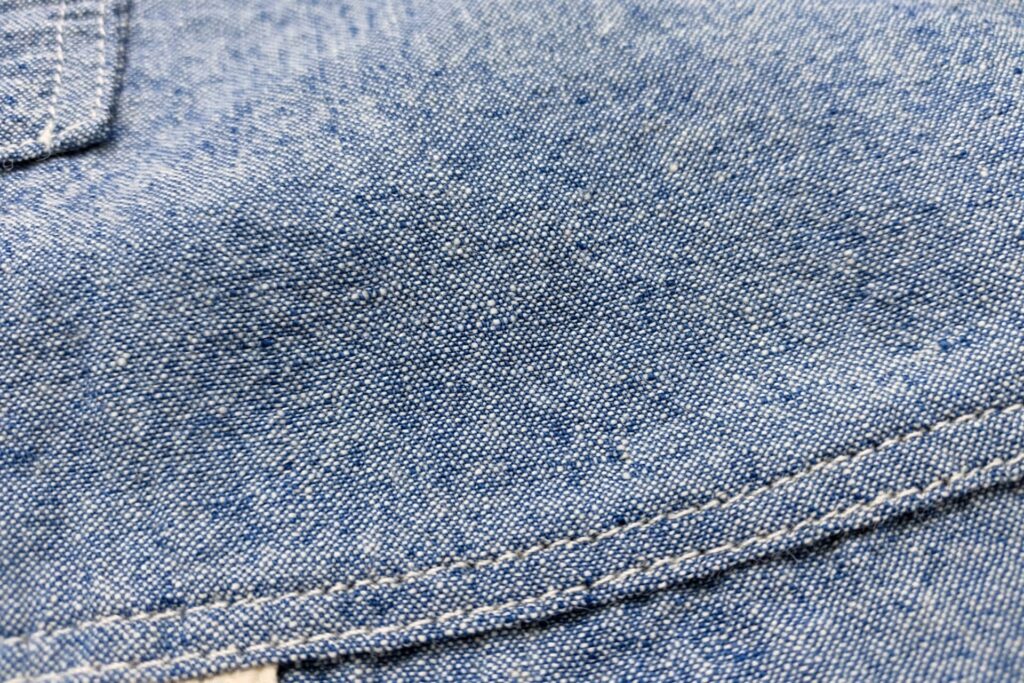
Chambray is often confused with denim because the two can look very similar. Both are commonly associated with blue shades, but the fabrics behave quite differently.
Chambray uses a plain weave and is generally much lighter and more open than denim. That construction allows more air to move through the material, making it a much better option for warm weather.
Technically, chambray is a cotton fabric woven with a colored thread in one direction and a white thread in the other. This gives it the subtle two-tone appearance that can resemble denim from a distance.
The lighter construction also changes the way it feels. Chambray drapes more softly and tends to sit more comfortably against the skin when temperatures rise.
Chambray shirts have become a summer wardrobe staple for precisely this reason. They can look casual without appearing sloppy and polished without feeling too formal.
Wear one open over a tank top, button it with shorts, or tuck it into a pair of linen trousers.
Care is generally simple. Most chambray garments can be machine washed and air-dried. It will wrinkle, but usually not as dramatically as linen, and normal wear tends to soften those creases.
4. Seersucker
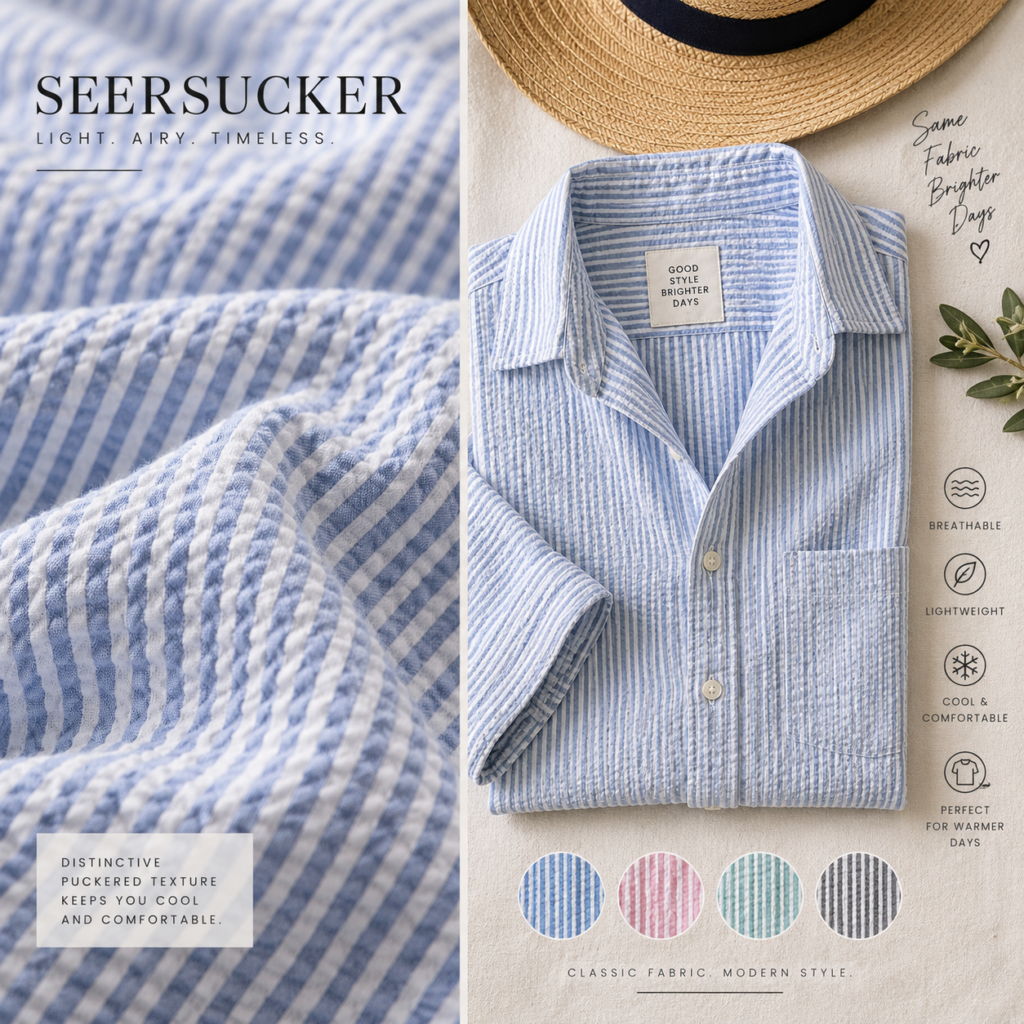
Seersucker is easy to recognise because of its puckered surface, but that texture is more than a visual feature.
The raised areas of the fabric sit slightly away from the body. This creates tiny pockets of air between your skin and the material, which helps with ventilation.
The texture is created during weaving by alternating tightly woven sections with looser ones. The looser sections naturally buckle and create the ridged appearance that seersucker is known for.
In other words, the fabric’s breathability is built into its construction.
Seersucker has long been associated with warm-weather clothing, particularly shirts, trousers, and lightweight suits. It has strong historical connections to warm-climate dressing, including traditional summer clothing in the American South and tropical settings.
Stripes are common, but you can also find seersucker in solid colors and other patterns.
One practical benefit is that the fabric doesn’t cling closely to the skin. That makes it particularly comfortable when temperatures and humidity are both high.
It also tends to need very little ironing, which is useful when you’re travelling somewhere warm and don’t want to spend time dealing with wrinkles.
5. Rayon / Viscose
Rayon, which is often called viscose depending on where you live, sits somewhere between the usual categories of natural and synthetic fibers.
It begins with plant cellulose, commonly from wood pulp, but the cellulose goes through significant chemical processing before becoming the finished fiber.
The resulting fabric has many qualities people associate with natural materials. It can feel soft, light, and comfortable, while also offering reasonable breathability.
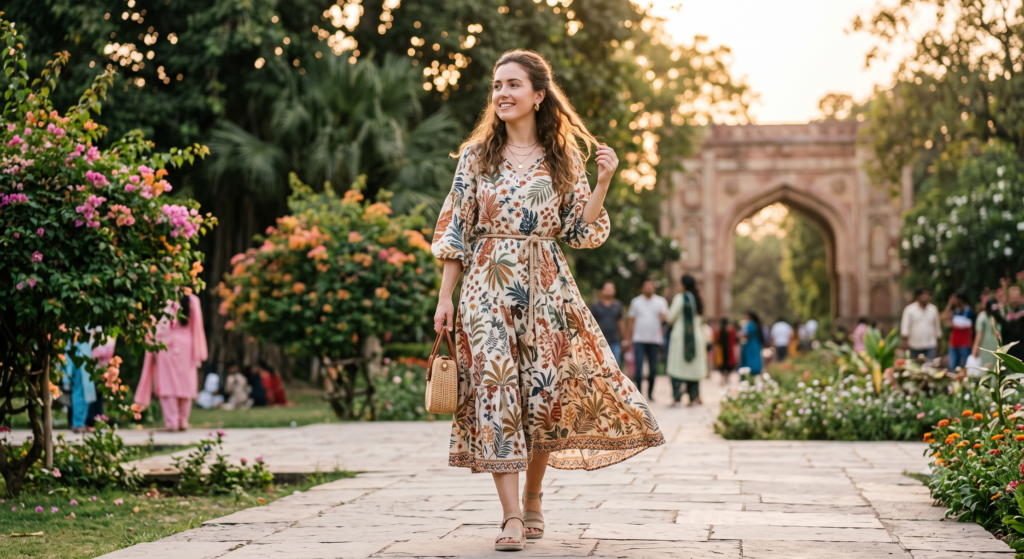
One reason rayon works well in warm weather is the fineness of the fibers. Lightweight rayon fabrics are often woven into flowing materials that move easily and don’t cling too tightly to the body.
That fluid drape is one of the reasons rayon is so common in summer dresses. The material moves with you instead of sitting heavily against the skin.
Rayon can absorb moisture reasonably well, although it may become less stable when wet and can stretch somewhat in humid conditions.
It also requires more care than cotton. Some rayon garments are best hand-washed or washed on a gentle cycle to help maintain their shape and texture.
It isn’t generally as durable over the long term as cotton or linen, but its combination of comfort, drape, and relatively low cost makes it a popular choice for warm-weather clothing.
6. Hemp
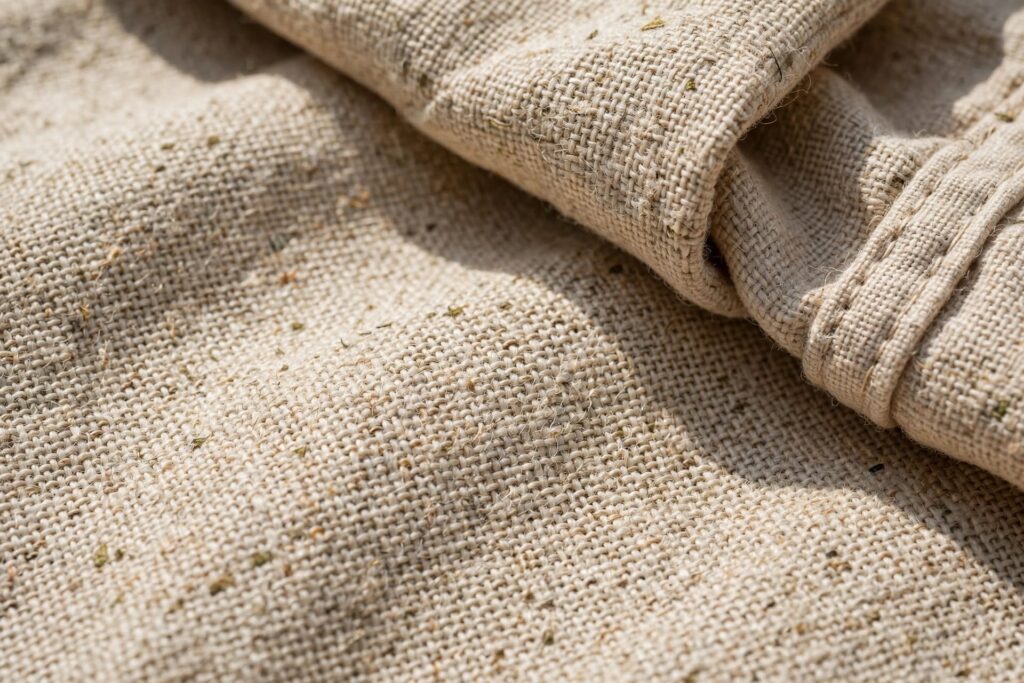
Hemp is an old textile fiber that has attracted renewed interest in recent years. It is a strong natural fiber, and the way hemp is commonly woven gives it good airflow.
Many hemp fabrics have a slightly open construction that allows air to move through the material. The fiber can also absorb moisture, helping move perspiration away from the skin and allowing it to evaporate.
Like linen, hemp may feel slightly stiff or rough at first. Washing and wearing it regularly generally softens the fabric.
One of hemp’s biggest strengths is durability. The fiber itself is strong, so clothing made from hemp can hold up well over time. It is also relatively resistant to stretching and can maintain its shape through repeated use.
That makes it appealing for people who would rather buy fewer clothes and keep them for longer.
Hemp also has a naturally earthy appearance. Its undyed color generally leans toward cream or off-white, although the fiber can take dye well.
It tends to work particularly well for relaxed, casual garments where its natural texture feels at home.
7. Modal
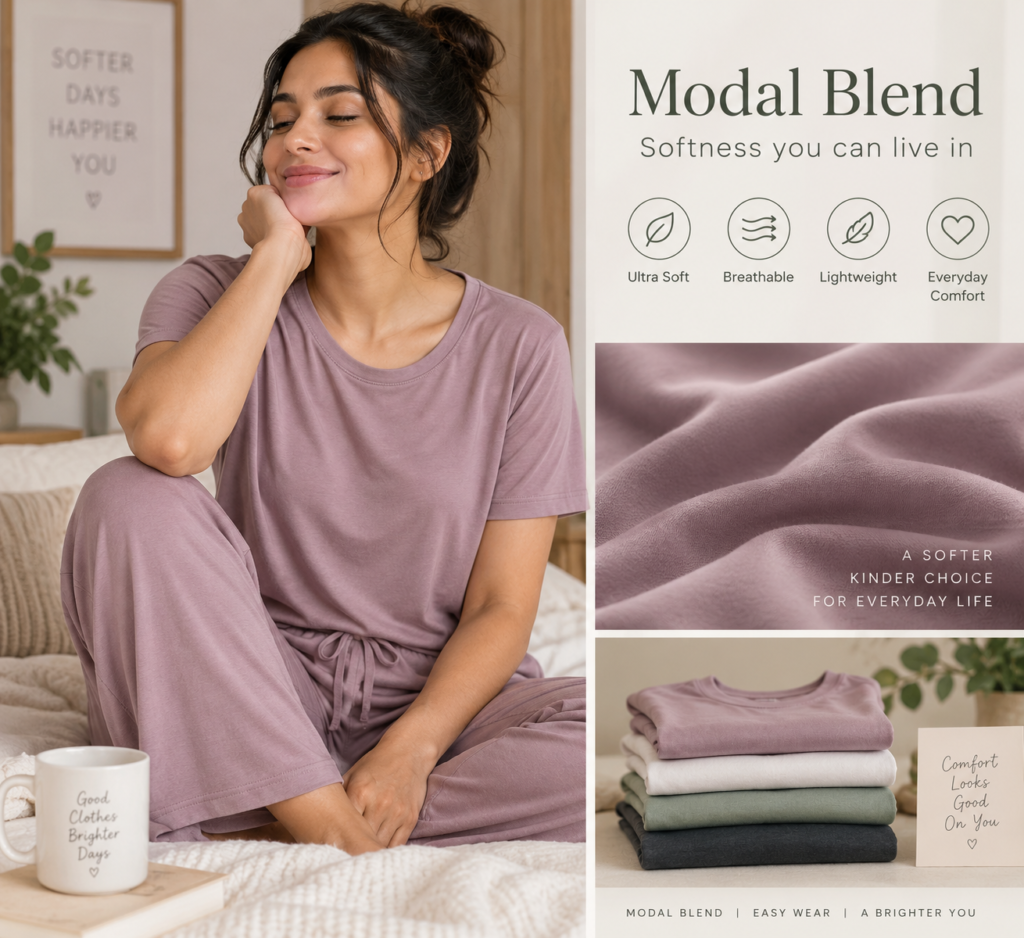
Modal is another semi-synthetic fiber made from plant cellulose, this time from beech trees.
Its main attraction is how soft it feels. It is often compared with cotton, but it has a smoother, slightly silkier hand. That softness, combined with its ability to manage moisture, makes modal particularly common in warm-weather basics and comfortable loungewear.
One of the differences between modal and standard rayon is the way it handles moisture. Modal tends to move moisture away from the skin and spread it across the fabric surface, where it can evaporate more quickly.
That can leave it feeling drier than a material that simply absorbs sweat and keeps it inside the fabric.
Modal is often blended with cotton. A cotton-modal fabric combines the familiar feel and breathability of cotton with the softness and drape of modal.
You’ll commonly see these blends in T-shirts, underwear, and activewear, where staying comfortable and managing moisture both matter.
Modal can also be used on its own. It has a smooth, fluid drape that works well in fitted clothing.
It generally holds its shape and withstands washing better than rayon, although following the care instructions is still important.
8. Cotton Piqué
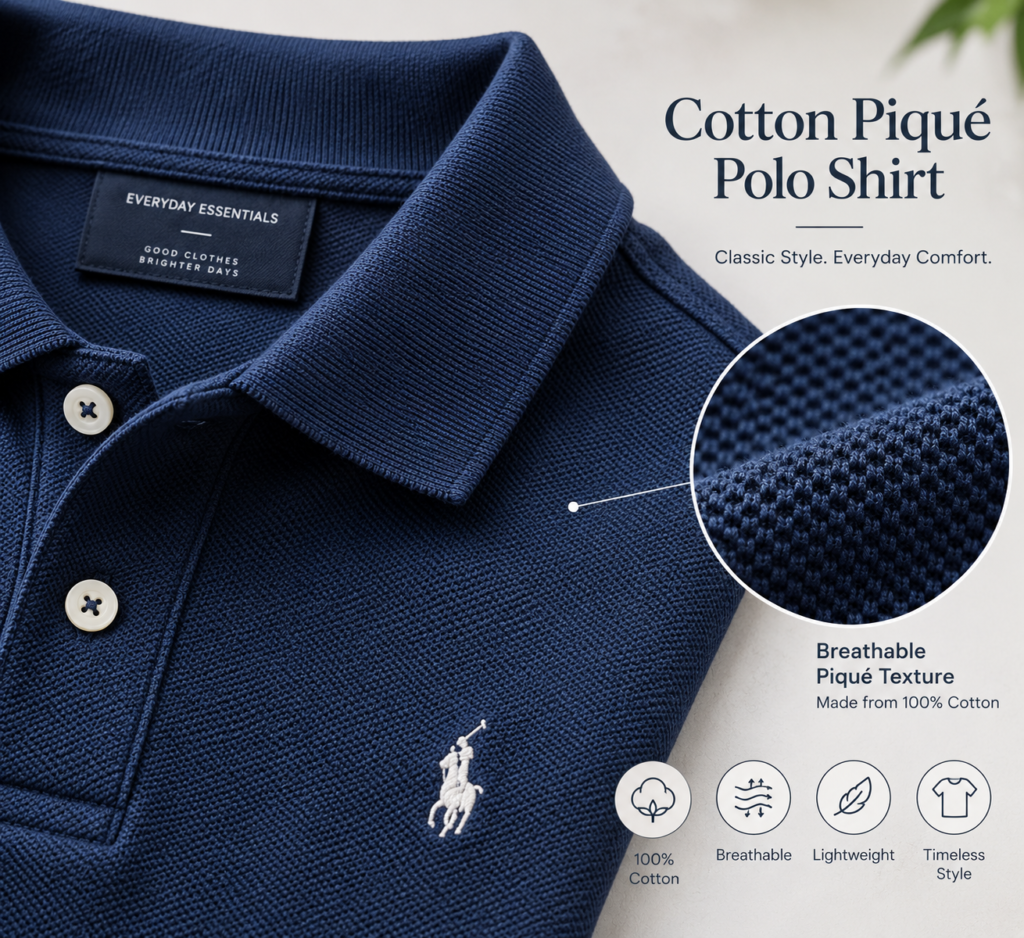
Cotton piqué is a knitted fabric with a textured surface. The small raised patterns, often resembling a waffle or honeycomb, give it more structure than ordinary cotton jersey.
That texture serves a practical purpose as well. The raised sections create small spaces in the fabric, which can improve airflow and keep some of the material slightly away from the body.
That’s why cotton piqué has long been associated with warm-weather clothing that still needs to look polished.
Polo shirts are probably the best-known example. The fabric looks neat and structured, but it is still comfortable enough for warm conditions.
Compared with softer, more fluid knits, piqué usually holds its shape better. It provides enough structure for a clean silhouette without becoming stiff.
The textured surface also makes it less likely to cling closely to the skin than a flat-knit fabric.
Care is straightforward in most cases, and machine washing is usually fine. One thing to watch is stretching, especially around areas such as the collar after repeated wear. Choosing a good-quality fabric weight can help reduce this problem.
Cotton piqué works particularly well for casual and smart-casual dressing in warm climates.
9. Lightweight Silk
Silk is often associated with luxury clothing and formal occasions, so it may not be the first material that comes to mind when you think about hot weather.
Lightweight silk is actually quite useful in warm conditions.
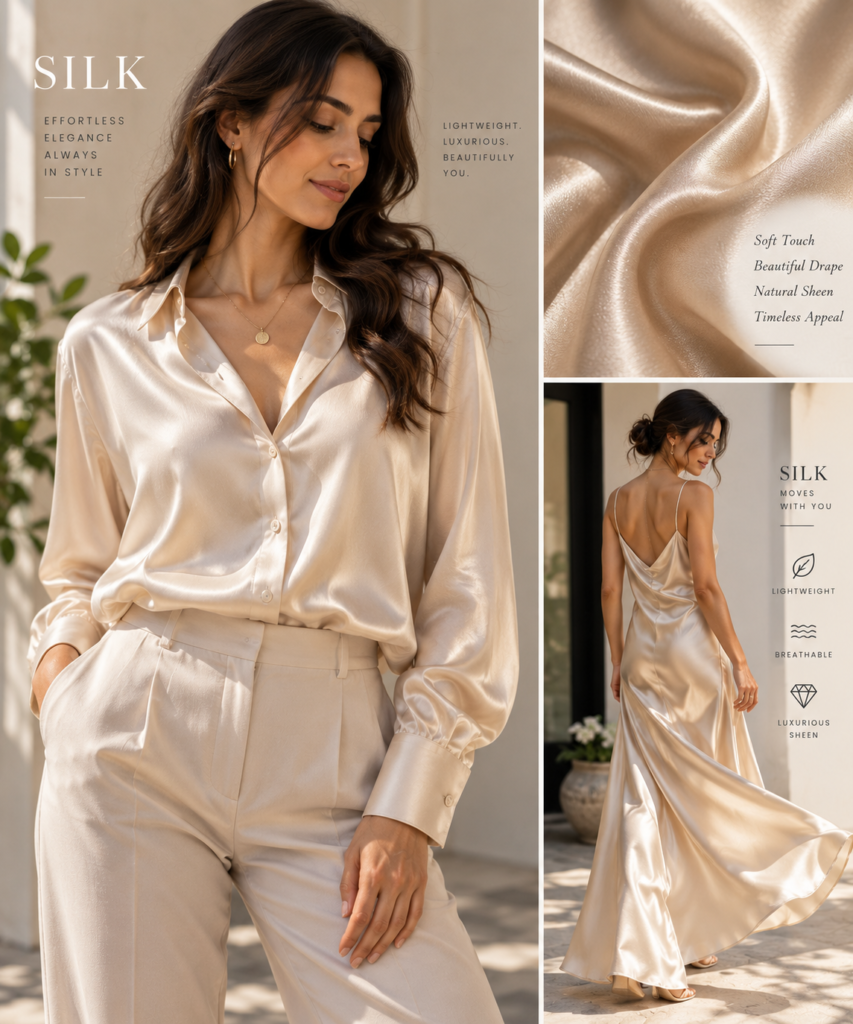
Finer silk fabrics allow air to circulate around the body, while the fiber’s natural ability to absorb moisture can make it comfortable in humid weather.
The way silk falls also helps. Lightweight silk tends to skim the body rather than cling tightly, which means there is less opportunity for heat to become trapped against the skin.
It also has that naturally cool feeling when you first touch it, and its fluid movement makes it especially well suited to blouses, dresses, and eveningwear.
Silk can absorb moisture without necessarily feeling wet against the skin, which is another reason it can work well in humid conditions.
The downside is care. Silk generally needs more attention than cotton or linen. Depending on the garment, hand washing or dry cleaning may be recommended, and prolonged exposure to direct sunlight can affect the fabric.
So while silk isn’t necessarily the easiest everyday choice, it can be an excellent option when you want something that feels comfortable and looks polished at the same time.
10. Cotton Gauze / Muslin
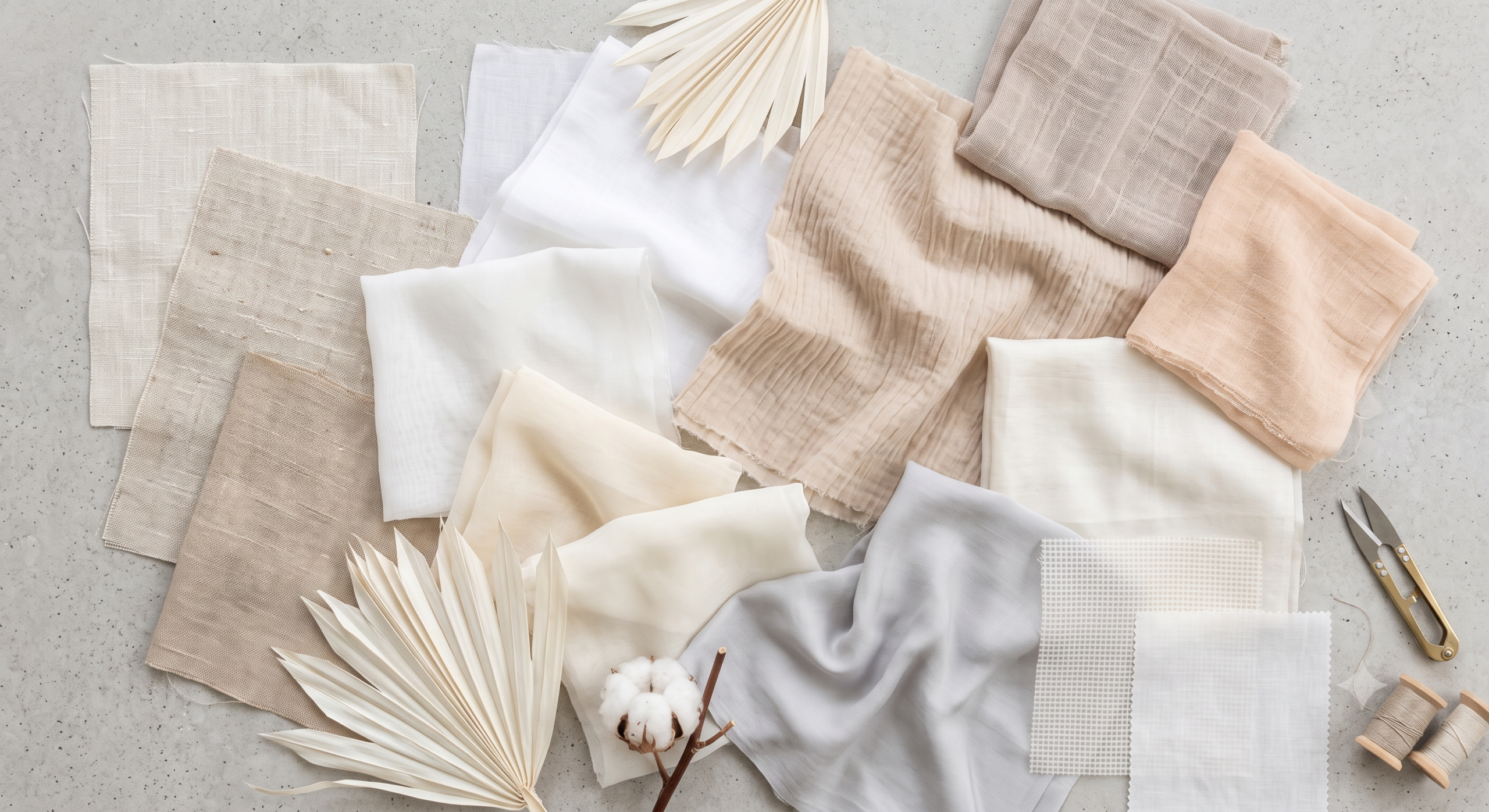
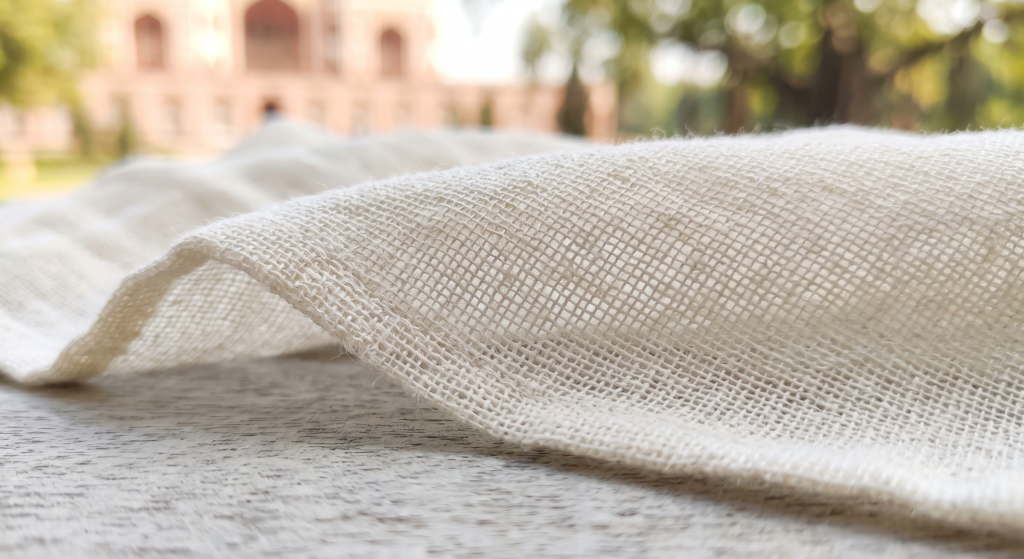
Cotton gauze is one of the loosest cotton fabrics around. It uses widely spaced threads in an open plain weave, and lighter versions can be almost sheer.
That open construction is exactly why it works so well in hot weather. Air can pass through the fabric easily rather than getting trapped.
Cotton gauze also feels extremely light when worn. It doesn’t cling much, holds little heat, and can dry fairly quickly after becoming damp.
Those qualities make it especially useful in humid climates.
Another advantage is that gauze is soft from the start. Unlike linen and hemp, it doesn’t usually need several washes before it becomes comfortable.
Its appearance is relaxed and slightly textured, which makes it a natural fit for loose tops, wide-leg trousers, lightweight cover-ups, and layering pieces.
Gauze does wrinkle easily, but that tends to suit its casual character. The texture rarely looks out of place.
The main trade-off is durability. The open weave that makes cotton gauze so breathable also leaves it somewhat more delicate than tightly woven cotton.
It isn’t necessarily fragile, but gentle washing is a good idea. A cold or delicate machine cycle is generally suitable for many cotton gauze garments.
Frequently Asked Questions About Breathable Fabrics
What is the most breathable fabric for hot weather?
Linen is widely considered one of the most breathable fabrics for hot weather because its flax fibers and generally loose weave allow good airflow while also helping moisture escape.
Cotton gauze and seersucker are strong alternatives. Both rely on open or raised fabric structures to improve ventilation.
The best choice can still depend on the garment itself and the climate. Humidity, fabric weight, and fit all affect how comfortable a material feels.
Is cotton or linen more breathable?
Linen is generally considered more breathable than cotton, although the difference becomes smaller when you’re comparing linen with lightweight or loosely woven cotton.
Linen tends to release moisture quickly, which can help it feel drier in intense heat.
Lightweight cotton, especially open-weave fabrics such as gauze or muslin, can come quite close. Cotton also tends to feel softer immediately and is usually easier to find.
What fabrics should I avoid in hot, humid weather?
Dense synthetic fabrics such as heavy polyester, nylon, and acrylic can be uncomfortable in hot and humid weather because they may restrict airflow and hold moisture close to the skin.
The same issue can occur with tightly woven fabrics, regardless of fiber. Thick denim and heavy wool, for example, don’t allow much air through.
In humid conditions, fabrics that absorb moisture and hold onto it can also feel particularly unpleasant.
Can synthetic fabrics ever be breathable?
Yes. Breathability isn’t determined by whether a fiber is natural or synthetic.
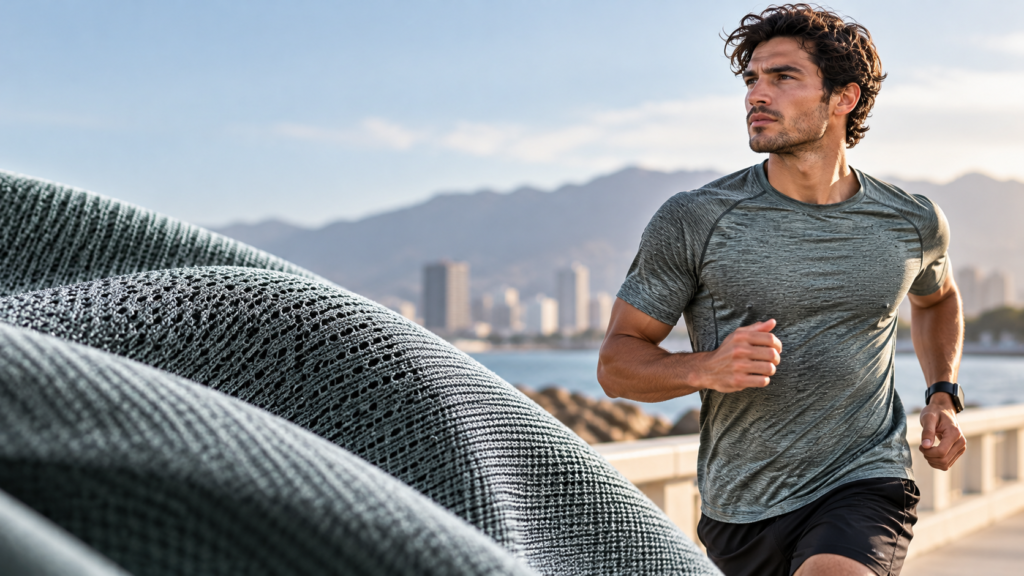
Some performance synthetics are specifically engineered to move moisture away from the body and improve airflow. These are common in athletic and outdoor clothing.
Semi-synthetic materials such as rayon, viscose, and modal can also perform well in warm weather.
The fabric’s construction and moisture management are often more important than the simple natural-versus-synthetic distinction.
Does fabric color affect how cool a garment feels?
Color has some effect, but it is usually less important than the fiber, weave, and weight of the fabric.
Lighter colors reflect more sunlight, while darker shades absorb more of it. As a result, lighter clothing can feel somewhat cooler when you’re standing in direct sun.
Still, fabric construction usually makes a bigger difference. A dark linen shirt can be more comfortable in hot weather than a tightly woven white polyester shirt.
The Takeaway: Choose Fabric with Purpose
There isn’t a single quality that makes a fabric breathable.
Fiber type matters, but so does the way that fiber is woven. Moisture management matters too, as does the weight and fit of the finished garment.
Linen and cotton gauze are well known for keeping people comfortable in hot weather, but materials such as modal and rayon can also perform very well depending on the situation.
The most useful thing to look at when shopping is the fabric’s weight and weave. A lightweight, loosely woven material will usually allow more airflow than a dense version of the same fiber.
That applies to both natural and semi-synthetic fabrics.
So rather than choosing a fabric simply because it is labelled “natural” or “breathable,” take a closer look at how it is made and how it is likely to behave in the conditions where you’ll wear it.
For more information on fabrics that align with sustainable practices, explore our guide to [Sustainable Fabrics]. And if you’re planning a warm-weather wardrobe around these materials, our guide to [Summer Fashion Trends] is a useful next read.