GORE-TEX fabric is designed for situations where ordinary clothing may not provide enough protection from rain, wind and wet conditions. It is widely used in outdoor jackets, hiking trousers, waterproof footwear, gloves and specialist workwear. Its main advantage is the combination of waterproof protection and breathability, helping wearers stay dry without trapping all their body heat and perspiration inside a garment.
Unlike cotton, linen or conventional polyester, GORE-TEX is not simply a type of textile fiber. It is a branded performance technology built around a thin membrane that is bonded to one or more textile layers. The exact construction varies according to the intended use, whether that is everyday rainwear, mountaineering equipment or protective work clothing.
Quick Facts About GORE-TEX Fabric
| Property | Details |
|---|---|
| Material category | Branded waterproof and breathable textile technology |
| Main function | Protection against rain, wind and external moisture |
| Common membrane materials | Expanded polytetrafluoroethylene (ePTFE) and expanded polyethylene (ePE), depending on product generation |
| Common face fabrics | Polyester, nylon and other selected textiles |
| Texture | Varies from soft and flexible to firm and abrasion-resistant |
| Breathability | Designed to allow water vapour to escape |
| Common uses | Outdoor jackets, trousers, footwear, gloves and technical clothing |
| Water resistance | Designed for durable waterproof performance when the complete product is properly constructed |
| Care | Depends on the garment label and specific product |
| Price range | Generally higher than ordinary fabrics because of specialised materials, construction and testing |
What Is GORE-TEX Fabric?
GORE-TEX is a branded textile technology developed by W. L. Gore & Associates. It is best known for making clothing and footwear that resist water and wind while allowing perspiration vapour to escape.
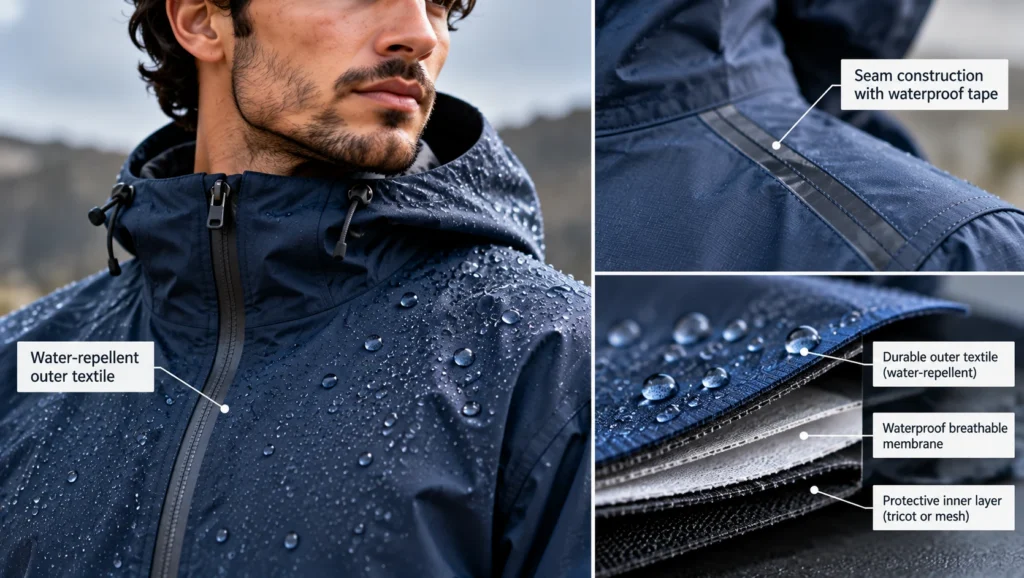
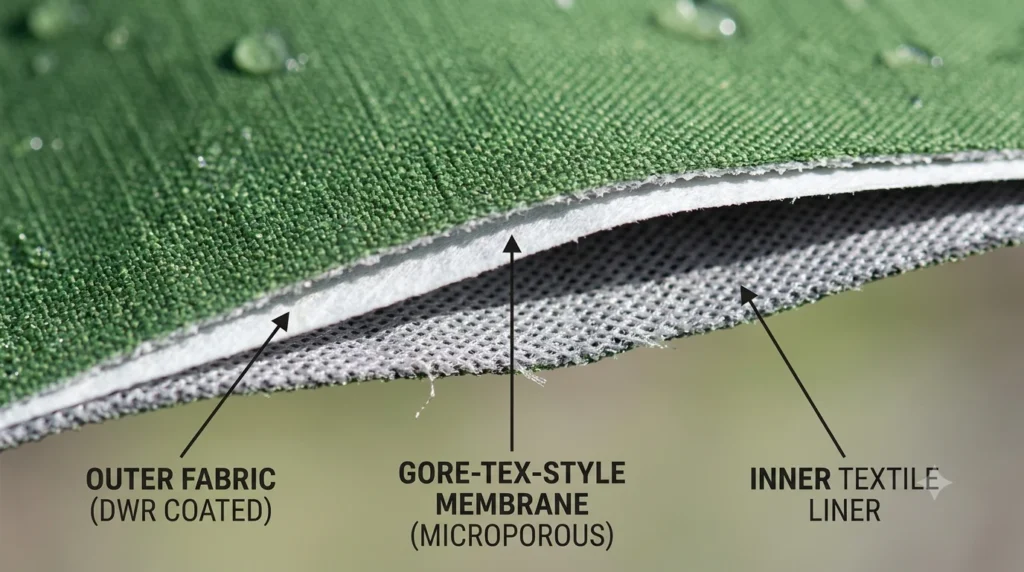
The membrane is the key component. It is extremely thin and is bonded to textile layers to create a functional laminate. The outer layer protects the construction from abrasion and everyday wear, while an inner layer or lining can improve comfort and protect the membrane.
The name GORE-TEX covers a range of product constructions rather than one universal fabric recipe. Traditional products have used expanded polytetrafluoroethylene, commonly known as ePTFE. Newer product lines also use expanded polyethylene, or ePE, as part of the brand’s evolving material technology.
It is important to distinguish GORE-TEX from a generic waterproof fabric. A material can be water-resistant because of a coating or surface treatment without using GORE-TEX technology. Likewise, a garment containing a GORE-TEX membrane still needs suitable seams, closures and construction to provide effective weather protection.
History of GORE-TEX Fabric
The story of GORE-TEX began with advances in polymer science. In 1969, Bob Gore discovered a way to rapidly stretch polytetrafluoroethylene, creating expanded PTFE with a distinctive structure and useful material properties.
This discovery led to the development of a microporous membrane that could provide a combination of water resistance and moisture-vapour transmission. GORE-TEX products subsequently became widely associated with outdoor clothing and equipment, particularly in activities where weather protection is essential.
Over time, the technology expanded beyond jackets to include footwear, gloves, uniforms and specialised protective equipment. Product development also focused on durability, comfort, lighter constructions and different levels of protection for different activities.
More recently, Gore has introduced ePE membrane technology in selected consumer products. This development forms part of a broader effort to reduce material mass and move away from intentionally added per- and polyfluoroalkyl substances, known as PFAS, in relevant product constructions.
The technology continues to evolve, but its central purpose remains the same: to help people stay protected in challenging weather without sacrificing comfort unnecessarily.
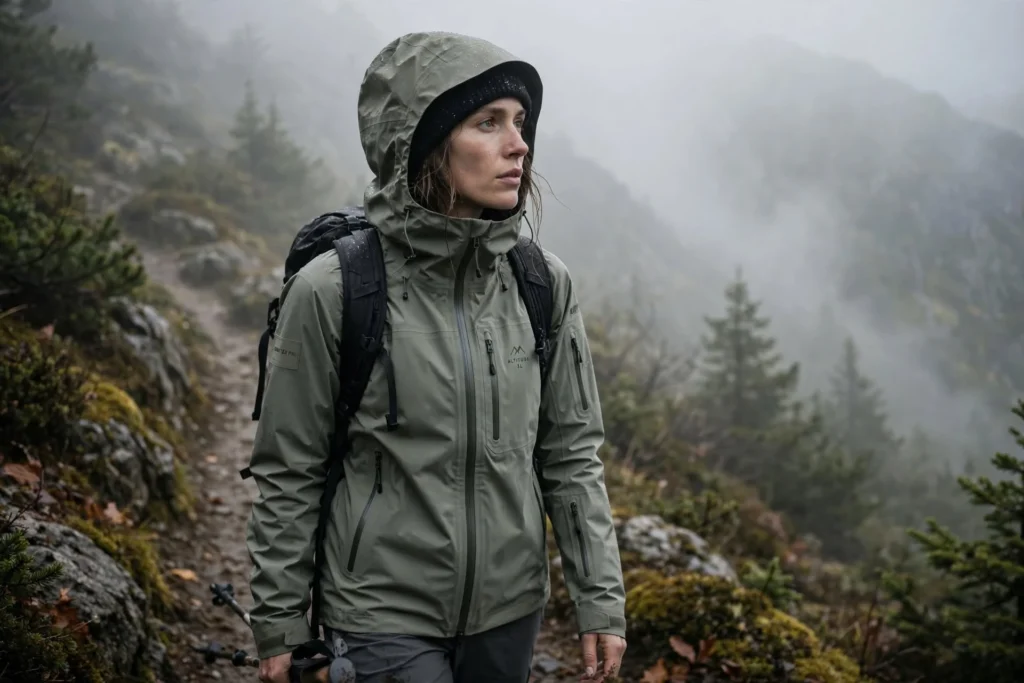
How Is GORE-TEX Fabric Made?
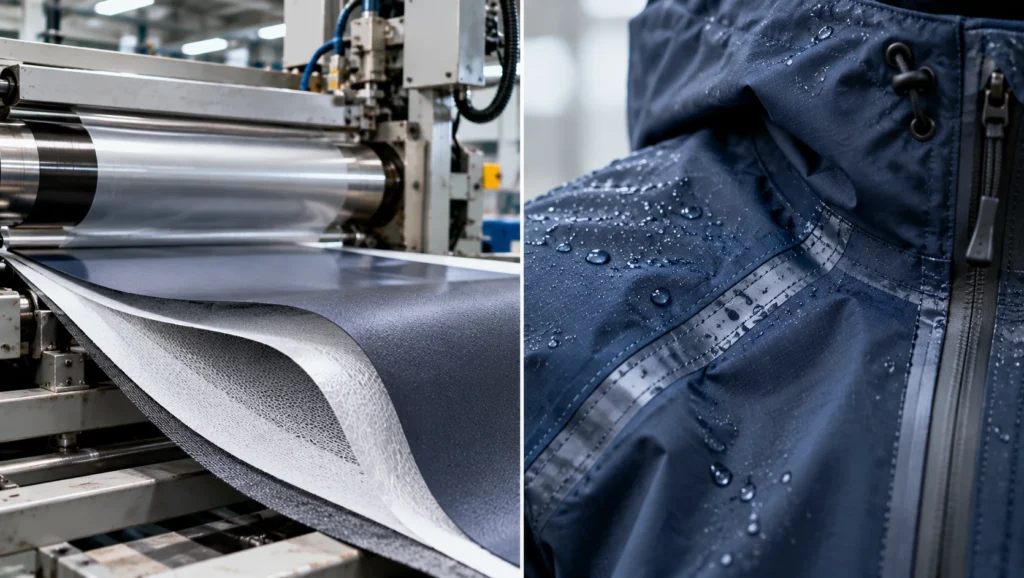
GORE-TEX fabric is produced through a specialised process that combines a membrane with carefully selected textile materials. The finished product is a layered construction rather than a single woven or knitted fabric.
1. Producing the membrane
The membrane is made from a specialised polymer. Depending on the product, this may be ePTFE or ePE. The material is processed to create a thin structure with properties suited to waterproof and breathable applications.
2. Selecting the textile layers
Manufacturers select face fabrics and, where required, backing textiles or linings. Nylon and polyester are common choices because they can offer useful combinations of strength, weight, flexibility and abrasion resistance.
The textile choice affects how the finished material feels, how it drapes, how much it weighs and how well it withstands repeated use.
3. Bonding the layers
The membrane is laminated to the textile layers using a controlled bonding process. This creates a stable construction that can be cut and sewn into garments or integrated into footwear and accessories.
4. Adding protective details
The membrane alone does not make a finished jacket completely waterproof. Sewing creates small holes in fabric, so garments intended for waterproof use generally require suitable seam sealing. Zippers, pockets, cuffs, hoods and other openings must also be designed to limit water entry.
5. Testing the finished product
The materials and finished products are assessed for performance requirements such as waterproofness, breathability and durability. The testing and construction standards depend on the intended application.
How Is GORE-TEX Fabric Used?
GORE-TEX is used where weather protection matters more than the low cost or simple construction of everyday fabrics.
Outdoor jackets and rainwear
Waterproof shells are among its best-known applications. They help protect hikers, climbers, cyclists and travellers from rain and wind. Some jackets are lightweight and packable, while others are built for harsh conditions and frequent use.
Hiking trousers and outdoor clothing
Technical trousers and other outdoor garments can use waterproof membranes to protect against wet vegetation, rain and snow. The best construction depends on whether the priority is mobility, durability, warmth or packability.
Footwear
GORE-TEX technology is used in hiking boots, walking shoes and other footwear. In these products, the membrane is incorporated into the shoe or boot construction to help prevent external water from entering while allowing some moisture vapour to escape.
Gloves and winter sports equipment
Waterproof gloves and selected snow-sports garments use membrane technology to help protect against snow, wind and wet conditions. The design must balance protection with dexterity and comfort.
Workwear and specialist protective clothing
Some professional garments use GORE-TEX technology for workers who spend long periods outdoors. The specific product must be selected according to the hazards and protection standards relevant to the job.

Where Is GORE-TEX Fabric Produced?
GORE-TEX is a proprietary technology, so its membranes and branded textile constructions are produced within specialised manufacturing and supply arrangements. Finished fabrics and products can involve several stages, including membrane production, textile lamination, garment assembly and quality testing.
Manufacturing locations and supply chains vary by product and production partner. The finished garment may be assembled in a different country from the place where its membrane or textile components were made.
For buyers, the country of manufacture alone does not establish how well a product performs. It is more useful to examine the exact product specifications, intended activity, construction quality, warranty and care instructions.
How Much Does GORE-TEX Fabric Cost?
GORE-TEX products generally cost more than ordinary woven or knitted fabrics because they use specialised membranes, lamination processes, performance testing and additional construction details. The actual price varies considerably by product and intended use.
A lightweight waterproof shell, a heavily reinforced mountaineering jacket and a pair of waterproof hiking boots are not directly comparable. Their prices reflect different materials, designs, manufacturing requirements and levels of protection.
The cost of the fabric itself is also different from the retail price of a finished garment. Branded material availability, minimum order quantities, product licensing and supplier arrangements can affect commercial pricing.
When comparing products, consider:
- Construction: Two-layer, three-layer and other constructions differ in comfort, durability and intended use.
- Face fabric: Heavier or more abrasion-resistant textiles can increase cost.
- Product design: Sealed seams, waterproof zippers, adjustable hoods and reinforced areas add complexity.
- Performance requirements: Equipment designed for demanding outdoor activities may require more extensive testing and specialised construction.
- Expected lifespan: A durable garment that can be maintained and repaired may offer better value over several seasons.
For consumers, comparing complete garments is usually more practical than trying to compare membrane prices alone. For manufacturers and designers, an authorised technical textile supplier is the appropriate route to obtain current specifications and commercial quotations.
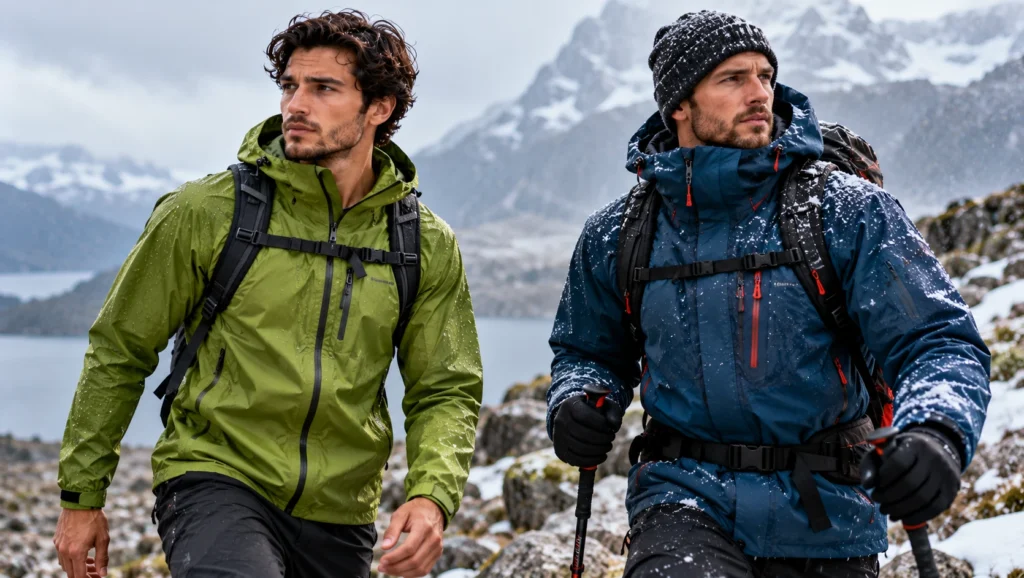
What Different Types of GORE-TEX Fabric Are There?
GORE-TEX products vary according to their membrane technology, number of textile layers and intended application. The following are useful ways to understand the main constructions.
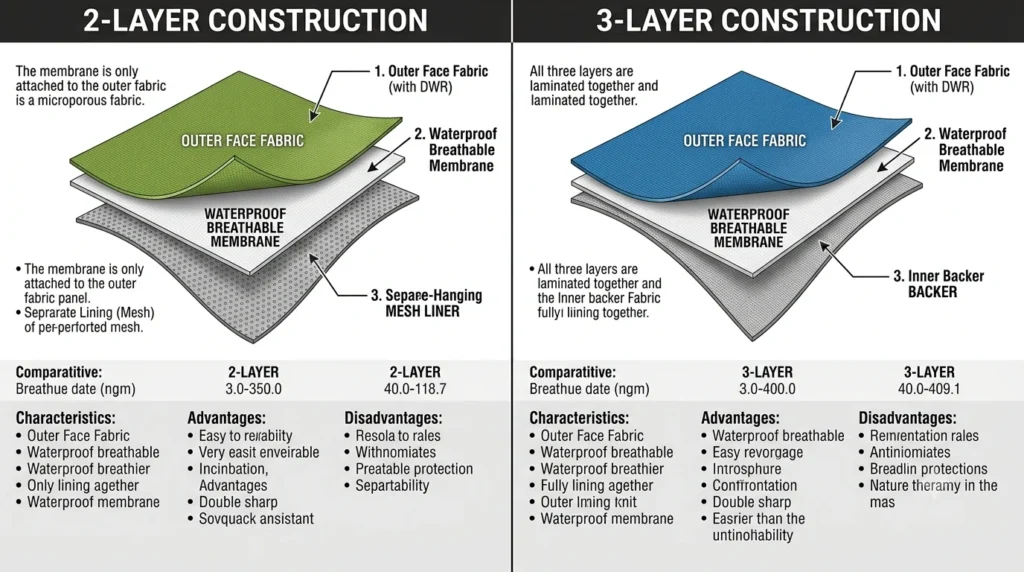
1. Two-layer construction
In a two-layer construction, the membrane is bonded to the outer face fabric. A separate lining is often added inside the finished garment.
This arrangement can feel comfortable and versatile, making it suitable for many everyday rain jackets and general outdoor garments. The separate lining can also help protect the inner construction.
2. Three-layer construction
A three-layer construction bonds the membrane between an outer textile and an inner backing fabric. The layers form a single laminate.
This design is commonly used when durability, lower bulk and dependable performance are priorities. It can be particularly useful for demanding outdoor activities where the garment will be worn frequently or exposed to rough conditions.
3. Lightweight and packable constructions
Some products are designed to minimise weight and packed size. They are useful for hiking, travel and activities where carrying space matters. Their suitability depends on the balance between weight, durability, comfort and the expected weather.
4. Insulated and cold-weather products
GORE-TEX technology can be combined with insulation and other garment layers. The membrane provides weather protection, while the insulation helps retain body heat. These products are intended for colder environments and winter activities.
5. Footwear and glove constructions
Membrane technology can be incorporated into footwear and gloves, where the shape, lining and construction differ from those of a jacket. Waterproof performance depends on the entire product, including its seams, closures and areas exposed to wear.
6. Products using ePE membrane technology
Selected newer GORE-TEX products use an expanded polyethylene membrane. These products are designed to provide waterproof, windproof and breathable performance, with a lower membrane material mass. The associated laminate is made without intentionally added PFAS, although trace amounts may still be present.
Not every GORE-TEX product uses the same membrane or textile combination. Buyers should check the specifications of the exact product rather than assuming all items carrying the brand have identical construction or environmental attributes.
How Does GORE-TEX Fabric Impact the Environment?
The environmental impact of GORE-TEX products depends on the materials used, the manufacturing process, the product’s useful life and what happens when it is discarded. Waterproof performance can help a garment last through years of outdoor use, but it does not make the material impact-free.
Polymer production and resource use
Traditional GORE-TEX membrane technology has used ePTFE, while selected newer products use ePE. Both are synthetic polymer materials that require industrial processing. Textile layers, lamination, dyeing and garment assembly also consume resources and energy.
PFAS and chemical considerations
PFAS is a broad group of chemicals with different properties and uses. Some historical waterproofing technologies have involved fluorinated chemistry, and concerns about persistence in the environment have prompted changes across the outdoor apparel industry.
Selected newer GORE-TEX products use ePE membranes and laminates made without intentionally added PFAS. This claim should not be generalised to every product, every generation or every component. Product specifications matter, and “made without intentionally added PFAS” does not necessarily mean that no trace amounts can be present.
Synthetic textile shedding and disposal
Where the face fabric or lining contains synthetic fibers, washing and wear may release small fibers. Laminated constructions can also be difficult to separate into their component materials at end of life, which may complicate recycling.
Durability and longer use
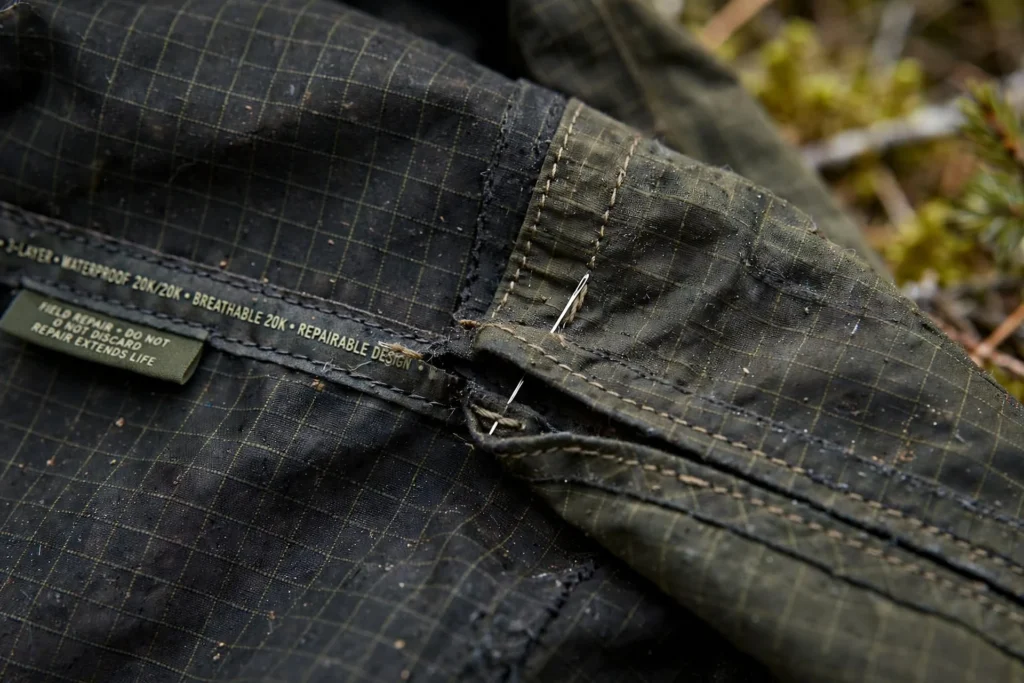
A well-maintained waterproof garment may remain useful for many seasons. Repairing damage, cleaning the garment correctly and restoring its water-repellent finish when needed can extend its working life. Keeping a product in use for longer can reduce the need to replace it frequently.
A balanced assessment
GORE-TEX technology offers practical protection and durability, but its environmental performance varies by product. When sustainability is a priority, look for clear information about membrane type, recycled textile content, chemical claims, repair options and expected service life. Recycled materials and newer membrane technologies can be meaningful improvements, but neither automatically makes a finished garment sustainable.
GORE-TEX Fabric Certifications Available
Certification and chemical-management standards can provide useful information about the safety and sourcing of textile materials. However, certification applies to particular materials, facilities or products, so it is important to check the exact scope.
Depending on the product and its components, relevant standards may include:
- OEKO-TEX® STANDARD 100: Assesses textiles for certain harmful substances under its testing criteria.
- bluesign®: Focuses on chemical management and environmental and worker-safety considerations across textile production.
- Global Recycled Standard (GRS): Verifies recycled material content and tracks it through the supply chain when a product is certified within the standard’s scope.
These standards are not interchangeable. A certificate related to a manufacturing facility does not automatically mean every finished garment is certified, and a recycled-content claim does not by itself establish that a product has a low overall environmental impact.
When buying technical clothing, check the label or product documentation to confirm which certification applies, what it covers and whether it refers to the fabric, a component or the finished item.
Frequently Asked Questions About GORE-TEX Fabric
Is GORE-TEX fabric completely waterproof?
GORE-TEX products are engineered for waterproof performance, but the result depends on the complete construction. Seams, zippers, closures, damage and wear can affect how well a finished garment keeps water out.
Is GORE-TEX fabric breathable?
Yes. The membrane is designed to allow water vapour to escape while resisting liquid water from the outside. Breathability does not mean the garment will never feel damp; activity level, temperature, humidity and the clothing worn underneath all matter.
Is GORE-TEX a natural or synthetic fabric?
GORE-TEX is a branded synthetic performance technology. Its membrane is combined with textile layers, which may include synthetic fibers such as polyester or nylon.
Does GORE-TEX keep out wind?
Yes. GORE-TEX products are designed to provide windproof protection as well as waterproofness and breathability.
Can GORE-TEX fabric be washed?
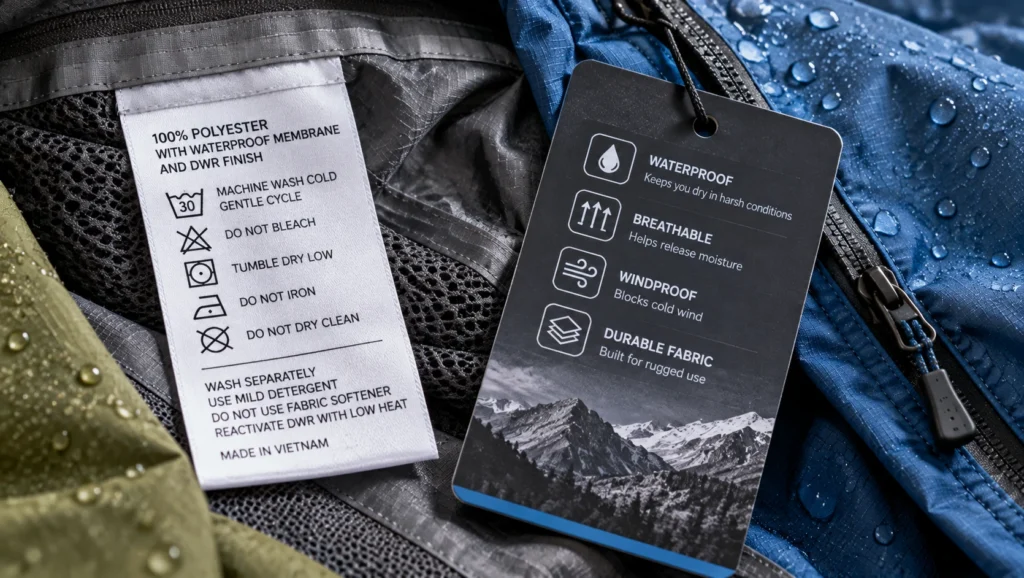
Many GORE-TEX garments can be machine-washed, but the garment’s care label should always come first. Use a suitable detergent and avoid fabric softener or bleach where the care guidance prohibits them. Proper washing and drying can help maintain performance.
Is every GORE-TEX product PFAS-free?
No single statement should be applied to every product and generation. Selected newer products use ePE membrane technology and are made without intentionally added PFAS. Check the specific product’s material and chemical information.
Is GORE-TEX better than ordinary waterproof fabric?
It depends on the intended use, construction and budget. GORE-TEX is a branded technology with defined performance requirements, while other waterproof materials can also work well. Compare waterproof performance, breathability, durability, comfort, care and product-level testing rather than relying on the name alone.
Does GORE-TEX fabric stretch?
Most standard GORE-TEX laminates are not highly stretchy by themselves, although the finished garment may incorporate stretch textiles or other construction features. Check the product description if mobility or flexibility is important.
How long does GORE-TEX clothing last?
There is no single lifespan for every garment. Frequency of use, abrasion, storage, washing, repairs and the quality of the complete product all affect longevity. Regular care and timely repairs can help extend useful life.
Is GORE-TEX suitable for everyday clothing?
Yes. It is used in casual rain jackets, footwear and other everyday products as well as specialist outdoor equipment. For occasional light rain, a less expensive water-resistant garment may be sufficient; GORE-TEX is especially useful when dependable weather protection is a priority.