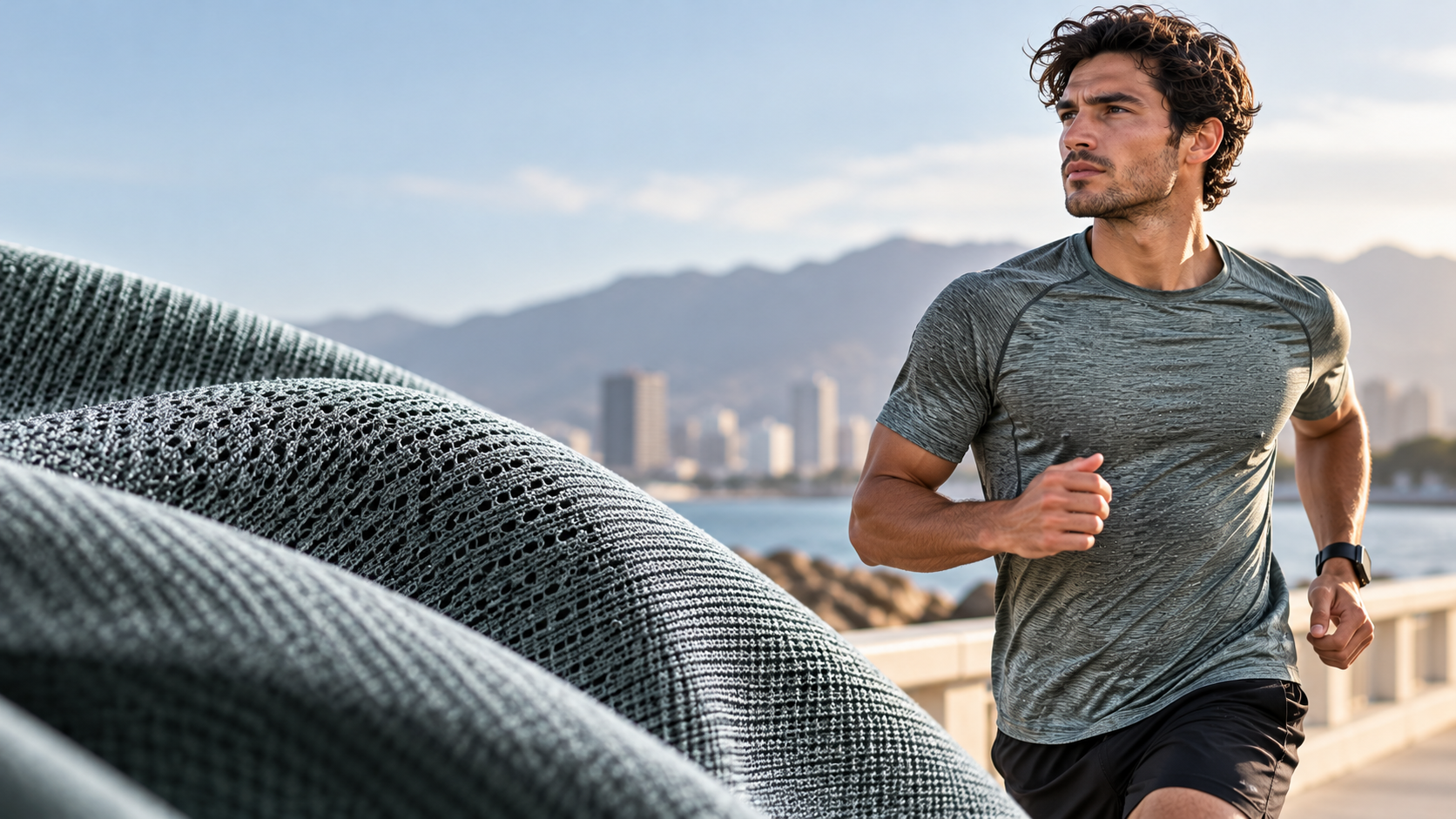
If a T-shirt feels damp long after a workout or socks stay wet inside your shoes, the problem is not always the amount of sweat. The fabric also affects how quickly moisture moves away from your skin and evaporates.
COOLMAX® fiber was developed to help with that problem. It is a branded performance fiber technology designed to move moisture away from the body, helping clothing feel drier and more comfortable during activity.
Unlike cotton or ordinary polyester, COOLMAX® fiber is engineered with a specially designed cross-section that helps moisture travel along the fiber surface. The fiber is commonly made from polyester, although the product range also includes other material options and recycled-content versions.
The technology is used in sportswear, socks, workwear, everyday clothing and some bedding products. Its performance depends on the particular fiber, the fabric construction and the way the finished garment is designed.
Quick Facts About COOLMAX® Fiber
| Property | Details |
|---|---|
| Material category | Branded performance fiber technology |
| Brand owner | The LYCRA Company |
| Common fiber material | Specially engineered polyester |
| Main purpose | Move moisture away from the skin |
| Key feature | Engineered fiber shape with moisture-moving channels |
| Typical benefits | Moisture management, quick drying and wearing comfort |
| Common applications | Socks, sportswear, shirts, workwear, jeans and bedding |
| Recycled options | Available in selected product lines |
| Care | Generally easy to wash; follow the garment label |
| Important distinction | COOLMAX® is a branded fiber technology, not one universal fabric construction |
1. What Is COOLMAX® Fabric?
COOLMAX® is a registered brand name for performance fiber technology designed to help manage moisture and improve wearing comfort.
The term is commonly used when describing fabrics and garments made with these fibers. Strictly speaking, however, COOLMAX® refers to the fiber technology rather than one specific finished fabric.
A manufacturer can combine COOLMAX® fiber with other fibers and use different knitting or weaving methods to create fabrics for particular purposes.
For example, a sock made with COOLMAX® fiber will have a different construction from a lightweight training shirt or a pair of moisture-managing jeans.
How Does COOLMAX® Work?
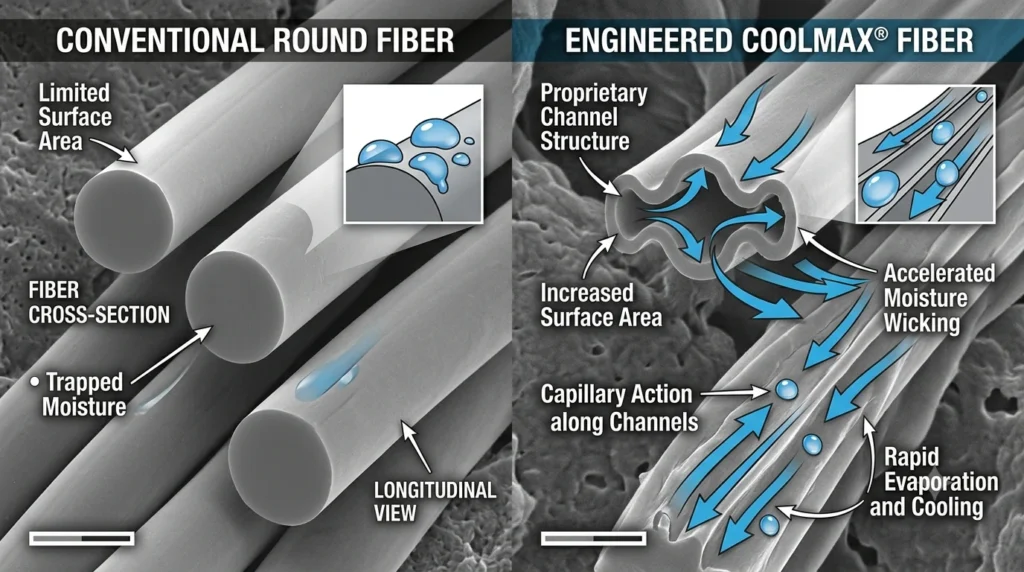
The technology relies partly on the shape of the fiber.
Many conventional fibers have a relatively simple cross-section. COOLMAX® fibers are engineered with channels or grooves that help move moisture along the fiber surface.
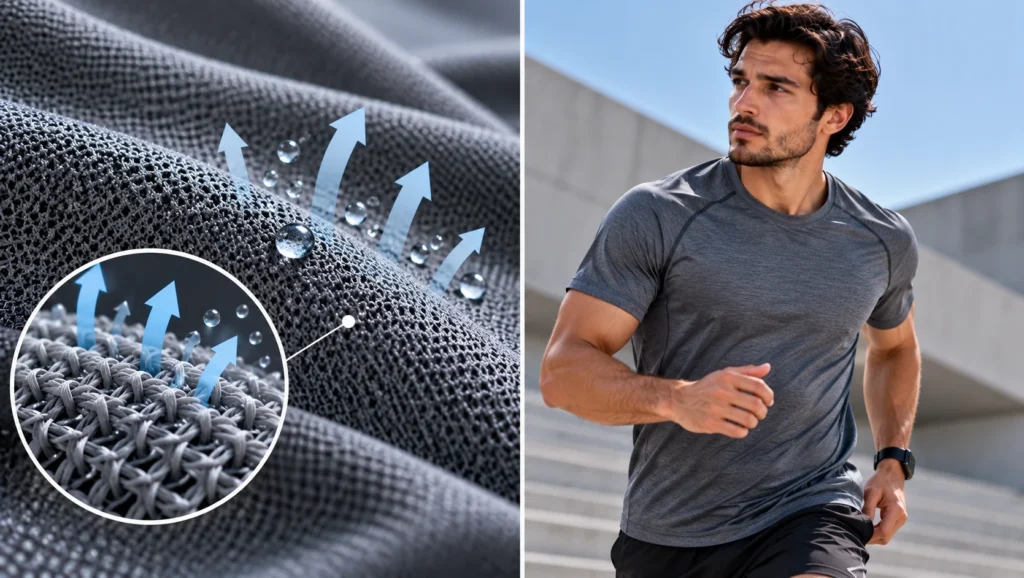
When sweat reaches the fabric, the structure helps transport it away from the skin and spread it across a larger area. This can encourage evaporation and help the wearer feel drier.
The effect depends on several factors, including the fabric’s thickness, knit or weave, fit, ventilation and the surrounding temperature and humidity.
Is COOLMAX® the Same as Polyester?
No. Polyester is a broad family of synthetic fibers. COOLMAX® is a branded technology that uses specially engineered fibers to provide particular moisture-management characteristics.
Not all polyester fabrics are COOLMAX®, and not all products described as moisture-wicking use COOLMAX® fiber.
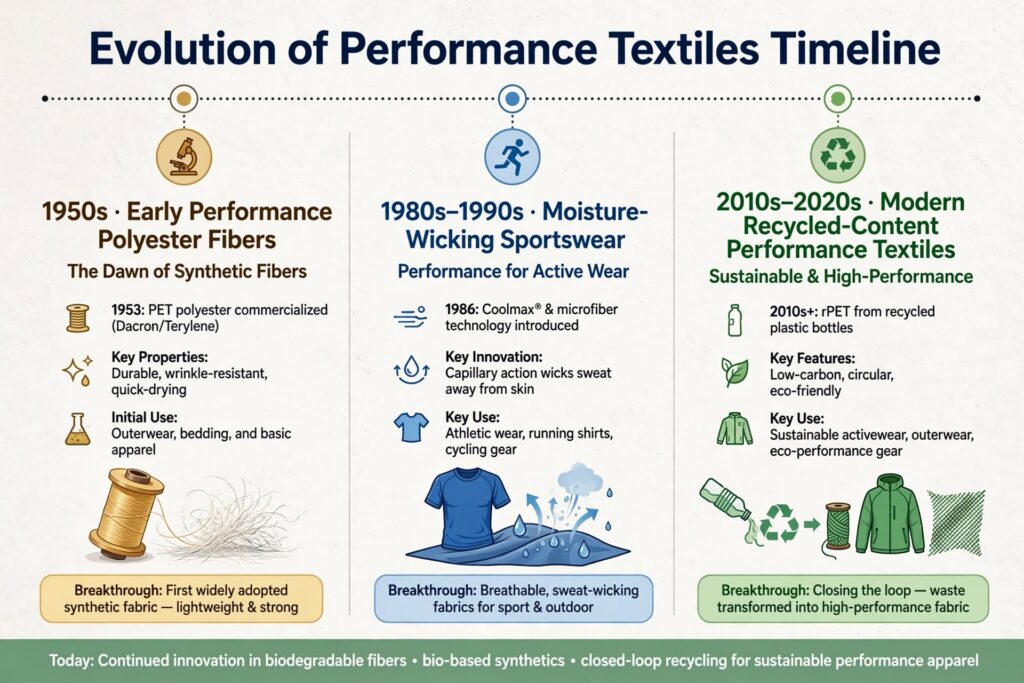
2. History of COOLMAX® Fiber
COOLMAX® technology emerged from the development of performance polyester fibers during the 1980s.
Textile manufacturers were looking for ways to improve comfort during exercise and other activities that cause sweating. Traditional fabrics could absorb moisture, but some constructions retained it close to the skin for longer than wearers wanted.
Engineered fiber shapes offered another approach. Rather than relying only on a chemical finish, manufacturers could modify the fiber itself to help transport moisture.
COOLMAX® became established in performance apparel, particularly socks and sportswear. The technology later spread into everyday garments, workwear, denim and other textile applications.
The brand has also evolved as textile production has changed. Alongside conventional polyester options, the product range now includes selected fibers made from recycled resources, including recycled PET and textile waste.
The current COOLMAX® brand is owned by The LYCRA Company.
3. How Is COOLMAX® Fabric Made?
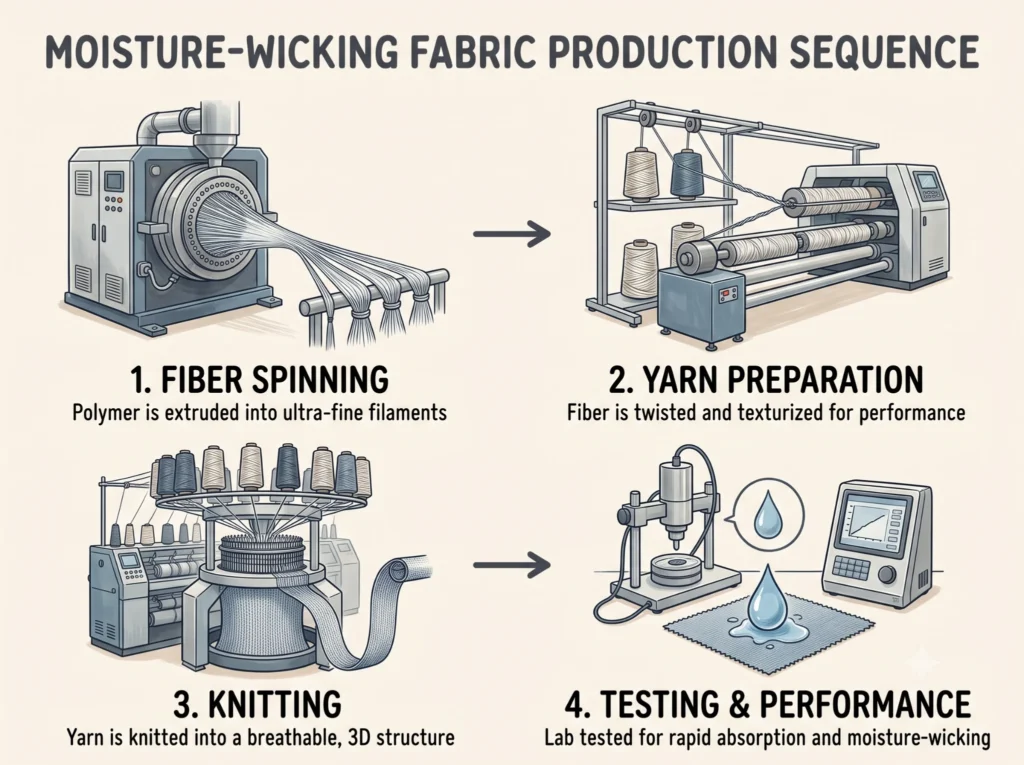
The manufacturing process starts with the production of the engineered fiber. The fiber is then converted into yarn and made into fabric by textile manufacturers.
Step 1: Preparing the Polymer
Many COOLMAX® fibers are made from polyester.
In conventional polyester production, chemical raw materials are processed to form a polymer. The polymer is then prepared for fiber spinning.
The exact raw materials and manufacturing details depend on the fiber type. Recycled-content versions can use qualifying recycled feedstocks instead of relying entirely on virgin raw materials.
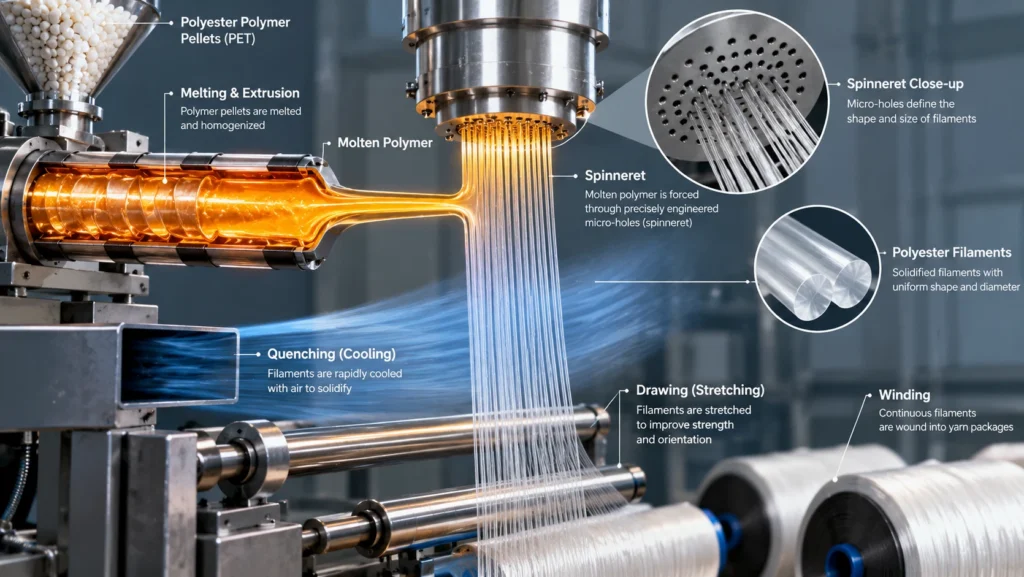
Step 2: Spinning the Fiber
The prepared polymer is melted and pushed through a specially designed spinneret.
A spinneret is a component containing small openings that shape the polymer into continuous filaments. The openings used for engineered performance fibers help create the intended cross-section.
This shape is important because it influences how moisture moves along the surface of the fiber.
Step 3: Drawing and Stabilizing the Filaments
After the filaments are formed and cooled, they may be stretched in a process called drawing.
Drawing helps align the polymer structure and develop the strength and properties required for textile use.
The fibers can then be processed into filament yarns or converted into other suitable forms for textile manufacturing.
Step 4: Making the Fabric
Textile manufacturers turn the fibers into yarn and use them to create knitted or woven fabric.
Knitting is common in sportswear and socks because it can provide stretch and flexibility. Woven constructions may be used in shirts, workwear and other garments.
The finished fabric may combine COOLMAX® fiber with cotton, elastane or other fibers to achieve a particular balance of comfort, stretch, strength and appearance.
Step 5: Finishing and Quality Checks
The fabric may be dyed, softened or treated to meet the requirements of its intended use.
Manufacturers can test properties such as moisture management, drying behavior, strength, colorfastness and dimensional stability.
Products carrying the COOLMAX® brand must meet the applicable requirements for use of that brand.
4. How Is COOLMAX® Fabric Used?
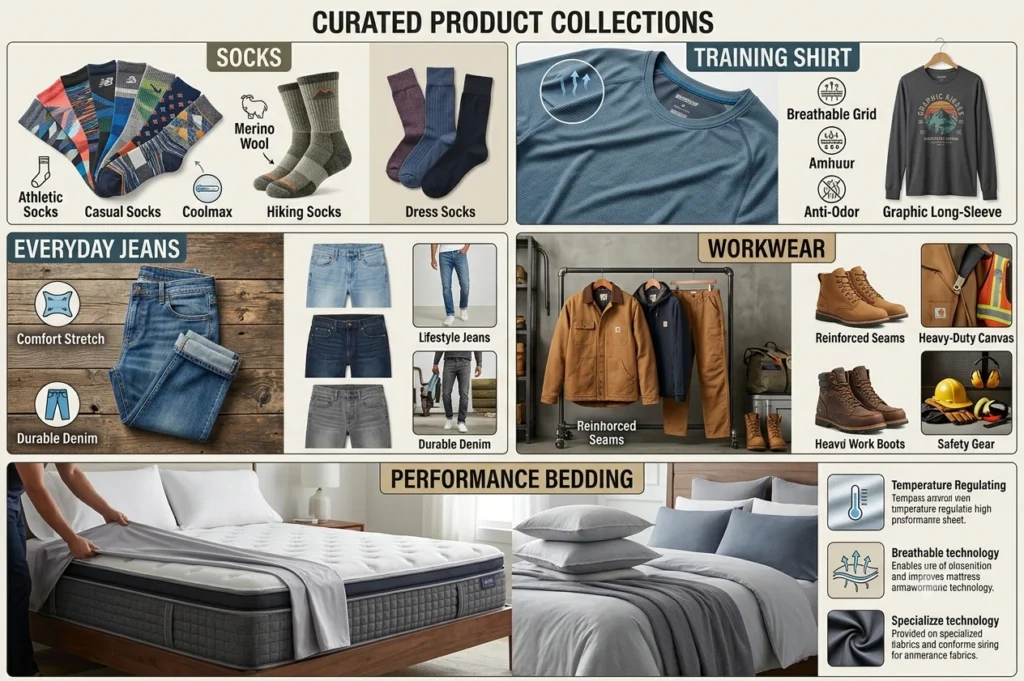
COOLMAX® fiber is used where moisture management and wearing comfort are important.
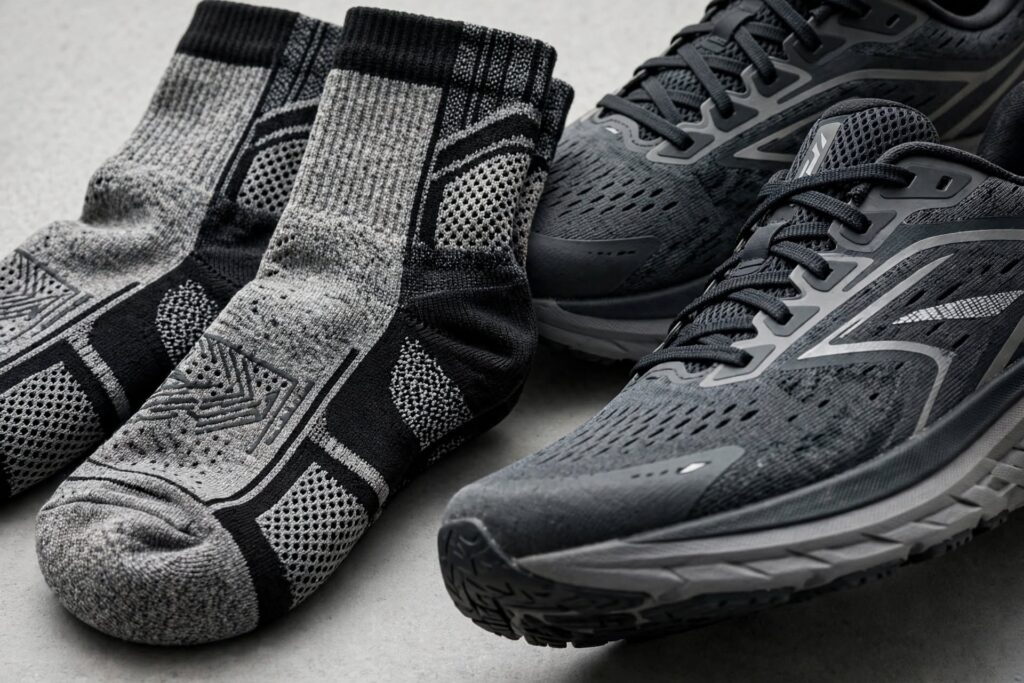
Socks
Socks are one of the best-known applications.
Feet can become warm and damp during walking, running and other activities. Fabrics containing COOLMAX® fiber can help move sweat away from the skin and spread moisture through the fabric, supporting quicker drying.
The overall result also depends on the sock’s thickness, fit, cushioning and ventilation.
Sportswear and Activewear
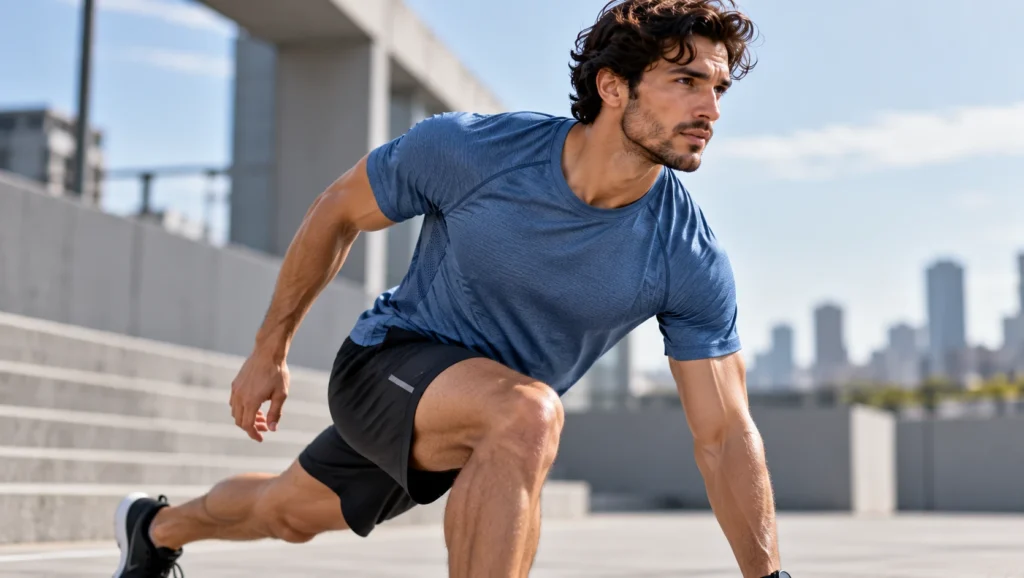
COOLMAX® fiber is used in performance T-shirts, training tops, running clothing and other activewear.
Its moisture-management properties can help reduce the uncomfortable feeling of sweat remaining against the skin during exercise.
The technology does not prevent sweating. Instead, it helps the fabric handle moisture more effectively.
Everyday Clothing
The technology can also be found in clothing worn outside sports settings.
Applications include:
- Polo shirts
- Casual T-shirts
- Shirts
- Underwear
- Workwear
- Jeans and trousers
In denim, COOLMAX® fiber can be blended with cotton and other fibers to add moisture-management properties while preserving much of the familiar look and feel of denim.
Bedding
Some bedding products use COOLMAX® fiber to help manage moisture during sleep.
These fabrics may be useful for people who prefer bedding that dries quickly and feels less damp. Comfort still depends on the overall construction, room conditions and other bedding layers.
Outdoor and Specialist Apparel
The fiber can also be used in hiking clothing, cycling garments, gloves and other products designed for active use.
Its value depends on how well the fabric’s moisture management works alongside ventilation, insulation and the garment’s overall design.
5. Where Is COOLMAX® Fiber Produced?
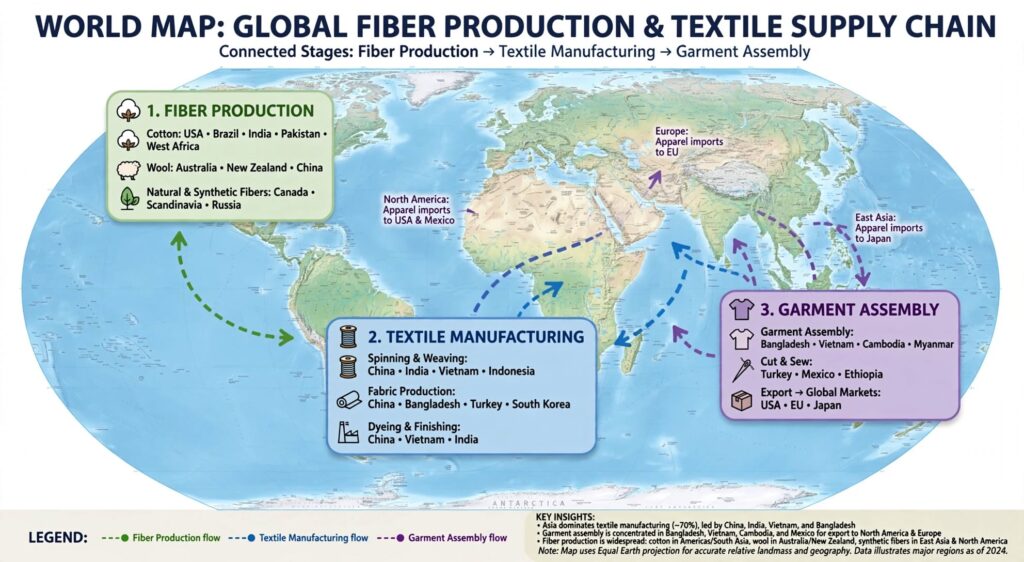
COOLMAX® fiber is part of an international textile supply chain.
The brand owner develops the technology and works with approved manufacturers and supply-chain partners. The fibers are then used by textile mills and garment manufacturers to create fabrics and finished products.
The location of fiber production, fabric formation, dyeing and garment assembly may differ from one product to another.
For that reason, it is not accurate to assume that every COOLMAX® garment is manufactured in one country. The country of origin should be checked on the finished product or its supplier documentation.
For buyers, the more useful questions are whether the fiber is authentic, which product version is used, how the fabric is constructed and whether the finished garment meets its intended performance requirements.
6. How Much Does COOLMAX® Fabric Cost?
There is no single price for COOLMAX® fabric because the brand covers different fiber products and applications.
Cost can depend on:
- The specific COOLMAX® fiber type
- Whether recycled material is used
- Fabric weight
- Knitting or weaving method
- Blended fibers
- Dyeing and finishing
- Performance testing
- Order volume
- Manufacturing location
A basic pair of socks made with COOLMAX® fiber will have a very different price from a technical cycling garment or specialist workwear.
Fabrics containing the branded fiber may cost more than comparable basic polyester fabrics because of their engineered properties, brand requirements and supply-chain specifications. However, the final retail price also reflects garment design, manufacturing, distribution and the brand selling the product.
When comparing products, look at the complete fabric composition and construction rather than assuming that every garment carrying the COOLMAX® name offers the same performance.
7. What Different Types of COOLMAX® Fiber Are There?
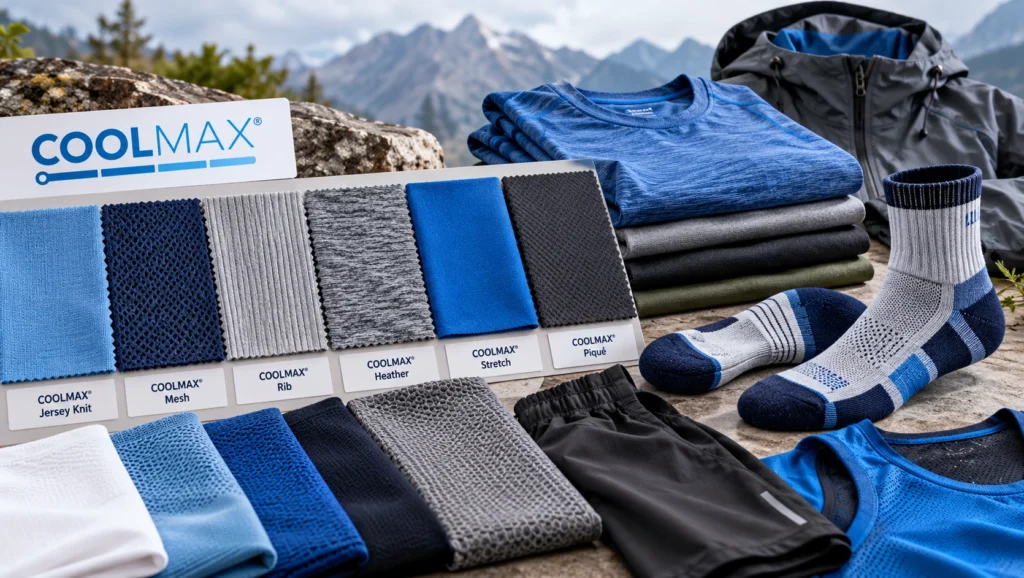
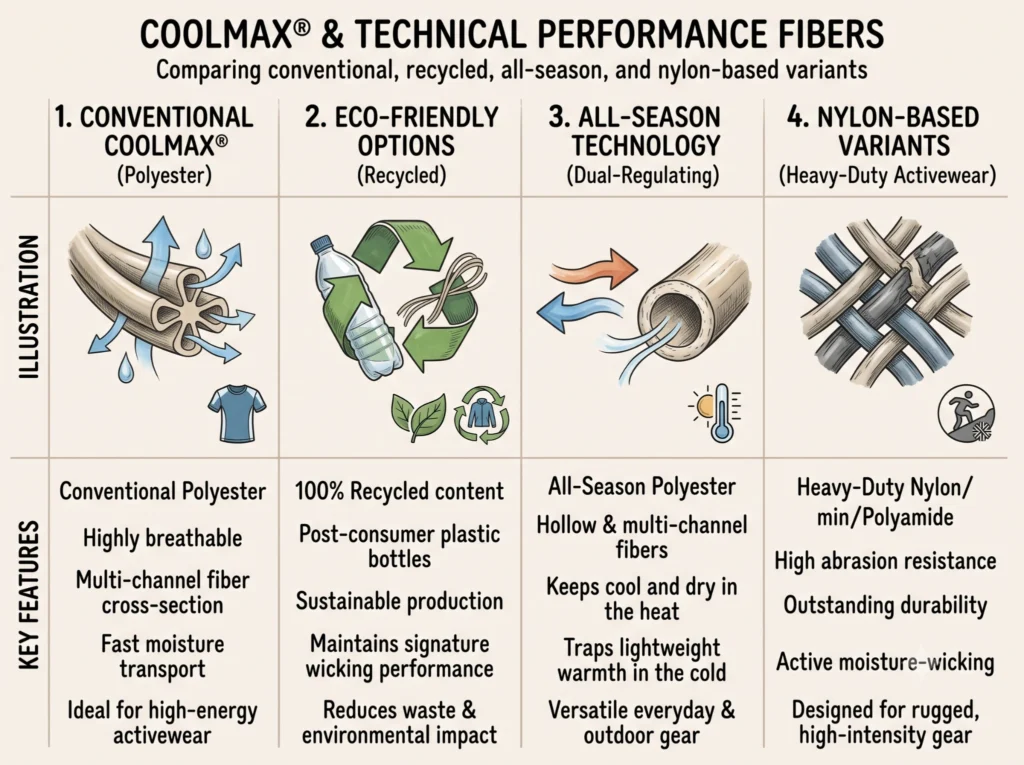
COOLMAX® is a family of branded fiber technologies rather than one single material. Product names and available formulations can change as the technology develops.
1. COOLMAX® EcoMade
COOLMAX® EcoMade includes moisture-managing fibers made from recycled resources.
Depending on the specific product, the recycled feedstock may include recycled PET or recovered textile material.
The use of recycled raw materials can reduce reliance on virgin resources, although the environmental impact still depends on processing, energy use, durability and what happens to the finished product at the end of its life.
2. COOLMAX® EcoMade ALL SEASON
This range is designed to support comfort across a broader range of conditions.
The fiber combination is intended to help manage moisture while also providing lightweight warmth when needed. The result depends on the particular fiber product and the construction of the finished garment.
3. COOLMAX® PRO EcoMade
This range is designed for performance-oriented applications.
It combines moisture-management properties with recycled-content options for products intended for demanding activities or work conditions. Exact specifications vary by product.
4. COOLMAX® Fiber Powered by Nylon
The COOLMAX® range also includes technology using nylon rather than relying exclusively on conventional polyester.
The modified fiber structure is designed to support moisture movement while offering characteristics associated with nylon, such as softness and durability.
5. Other COOLMAX® Technologies
Additional products may be designed for particular needs, such as moisture management in everyday clothing, helping manage the appearance of sweat marks or supporting specialist performance requirements.
Because product names and formulations can change, the specific fiber description supplied by the manufacturer is the best way to identify the version used in a garment.
8. How Does COOLMAX® Fiber Impact the Environment?
COOLMAX® fiber has some of the same environmental considerations as other synthetic textiles, especially when it is made from polyester.
The impact depends on the raw materials, manufacturing process, product lifespan, washing habits and disposal method.
Raw Materials
Conventional polyester is generally made from fossil-derived feedstocks. Producing the polymer and converting it into textile fibers requires energy and industrial processing.
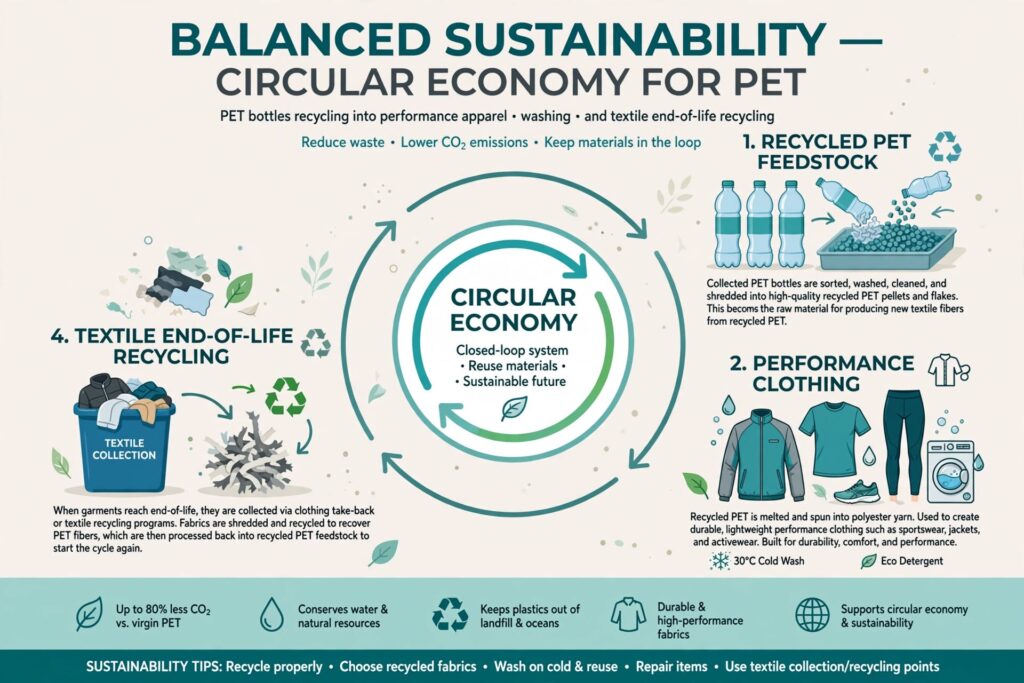
Selected COOLMAX® products use recycled resources, which can reduce the need for virgin raw materials.
However, recycled content does not remove every environmental impact. The material still needs to be processed, transported, turned into fabric and eventually managed at the end of its useful life.
Microfiber Shedding
Like other synthetic textiles, fabrics containing COOLMAX® fiber can release small fibers during washing and use.
The quantity depends on fabric construction, garment age, washing conditions and other factors. Some released fibers may enter wastewater and contribute to microplastic pollution.
Careful laundering and effective wastewater treatment can help reduce the amount reaching the environment, although neither eliminates the issue completely.
Durability and Useful Life
A durable garment that remains in use for years can reduce the need for frequent replacement.
The environmental benefit depends on whether the product lasts, whether it is cared for properly and whether its performance justifies its material and manufacturing impacts.
Recycling and Disposal
Recycling options depend on the complete garment. A product made from a single fiber may be easier to process than one containing several fiber types, elastane, coatings and trims.
Recycled-content fibers also do not guarantee that a finished garment can be recycled again after use.
For this reason, the environmental performance of COOLMAX® clothing should be considered alongside its composition, longevity and end-of-life options.
9. COOLMAX® Fiber Certifications and Standards
There is no single certification that applies automatically to every garment containing COOLMAX® fiber. Different claims require different evidence.
Brand Performance Approval
The COOLMAX® brand has its own requirements for products using its fibers. Authorized manufacturers and supply-chain partners must follow the relevant brand and product requirements.
This helps distinguish genuine branded fiber from a garment that merely claims to have similar moisture-wicking properties.
Global Recycled Standard
The Global Recycled Standard may apply to qualifying recycled-content products and supply chains.
Selected COOLMAX® fibers made from recycled PET or recovered textile material may carry relevant third-party recycled-content certification. The applicable certificate should be checked for the exact fiber and supplier.
Recycled Claim Standard
The Recycled Claim Standard can be relevant to products containing qualifying recycled material. As with any recycled-content claim, the exact scope of certification matters.
OEKO-TEX and Chemical Testing
OEKO-TEX certification may be relevant to the finished textile or garment, depending on the specific product and certification scope.
It should not be assumed that every product containing COOLMAX® fiber automatically carries this certification.
Performance Testing
Manufacturers may also test the finished fabric for moisture management, drying behavior, colorfastness, strength and dimensional stability.
When purchasing, check whether the claim applies to the fiber, the fabric or the finished garment. These are different stages of the supply chain.
10. Frequently Asked Questions
Is COOLMAX® a fabric or a fiber?
COOLMAX® is a branded fiber technology. The fibers are used to produce fabrics, which are then made into clothing and other products.
What is COOLMAX® made from?
Many COOLMAX® fibers are made from specially engineered polyester. Selected products use recycled resources, and the range also includes nylon-based technology.
Is COOLMAX® better than ordinary polyester?
It can offer more specialized moisture-management performance than basic polyester, depending on the fabric construction. However, not all COOLMAX® products perform identically, and the best choice depends on the intended use.
Does COOLMAX® keep you cool?
It is designed to help manage moisture and support a cooler, drier feeling. It does not actively refrigerate the body, and its effectiveness depends on the garment, activity and surrounding conditions.
Is COOLMAX® good for summer clothing?
It can be useful for summer clothing because moisture-wicking and quick-drying properties may improve comfort in warm conditions. Lightweight construction and ventilation remain important.
Is COOLMAX® suitable for sportswear?
Yes. It is used in sportswear, socks and other performance garments where moisture management is important.
Is COOLMAX® natural or synthetic?
It is a man-made fiber technology. Most products use synthetic fibers, although selected versions use recycled raw materials.
Does COOLMAX® contain recycled plastic?
Some COOLMAX® product lines use recycled PET or other recycled resources. Not every COOLMAX® product has the same recycled content, so check the specific product details.
Is COOLMAX® environmentally friendly?
Not automatically. Recycled-content options can reduce reliance on virgin resources, but synthetic fiber production, microfiber shedding and end-of-life challenges remain relevant.
Can COOLMAX® fabric be machine washed?
Most garments containing COOLMAX® fiber can be machine washed, but the garment’s care label should always take priority. Avoiding unnecessary heat and fabric softener may help preserve the intended fabric performance.
Does COOLMAX® lose its moisture-wicking ability after washing?
The moisture-management properties are built into the engineered fiber rather than relying solely on a surface finish. However, dirt, fabric softener, wear and the construction of the garment can affect how the finished fabric performs.
Where is COOLMAX® used besides sportswear?
It is also used in socks, underwear, workwear, jeans, everyday shirts, bedding and selected specialist products.
Is COOLMAX® the same as moisture-wicking polyester?
No. Moisture-wicking polyester is a general description of a performance fabric. COOLMAX® is a specific branded fiber technology.
How can I identify genuine COOLMAX® clothing?
Check the garment’s product description, composition label and authorized brand identification. The presence of the word “moisture-wicking” alone does not mean a product contains COOLMAX® fiber.