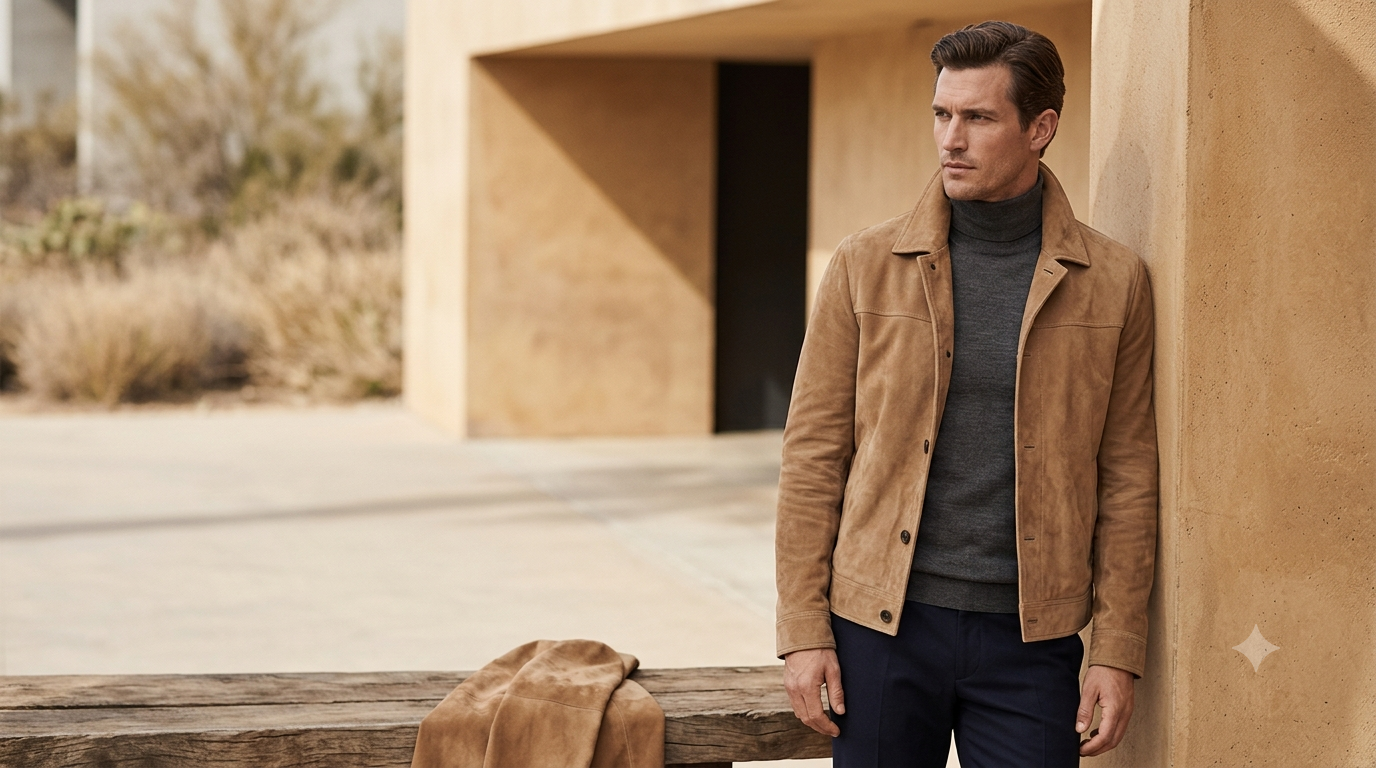
Suede is known for one feature above all others: its soft, velvety surface.
Unlike smooth leather, which is usually finished to preserve or emphasize the grain side of an animal hide, suede has a napped surface made from fine exposed fibers. This gives it a matte appearance and a distinctive feel that has made it popular in footwear, jackets, bags, gloves and upholstery.
True suede is a form of leather rather than a conventional textile. It is commonly produced from the flesh side or split portion of animal hide, although the exact construction can vary. The surface is mechanically worked to create its characteristic nap.
There is also a large market for synthetic suede, including microfiber materials designed to reproduce the look and feel of natural suede without using animal leather. These materials are often used where easier maintenance, consistency or a different performance profile is required.
Understanding the difference between natural suede and synthetic suede is important because the two materials may look similar while having very different origins, construction, care requirements and environmental considerations.
Quick Facts About Suede Fabric
| Property | Details |
|---|---|
| Material type | Napped leather or suede-like textile |
| Natural suede source | Animal hide or skin |
| Common animal sources | Lamb, goat, calf and other hides |
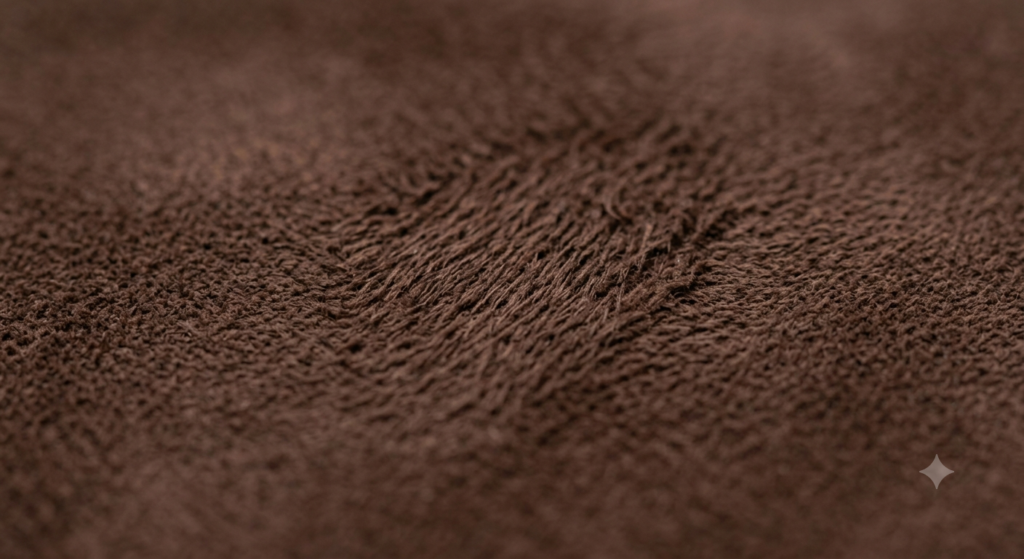
| Surface characteristic | Soft, velvety nap |
| Appearance | Matte with a directional color change when brushed |
| Water resistance | Generally limited unless specially treated |
| Breathability | Varies with leather thickness and construction |
| Common uses | Shoes, jackets, bags, gloves, accessories and upholstery |
| Synthetic alternatives | Microsuede, microfiber suede and other engineered materials |
| Care | Usually requires specialized cleaning and protection |
1. What Is Suede Fabric?
Suede is a type of leather characterized by a soft, fibrous, napped surface.
The material is generally made from the lower portion of an animal hide or from a layer that has been separated from the original hide. After tanning, the surface is mechanically sanded, buffed or otherwise finished to expose fine fibers and create the familiar velvety texture.
This surface treatment is what distinguishes suede from most smooth leathers.
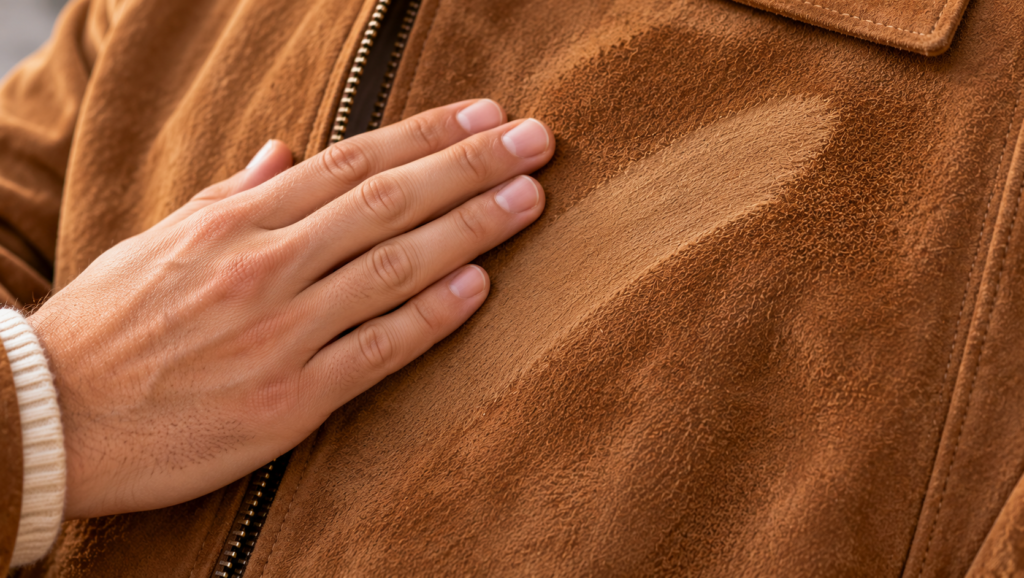
When you run a finger across suede, the fibers can change direction. That produces subtle differences in light reflection and color, sometimes called a nap effect.
Is Suede a Fabric?
In everyday fashion terminology, suede is often grouped with fabrics because it is sold by the material and used to construct garments and accessories.
Technically, natural suede is leather, not a woven or knitted fabric.
Synthetic materials that imitate suede, however, can genuinely be textile constructions. These may be made from polyester or other fibers that are engineered into a fine, suede-like surface.
What Does Suede Feel Like?
High-quality suede is typically:
- Soft
- Flexible
- Warm to the touch
- Velvety
- Matte rather than glossy
- More tactile than smooth leather
Its softness is one of its biggest advantages, but the exposed nap also makes suede more vulnerable to staining, abrasion and moisture than many protected leather surfaces.
2. History of Suede
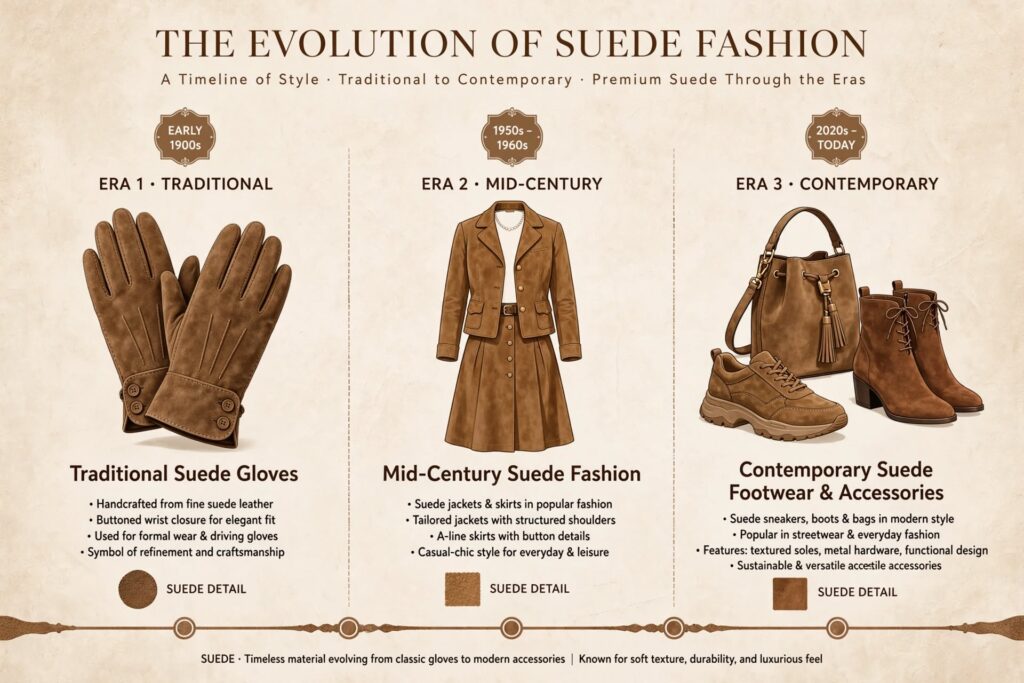
The word suede is associated with Sweden. Its history is commonly linked to the French expression gants de Suède, meaning “gloves of Sweden,” reflecting the popularity of soft Swedish leather gloves in France.
The story of suede, however, is part of the much older history of leather.
Humans have used animal skins for clothing and practical goods for thousands of years. What changed over time was the ability to process those skins more precisely and create specific surface effects.
The soft inner surfaces of hides were particularly useful when comfort and flexibility mattered. Eventually, techniques for splitting, sanding and finishing leather developed into the material recognized today as suede.
During the twentieth century, suede moved beyond gloves and became strongly associated with fashion.
Shoes, jackets, handbags and other accessories helped establish suede as a material that could combine a luxurious tactile quality with a more casual appearance than highly polished leather.
The development of synthetic microfiber materials later created another category: suede-like textiles that could reproduce some of the visual and tactile qualities of natural suede without using animal hide.
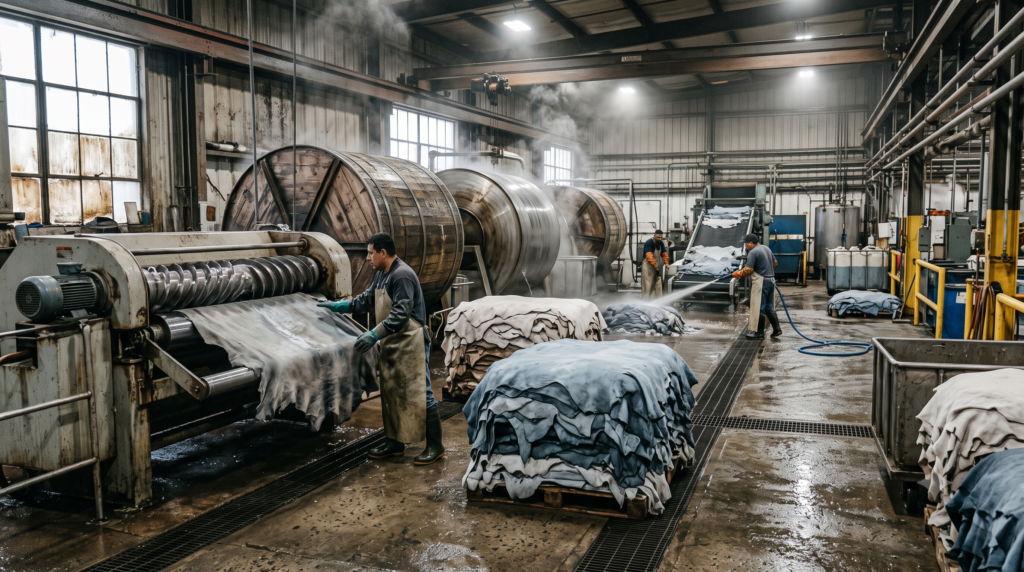
3. How Is Suede Fabric Made?
Natural suede begins with animal hide or skin, but creating the finished material involves considerably more than simply turning the underside of a hide outward.
Step 1: Preparing the Hide
The hide first goes through conventional leather-making preparation.
Depending on the tannery and production method, this can involve:
- Cleaning
- Soaking
- Hair removal
- Fleshing
- Liming
- Deliming
- Pickling
- Other preparation treatments
The goal is to produce a clean, consistent hide that can be tanned.
Step 2: Tanning
The prepared hide is then tanned.
Tanning stabilizes the collagen structure and turns the perishable skin into leather that can be used for long-term products.
Suede can be produced from hides that have undergone different tanning systems, so suede should not automatically be associated with one particular tanning chemistry.
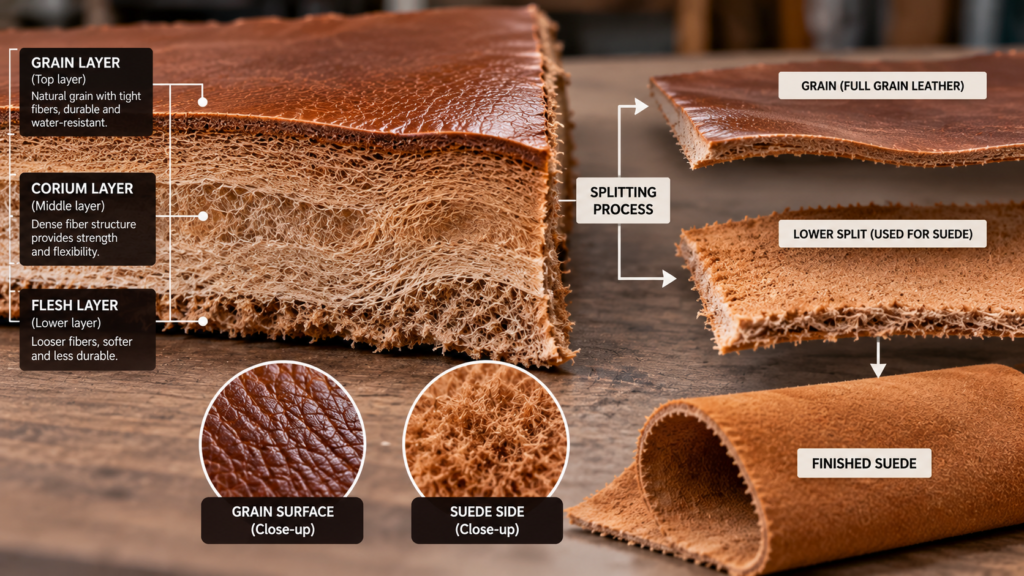
Step 3: Splitting the Hide
For many suede constructions, the hide is divided horizontally into layers.
The upper portion contains the original grain surface. The lower portion can be processed into split leather.
The split is then prepared for the suede finish.
This distinction is important because suede and nubuck are not the same material.
Nubuck is created by buffing the grain side of leather, while suede is generally associated with the flesh side or split portion.
Step 4: Creating the Nap
The surface is mechanically worked to produce the characteristic fuzzy texture.
Sanding, buffing or similar techniques raise and refine the fibers.
The depth and fineness of the nap affect how the finished suede looks and feels.
Step 5: Dyeing and Finishing
Suede can be dyed in almost any commercially desirable color.
Manufacturers may also apply treatments intended to improve resistance to water, staining or other forms of wear.
However, additional surface treatments can change the natural hand and appearance of suede.
The final material is then inspected, graded and supplied for use in footwear, clothing, bags or other products.

4. How Is Suede Fabric Used?
Suede occupies a distinctive position in fashion because it provides the softness of a napped surface while retaining the structure of leather.
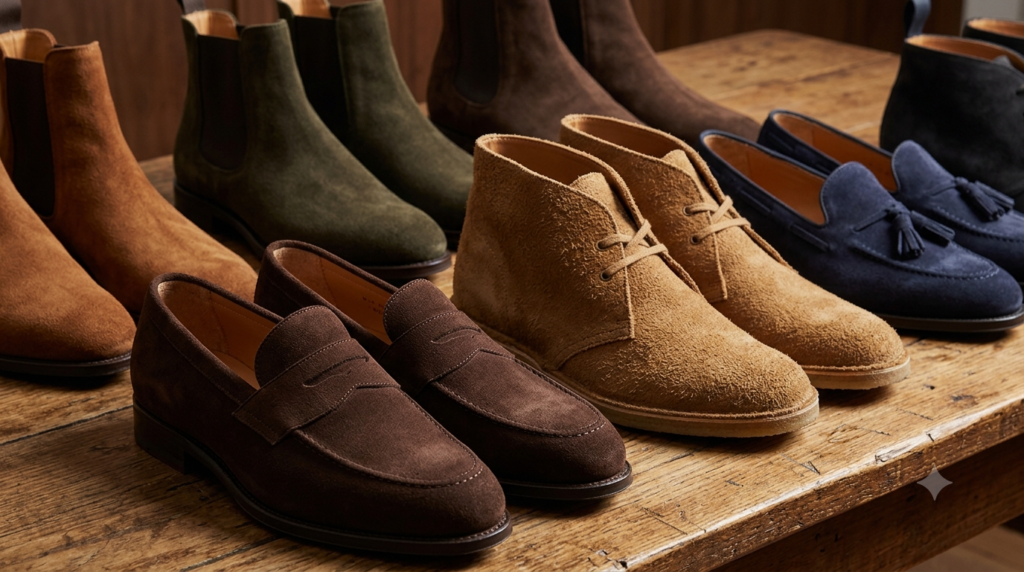
Suede Footwear
Shoes and boots are among the most recognizable suede products.
It is commonly used for:
- Casual shoes
- Loafers
- Sneakers
- Boots
- Desert boots
- Fashion footwear
The matte texture gives suede footwear a softer and more understated appearance than polished leather.
Suede Jackets and Outerwear
Suede jackets have been a recurring part of fashion for decades.
The material works particularly well for:
- Bomber jackets
- Overshirts
- Western-style jackets
- Lightweight outerwear
- Vintage-inspired jackets
Its softness and drape make it more relaxed than many structured leather jackets.

Handbags and Accessories
Suede is also used for:
- Handbags
- Clutches
- Wallets
- Belts
- Gloves
- Hats
- Small accessories
Because the surface can show marks and changes in nap direction, suede accessories often have a more tactile and casual character.
Upholstery and Interiors
Suede-like materials are used extensively in interiors.
Natural suede can appear in premium furniture and accessories, while synthetic microfiber suede is particularly useful for:
- Car interiors
- Furniture
- Headliners
- Speaker coverings
- Electronics
- Interior panels
Synthetic materials are often selected for demanding applications because their performance can be engineered more precisely.

5. Where Is Suede Fabric Produced?
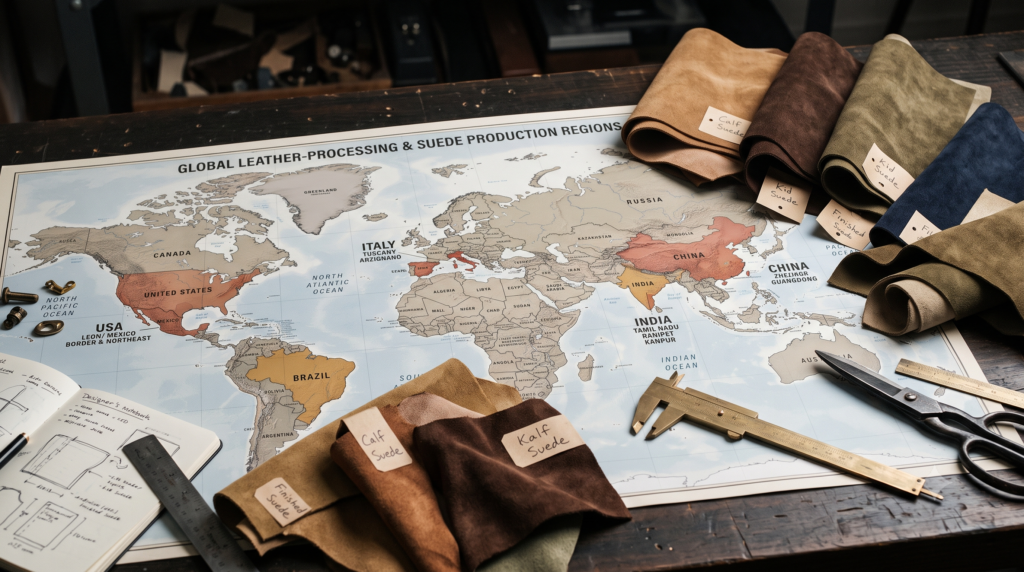
Suede is manufactured in many of the same global leather-producing regions as other leather products.
The supply chain can involve animal hide collection in one country, tanning and splitting in another, and final cutting or manufacturing somewhere else.
Major leather-processing industries exist across Europe, Asia and the Americas.
Italy has a long-established reputation for high-end leather and suede processing, while large-scale leather manufacturing also takes place in countries including China, India, Brazil and other regions.
For suede, the quality of the tannery and finishing operation can matter more than country of origin alone.
The final result depends on:
- Hide selection
- Tanning
- Splitting
- Fiber structure
- Sanding
- Dyeing
- Finishing
- Quality control
Synthetic suede follows a different supply chain and can be manufactured wherever suitable polymer and textile-processing infrastructure is available.
6. How Much Does Suede Fabric Cost?
Suede prices vary considerably.
Natural suede is influenced by the quality and origin of the hide, while synthetic suede is priced according to fiber, construction and performance.
For natural suede, important cost factors include:
- Animal species
- Hide quality
- Thickness
- Fiber density
- Nap quality
- Dyeing
- Finishing
- Defect level
- Production location
Fine lambskin suede, for example, can have a very different price from heavier suede made from other hides.
Synthetic suede also spans a wide range. Basic polyester microfiber fabrics can be relatively affordable, while high-performance automotive or luxury materials can be considerably more expensive.
For manufacturers, the price per yard or metre should therefore always be considered alongside weight, width, thickness, performance and minimum order quantity.
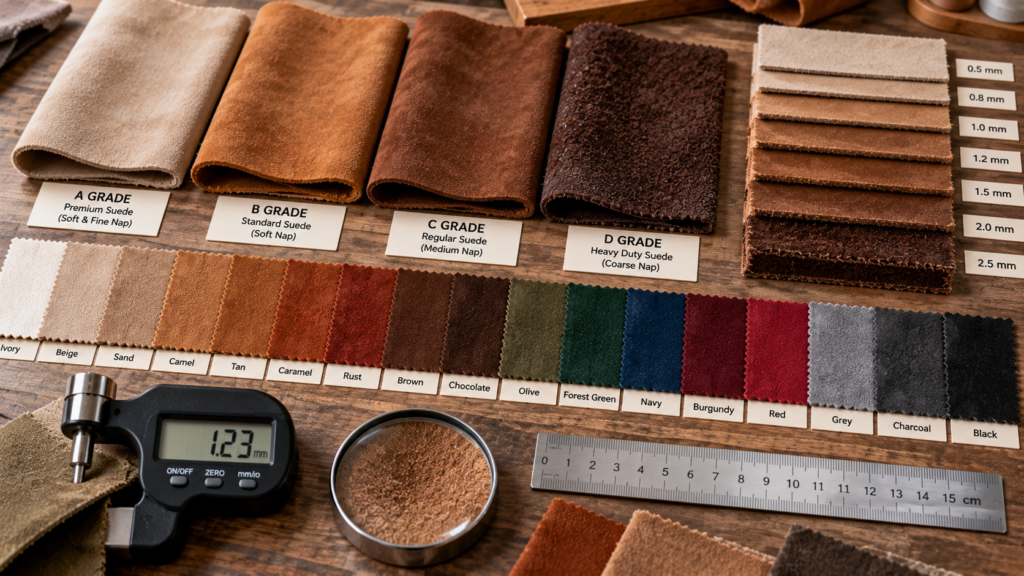
7. What Different Types of Suede Fabric Are There?
“Suede” can refer to natural leather as well as several synthetic materials that imitate its appearance.
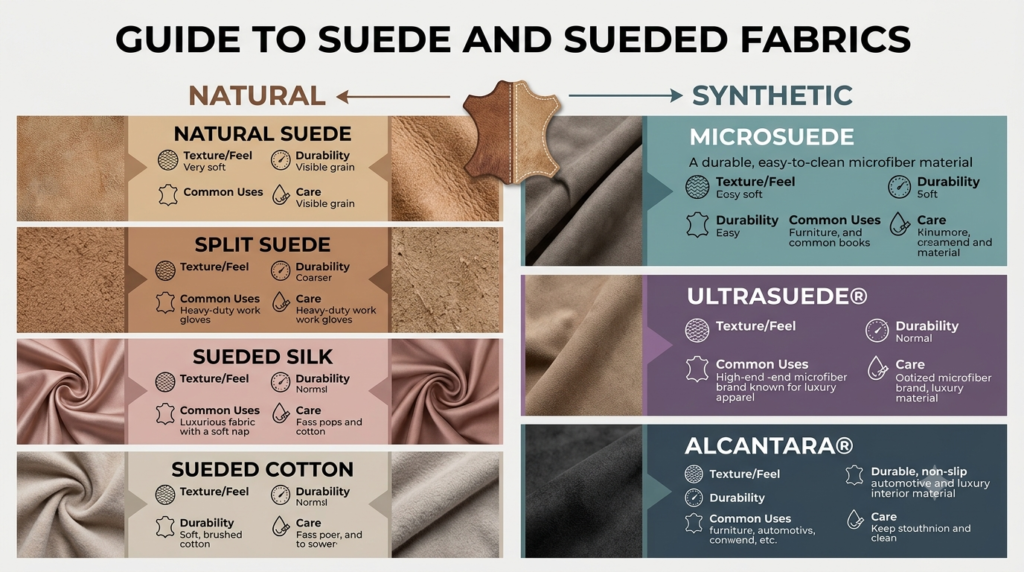
1. Natural Suede
Natural suede is animal-derived leather with a napped surface.
It can be made from different animal skins and hide splits, resulting in differences in softness, fiber length, thickness and durability.
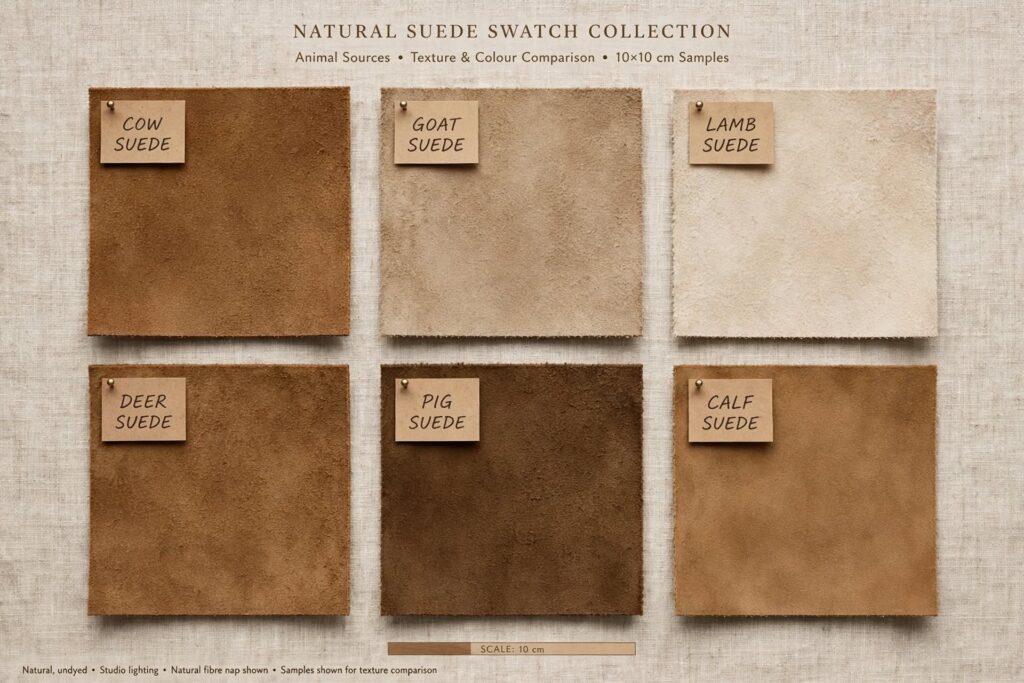
2. Split Suede
Split suede is produced from the lower layer of a hide after it has been separated from the grain layer.
It is one of the most common constructions associated with traditional suede.
The final quality depends heavily on the fiber structure and how the surface has been finished.
3. Suede Leather
The term suede leather is sometimes used to emphasize that the material is genuine leather rather than a synthetic suede textile.
It has the same fundamental napped character but may be described differently depending on the market and product specification.
4. Microsuede
Microsuede is a synthetic textile designed to reproduce the soft surface of natural suede.
It is commonly produced using very fine synthetic fibers, particularly polyester-based microfiber.
Because the material is engineered rather than obtained from an animal hide, manufacturers can control its thickness, color and surface consistency more closely.
5. Ultrasuede®
Ultrasuede® is a branded synthetic microfiber material developed as a suede alternative.
It belongs to the engineered microfiber category rather than being genuine animal suede.
Its construction allows it to be used in fashion, interiors and other applications where a consistent suede-like surface is desired.
6. Alcantara®
Alcantara® is another branded synthetic material, not simply another generic name for suede.
It was developed from technology originating with Japanese researcher Miyoshi Okamoto in the 1970s and is produced in Italy.
The material is known for its soft tactile surface and is used in automotive interiors, fashion, furniture, accessories and other applications.
It should therefore be treated as a specific branded material rather than a synonym for every type of synthetic suede.
7. Sueded Silk
Sueded silk is genuine silk that has been mechanically or chemically treated to create a softer, peach-like or suede-like surface.
It remains a textile fiber rather than becoming leather.
8. Sueded Cotton
Sueded cotton is cotton fabric that has been mechanically finished to raise fine fibers on its surface.
The result is a soft, brushed texture that resembles suede without containing animal leather.
8. How Does Suede Fabric Impact the Environment?
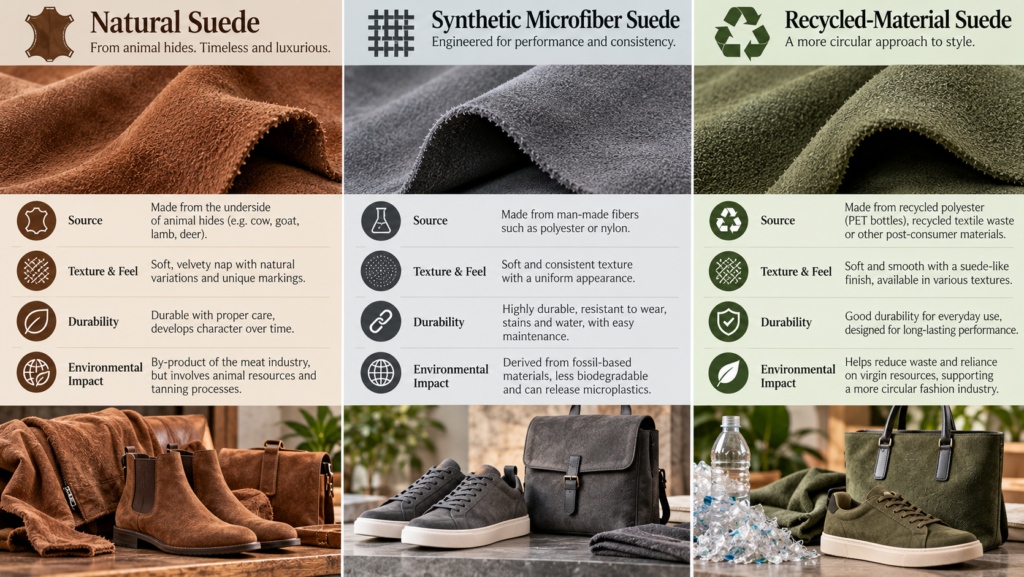
Suede needs to be evaluated differently depending on whether it is natural leather suede or synthetic suede.
Environmental Considerations of Natural Suede
Natural suede is made from animal hide, so its environmental profile is connected to the broader livestock and leather supply chain.
Animal agriculture can involve:
- Land use
- Feed production
- Water consumption
- Greenhouse-gas emissions
- Biodiversity impacts
The hide itself is generally a by-product of the meat industry, but describing leather or suede as having no environmental impact would be misleading.
The tanning process also requires water, energy and chemical inputs.
Wastewater treatment and chemical management are therefore important parts of responsible suede production.
Durability and Product Life
One environmental advantage of a durable material is that it can remain in use for a long time.
A well-made suede shoe, jacket or bag can potentially be repaired and maintained rather than immediately replaced.
However, suede is more vulnerable to staining, abrasion and moisture than many heavily finished leather surfaces, so appropriate care has a direct influence on its useful life.
Synthetic Suede
Synthetic suede avoids animal hide but is generally made from manufactured fibers and polymers.
Many conventional microfiber suede materials rely on polyester, polyurethane or other synthetic components.
This can reduce dependence on animal-derived materials but introduces other considerations, including fossil-resource use, polymer production and end-of-life management.
Bio-Based and Recycled Alternatives
Some newer suede-like materials incorporate recycled fibers or alternative feedstocks.
These developments can reduce dependence on virgin resources in certain constructions, but a material should not automatically be considered sustainable simply because it contains recycled or plant-derived content.
A better assessment looks at:
- Material composition
- Recycled content
- Energy use
- Chemical processing
- Durability
- Manufacturing location
- Product lifespan
- End-of-life options
9. Suede Fabric Certifications Available
There is no single universal certification that covers every type of suede.
Natural suede can fall under standards and certifications developed for leather, while synthetic suede can be assessed under textile and chemical-safety standards.
Leather-Related Standards
For natural suede, leather-sector certification systems can assess aspects of:
- Environmental management
- Chemical management
- Wastewater
- Energy and water use
- Traceability
- Social responsibility
The certification applies to the relevant facility, product or supply chain, so buyers should check exactly what the certification covers.
OEKO-TEX
OEKO-TEX standards may be relevant to both natural and synthetic suede products depending on the material and certification scope.
They can help assess the presence of certain harmful substances in tested products.
Recycled Content Standards
For synthetic suede containing recycled fibers, standards such as the Global Recycled Standard (GRS) or other recognized recycled-content systems may be relevant.
These standards are useful when verifying claims about recycled materials and supply-chain traceability.
Brand-Specific Certifications
Some premium synthetic suede manufacturers maintain their own environmental and quality certifications.
For branded materials, buyers should look at the certification associated with the specific product rather than assuming that all suede-like materials share the same credentials.
10. Frequently Asked Questions
Is suede real leather?
Traditional suede is real leather. It is made from animal hide or skin and has a characteristic napped surface.
What is suede made from?
Natural suede is made from animal hide or skin, commonly using a split or the flesh side of the leather. Synthetic suede is made from manufactured fibers and polymers.
Is suede the same as leather?
Suede is a type of leather, but its surface and construction differ from many smooth leather products.
What is the difference between suede and nubuck?
Suede is generally associated with the flesh side or split portion of leather. Nubuck is made by buffing the grain side of leather to create a fine velvety surface.
Is suede waterproof?
Natural suede is not naturally waterproof. Water can darken, stain or alter its surface. Protective treatments can improve resistance but do not necessarily make suede completely waterproof.
Can suede be washed?
Natural suede generally requires specialized cleaning rather than ordinary machine washing. Always follow the care instructions for the specific product.
Why does suede change color when touched?
The fine fibers on the surface can lie in different directions. When they are brushed, they reflect light differently, creating a lighter or darker appearance.
Is synthetic suede better than real suede?
Neither is universally better. Natural suede offers the characteristics of genuine leather, while synthetic suede can provide greater consistency, easier maintenance or different performance characteristics.
Is microsuede the same as suede?
No. Microsuede is a synthetic textile designed to imitate natural suede.
Is Alcantara real suede?
No. Alcantara® is a branded synthetic material rather than animal-derived suede.
Is Ultrasuede real suede?
No. Ultrasuede® is a branded synthetic microfiber material designed to reproduce some of the qualities associated with suede.
Is suede environmentally friendly?
Not automatically. Natural suede has environmental impacts associated with livestock production and tanning, while synthetic suede can involve synthetic polymers, energy use and end-of-life challenges.
How long does suede last?
The lifespan depends on the quality of the material, how it is used and how well it is maintained. Good-quality suede can last for many years when properly cared for.
What is the best use for suede fabric?
Suede works particularly well for footwear, jackets, bags, gloves, accessories and decorative interiors where its soft texture and matte appearance are desirable.