Accessories used to be the part of a man’s wardrobe that happened almost by accident. A belt was something you grabbed because your trousers needed one. A wallet stayed in your pocket until it fell apart. Jewelry was often reserved for a watch, a wedding ring, or the occasional formal event.
That approach is changing.
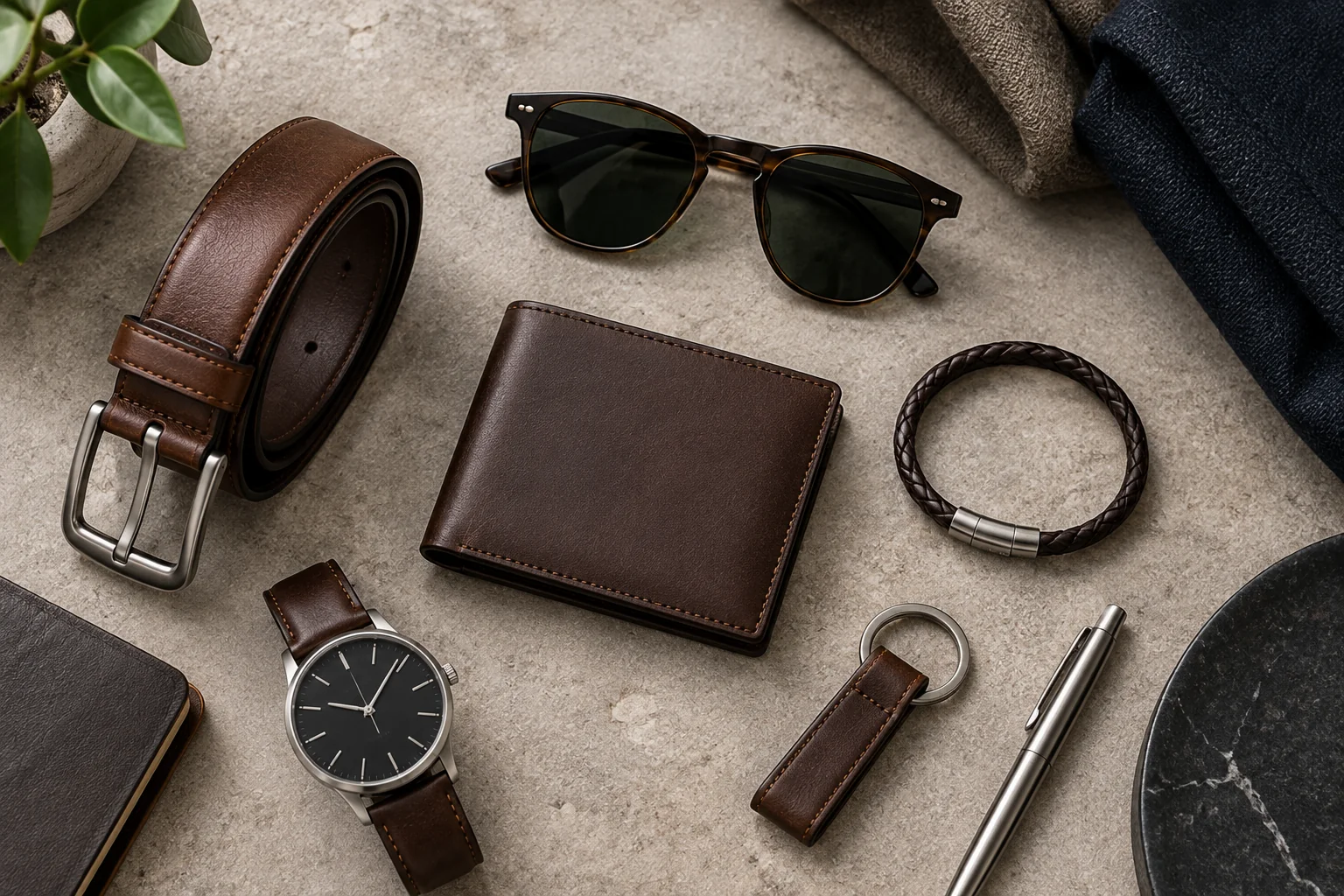
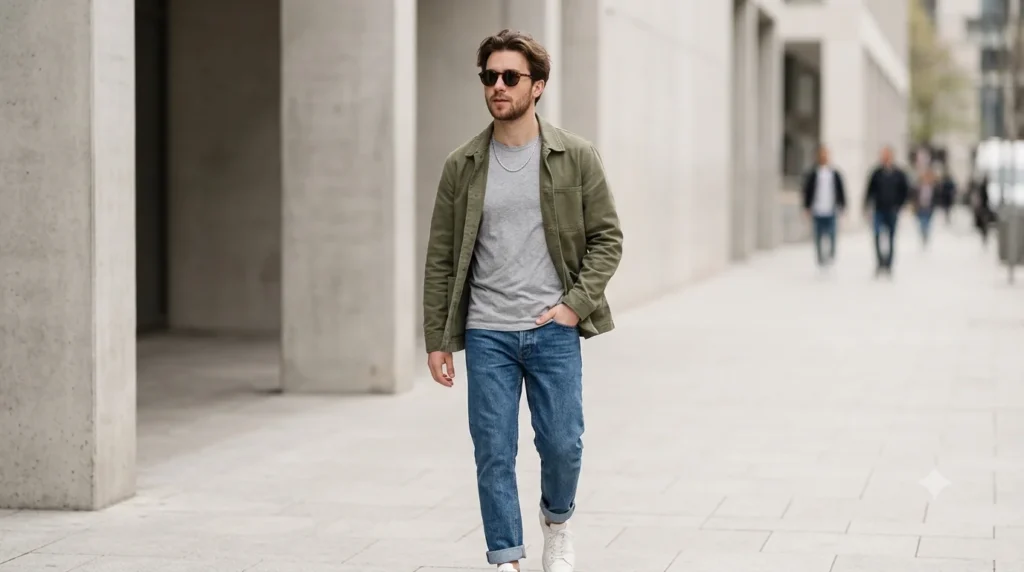
In 2026, accessories are playing a much more deliberate role in men’s style. A chain can change the character of a plain T-shirt. The right sunglasses can give structure to an otherwise basic summer outfit. A well-made belt can make tailored trousers look more finished, while a good bag can pull together an everyday look without feeling overly styled.
The trick isn’t to wear more accessories. It’s to choose better ones.
This guide covers ten categories worth having in rotation, from everyday leather goods and jewelry to bags, cold-weather pieces, and the often-ignored socks. Watches aren’t included here because they deserve their own category and are covered separately in our guide to watches for men.
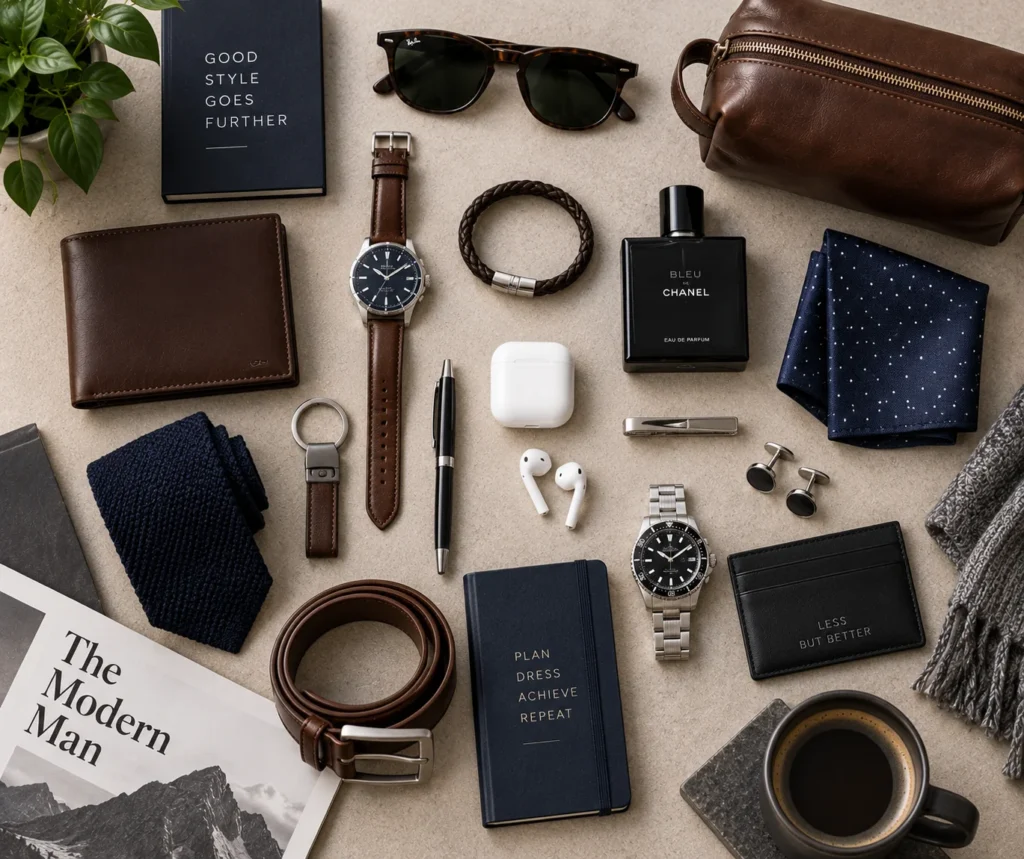
Whether you’re starting a capsule wardrobe or refining one you’ve already built, these are the accessories that can make the biggest difference.
1. Statement Sunglasses
Sunglasses are one of the rare accessories that combine a practical purpose with an immediate visual effect. They protect your eyes, but they also change the way your face and outfit are perceived.
That makes frame choice more important than simply buying whatever shape happens to be trending.
Face shape is a useful starting point. Rounder faces can benefit from more angular frames, while rounded frames can soften the stronger lines of a square face. The goal isn’t to follow a rigid rule, but to find a shape that creates some balance.
Once the fit is right, sunglasses can do a surprising amount of work. A T-shirt and shorts outfit doesn’t suddenly become complicated, but the right pair of shades can make it look much more deliberate.
Material changes the mood too. Acetate frames generally have a more relaxed character, while metal frames can look cleaner and more refined.
If you’re buying your first serious pair, start with something versatile enough to wear with a linen shirt, a plain T-shirt, and everything in between. You can always get more experimental later.
2. A Quality Leather Belt
A belt is easy to underestimate because it has an obvious job: keeping your trousers where they belong.
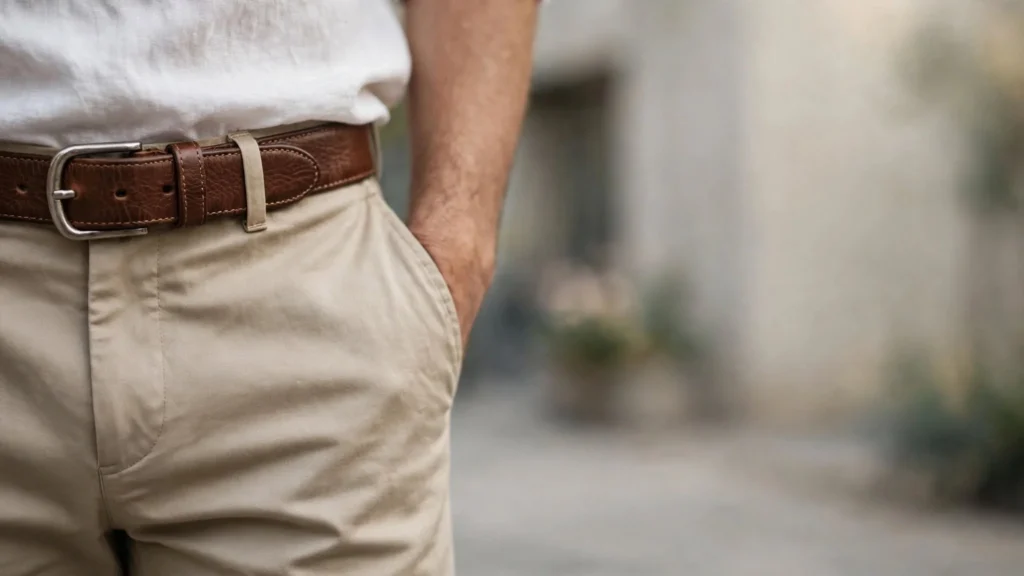
But visually, it does more than that. A belt creates a break between the upper and lower half of an outfit and can help make the proportions feel intentional.
Color is where the biggest difference often appears.
The traditional guideline is straightforward: black shoes with a black belt, brown shoes with a brown belt. You don’t need to obsess over making the shades identical, but keeping them in the same general family creates a much cleaner connection between the different parts of an outfit.
This becomes particularly noticeable with tailored and business-casual clothing.
Leather quality is also worth prioritizing. A good leather belt tends to develop character as it ages, while cheaper materials are more likely to crack, peel, or lose their shape.
One or two genuinely good belts will usually serve a wardrobe better than a drawer full of inexpensive ones.
3. A Slim Wallet or Cardholder
The oversized wallet has become harder to justify.
As cards become fewer, cash becomes less central to everyday payments, and phones handle more of our transactions, there is less reason to carry a thick block of leather in your pocket.
Slim wallets and cardholders make more sense for the way many men actually carry things in 2026. They’re cleaner in a trouser pocket, easier to handle, and less visually cumbersome.
Leather remains a particularly good material because it changes with use. A quality leather wallet develops patina over time, giving it a worn-in character that a brand-new wallet simply doesn’t have.
There’s also something satisfying about keeping the design simple. You don’t need six compartments if you only regularly use three.
For a more cohesive accessory collection, choose a wallet that sits comfortably alongside your other leather goods, particularly your belt and bag. Those small connections can make the whole wardrobe feel more considered.

4. A Chain Necklace
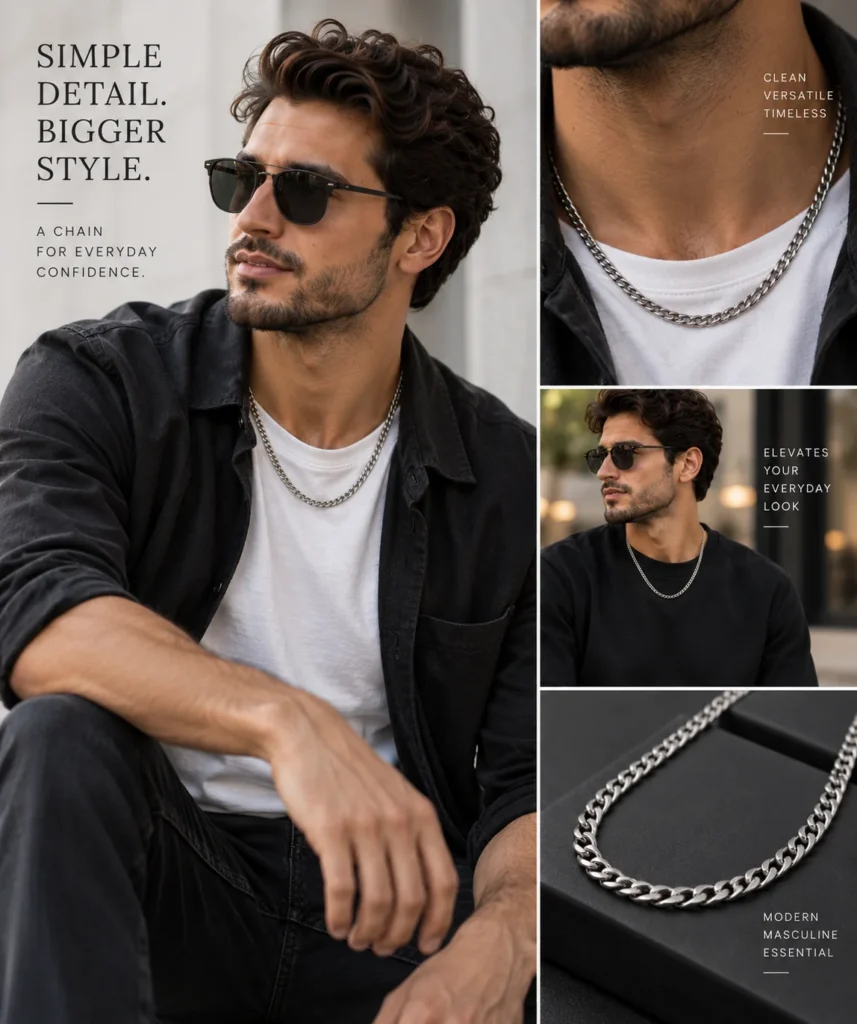
If you’re new to men’s jewelry, a chain necklace is probably the easiest place to start.
It works with a surprisingly broad range of clothing. A simple chain can sit naturally against a white T-shirt, add detail to an open-collar shirt, or even bring some personality to a blazer.
But chain length matters more than many first-time buyers expect.
A shorter chain tends to sit around the collarbone and works naturally with crew necks and higher necklines. A longer chain has more room to show against an open collar or V-neck.
The metal tone matters too. Silver, gold, and mixed-metal finishes create noticeably different moods, so think about the other jewelry you already wear. If you wear a watch or bracelet regularly, the chain doesn’t necessarily need to match it exactly, but there should be some visual relationship between the pieces.
Starting with one well-made chain is usually more effective than buying several inexpensive ones at once.
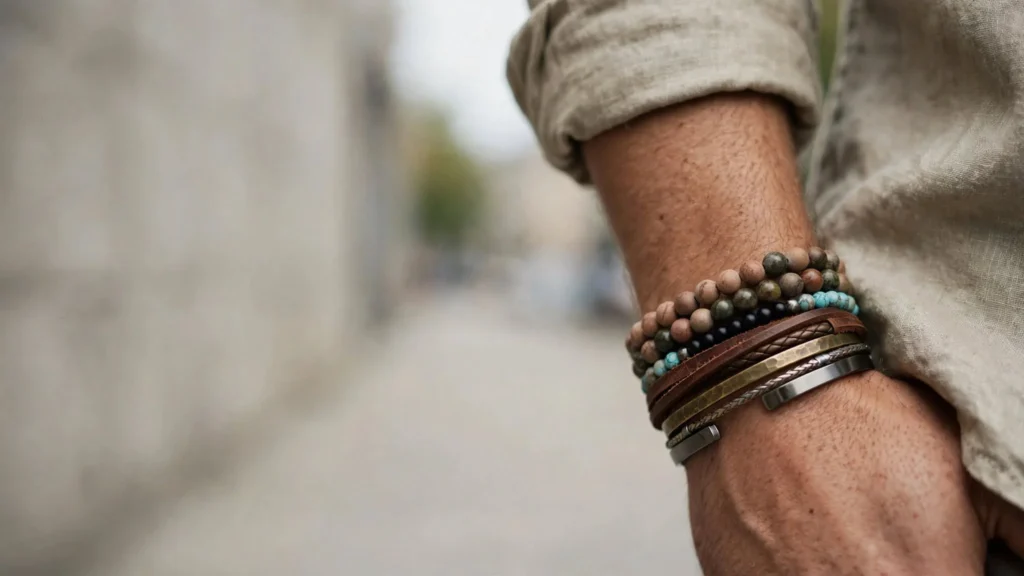
5. Minimalist Bracelets
Bracelets are an easy way to introduce another layer of detail without making jewelry the main event.
A thin metal cuff, simple leather cord, or understated beaded bracelet can add texture to the wrist without competing with the rest of the outfit. They can also work alongside a watch, provided the combination doesn’t become too crowded.
The material changes the character of the piece.
Beaded bracelets generally feel more casual, while a slim metal cuff can look slightly sharper. Layering two bracelets can also work, but there’s a point where adding another piece stops creating texture and simply creates clutter.
Metal consistency is a useful guideline.
If you’re wearing a silver watch, a silver-toned bracelet and ring will usually create a more cohesive combination. The same applies to warmer gold tones. You don’t have to make every accessory identical, but keeping the overall palette related makes the styling look intentional rather than accidental.
6. Rings
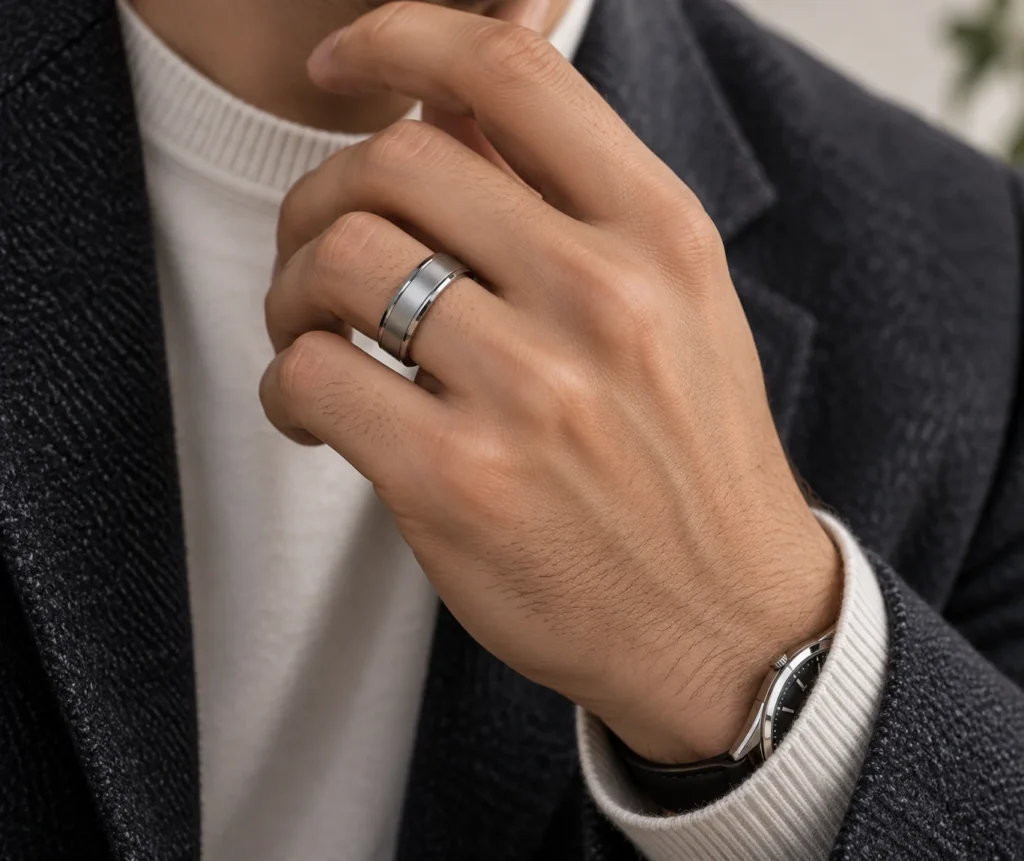
Men’s rings have moved well beyond wedding bands.
Simple bands, signet rings, and textured metal designs can now work as everyday accessories, adding a small but noticeable sense of personality.
Signet rings have a long history of tradition and identity, but their modern appeal doesn’t have to depend on symbolism. They can simply be an interesting piece of jewelry. A plain band offers the opposite approach: clean, understated, and easy to wear without attracting too much attention.
The question is really one of proportion.
One ring can make a quiet statement. Two or three rings can create a more deliberate jewelry-heavy look, but that approach needs a little more thought because the hands become a stronger visual element.
There isn’t a universal rule about how many rings to wear. The better guide is the rest of the outfit. If your clothes and other accessories are already doing a lot, one ring may be enough.
7. A Crossbody Bag or Sleek Backpack
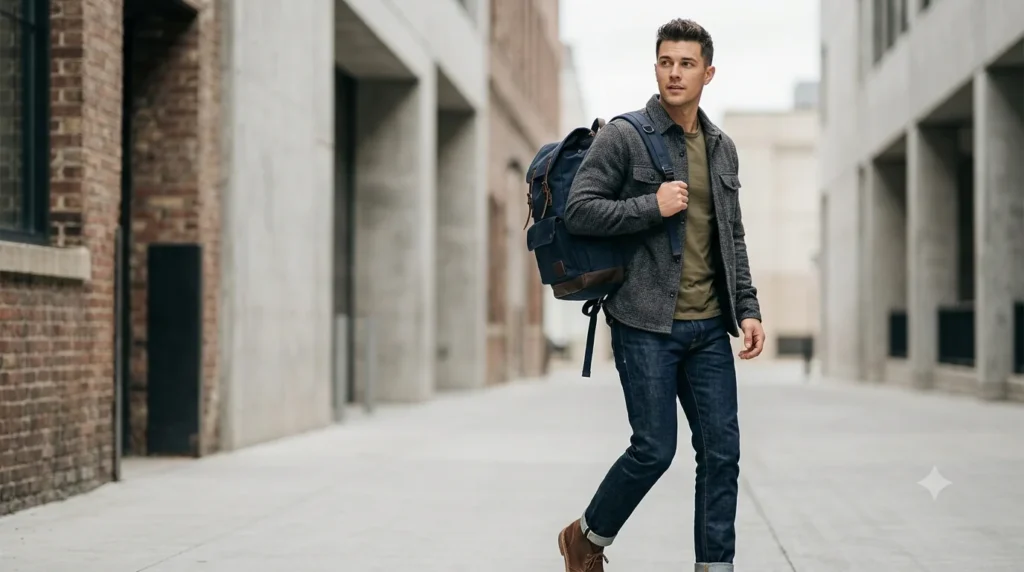
The modern man’s accessory collection needs somewhere to put all the things that don’t belong in a trouser pocket.
That’s where crossbody bags and sleek backpacks earn their place.
A crossbody bag makes sense for a lighter daily carry: phone, wallet, keys, perhaps a small notebook or other essentials. It stays close to the body and doesn’t have the bulk of a full backpack, making it particularly useful for errands and casual days.
A sleek backpack is the more practical option when you’re commuting or traveling. A laptop, documents, an extra layer, and other work essentials quickly make a small crossbody impractical.
The important part is choosing a bag that looks like it belongs with the wardrobe rather than something purely functional that was added at the last minute.
Leather can give a bag a more refined character, while technical fabrics tend to feel more contemporary and casual. Neutral colors are generally easier to integrate, especially if the bag will be used across several different outfits.
A good bag should carry what you need without making the outfit feel like it revolves around the bag.
8. Ties and Cufflinks
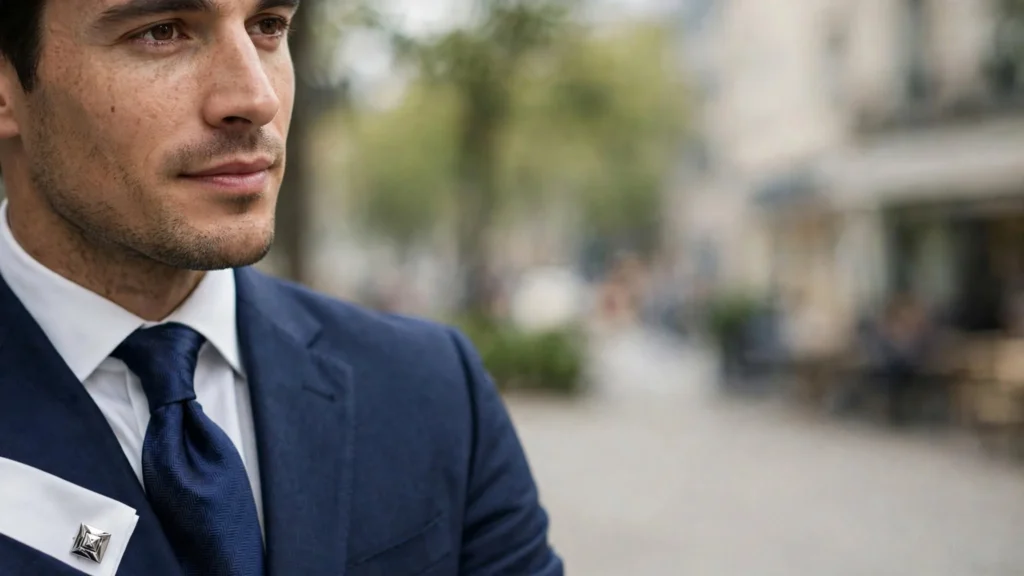
Formalwear doesn’t leave much room for experimentation. That’s exactly why ties and cufflinks matter.
A suit and dress shirt establish most of the outfit’s structure, leaving relatively little space for personal expression. The tie can introduce color, pattern, or texture without breaking the expectations of a formal or business setting.
Checks, plaids, and subtle textures can make a standard suit more memorable without making it look casual. A solid tie remains the dependable option, but there’s no reason every formal outfit needs to be completely predictable.
Cufflinks operate on a smaller scale.
Simple silver or gold cufflinks can work across a wide range of formal clothing, while colored or novelty designs offer more room for personality when the dress code allows it.
The strongest combinations usually don’t scream for attention. They reward a closer look.
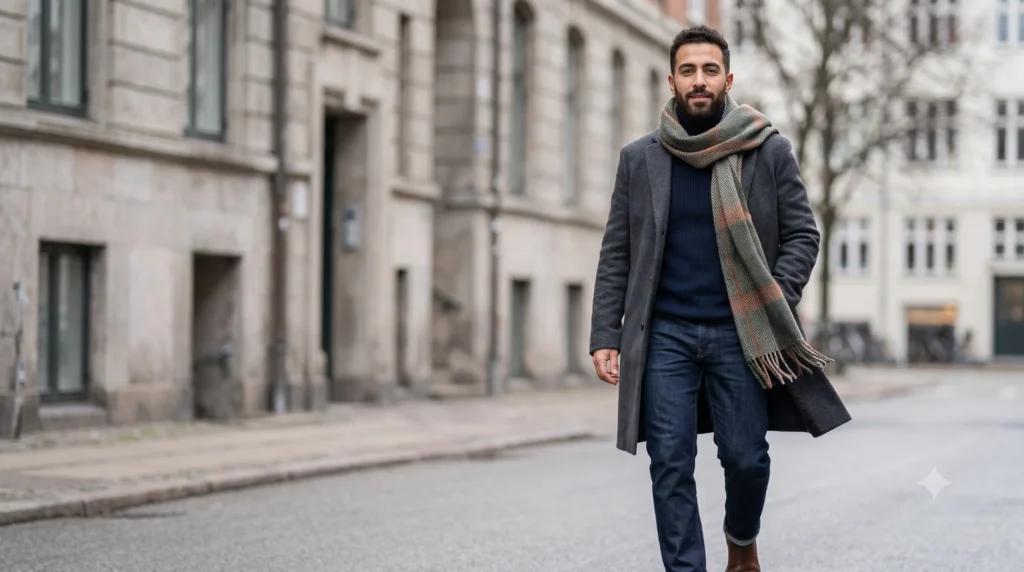
9. Scarves and Cold-Weather Accessories
Cold-weather accessories have an obvious practical function, but they also happen to be some of the easiest pieces to use for adding color and texture.
A scarf can completely change the appearance of a simple coat. Wool and cashmere bring warmth with a more refined finish, while cotton and knitted options generally feel more relaxed and everyday.
Color is where you can have some fun.
A scarf that echoes the tone of your coat creates a restrained, tonal look. A deliberate contrast can make the same coat feel much more expressive. Neither approach is inherently better; it depends on how much visual interest the rest of the outfit already has.
Gloves and hats complete the cold-weather rotation. Leather gloves tend to complement tailored outerwear, while knitted gloves feel more natural with casual coats and jackets. A beanie or structured hat can introduce another layer of texture or repeat a color already present elsewhere in the outfit.
Staying warm doesn’t require sacrificing style. It just means treating these pieces as part of the outfit rather than emergency equipment.
10. Quality Socks
Socks are probably the least appreciated accessory on this list.
They’re also one of the easiest places to get something subtly wrong.
A good outfit can lose some of its polish when socks look worn, lose their elasticity, or clash awkwardly with the trousers and shoes. The problem becomes even more obvious when trousers rise while sitting or when shoes come off.
Quality matters for practical reasons. Well-made socks tend to maintain their shape and elasticity for longer, while cheaper pairs can become thin or loose surprisingly quickly.
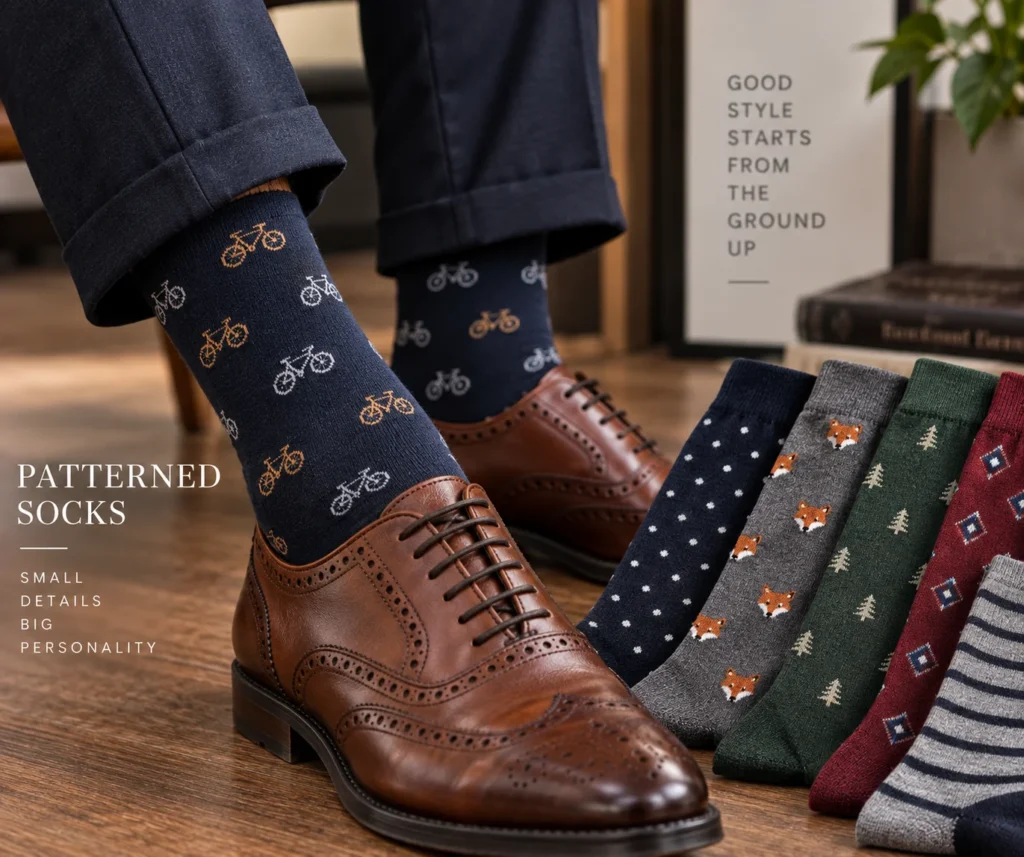
But socks can also be a small opportunity for personality.
A subtle pattern or flash of color beneath a trouser leg can add something unexpected to an otherwise classic outfit. For formal dressing, solid or lightly textured socks that complement the trousers are the safer choice. Casual clothing gives you much more freedom.
It’s a tiny detail, but that’s precisely why it can work.
Frequently Asked Questions
What accessories should every man own as a starting point?
Start with the pieces you’re most likely to use: a quality leather belt, a slim wallet, and a pair of sunglasses that suit your face shape.
Those three can work across a wide range of outfits. Once they’re covered, jewelry, bags, and more occasion-specific accessories can be added according to your lifestyle.
How many accessories should a man wear at once?
There’s no fixed number.
The better approach is to think about how the pieces relate to one another. A chain, one or two rings, and a bracelet in a compatible metal tone can be enough to create a considered look without making the outfit feel overloaded.
If the clothing is already bold, fewer accessories will usually create better balance.
What metal tone should I choose for men’s jewelry?
Personal preference matters most, but the source guidance suggests that warmer skin tones can work well with gold, while cooler skin tones often pair naturally with silver.
More important than following that rule strictly is keeping your jewelry visually consistent. A coordinated group of pieces usually looks more deliberate than several unrelated metal tones competing for attention.
How do I match a belt to my shoes correctly?
The simplest guideline is to keep the belt and shoes in the same color family.
Brown shoes generally work with a brown belt, while black shoes pair with a black belt. The shades don’t have to be identical, but the closer the relationship, the more cohesive the outfit tends to look, particularly with business and semi-formal clothing.
Building Your Accessory Collection, One Piece at a Time
A strong accessory collection doesn’t need to appear all at once.
Start with the pieces that will genuinely earn their place in your everyday wardrobe: a well-made belt, a slim wallet, and sunglasses that fit properly. Those provide a practical foundation before you start adding jewelry or bags.
Then build more selectively.
A chain might become part of your everyday uniform. A particular metal tone might start to feel more natural than another. You may discover that you reach for a crossbody bag constantly, or that patterned socks become an easy way to add personality to otherwise conservative outfits.
That’s the more useful way to approach men’s accessories in 2026. Don’t buy ten things simply because a list says they’re essential. Choose pieces that solve a practical problem, add something to your style, or ideally do both.
For the next layer of your wardrobe, explore our guide to watches for men or our roundup of men’s fashion trends for 2026.