A watch can be one of the quietest parts of an outfit or the thing everyone notices first. In 2026, men’s watch styles are moving in both directions at once: some designs are becoming cleaner and more restrained, while others are embracing bold cases, intricate dials, and unmistakable visual presence.
That range is part of what makes choosing a watch interesting. A slim dress watch can disappear beneath a shirt cuff and still look right with a T-shirt later in the week. An oversized statement watch does almost the opposite, turning the wrist into a focal point. Between those extremes are dive watches, integrated-bracelet designs, chronographs, blue dials, gold-tone finishes, and even hybrid watches that quietly add smart functionality.
The right choice has less to do with finding a universally “best” watch and more to do with understanding what you actually want from one. Do you need something that can move between work and weekends? Something rugged? A piece with mechanical detail? Or simply a watch that gives a familiar outfit more personality?
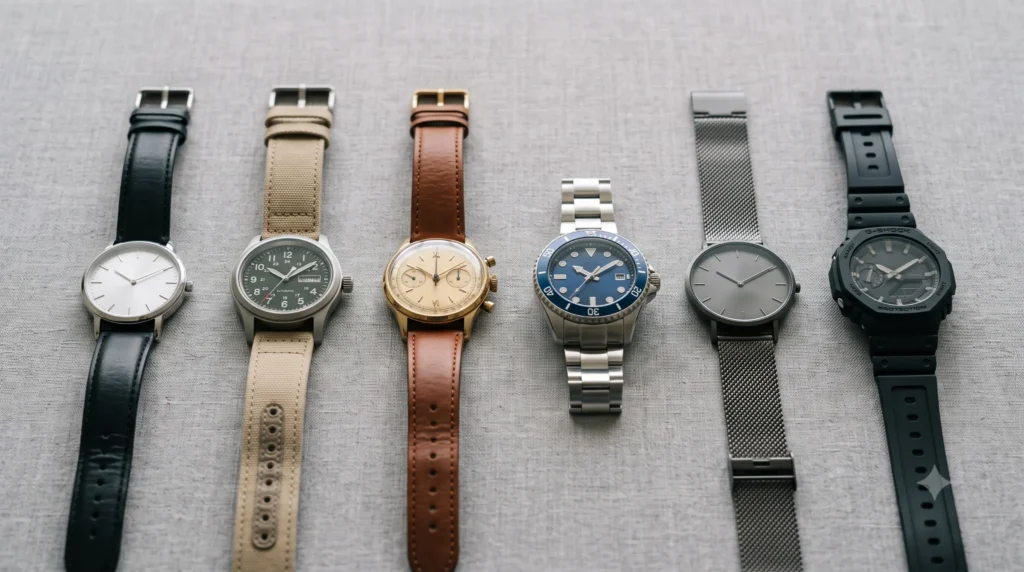
Here are ten men’s watch styles worth knowing in 2026.
1. The Minimalist Dress Watch
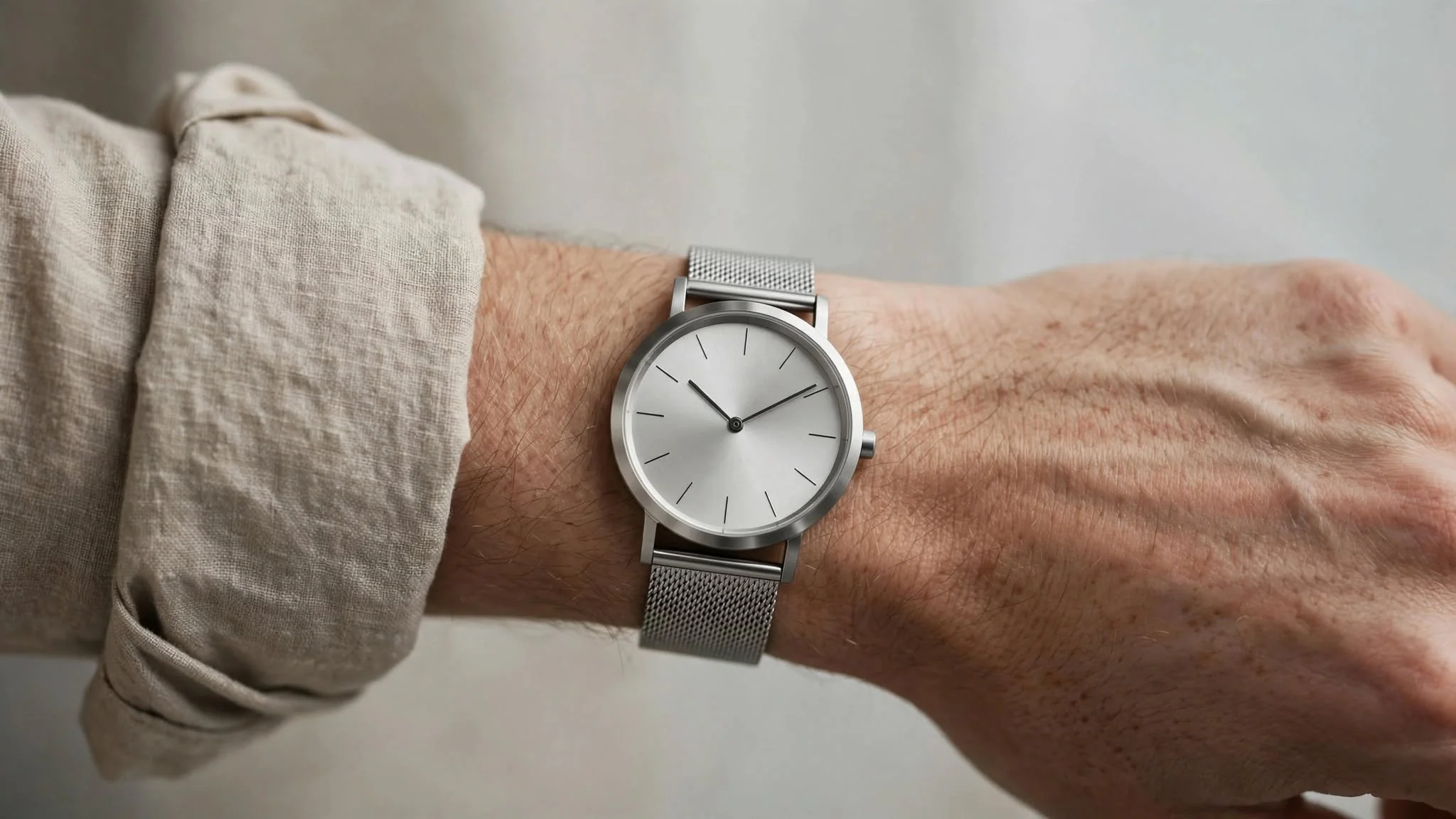
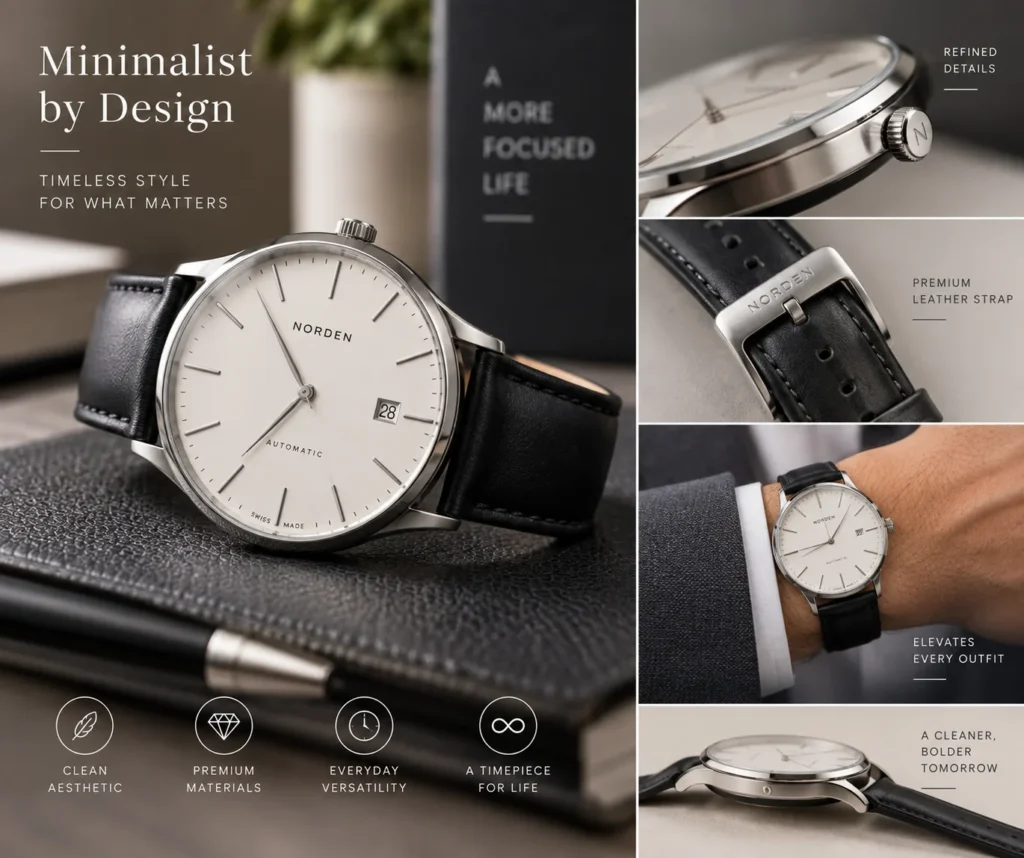
Minimalist dress watches are built on restraint.
The cases tend to be slim, the dials clean, and the overall design free from unnecessary decoration. You might see no date window, no collection of sub-dials, and very little visual texture. The watch simply tells the time and does it without demanding attention.
That’s exactly what makes the style so useful.
A slim dress watch can disappear neatly beneath an office shirt cuff, then look just as natural with a T-shirt and jeans on the weekend. It doesn’t compete with the clothes around it. It gives the outfit a finished quality without becoming the centerpiece.
Case proportions usually stay on the smaller or mid-size side, which helps maintain the restrained character of the design. Leather straps are common, although slim metal bracelets can give the same basic silhouette a slightly sharper, more polished feel.
If you want one watch that quietly handles a wide range of situations, this remains one of the most dependable starting points.
2. The Integrated Bracelet Watch
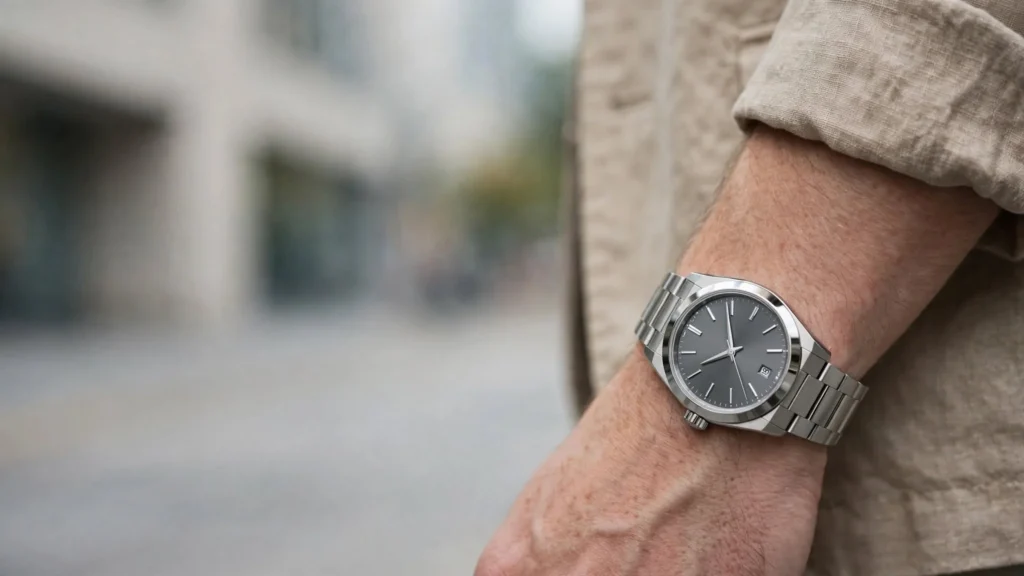
An integrated bracelet watch is defined by the relationship between its case and bracelet. Instead of looking like a conventional watch with a separate strap or bracelet attached to the lugs, the metal flows directly out of the case, creating one continuous shape.
The effect is surprisingly dramatic.
The design feels modern, architectural, and substantial, even when the dial itself is relatively simple. It also gives the watch an interesting dual personality. It can look perfectly at home in a professional setting, yet it doesn’t suddenly feel too formal when worn with casual clothing.
That versatility is a major part of its appeal.
Because the bracelet and case are designed to work together, integrated designs often have a more tactile presence on the wrist than a conventional strap-and-case combination. There’s a sense of solidity to the construction that gives even simpler versions considerable visual weight.
For men who want something more distinctive than a standard stainless steel watch without moving into obvious statement-watch territory, this silhouette occupies a useful middle ground.
3. The Dive Watch
The dive watch was originally a piece of equipment, and its design still carries that history.
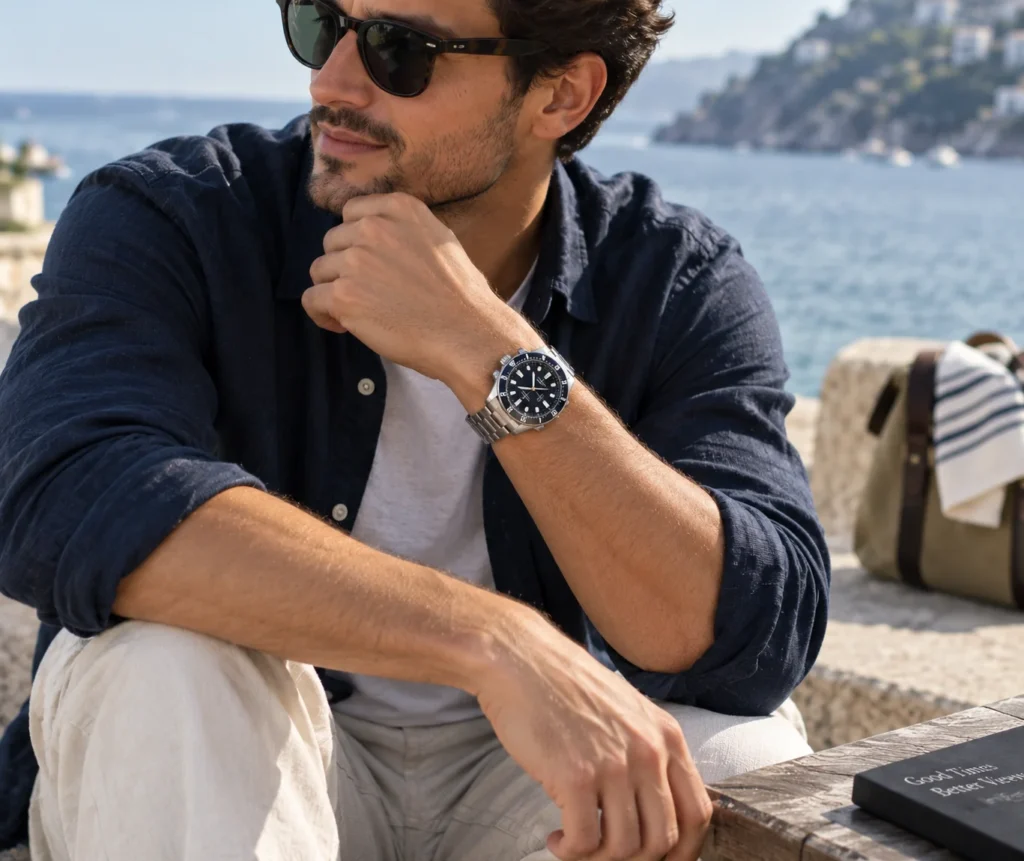
Rotating bezels, luminous markers, strong water resistance, and durable cases are all tied to the functional requirements that shaped the category. You may never take yours underwater, but those characteristics remain useful in everyday life.
A dive watch can handle the less predictable parts of a normal week. A gym session, a hike, wet weather, travel, or simply the accumulated wear of daily use all make more sense with a watch designed around durability.
The trade-off is size.
Dive watches generally have a larger, heavier presence than minimalist dress watches. For some men, that’s exactly the attraction. The bold bezel and clear markers give the watch an immediate visual identity, even from across the room.
They also transition surprisingly well between casual and more polished weekend clothing. You don’t need to be a diver to appreciate what the design gets right.
4. The Pilot or Chronograph Watch
Pilot and chronograph watches are for men who like their watches to give them something to look at.
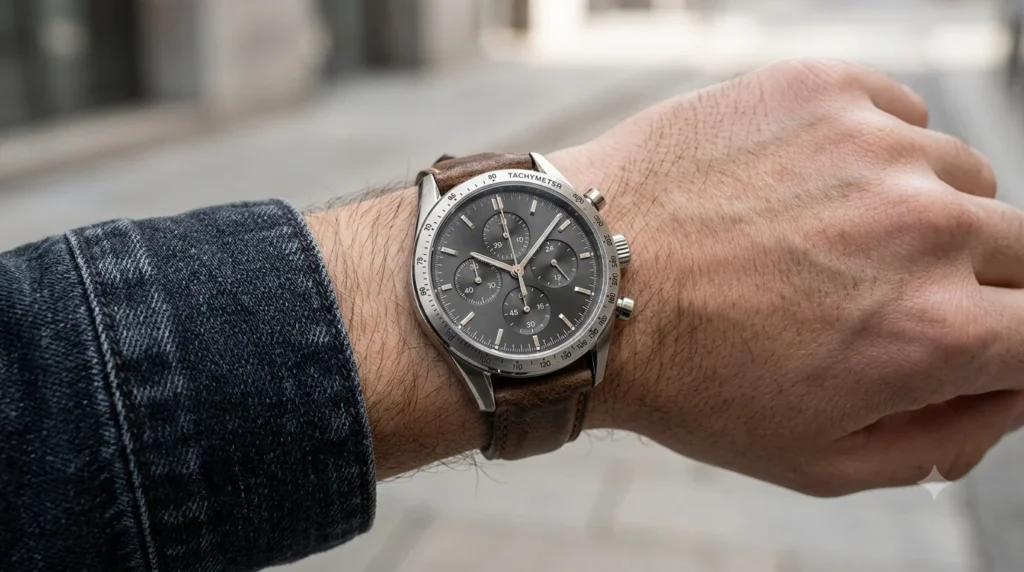
Multiple sub-dials, timing functions, larger cases, and layered dial layouts create a much busier appearance than a minimalist dress watch. Instead of trying to disappear into an outfit, these watches reward a closer look.
Chronographs are particularly appealing because their mechanical complexity is visible on the dial. Even if you rarely use the stopwatch function, the additional pushers and sub-dials give the watch a technical character that a simpler three-hand design can’t reproduce.
The larger dial also makes these watches more visually assertive.
They work particularly well with casual and business-casual clothing, where the extra detail feels intentional rather than overly formal. If a plain dress watch feels too quiet but an oversized statement piece feels excessive, a chronograph can sit comfortably between the two.
It’s a style for someone who wants the watch to have some personality without making it the entire outfit.
5. The Skeleton or Open-Heart Watch
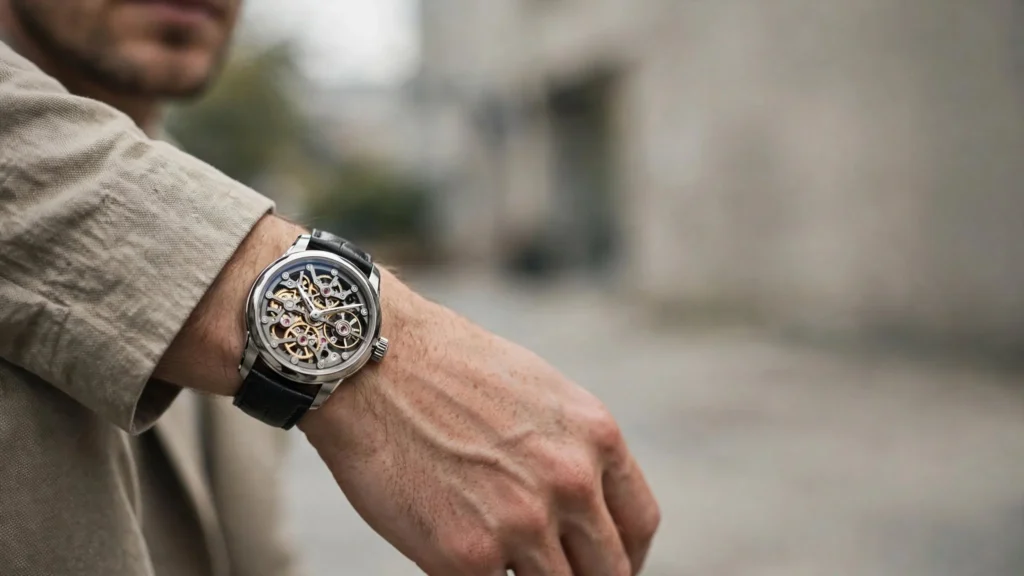
Some watches hide their mechanics. Skeleton and open-heart designs do the opposite.
An open-heart watch exposes part of the movement through the dial, while a skeleton design takes the idea further by opening up much more of the face to reveal the components underneath.
The result changes the role of the watch. It becomes less about a clean dial and more about movement, construction, and mechanical detail.
For collectors, that’s often the entire point. Seeing the gears and components moving behind the dial gives the watch a sense of motion that a conventional timepiece can’t quite replicate. It can also make the watch an easy conversation starter because there’s immediately something unusual to notice.
This isn’t necessarily the first style to buy when starting a collection. A skeleton watch tends to make more sense once you already appreciate mechanical watches and want something with a more distinctive personality.
The visible movement becomes part of the design rather than something hidden behind it.
6. The Hybrid Smart-Analog Watch
Hybrid smart-analog watches occupy an interesting space between traditional watches and full smartwatches.
From the outside, the design generally looks familiar: physical hands, a conventional dial, and the proportions of a traditional timepiece. Beneath that surface, however, the watch can offer connected functions such as fitness tracking and smartphone notifications.
That makes the category particularly useful for men who want modern functionality without wearing a touchscreen on the wrist.
A hybrid can still look natural with a blazer or business-casual outfit because the traditional watch aesthetic remains intact. Battery life can also be an advantage, with many hybrid designs relying on standard watch batteries rather than requiring daily charging.
It won’t replace every function of a full smartwatch, and that isn’t really the point. The appeal is the compromise: some connected convenience without giving up the visual character of a conventional watch.

7. The Blue Dial Watch
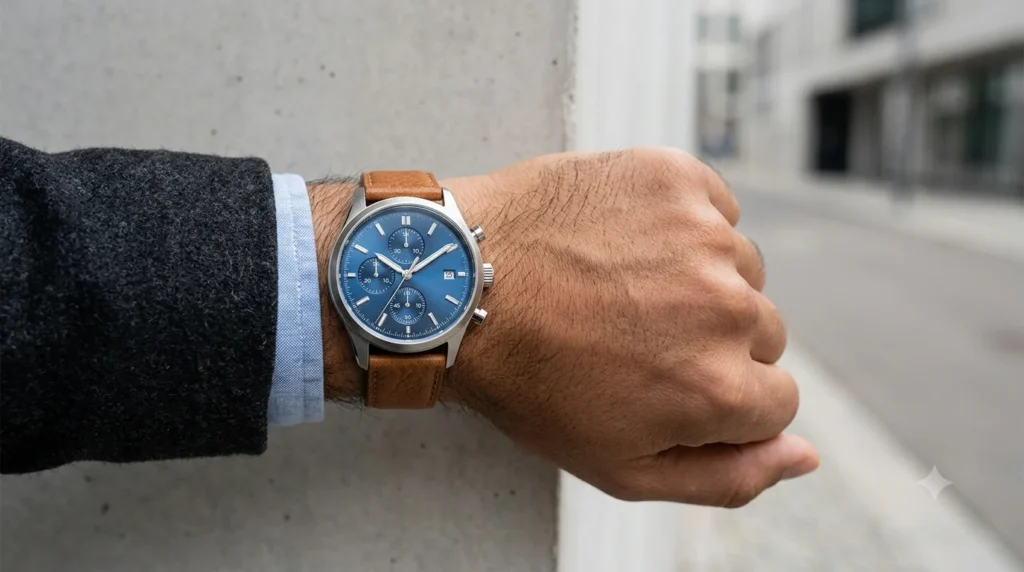
Changing the dial color is one of the easiest ways to give a traditional watch more personality without making it difficult to wear.
Blue works particularly well because it sits between conservative and expressive. It has more character than a straightforward black or white dial, but it rarely feels as unconventional as brighter or more unusual colors.
The particular shade makes a difference.
Deep navy tends to feel more formal and can work comfortably with suits and tailored clothing. Lighter or brighter blues have a more relaxed character and can stand out more strongly in everyday outfits.
That range is what makes blue such a useful choice. You can move away from the safest black or silver option without suddenly committing to a watch that only works in specific situations.
For men building a collection, a blue dial can also fill a different visual role from a more traditional neutral watch without becoming overly loud.
8. The Gold-Tone Watch
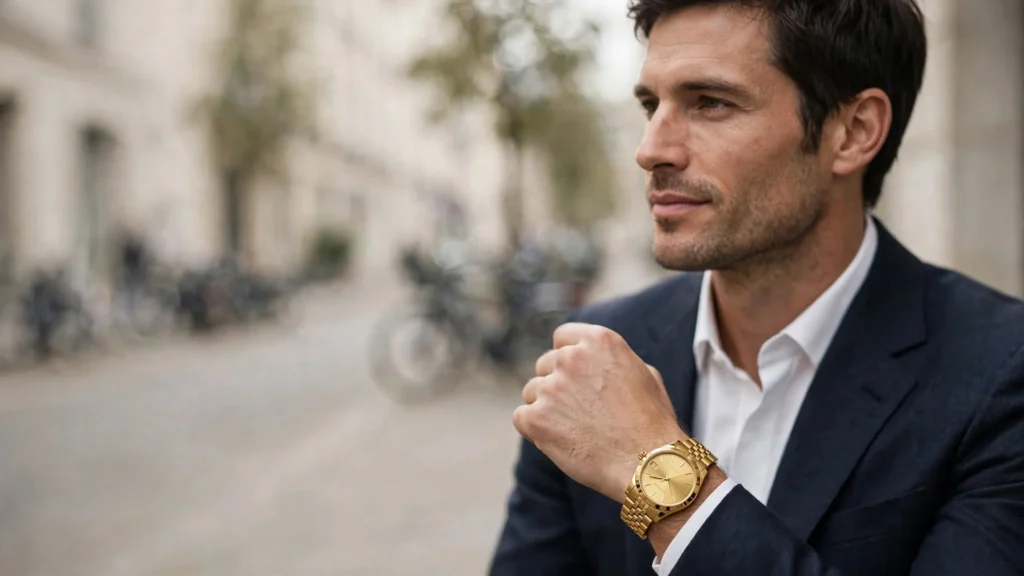
Gold-tone watches bring instant warmth and polish to the wrist.
The finish has long been associated with formal and evening dressing, where the reflective tone works naturally alongside tailored clothing. But the category has become broader. Gold tones are no longer restricted to slim, traditional dress watches.
Sportier designs now use gold-tone finishes as part of more casual silhouettes, making the look considerably easier to wear outside formal settings.
That’s an important shift because gold can otherwise feel like a high-commitment choice. A slim gold-tone dress watch sends a very different message from a sportier watch that uses gold as one element of the overall design.
For formal occasions, the classic approach still works beautifully. For everyday wear, a more restrained or sport-influenced design can introduce the same warmth without making the watch feel excessively dressy.
If you want your watch to look deliberately polished, gold-tone is difficult to ignore.
9. The Oversized Statement Watch
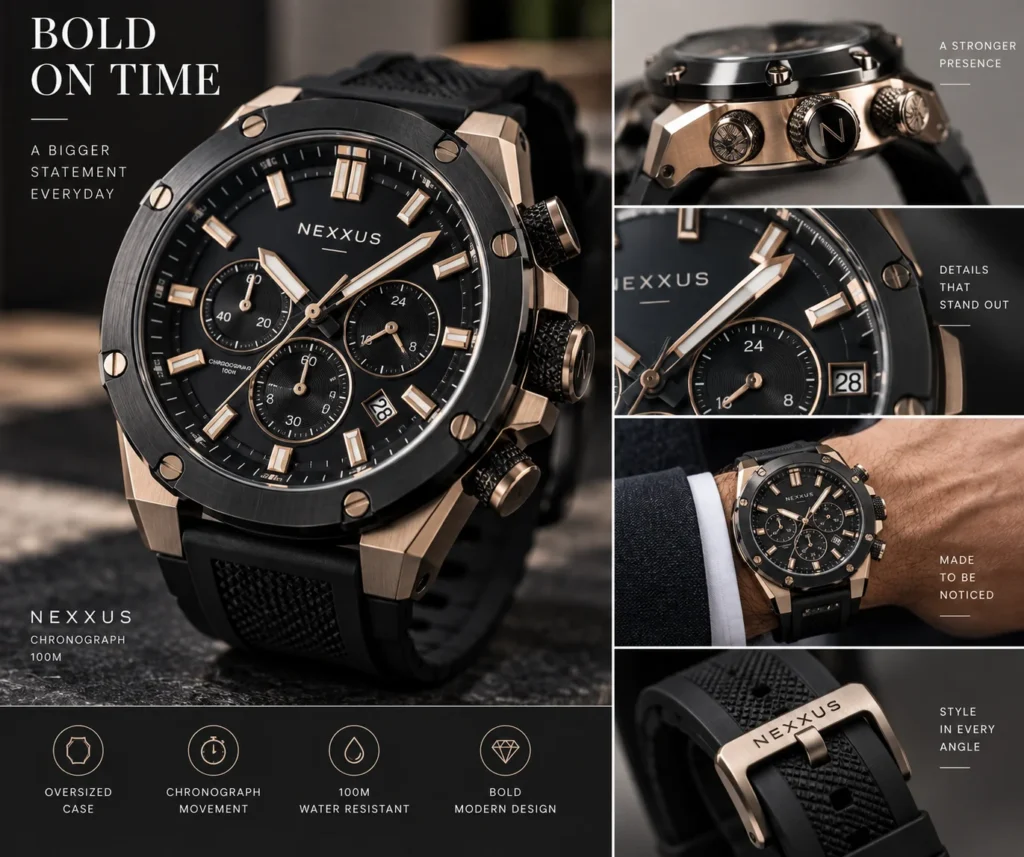
Some watches are designed to disappear into an outfit. Oversized statement watches are designed to do the opposite.
Large cases, textured dials, sculptural details, and strong proportions give these pieces a presence that is closer to jewelry than a purely functional timepiece. The wrist becomes part of the outfit rather than simply carrying an accessory.
That makes this category inherently less versatile.
A large, visually complex watch can work extremely well when the rest of the look supports it, but it can feel excessive in conservative professional settings or alongside already busy clothing. This is a watch that benefits from a little restraint elsewhere.
For men who already have a strong sense of personal style, however, that boldness can be exactly the attraction.
A minimalist watch complements an outfit. An oversized statement watch becomes part of the outfit’s identity.
10. The Everyday Stainless Steel Watch
If the other watches on this list explore specific personalities, the everyday stainless steel watch is the workhorse.
The formula is straightforward: a stainless steel case, usually paired with a bracelet or practical strap, and a design that can withstand regular wear without demanding too much attention.
Its strength is range.
A well-designed stainless steel watch can move from a Monday morning meeting to a Saturday afternoon without looking like you’ve changed accessories for two completely different wardrobes. It has enough polish for professional settings but doesn’t feel too precious for ordinary daily use.
That’s why this is often the watch that gets worn most.
For someone buying a first serious watch, it can provide the foundation for an eventual collection. Once that dependable option is in place, more specialized pieces such as a chronograph, dive watch, skeleton design, or statement watch can add variety.
You don’t need ten watches. But if you eventually own several, this is often the one that earns its place through sheer usefulness.

Frequently Asked Questions
What’s the most versatile watch style for everyday wear?
An everyday stainless steel watch and a minimalist dress watch are two of the most adaptable choices. Both can move between formal and casual settings without requiring much adjustment to the rest of the outfit.
If you prefer owning fewer watches, versatility is usually more valuable than choosing a highly specialized design.
Should I choose a leather strap or metal bracelet watch?
Leather generally has a dressier character and works naturally with formal or office-focused wardrobes. Metal bracelets tend to be better suited to regular wear, particularly when moisture or more active days are involved.
The better choice depends largely on how you spend your time. There is no reason to treat one material as universally superior.
What size watch case works best for most men?
Case size should be considered in relation to wrist size and personal preference. Mid-size cases tend to work across a broad range of proportions, while smaller cases can complement slimmer wrists and more formal styles.
Larger cases create more presence and generally suit men who prefer a bolder look or have larger wrists.
Are smartwatches replacing traditional watches?
Smartwatches have become increasingly popular, but traditional watches remain part of many men’s wardrobes. In fact, owning both is increasingly practical.
A full smartwatch can handle fitness tracking and notifications, while a traditional watch can provide a more style-focused option. Hybrid smart-analog watches occupy the middle ground for men who want some connected features without moving completely away from a conventional watch.
Finding the Right Watch for Your Lifestyle
There isn’t a single watch style that makes sense for every man.
A minimalist dress watch or everyday stainless steel model is likely to appeal to someone who values flexibility and wants one watch to handle most situations. Someone more interested in mechanical detail may prefer a chronograph or skeleton design. A dive watch makes sense for a more rugged aesthetic, while an oversized statement piece is better suited to someone who wants the watch to play a visible role in the outfit.
The useful question isn’t simply, “Which watch is best?”
It’s, “What do I want this watch to do for my wardrobe?”
Start with the role it needs to fill, then consider the design. A dependable everyday watch can provide the foundation, while one or two more distinctive pieces can bring in personality, color, mechanical interest, or a stronger sense of style.
For more ideas on building a complete look, explore our related guides on [Men’s Accessories] and Business Casual Outfit Ideas.