Men’s jackets are in an interesting place in 2026. After several seasons of oversized outerwear, proportions are becoming more considered again. Jackets are sitting closer to the body, silhouettes are getting cleaner, and classic styles are being updated rather than replaced.
At the same time, technical clothing has become much less obviously technical. Weather-resistant fabrics, lightweight insulation, and practical construction are increasingly being worked into jackets that could pass easily in a city wardrobe.
That combination makes this year’s outerwear landscape more interesting than a simple list of trends suggests. The bomber still has its place. So does the aviator, the varsity jacket, and the shearling coat. But each is being interpreted through a more contemporary lens, with better fabrics, cleaner proportions, and less reliance on oversized volume.
The ten men’s jacket styles below cover that range, from heritage pieces with plenty of personality to understated technical layers designed for everyday use.
1. The Bomber Jacket
The bomber has been through enough fashion cycles to prove that it isn’t going anywhere.
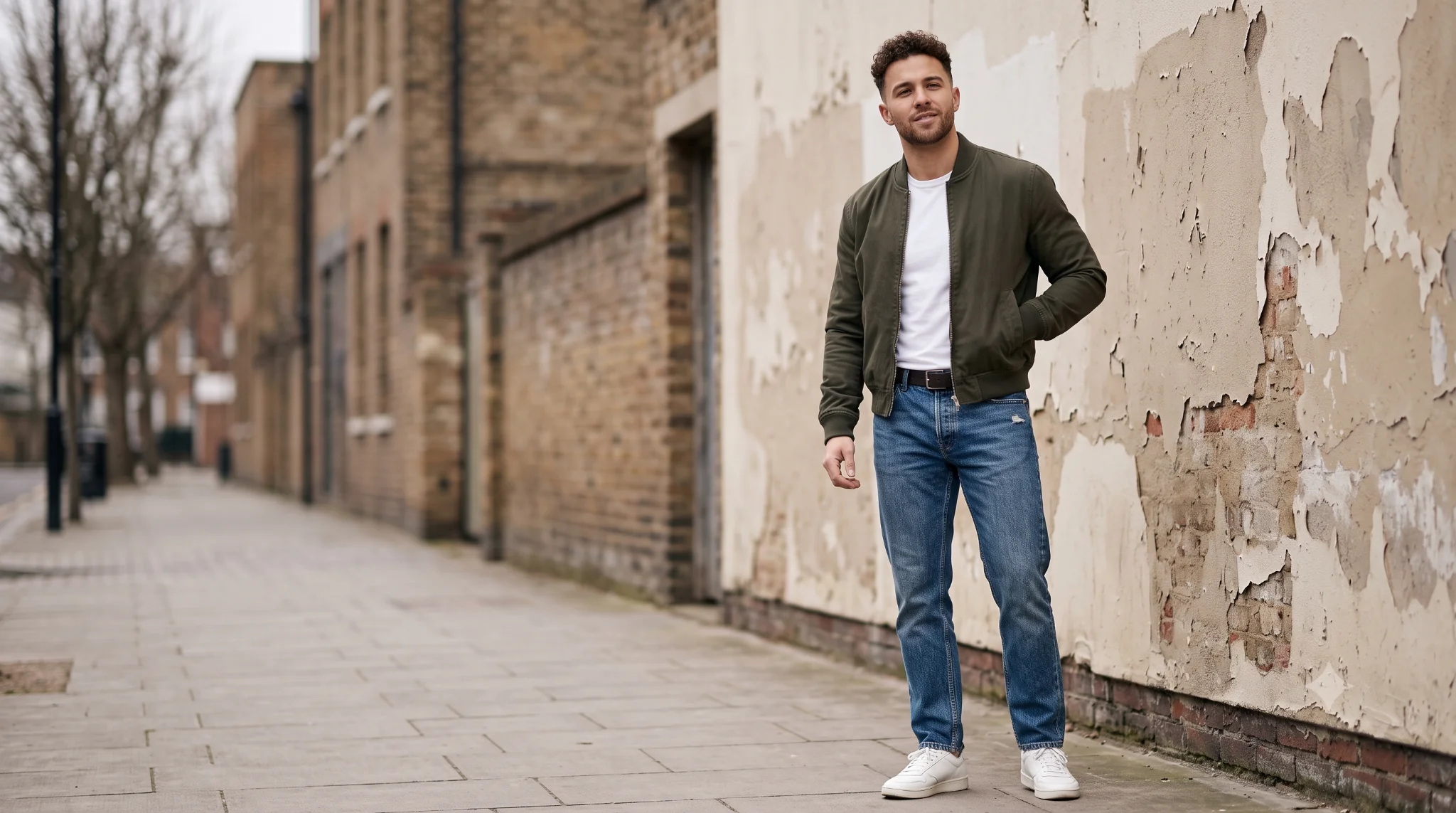
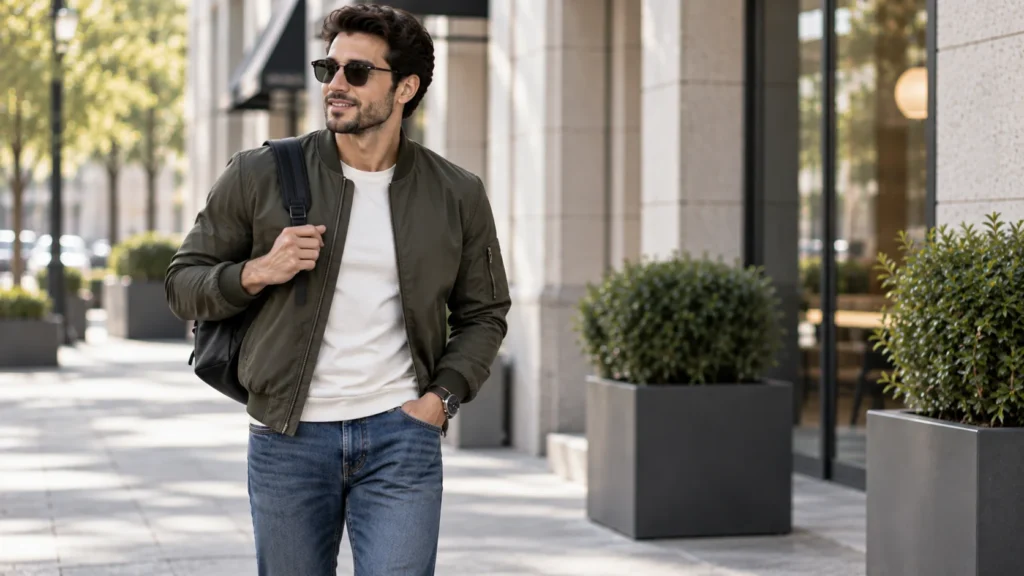
Its military origins are still visible in the basic architecture: cropped length, ribbed cuffs, and a ribbed hem that pulls the jacket back toward the body. Those details give the bomber its distinctive shape, and they remain just as effective when the fabric changes.
In 2026, bombers are appearing in everything from traditional nylon and leather to more technical fabrics designed to handle light weather without looking like outdoor equipment.
The cropped silhouette is important. A bomber works best when the ribbed hem actually defines the waist rather than hanging loosely around it. That closer fit is part of what separates it from a generic short jacket.
Styling is straightforward. A leather bomber with dark denim works for an evening out. A nylon version over a T-shirt feels more relaxed during the day.
For a relatively small wardrobe, the bomber earns its place because it can move between casual and smart-casual dressing without changing its basic character.
2. The Varsity Jacket
The varsity jacket brings a little more personality to an outfit.
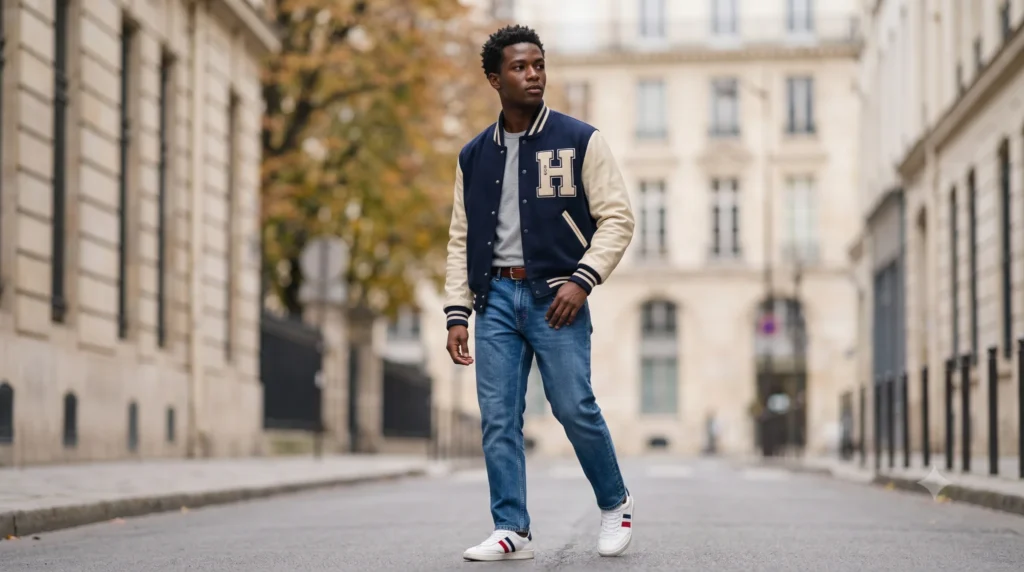
Its collegiate associations are obvious, but the better versions in 2026 don’t necessarily look like sports memorabilia. Wool bodies, leather sleeves, substantial ribbing, and richer materials give the jacket a more considered feel than the lightweight cotton versions often associated with traditional varsity styles.
The silhouette is another point of difference. Like the bomber, it usually has a close-fitting ribbed collar, cuffs, and hem, but the body tends to be boxier.
That makes it particularly easy to wear with straightforward basics. A white T-shirt, straight-leg jeans, and a varsity jacket are enough. There’s no need to add more visual noise.
It also layers well over a hoodie or knit when temperatures fall.
The varsity is a good choice when a standard bomber feels too predictable. It carries more attitude, but it doesn’t require the rest of the outfit to become equally expressive.
3. The Suede Jacket
Suede changes the conversation almost immediately.
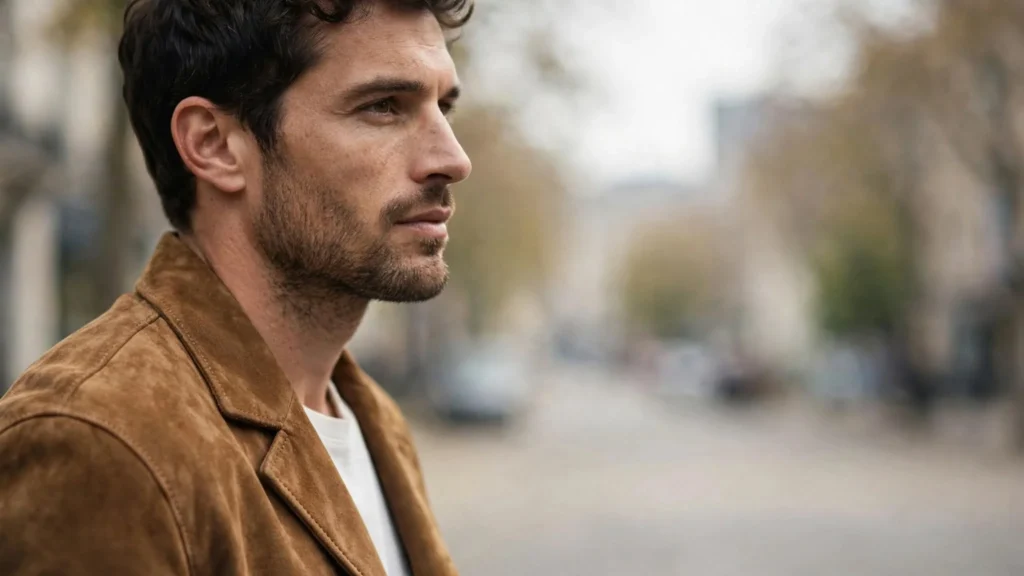
Where polished leather can feel sharp and slightly formal, suede has a softer, matte surface that gives the same basic jacket a more relaxed character. In 2026, that texture is showing up particularly often in bomber silhouettes and hybrid jackets that combine suede with leather panels or sleeves.
The appeal is largely tactile. Even a simple suede jacket has enough surface interest to make an otherwise quiet outfit feel considered.
It also has a useful range. Wear it with denim and a simple knit for a relaxed look, or put it over tailored trousers when you want something more refined without reaching for a traditional blazer.
There is, however, a trade-off.
Suede needs more care than standard leather and is more vulnerable to marking. That’s not necessarily a reason to avoid it, but it is something to accept before buying one. A suede jacket is not the piece to throw over a chair, ignore for months, and expect to look untouched.
For anyone who already owns the standard leather or nylon options, suede is an easy way to bring more texture into a jacket rotation.
4. The Technical Jacket
Technical jackets have changed considerably.
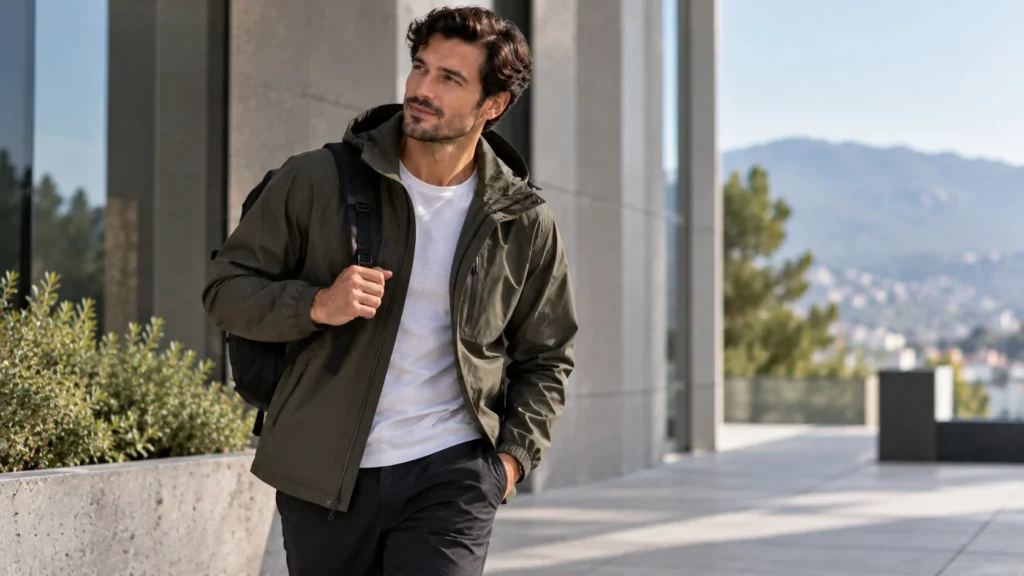
The most interesting versions no longer advertise their performance through oversized pockets, obvious hardware, or an unmistakably outdoor appearance. Instead, the technical features are increasingly hidden inside clean silhouettes.
Water resistance and wind protection can now sit beneath fabrics that resemble traditional wool or cotton, allowing the jacket to look appropriate in places where overt outdoor gear would feel out of place.
That’s where the modern technical jacket becomes genuinely useful.
Wear one over a dress shirt for a work commute or layer it over a lightweight knit for a casual day. The jacket handles wind and light rain while remaining visually restrained.
For commuters and travelers, that combination of practicality and understatement is difficult to beat. You don’t have to choose between weather protection and looking like you’re dressed for the trail.
The best technical jackets almost disappear into the outfit. Their usefulness is something you notice rather than something everyone else notices.
5. The Shearling Jacket
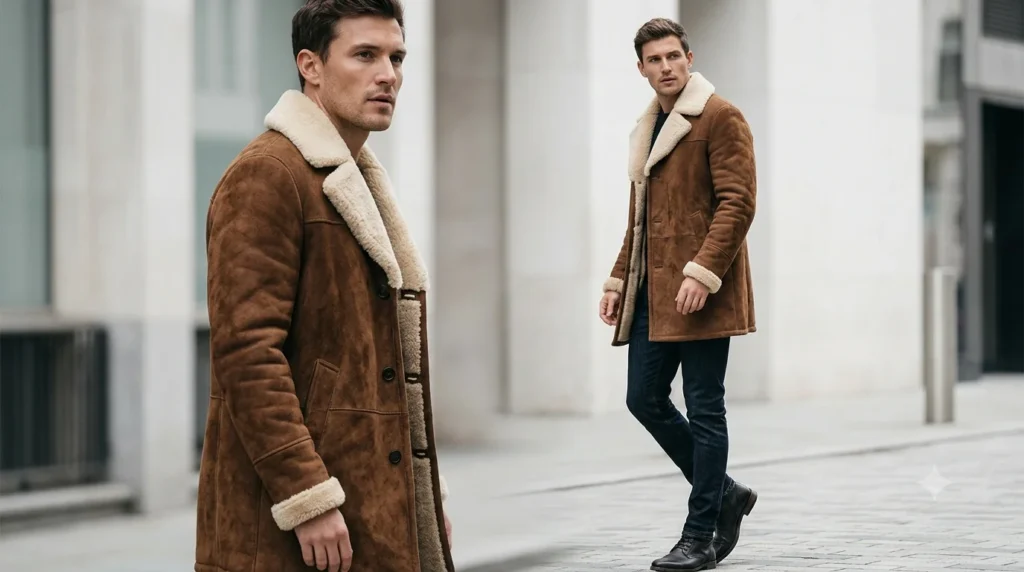
Shearling doesn’t need much introduction.
The material itself is the statement. Genuine shearling uses sheepskin with the fleece left intact, creating the distinctive texture and warmth that have made it a recurring feature of winter outerwear.
In 2026, shearling appears in several forms. There are substantial shearling coats for genuinely cold conditions, along with leather jackets that use shearling collars or trim for a lighter interpretation.
The difference is significant.
A full shearling coat has presence and can easily dominate an outfit. That’s not necessarily a problem. In fact, it works best when the rest of the clothes are relatively quiet. A simple sweater and trousers give the material enough space to stand out.
A shearling-trimmed leather jacket is easier to integrate into an everyday wardrobe and offers some of the same visual richness without the same level of bulk.
Either way, this is not a background jacket. Shearling naturally becomes the focal point, so there’s little need to compete with it.
6. The Aviator Jacket
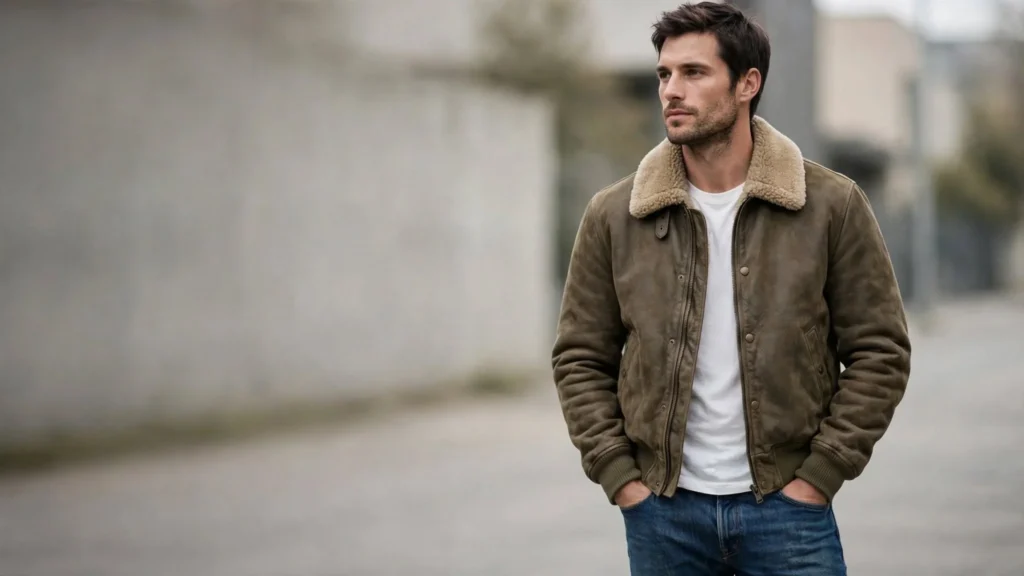
The aviator jacket is having another moment, but the 2026 version is less interested in reproducing a vintage flight jacket exactly as it was.
Traditional aviators were often broad and boxy. Contemporary versions tend to sit closer to the body, giving the silhouette a sharper shape and making it easier to work into an everyday wardrobe.
Brown leather remains the classic choice, particularly when combined with a shearling collar. That contrast between the smooth leather body and textured collar is what gives the aviator much of its identity.
The styling almost writes itself: denim, boots, and a simple knit or T-shirt.
There’s no need to add more heritage references. The jacket already carries plenty of history.
That’s also the reason proportion matters. A very bulky aviator can quickly become costume-like, while a cleaner, more fitted version retains the character without overwhelming the wearer.
For men who like heritage clothing but want something that feels current, the aviator sits in a useful middle ground.
7. The Puffer Jacket
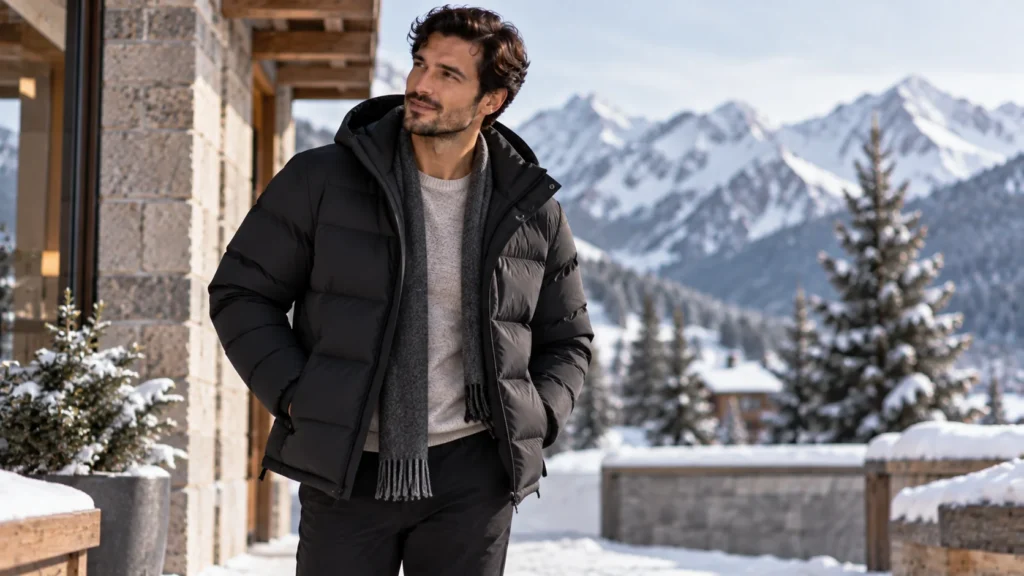
The puffer has spent years being treated primarily as a practical answer to cold weather. That distinction is becoming less useful.
Modern puffers are being cut more cleanly, with shorter and more streamlined versions appearing alongside the traditional longer silhouettes. Quilting remains central to the design, but the overall shape is less likely to overwhelm everything underneath it.
That change matters.
Older, bulkier puffers could easily become the dominant feature of an outfit simply because of their volume. A slimmer or cropped version leaves more room for the rest of the clothes to have a role.
A cropped puffer works particularly well with higher-waisted trousers, where the shorter length creates a deliberate break between the jacket and the lower half of the outfit. Longer versions make more sense with relaxed layers underneath.
For genuinely cold conditions, practicality still comes first. A jacket that looks good but doesn’t provide enough warmth isn’t much of a success.
The modern puffer simply makes that practical choice easier to integrate into a considered wardrobe.
8. The Barn or Chore Jacket
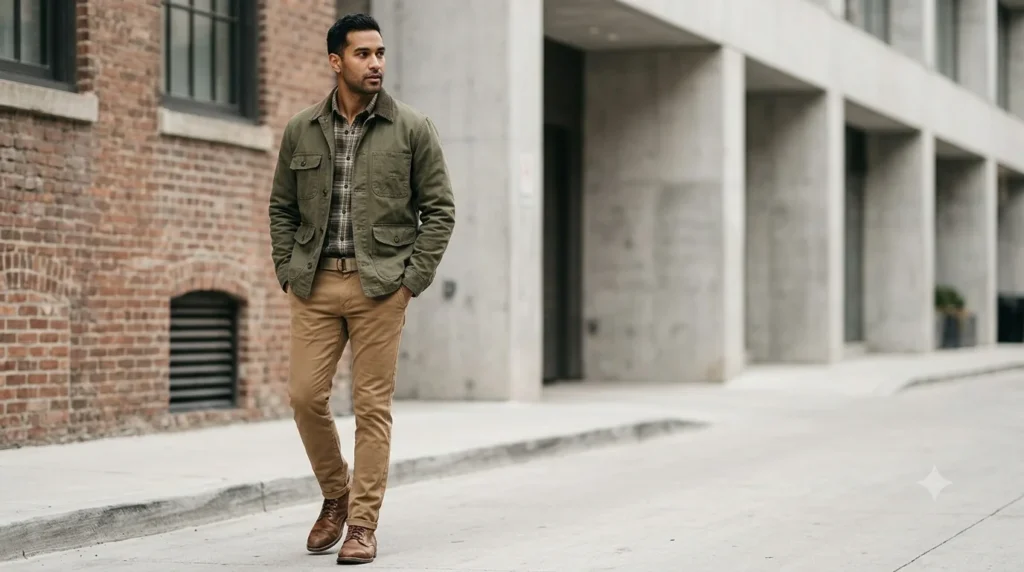
The barn jacket brings workwear history into a surprisingly versatile modern silhouette.
Its defining features are familiar: a corduroy collar, substantial patch pockets, and a mid-length body. Those details were originally functional. The pockets were designed for carrying tools, while the collar provided durability. Today, they’ve become part of the jacket’s visual identity.
What’s changed is how the jacket is being worn.
Instead of leaning heavily into rugged styling with distressed denim and worn-in boots, current versions can be paired with chinos and clean sneakers. The result is quieter and more contemporary while retaining the practical character of the original.
That’s part of what has broadened its appeal.
The barn jacket can sit comfortably over a T-shirt or knit for a weekend, but it can also work with cleaner trousers when you want something slightly more considered.
And the deep pockets aren’t decorative. They remain genuinely useful, which is a rare quality in fashion.
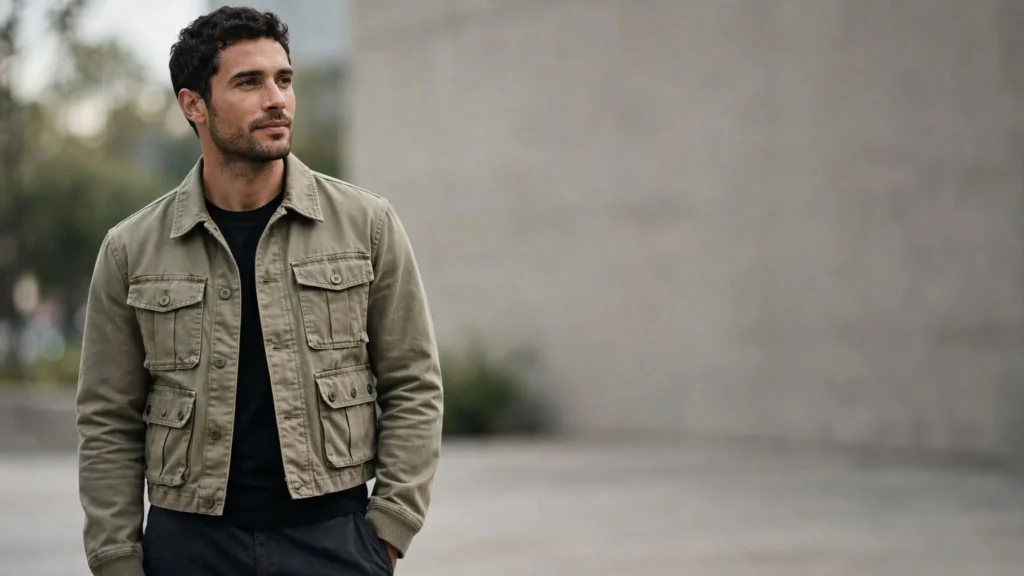
9. The Cropped Utility Jacket
The cropped utility jacket takes the sturdy construction of workwear and changes the proportions.
Traditional utility jackets tend to be longer and relatively loose. The cropped version cuts the length and often introduces a boxier, more deliberate shape. Heavy cotton duck and rubberized fabrics reinforce the practical character.
The shorter length changes everything underneath it.
Rather than automatically pairing this jacket with loose trousers, try a cleaner lower half. High-waisted or straight-leg trousers give the cropped jacket enough space to establish its shape without creating too much volume through the entire outfit.
That’s what makes this style interesting. It retains the toughness of workwear while fitting more naturally into a modern, considered wardrobe.
The heavier fabrics also tend to hold their shape well, which is useful for a jacket intended to be worn repeatedly.
For transitional weather, it fills a useful gap. It’s more substantial than a light shirt jacket but nowhere near as heavy as proper winter outerwear.
10. The Soft-Tailored Blazer
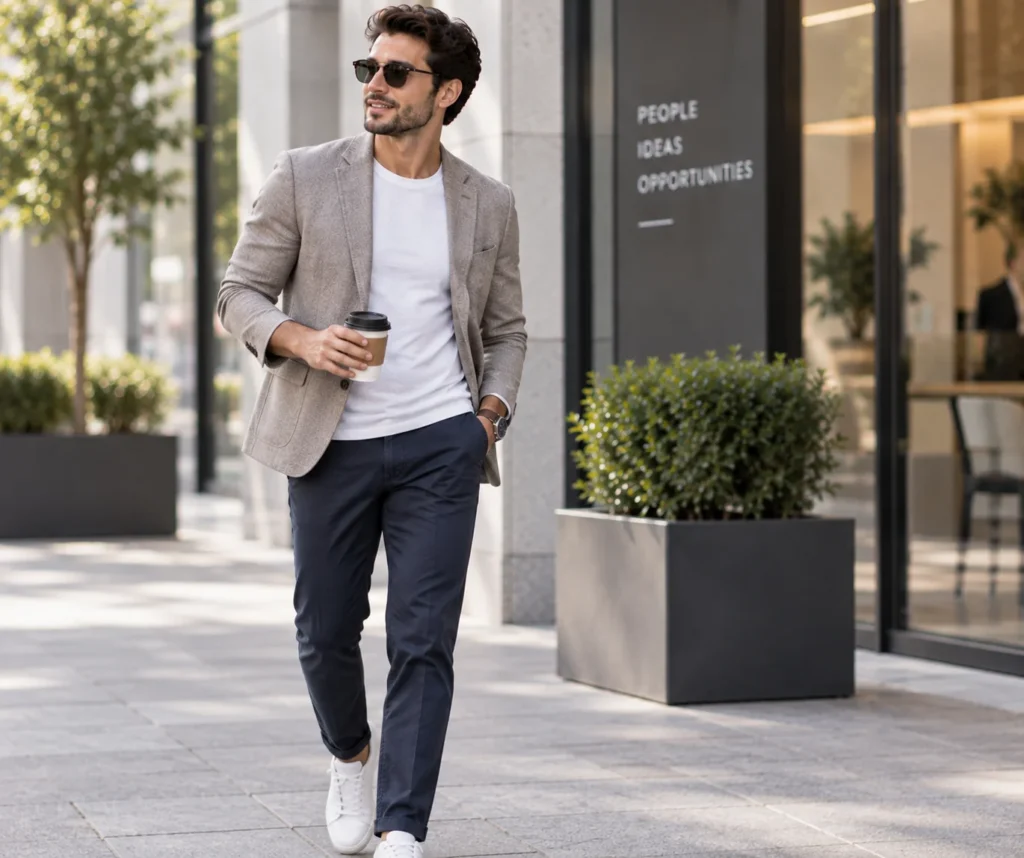
The soft-tailored blazer is perhaps the clearest example of how the boundary between tailoring and casualwear continues to blur.
Unlike a traditional blazer, it isn’t built around stiff shoulders, rigid construction, or heavily structured lapels. The lighter construction gives it the ease of a jacket while preserving enough tailoring to make it feel elevated.
Details can push it in different directions. Patch pockets, softer shoulders, textured fabrics, and workwear-inspired elements make it feel less corporate than conventional tailoring.
That’s what gives the soft-tailored blazer its range.
Wear it with tailored trousers when you want a smart-casual look. Put it over a T-shirt and jeans and the same jacket becomes considerably more relaxed.
The trick is not to treat it like a suit jacket that happens to be missing its matching trousers. Its appeal comes from the fact that it can exist comfortably between formal tailoring and casual outerwear.
For 2026, that flexibility makes it one of the more useful jacket styles to have around.
Frequently Asked Questions
What is the most versatile men’s jacket to own?
The bomber is one of the easiest places to start because its cropped silhouette works naturally with casual clothing and can be dressed up slightly depending on the fabric.
A technical jacket is another practical option, particularly if you regularly deal with unpredictable weather. Clean construction allows it to work with more polished clothing without looking like outdoor gear.
How many jackets does a man actually need in his wardrobe?
There isn’t a fixed number.
For a relatively small wardrobe, two jackets can cover a lot of ground: one practical option for everyday wear and changing weather, and one more polished piece for situations where you want a sharper silhouette.
After that, climate, lifestyle, and personal taste matter more than any specific number. Someone living somewhere cold will naturally need different outerwear from someone in a warm climate.
What’s the difference between a bomber and a varsity jacket?
Both usually have ribbed collars, cuffs, and hems, but the silhouettes are different.
A bomber tends to have a closer, more streamlined body and is commonly made from nylon or leather. A varsity jacket generally has a boxier body and often combines a wool body with leather sleeves, giving it a more collegiate and sporty character.
Are technical jackets appropriate for smart-casual settings?
Many are.
The cleaner technical jackets are designed specifically to hide their performance features, making them much easier to wear outside traditional outdoor settings. A simple knit or collared shirt underneath usually works better than sportswear if you’re taking the jacket into a smart-casual environment.
The less visible the technical hardware, the easier the jacket is to integrate into a polished outfit.
Building a Jacket Wardrobe That Works
A good jacket wardrobe doesn’t need to contain every silhouette on this list.
It needs to cover the situations you actually encounter.
For everyday weather, a clean technical jacket can be invaluable. For evenings and smarter occasions, a soft-tailored blazer or suede jacket gives you a different level of polish. A bomber handles the space between the two. If you live somewhere genuinely cold, a puffer or shearling jacket has a more obvious practical role.
Then there are the pieces you buy because they give a wardrobe some personality. A varsity jacket, aviator, barn jacket, or cropped utility jacket can do that without requiring the entire outfit to follow the same aesthetic.
That’s perhaps the most useful way to approach men’s jacket styles in 2026. Don’t chase every new silhouette. Look for the combination of proportion, fabric, function, and character that actually suits the way you dress.
Technical fabrics have made performance clothing easier to wear in everyday settings, while heritage jackets continue to offer the kind of personality that trend-driven pieces often lack.
A small, well-chosen outerwear rotation will usually serve you better than a closet full of jackets you only wear because they’re currently fashionable.
For a broader look at the direction of men’s style this year, explore our Men’s Fashion Trends 2026 guide. You can also see how different jacket silhouettes work with footwear in our Men’s Shoes guide.