Men’s dress shoes aren’t being replaced by sneakers in 2026. The more interesting change is happening inside the classics.
Oxfords, Derbies, loafers, boots, and other traditional silhouettes are being built with more attention to comfort. Cushioned soles, lighter construction, and greater flexibility are making their way into shoes that still look unmistakably dressy.
That matters because a good pair of dress shoes has to do more than look sharp for the first hour. For anyone commuting, working long days, traveling for business, or moving between meetings and dinners, comfort eventually becomes part of the equation.
The result is a broader range of men’s dress shoes that can cover everything from formal events to relaxed weekends. Some are genuinely formal. Others are deliberately positioned somewhere between tailored clothing and casualwear.
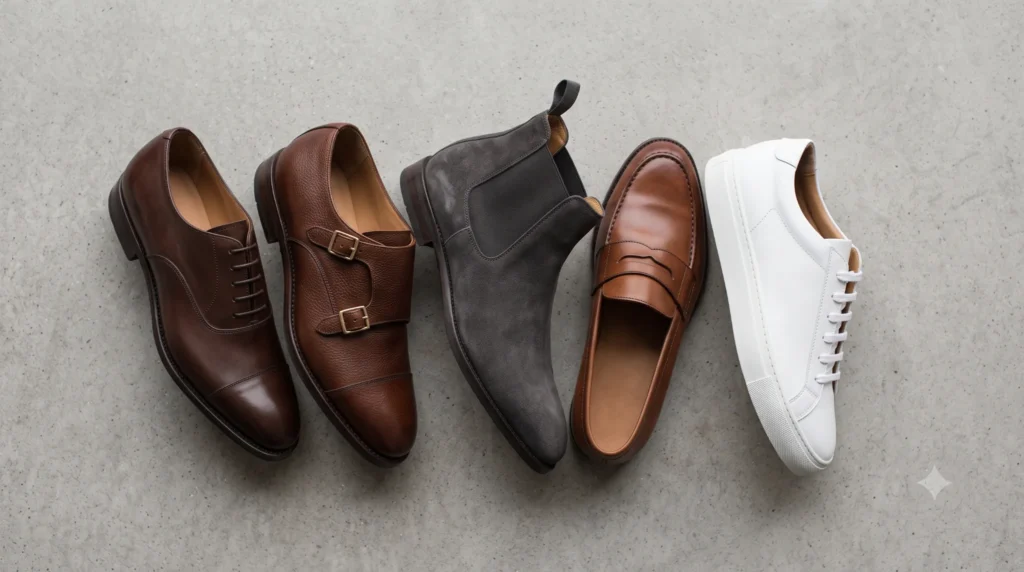
Here are ten styles worth knowing in 2026, along with where each one fits best.
1. Oxford Shoes
If one shoe represents formal men’s footwear, it’s the Oxford.
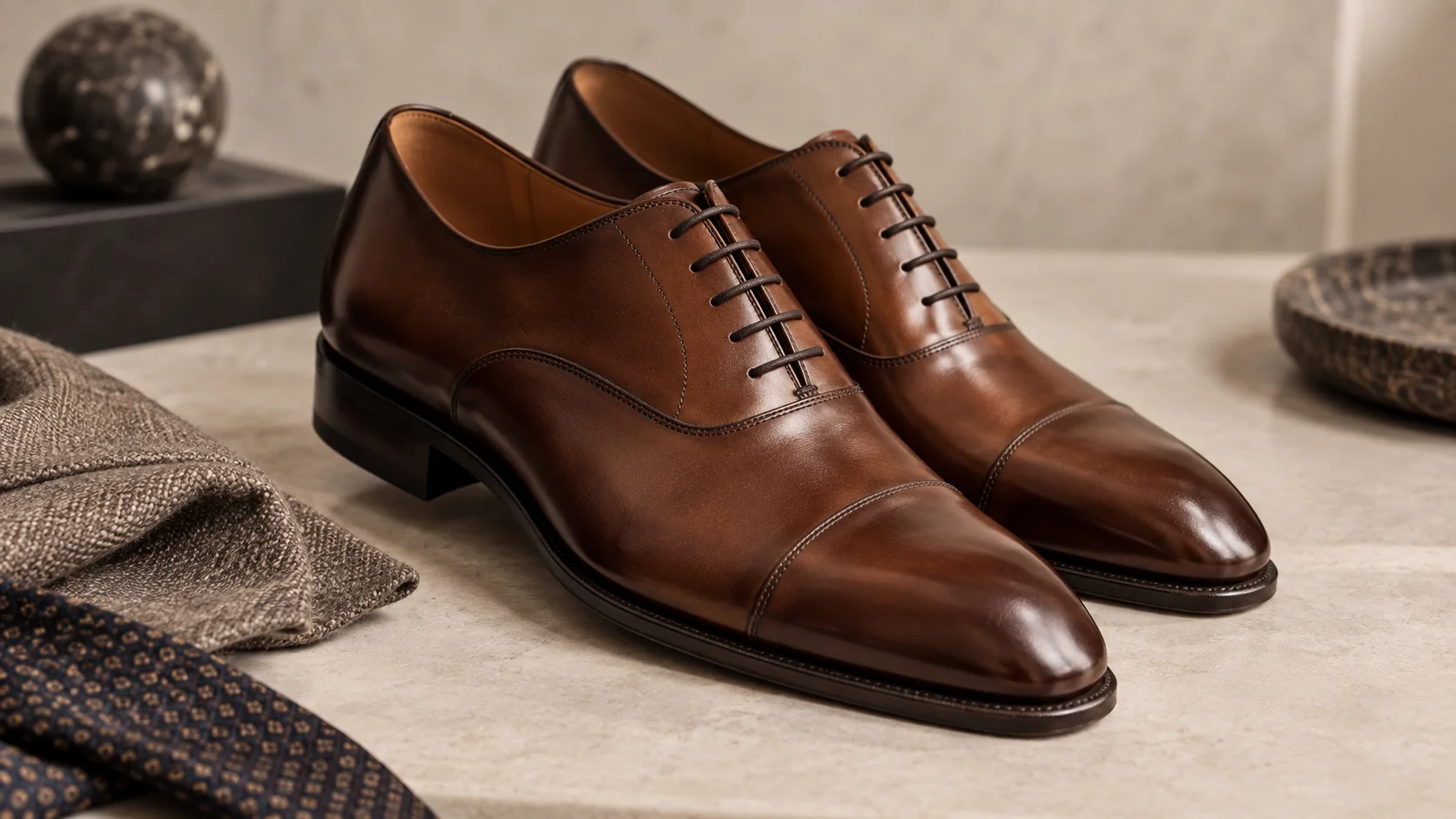
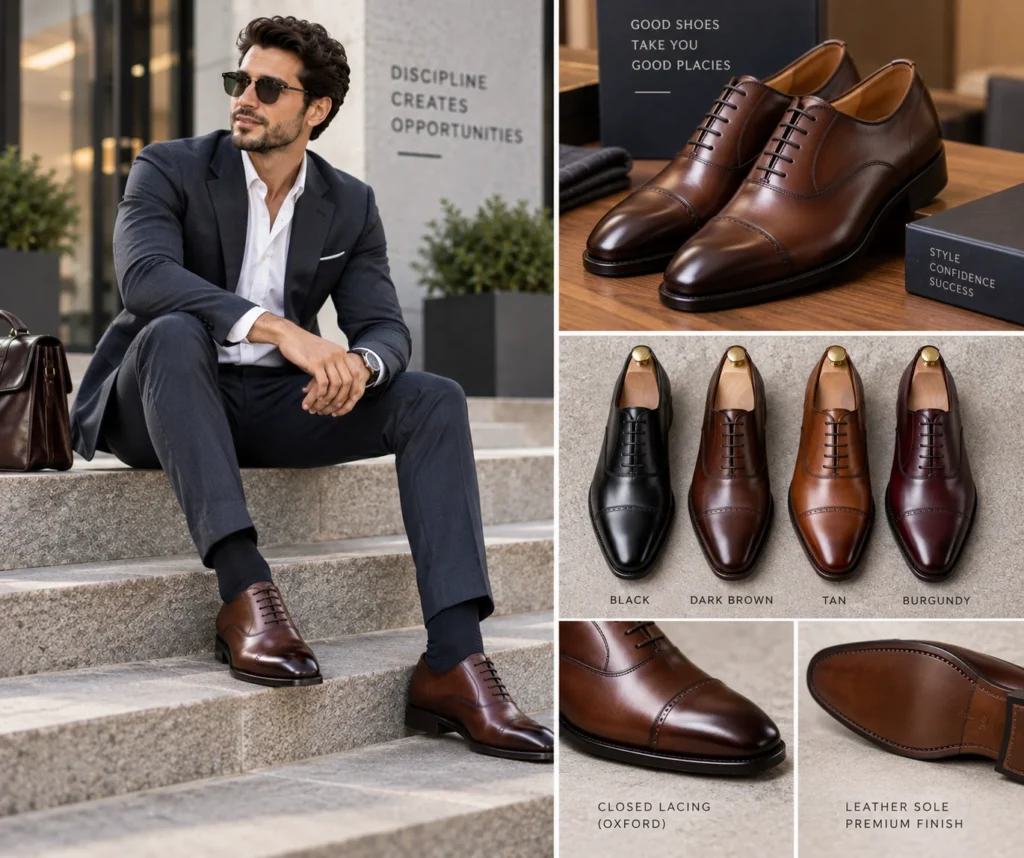
The defining detail is the closed-lacing construction. The eyelet facings are stitched beneath the vamp rather than sitting on top of it, creating the clean, uninterrupted appearance that gives the Oxford its formal character.
It’s a small construction detail with a noticeable effect. Oxfords generally look sleeker than other lace-up dress shoes, which is why they’ve remained a foundation of formal wardrobes for generations.
Black leather is the obvious choice for the most formal occasions. Weddings, evening events, business functions, and situations involving a suit and tie are where a polished black Oxford makes the most sense.
Deep brown gives you more room to move. It works with business suits and less formal tailoring while retaining much of the Oxford’s refined character.
An Oxford isn’t the shoe you reach for when the dress code is casual. That’s precisely why it’s useful. When the occasion demands your sharpest footwear, few styles make the message clearer.
A well-maintained pair can also remain relevant for years, making the Oxford a sensible foundation for a serious shoe collection.
2. Derby Shoes
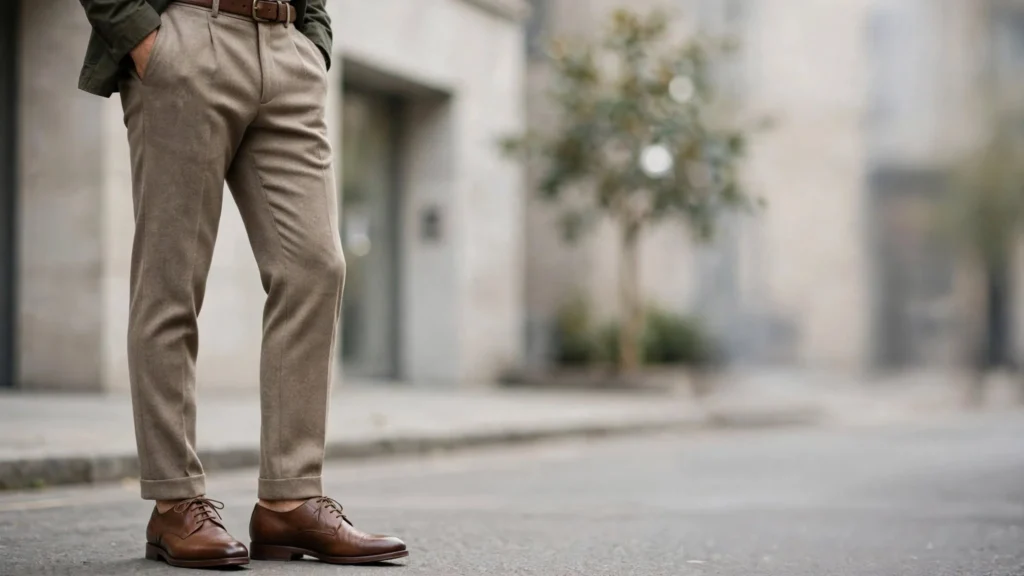
The Derby looks similar to an Oxford at first glance, but the construction tells a different story.
Its lacing is open, with the eyelet facings sewn on top of the vamp rather than underneath it. That gives the shoe a slightly more relaxed appearance and allows the upper to open further across the foot.
The difference isn’t purely visual.
For some feet, the additional adjustability makes a Derby more accommodating than an Oxford. That practical quality is one reason it works so well as an everyday office shoe.
Brown and burgundy are particularly useful colors because they work with a broad range of professional clothing without carrying the same level of formality as black.
If an Oxford is the shoe you save for the most formal occasions, a Derby is the one that can comfortably become part of the working week.
It’s polished enough for the office but doesn’t feel excessive when worn regularly.
For someone buying a first pair of formal shoes and looking for something adaptable, a well-made brown Derby covers a lot of ground.
3. Penny Loafers
Penny loafers take almost everything people associate with dress shoes and remove the laces.
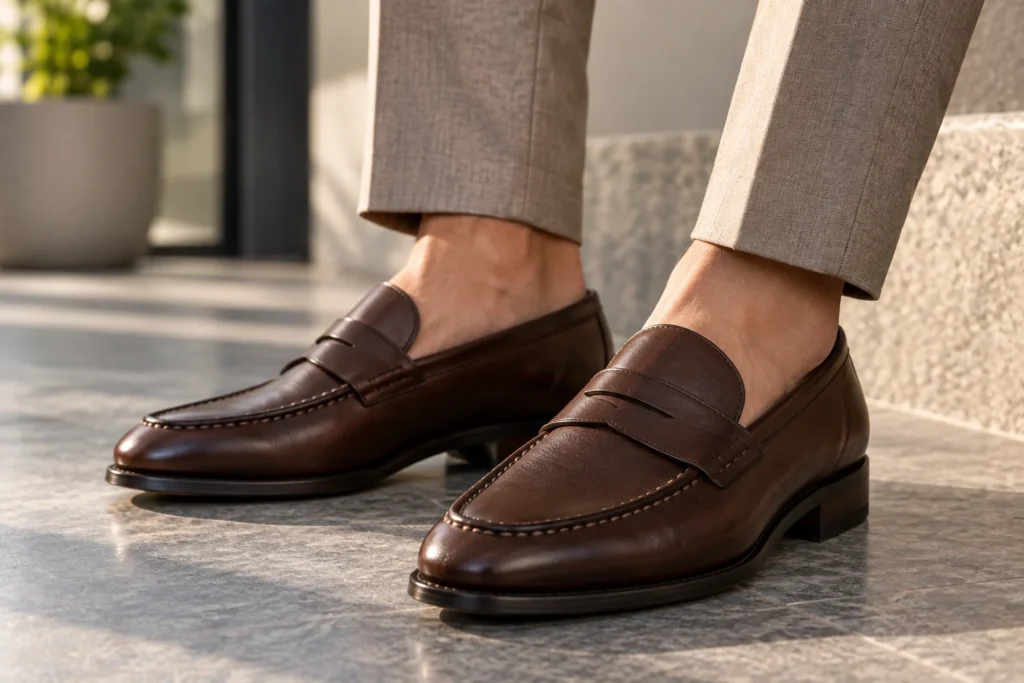
The defining strap across the vamp gives the shoe its familiar shape, along with the small slot that inspired its name. But the real reason the penny loafer has lasted is its position between formal and casual dressing.
With a suit, it looks relaxed compared with an Oxford or Derby. With chinos or dark denim, it becomes a natural smart-casual shoe.
That range makes the loafer unusually useful.
It’s also one of the few dressier shoes you can slip on without changing the entire character of an outfit. A client dinner, an office day, or a weekend evening can all accommodate the same pair, depending on the rest of the clothing.
There are more formal shoes. There are more casual shoes. The penny loafer occupies the useful space between them.
For a growing shoe collection, that’s a difficult quality to overlook.
4. Monk Strap Shoes
Monk straps make their presence known without relying on laces.
Instead, the shoe closes with a strap and buckle across the vamp. Single monks use one strap, while double monks use two, creating a more pronounced visual detail.
The buckle is the attraction. It gives the shoe a slightly architectural quality that immediately separates it from a conventional Oxford or Derby.
That’s why monk straps tend to appeal to men who want their formal footwear to have a little more personality. They remain rooted in traditional leather footwear, but they aren’t as expected as a plain lace-up shoe.
Double monks make the statement more obvious. Single monks are a quieter interpretation.
They’re not necessarily the first pair to buy. If your wardrobe still needs an Oxford, Derby, or loafer, those basics will generally cover more situations. Once those foundations are in place, however, a monk strap can add some welcome variation.
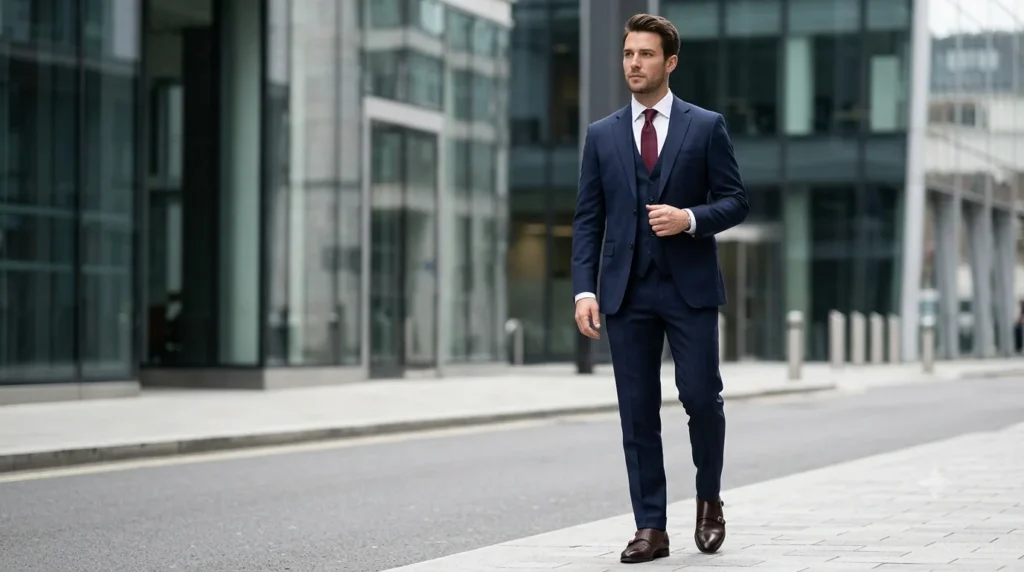
5. Chelsea Boots
The Chelsea boot has one of the cleanest silhouettes in men’s footwear.
It’s ankle-high, usually streamlined, and defined by elastic side panels that allow it to be pulled on without laces or buckles. There isn’t much decoration, which is exactly why the shape works so well.
Its real strength is range.
With a suit, a sleek Chelsea boot can provide a contemporary alternative to traditional lace-up dress shoes, particularly in a business environment that isn’t extremely formal. With jeans, the same boot moves naturally into evening and weekend dressing.
That ability to cross between categories makes it one of the more useful men’s boots to own.
A Chelsea doesn’t need much styling either. Its clean profile does most of the work. The better the fit and proportions, the less you need to add around it.
For men who want one boot that can handle both professional and casual settings, it’s difficult to ignore.
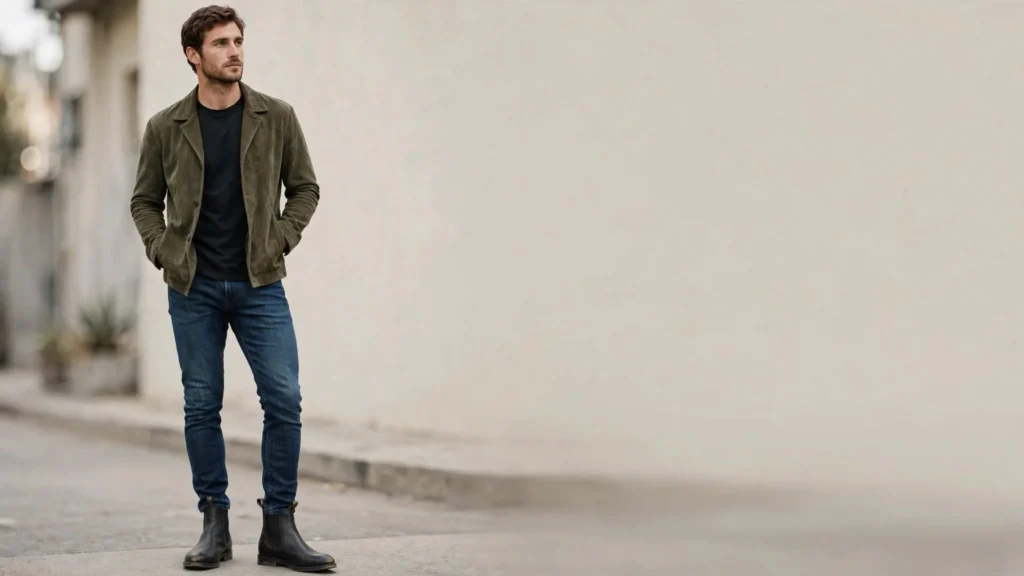
6. Brogues and Wingtips
Brogues are for men who find completely plain dress shoes a little too quiet.
Their defining feature is decorative perforation. Those punched holes originally had a practical purpose, helping water escape from shoes used in wet conditions. Today, the perforations are purely decorative, but they remain one of the easiest ways to give a traditional leather shoe more character.
Wingtips take that idea further. They’re a type of brogue with a wing-shaped toe cap that extends along the sides of the shoe.
Not all brogues are equally busy. Some feature extensive perforation, while semi-brogues use the detailing more sparingly.
That range makes them useful. A heavily detailed brogue can become a strong visual element, while a restrained version can add just enough interest to an otherwise conservative outfit.
They’re particularly useful for business and semi-formal settings where a plain Oxford or Derby feels too predictable but something more unconventional would be out of place.
The detailing changes the mood without changing the basic language of the shoe.
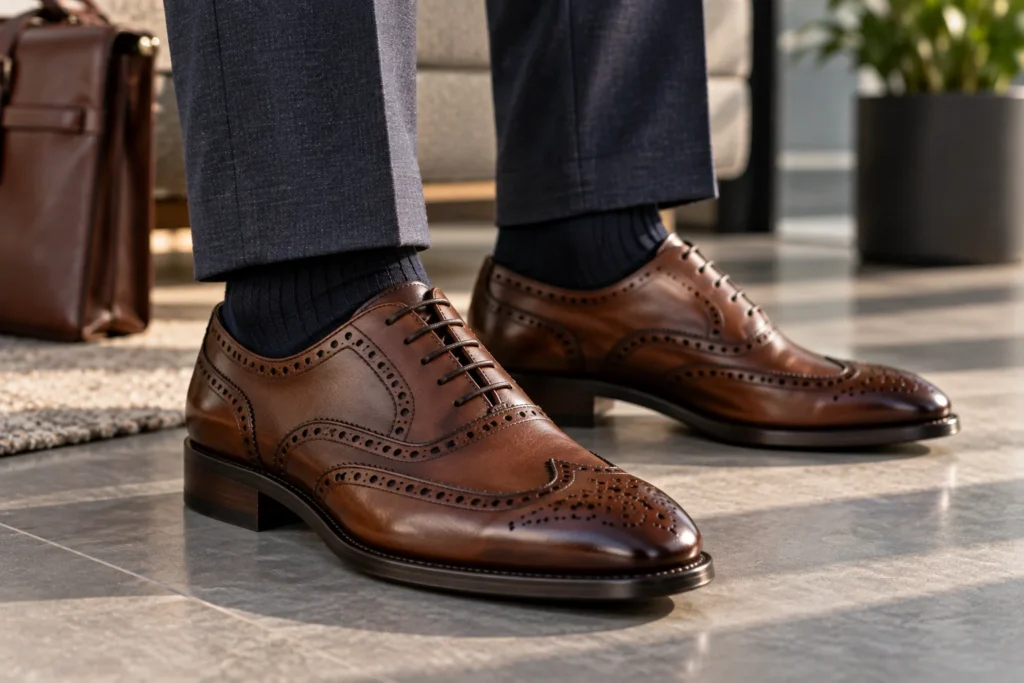
7. Desert Boots
Desert boots were never designed to be formal shoes, and that’s exactly why they’re useful.
Their roots lie in military footwear designed for warm climates. Traditional versions typically use suede, a low ankle profile, and a simple crepe or rubber sole.
The result is lightweight, comfortable footwear that sits naturally between casual and smart-casual dressing.
A desert boot won’t replace an Oxford at a formal event. It shouldn’t. But with chinos, textured trousers, or dark denim, it provides a cleaner alternative to sneakers without pretending to be a dress shoe.
They’re particularly useful for travel and warmer weather, where heavy boots can feel excessive.
In a wardrobe that already has formal shoes covered, desert boots fill a different role. They give you a polished casual option without pushing the outfit too far toward tailoring.
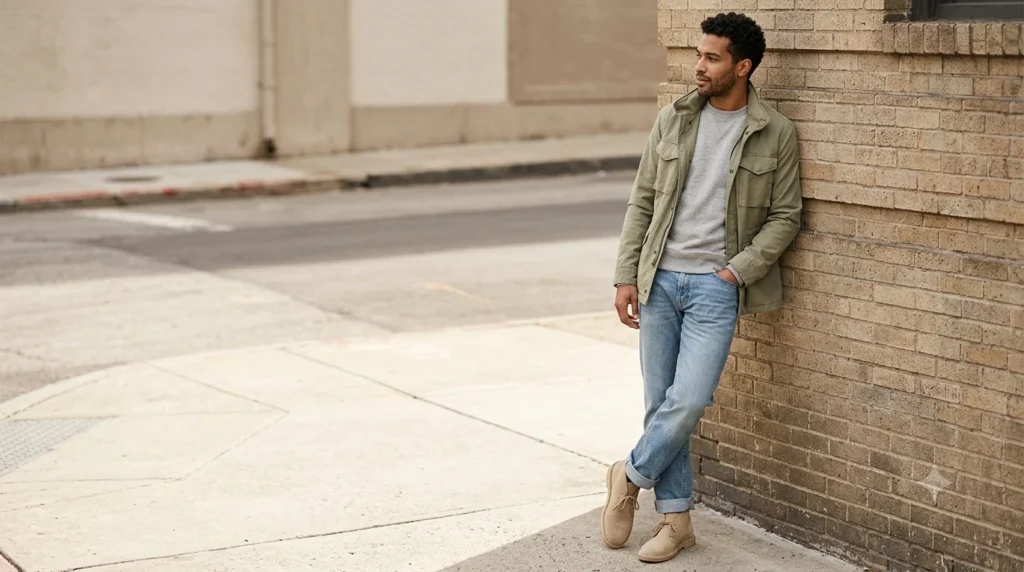
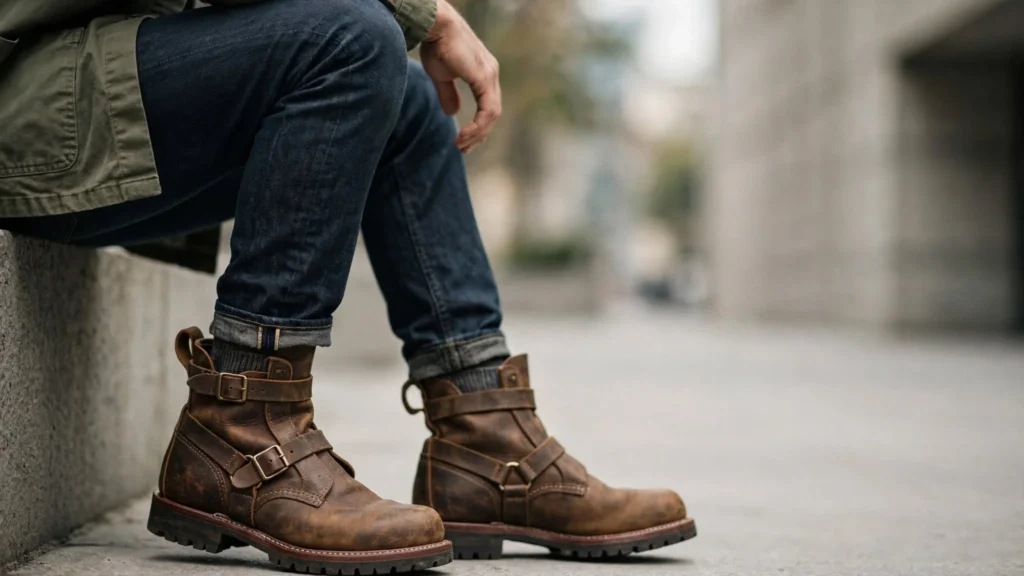
8. Engineer Boots
Engineer boots bring considerably more attitude to a shoe collection.
Originally designed for railroad workers, these pull-on boots are recognizable by their ankle and shin straps, buckles, rugged leather construction, and substantial soles.
They’re not subtle.
That’s part of the appeal.
Engineer boots fit naturally with workwear-inspired clothing: raw denim, flannel, heavier jackets, and other pieces with a similarly rugged character. The boots themselves can become the strongest element of the outfit, so the rest of the clothing doesn’t need to compete.
They also belong firmly in casual territory. This isn’t a replacement for a Chelsea boot at the office or a formal leather shoe at a wedding.
Instead, engineer boots offer something different: heritage character, substantial construction, and a stronger visual presence than most polished boots.
For men interested in expanding beyond conventional dress footwear, that difference is the point.
9. Boat Shoes
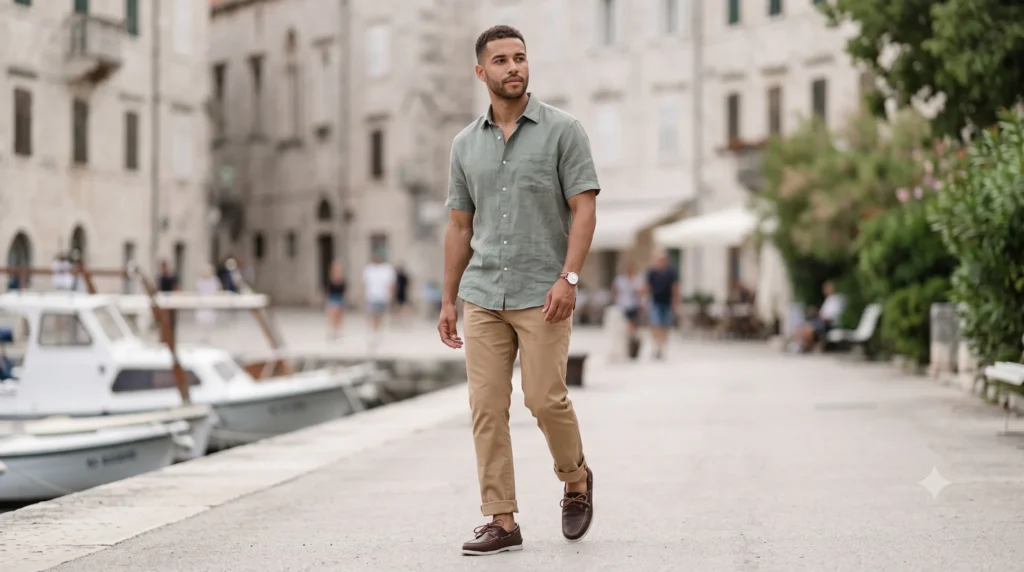
Boat shoes have one of the clearest functional origins in men’s footwear.
They were designed for sailors who needed reliable grip on wet decks, which explains the non-marking rubber soles, siping for traction, and moisture-resistant leather. The lacing across the front became part of the familiar visual identity along the way.
Today, they’re firmly associated with warm-weather dressing.
Boat shoes work naturally with rolled chinos, linen trousers, and shorts in relaxed settings. They’re particularly at home on vacations, around coastal environments, or anywhere the dress code is informal and the weather is warm.
Trying to turn them into formal shoes misses the point.
Their appeal is their easy, breezy character. They’re a casual counterpart to the more polished footwear elsewhere in this list, not a substitute for it.
For men who divide their wardrobe between office shoes and relaxed summer footwear, boat shoes can fill that casual role particularly well.
10. Hybrid Dress Shoes
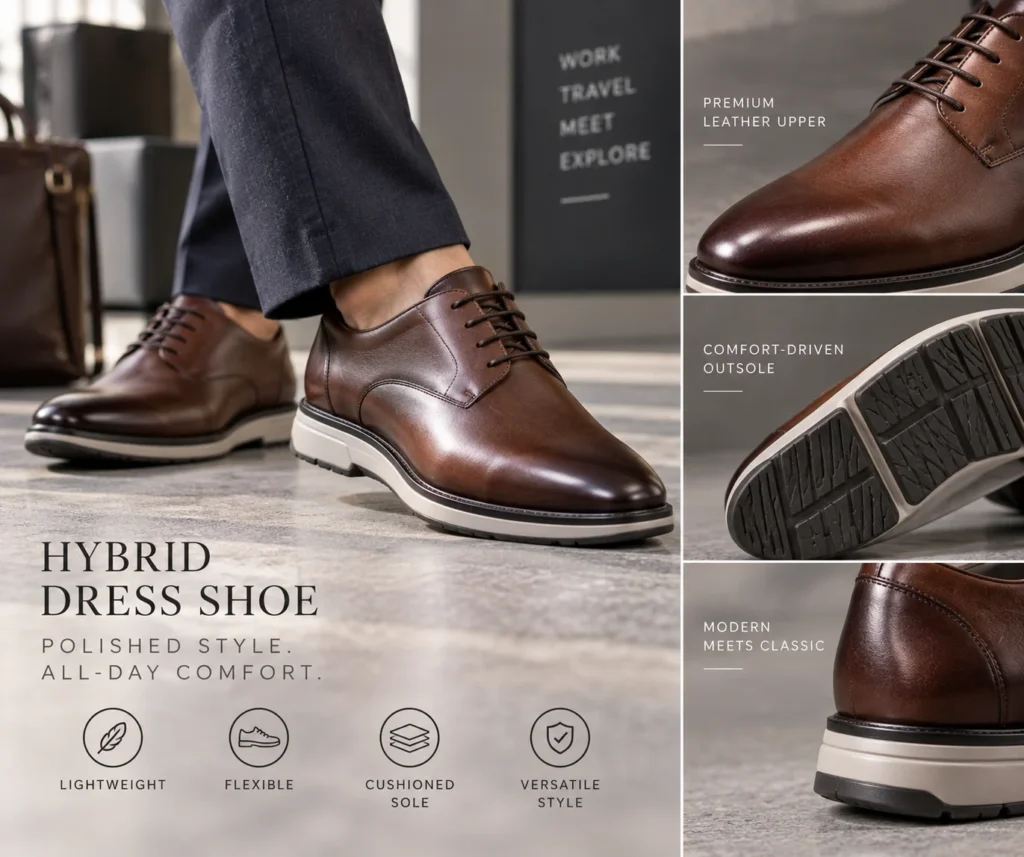
Hybrid dress shoes may be the clearest sign of where men’s formal footwear is heading.
The idea isn’t to abandon the traditional appearance of a dress shoe. Instead, the leather upper retains the familiar shape of an Oxford, Derby, or loafer while the sole becomes lighter, softer, and more cushioned.
That change makes sense for modern working life.
A man commuting to work, spending hours on his feet, moving between meetings, and then traveling home doesn’t necessarily want to spend the entire day standing on a rigid traditional sole.
Hybrid construction addresses that problem without dramatically changing the appearance of the shoe.
The result is footwear that can still look appropriate with professional or dressier clothing while reducing some of the discomfort associated with traditional construction.
It doesn’t make every formal shoe obsolete. There are occasions where the construction and appearance of a traditional Oxford or Derby are exactly what the outfit requires.
But for everyday professional life, especially when long hours and commuting are part of the routine, a good hybrid dress shoe can make a compelling case for itself.
Frequently Asked Questions
What’s the difference between Oxford and Derby shoes?
The main difference is the lacing construction.
Oxfords use closed lacing, with the eyelet facings stitched underneath the vamp. This creates the sleek, formal appearance associated with the style.
Derbies use open lacing, with the facings attached on top of the vamp. The result is slightly more relaxed visually and can also provide more room for adjustment across the foot.
Which men’s dress shoes are most versatile for everyday wear?
Derbies and penny loafers are particularly adaptable because both can work with office clothing while still making sense with less formal outfits.
Chelsea boots are another strong option if you want footwear that can move between professional and casual settings without requiring a complete change of style.
The most useful choice ultimately depends on how formal your everyday wardrobe is.
Can Chelsea boots be worn with a suit?
Yes. A sleek Chelsea boot can work well with a suit, particularly in business settings that aren’t extremely formal.
Its clean, minimal shape allows it to sit comfortably alongside tailoring while giving the outfit a slightly more contemporary feel than a traditional lace-up dress shoe.
For black-tie events or highly formal occasions, however, a classic formal shoe remains the more conventional choice.
How often should leather dress shoes be resoled or maintained?
There isn’t a universal schedule because wear varies considerably.
Shoes worn several times a week and exposed to wet conditions will generally need more attention than a pair reserved for occasional events. Regular conditioning and appropriate maintenance can help preserve the leather, while resoling can extend the life of shoes with suitable construction.
Rotating between several pairs also gives each pair time to rest and can reduce the wear placed on any single shoe.
Are hybrid dress shoes as formal as traditional dress shoes?
They can maintain a similarly formal appearance because the upper often retains the leather construction and classic silhouette of traditional dress shoes.
The main difference is underneath. Hybrid shoes use lighter and more cushioned sole construction, prioritizing comfort without necessarily changing the overall appearance enough to make the shoe look casual.
For the most formal settings, a traditional Oxford or similarly formal shoe may still make more sense. For everyday professional wear, hybrids can be a practical alternative.
Building a Shoe Collection That Actually Works
You don’t need ten different types of shoes to cover a wardrobe.
A good starting point is much simpler: one genuinely formal pair, one versatile everyday option, and one boot that can handle the space between work and casual dressing.
That might mean a black Oxford for formal occasions, a brown Derby or penny loafer for the office, and a Chelsea boot for days when you want something slightly more relaxed.
From there, the additions should reflect your actual life.
A monk strap makes sense if you enjoy more distinctive formal footwear. Brogues add detail without abandoning tradition. Desert boots cover smart-casual territory, while engineer boots offer a much more rugged alternative. Boat shoes make sense if warm-weather and resort dressing are regular parts of your wardrobe.
The bigger shift in 2026 isn’t that men’s dress shoes are suddenly becoming casual. It’s that comfort is becoming harder to ignore.
Classic silhouettes are still here. They’re simply being built with more flexibility, lighter soles, and better cushioning than many traditional versions offered.
That’s a useful development. A good shoe should look right for the occasion, but it should also survive the reality of wearing it for hours.
The best additions to a shoe collection are therefore rarely the ones that simply look impressive in a photograph. They’re the pairs you’ll actually reach for, maintain, and wear for years.
For the rest of your footwear rotation, explore our guides to Men’s Sneakers and Business Casual Outfit Ideas.