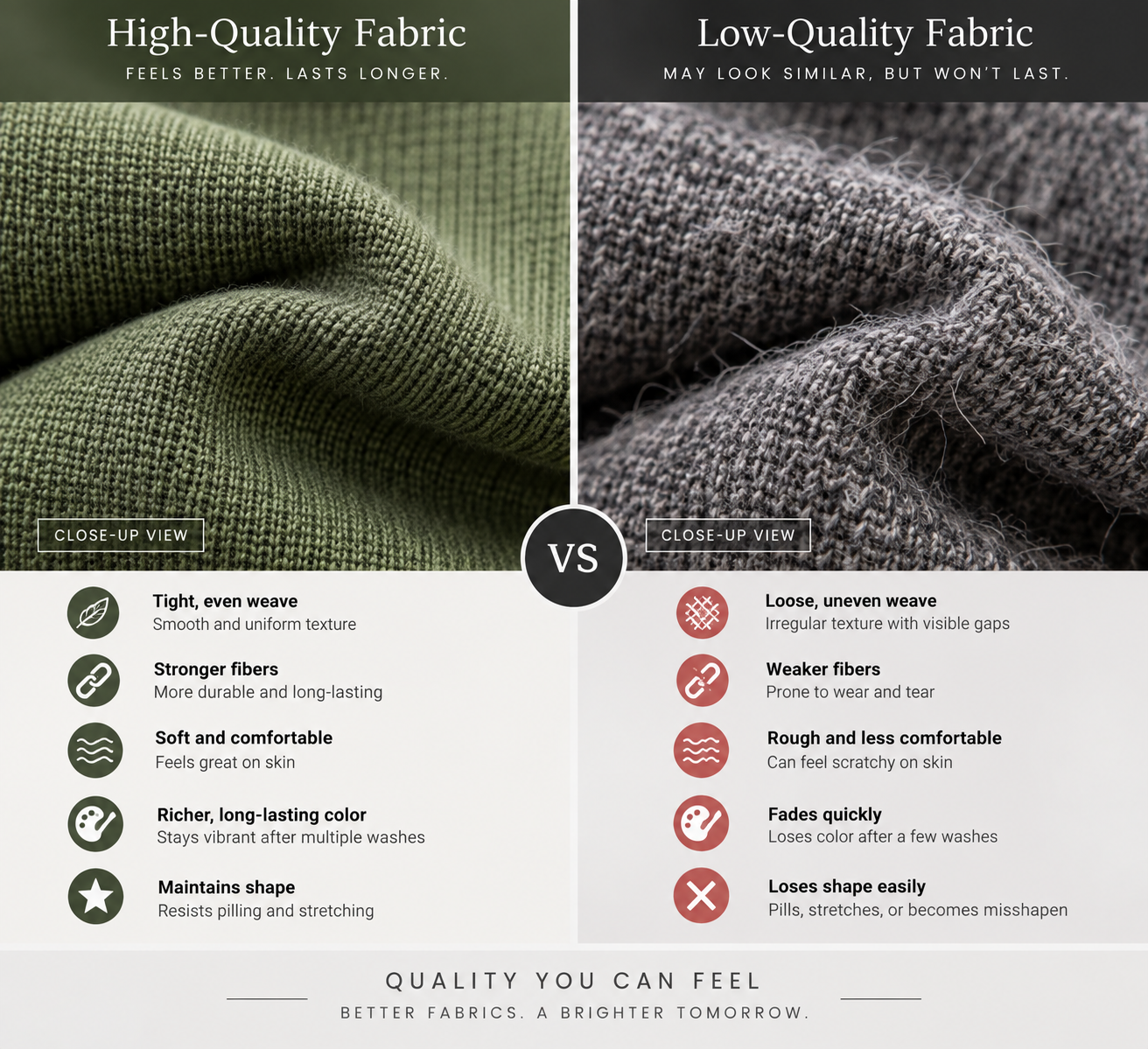
Quick answer: One of the easiest ways to spot low-quality fabric is to pay attention to what you can see and feel before buying. Rough texture, sloppy stitching, twisted seams, poorly matched patterns, unexpected sheerness, and vague fabric labels can all point to a garment that may not hold up well. Most of these checks take less than a minute.
A garment can look perfectly fine on a hanger and still disappoint you after a few months of regular wear.
Store lighting can be flattering, mannequins can make clothing look better than it really is, and even a high price doesn’t necessarily mean you’re getting good fabric. At the same time, some inexpensive pieces can turn out to be surprisingly well made.
So what should you actually look at?
Fabric quality usually becomes clearer when you examine three things: how the material feels, how the garment has been put together, and what the label tells you.
You don’t need to be a textile expert to do any of this. A few simple checks can tell you a lot about what you’re buying.
Here are ten practical signs to look for when shopping for clothing, home textiles, or other fabric products.
1. The Fabric Feels Rough, Stiff, or Plasticky
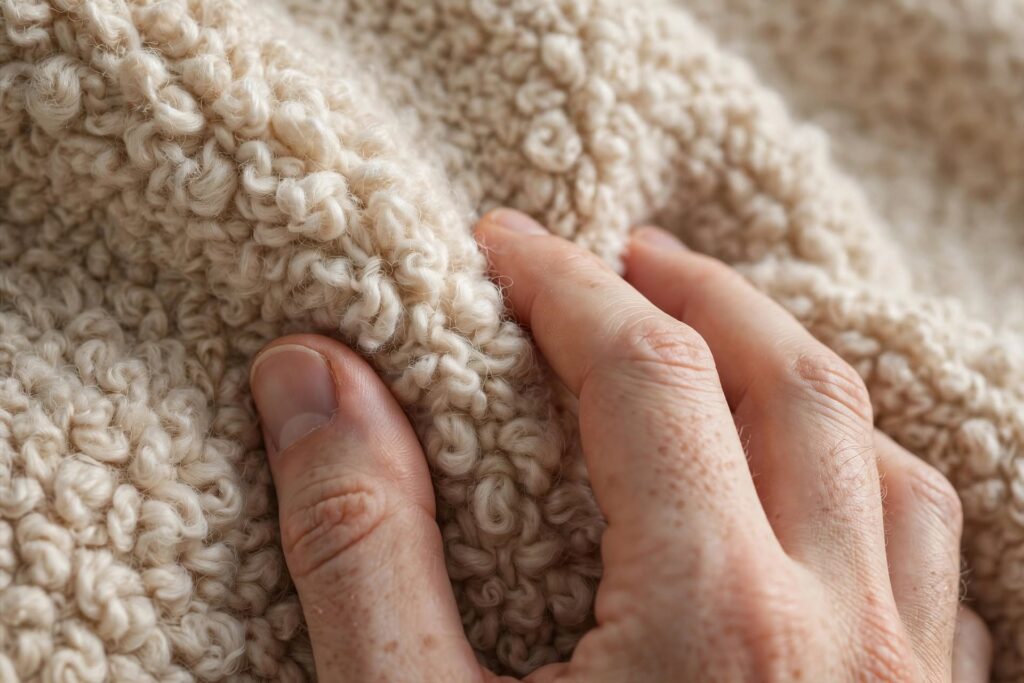
Touch is one of the simplest ways to get an early sense of fabric quality.
Higher-quality natural fibers such as cotton, linen, wool, and silk generally have a more comfortable, breathable feel. Cheap synthetic fabrics can sometimes feel noticeably different. Some are rough or scratchy, while others have an overly slippery or plastic-like surface. You may also come across fabrics that feel strangely stiff and don’t soften when you handle them.
An especially poor sign is when a fabric manages to feel both thin and rough at the same time.
Try a simple hand-feel test while shopping. Hold the material between your fingers, gently squeeze it, and then release it. A good fabric will usually have some body and resilience. It should respond naturally rather than feeling completely limp, rigid, or unnaturally smooth.
You can also rub a small section against the inside of your wrist. That area is more sensitive than your fingertips, so it can give you a better idea of how the material might feel after several hours against your skin.
If it already feels irritating in the shop, there’s a good chance it won’t become more comfortable once you’re wearing it all day.
You don’t need to identify the exact fiber to perform this test. Your hands can often tell you more than you expect.
2. You Can Already See Pilling on a New Garment
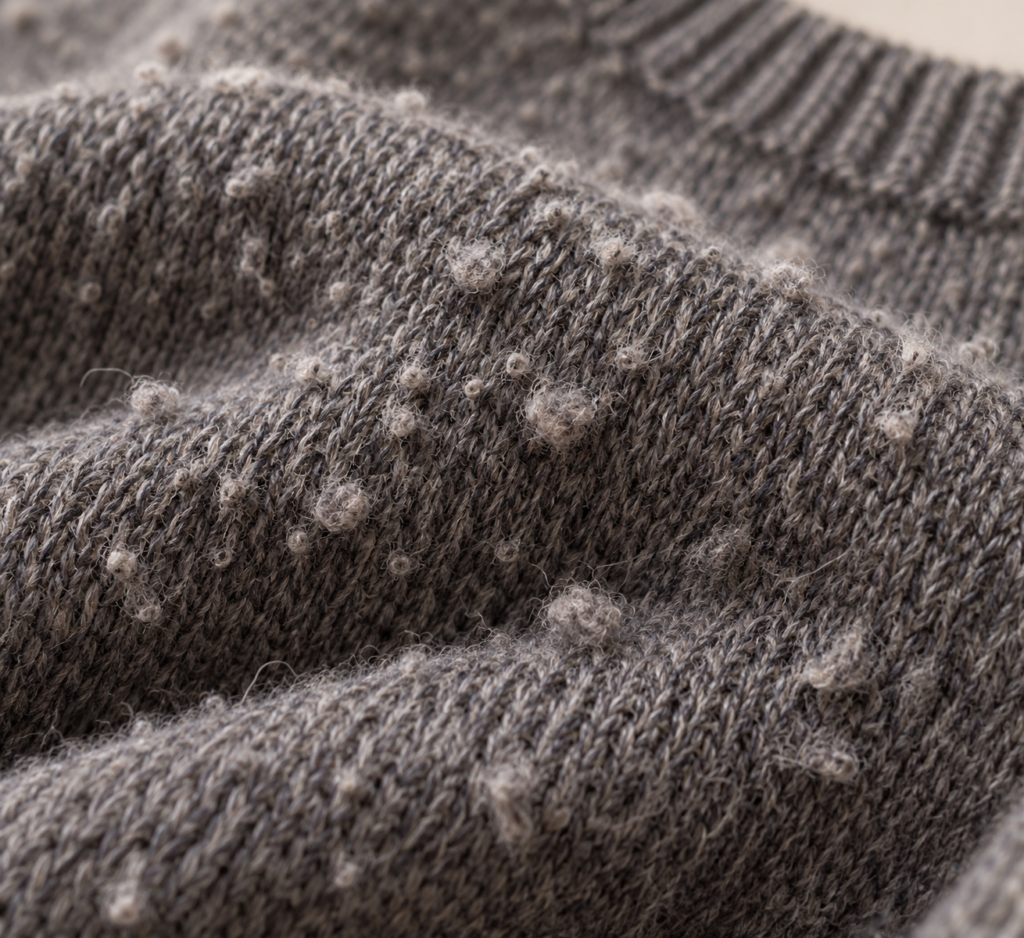
Pilling refers to the small fuzzy balls that form when loose fibers gather together on the surface of fabric.
Some pilling is normal after a garment has been worn and rubbed repeatedly. Seeing it on something that is brand new, however, is a warning sign.
Pilling happens when short or weak fibers break away from the yarn and become tangled through friction. Better-quality fabrics tend to use longer, stronger fibers and more secure yarn construction, so they are generally better able to withstand everyday wear.
When checking a garment, pay particular attention to places where fabric is likely to rub. Look at the underarms, inner thighs, collar area, and other high-friction sections.
If you can already see a fuzzy surface or small fiber balls, the fabric may not age particularly well.
You can also do a very light test with your fingers. Rub a small area for a few seconds and see what happens. If the surface starts producing little balls almost immediately, the yarn may not be very durable.
This can happen with lower-quality knitwear, fleece, and some blended fabrics.
Pilling might look like a purely cosmetic problem, but when it appears this early, it can indicate that the fabric is already struggling to hold itself together.
3. The Stitching Looks Uneven or Sloppy
Stitching holds a garment together, so it’s one of the most useful things to inspect before buying.
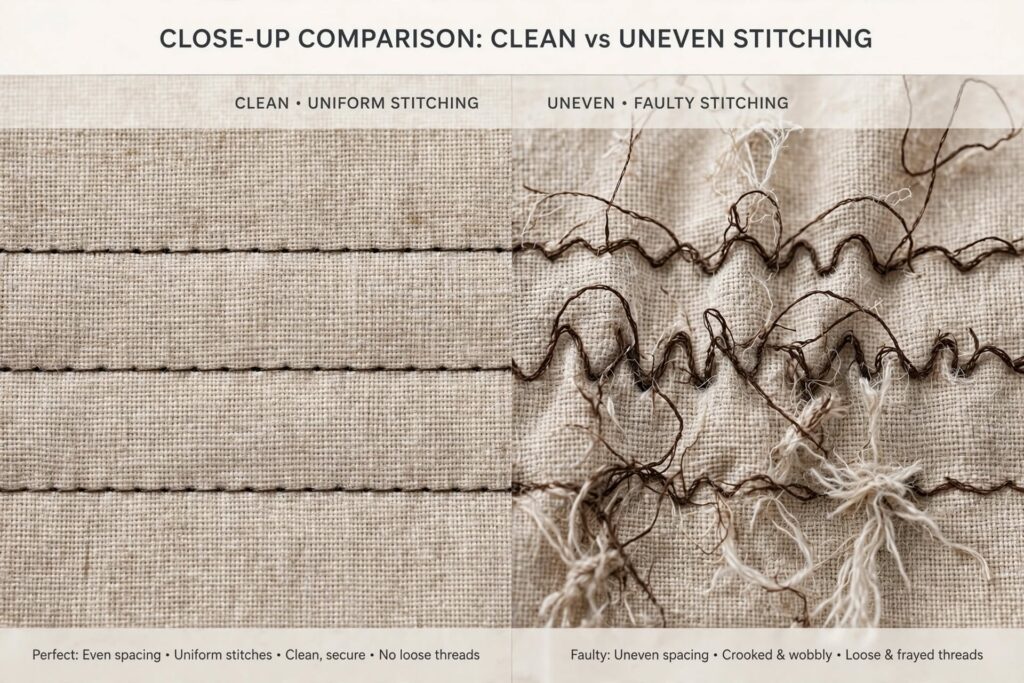
Good stitching should look even, neat, and consistent. Cheap construction often gives itself away through irregular stitch spacing, loose threads, or seams that look gathered or puckered.
Puckering can happen when thread tension isn’t right or when the fabric isn’t fed correctly through the sewing machine. On a well-made garment, the seam should generally lie flat.
Loose threads deserve a closer look as well. One stray thread isn’t necessarily a reason to reject an item, but several loose ends, especially around joins, can suggest that the garment didn’t receive much attention during finishing or quality control.
Stitch density is another useful check.
When stitches are close together, they create a stronger connection that is less likely to pull apart. Wider spacing can look acceptable from a distance but may not provide the same strength.
Try gently pulling the fabric on either side of a seam. A strong seam should stay fairly stable. If the seam opens noticeably or you can easily see the fabric between the stitches, that’s worth taking seriously.
Even the thread color can tell you something. If the thread clearly doesn’t match the fabric and the mismatch is visible across several seams, it can be another sign of rushed production.
4. The Seams Twist or Pucker
Twisted seams are easy to overlook until you know where to look.
This problem isn’t simply about sewing quality. It can also happen when fabric pieces are cut incorrectly before they are assembled.
Woven fabric has a grain, which refers to the direction of its threads. When pieces are cut and sewn correctly, the finished garment should hang naturally and the side seams should stay in the right place.
If fabric is cut off-grain, sometimes because a manufacturer is trying to save material, the seams can twist toward the front or back of the garment.
There’s a simple way to check.
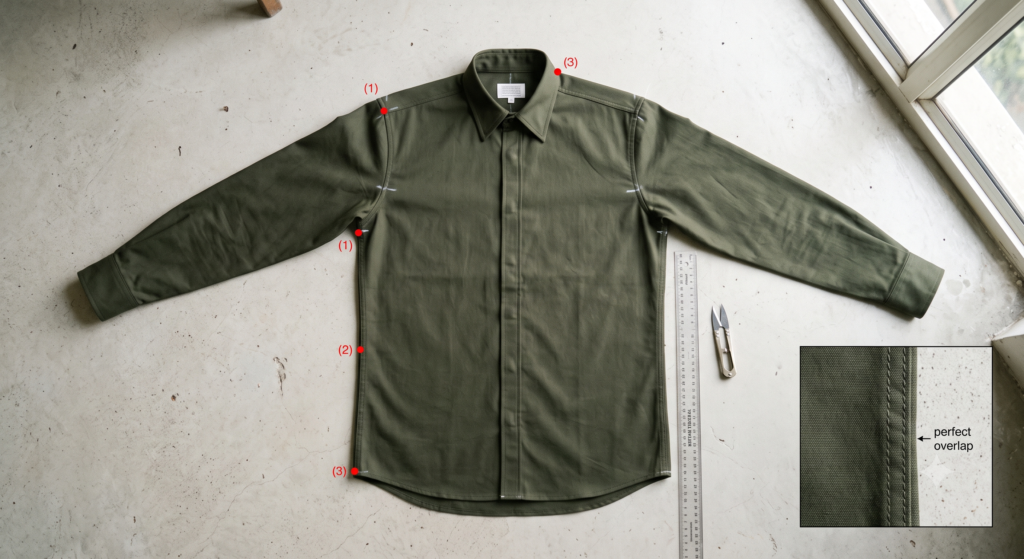
Lay the garment flat and look at the side seams from the underarm down to the hem. They should form a reasonably straight line.
If the seam curves, spirals, or pulls noticeably toward the front or back, the garment may not have been handled correctly during construction.
This can become more obvious after washing. Heat and agitation can allow fabric to relax along its natural grain, turning a small twist into a much more visible problem.
The issue is particularly common in T-shirts and other casual garments made from tubular knit fabric, where correct grain alignment can require extra care.
A twisted seam isn’t only an appearance issue. It can also affect how the garment hangs, fits, and moves once you’re wearing it.
5. Patterns Don’t Match at the Seams
Pattern matching is one of those small details that can reveal a surprising amount about how a garment was made.
On stripes, checks, plaids, and other repeating patterns, look closely at what happens where two pieces of fabric meet.
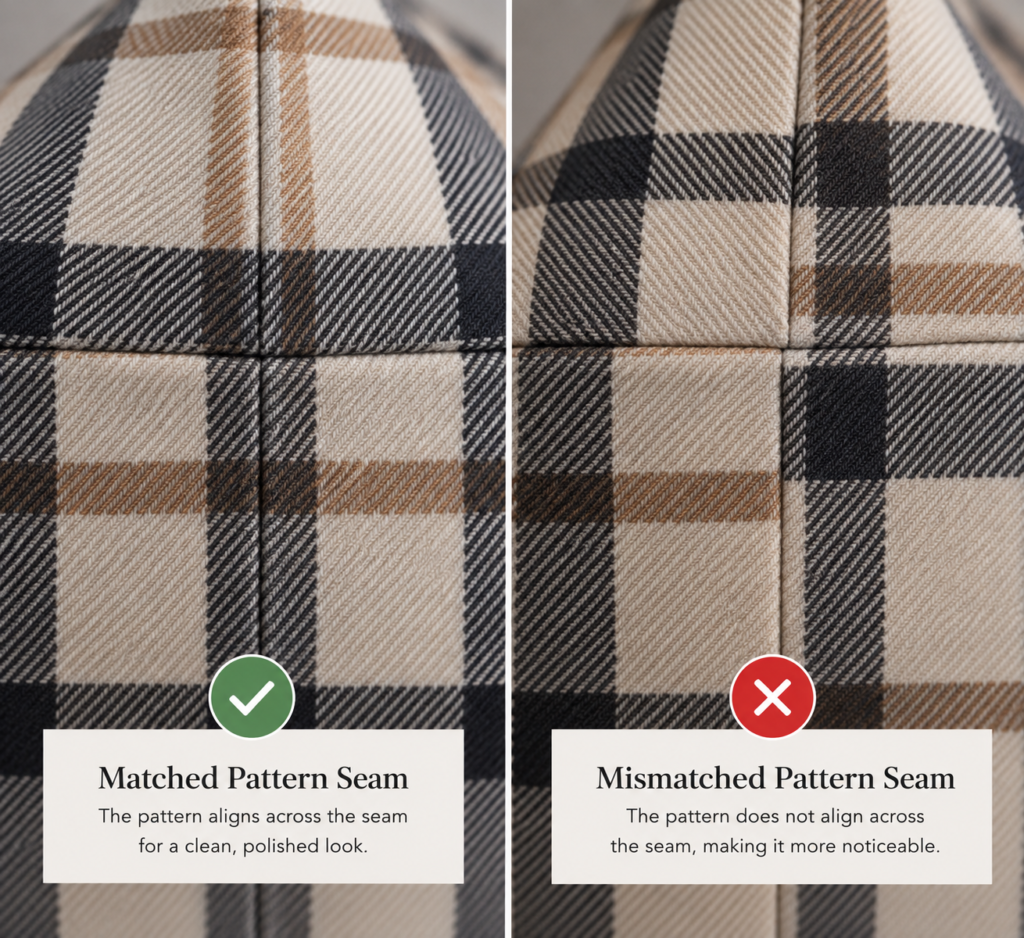
A well-made garment will usually have the pattern flowing naturally across important seams. A striped shirt, for example, should have the stripes meeting fairly cleanly at the sides. On a checked jacket, the pattern should line up where the front panels meet and around areas such as the shoulders and pockets.
Getting this right requires additional time and usually uses more fabric. Manufacturers producing garments as cheaply as possible may choose not to spend that extra time.
The result can be obvious. A stripe suddenly shifts direction at a side seam, a plaid doesn’t line up at the shoulder, or a print appears to jump between two panels.
Check the side seams, shoulders, pocket areas, and collar edges first because these are among the most visible locations.
You can also run your finger along the seam and look at both sides together. If the pattern continues naturally, it was likely considered during cutting. If it suddenly breaks or shifts, pattern matching probably wasn’t a priority.
This check isn’t relevant to every patterned garment. Abstract prints and deliberately mismatched designs are different. But with traditional stripes, checks, and plaids, pattern alignment can be a useful indicator of construction quality.
6. The Fabric Wrinkles Far More Than It Should
Wrinkling by itself doesn’t mean a fabric is poor quality.
Linen is a good example. It wrinkles easily, and that’s a normal characteristic of the material.
The concern is excessive wrinkling in a fabric that isn’t normally expected to behave that way.
Lower-quality polyester is one material where this can sometimes become noticeable. Although synthetic fabrics are often chosen because they’re supposed to be easy to care for, inexpensive polyester blends can develop stubborn creases and hold onto them.
Fiber quality and finishing treatments can both affect how well fabric recovers from compression.
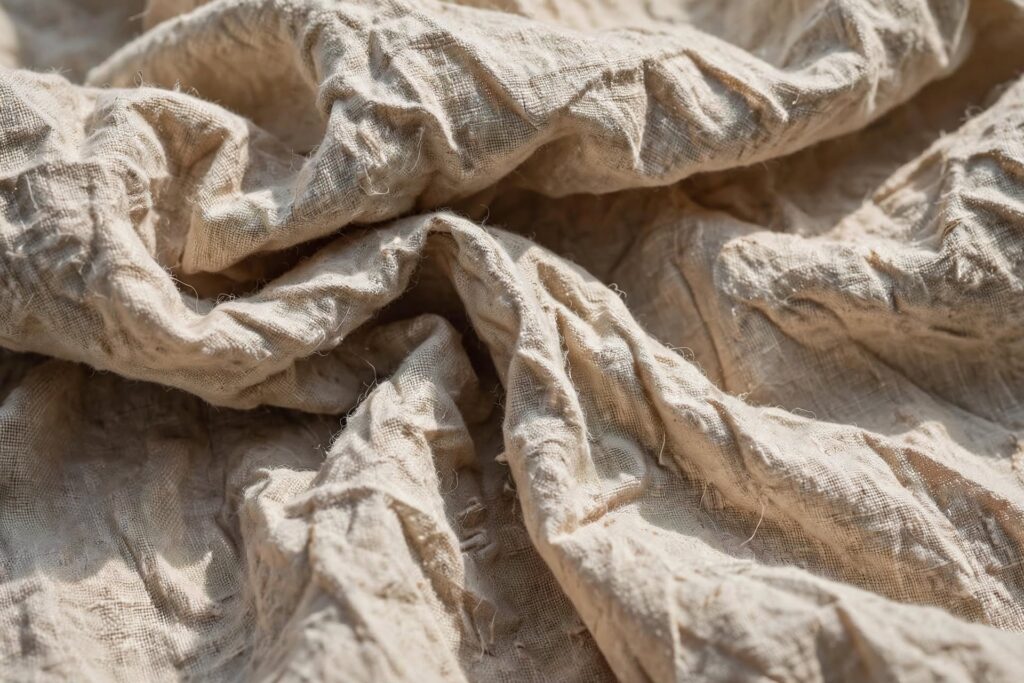
You can test this in a shop without damaging the garment. Take a small section, scrunch it firmly in your hand for a few seconds, then release it.
Watch what happens.
A better-quality fabric will often relax relatively quickly, either on its own or after a little smoothing. A poor-quality material may keep the creases clearly visible.
This matters once the garment is part of your regular wardrobe. If a shirt, dress, or pair of trousers develops heavy wrinkles simply from being folded or packed, you’ll end up spending a lot more time ironing or steaming it.
As the fabric gets weaker through repeated washing, the problem may become even more noticeable.
It’s a quick test, and it gives you useful information without damaging the item.
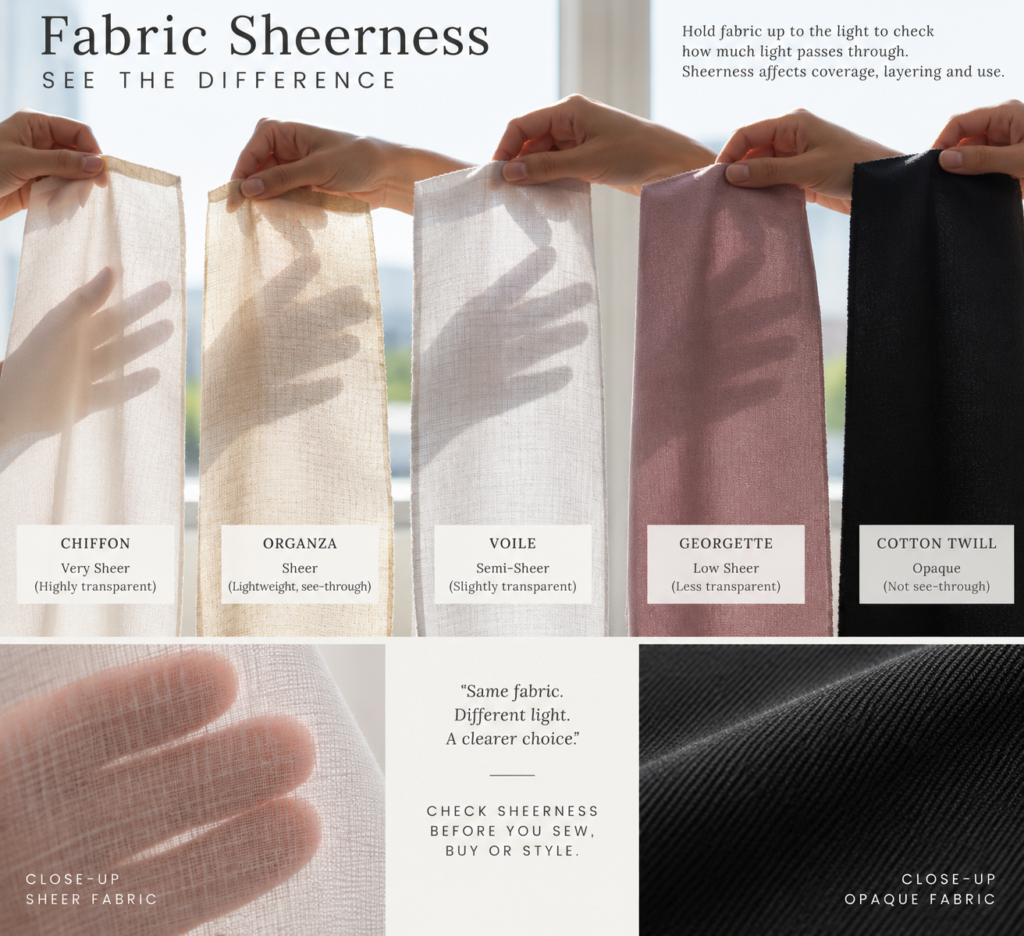
7. The Fabric Is Much Thinner or More See-Through Than Expected
Not every sheer fabric is cheap.
Chiffon, voile, and organza are intentionally lightweight and translucent, so transparency is part of their design.
The problem is when a garment is supposed to be opaque but the fabric is unexpectedly see-through.
A simple light test can help. Hold the fabric near a bright light or in front of a window and see how much light comes through.
For a normal T-shirt, blouse, or pair of trousers that is expected to be opaque, you generally shouldn’t be able to see the shape of your hand clearly through the material.
If you can, the weave may be unusually loose or the fabric may contain a low amount of fiber.
Thin fabric can also raise durability concerns. Fewer fibers means less material holding the cloth together, which can make it more vulnerable to tearing, stretching, and wearing thin.
Stretch fabrics deserve special attention here. A jersey or knit garment may look completely fine when it’s relaxed, but become much more transparent once it is stretched across the body.
Gently pull the fabric between your hands and see what happens.
A lightweight fabric isn’t automatically a bad choice. The important question is whether the level of sheerness matches what the garment is supposed to be.
8. The Fabric Content Label Is Vague or Missing
The label inside a garment isn’t there just for washing instructions.
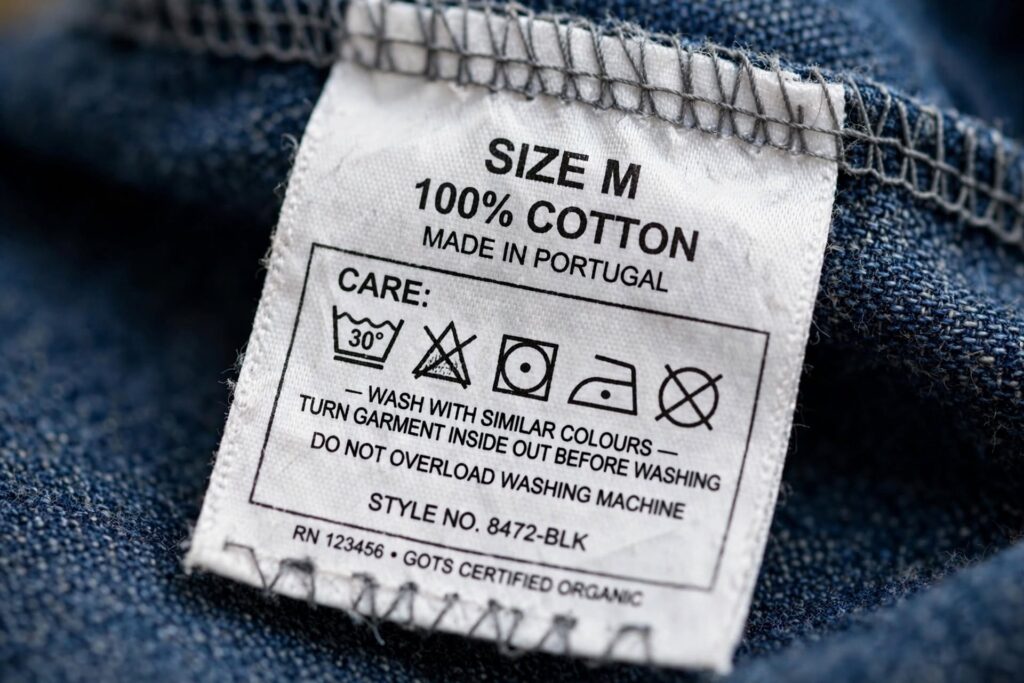
Fabric content information also tells you what you’re actually buying, which makes it an important part of judging quality and transparency.
Be cautious when you see phrases such as “assorted fibers” or “mixed fibers” without specific percentages.
A fiber breakdown should normally add up to 100%. If the numbers don’t, or if the label lists only one fiber even though the fabric clearly contains several, that’s worth investigating.
Missing fiber information can be an even bigger warning sign, and in some markets it may violate labeling requirements.
Specific information is useful because the fiber content affects how a garment behaves.
Knowing that a shirt is 80% cotton and 20% polyester gives you a much better idea of how it might feel, breathe, wash, and wear than a label that simply says “synthetic blend.”
Take a moment to examine the physical label as well. It should be clearly printed and attached securely.
A crooked label, poor printing, or stitching that is already coming loose before you’ve worn the garment can be another indication that quality control wasn’t especially strong.
Clear, complete labeling doesn’t prove a garment is well made, but vague information certainly gives you less confidence in what you’re buying.
9. The Price Seems Too Low for the Fabric Being Claimed
Some fabrics naturally cost more to produce.
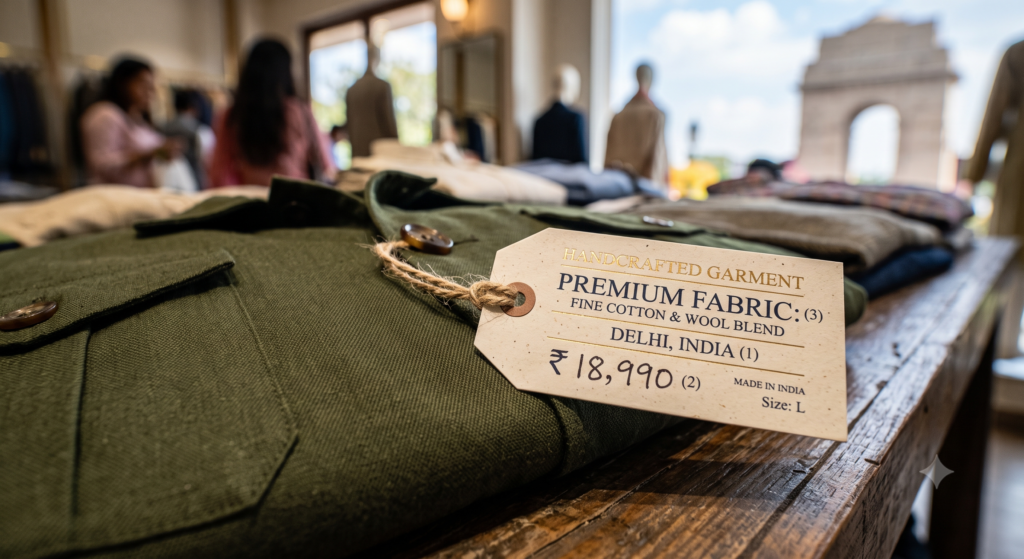
Cashmere is expensive partly because cashmere goats produce only limited amounts of the fine undercoat fibers used to make the material. High-quality silk, fine merino wool, certified organic cotton, and other specialty fibers also have genuine production and supply-chain costs.
That doesn’t mean every expensive garment is high quality.
It does mean that a garment claiming to contain a premium fiber but selling for an unusually low price deserves a closer look.
Take a “cashmere blend” as an example. The label may be technically correct even if the garment contains only a very small percentage of cashmere. The rest could be made from much cheaper fibers.
So the phrase on the label isn’t enough. Check the actual fiber percentages.
The same applies when the claimed material seems completely out of proportion with the price.
A dramatically low price can mean several things. The fiber might be present only in a tiny amount. The quality of that fiber may be very low. Or the manufacturer may have reduced costs elsewhere through cheaper construction.
The practical approach isn’t to assume you’ve found a great deal. Instead, treat the low price as a reason to inspect the fabric, label, and stitching more carefully.
Genuine premium materials at unusually low prices do exist, but they are uncommon enough to deserve some scrutiny.
10. The Fabric Loses Its Shape or Color After Washing
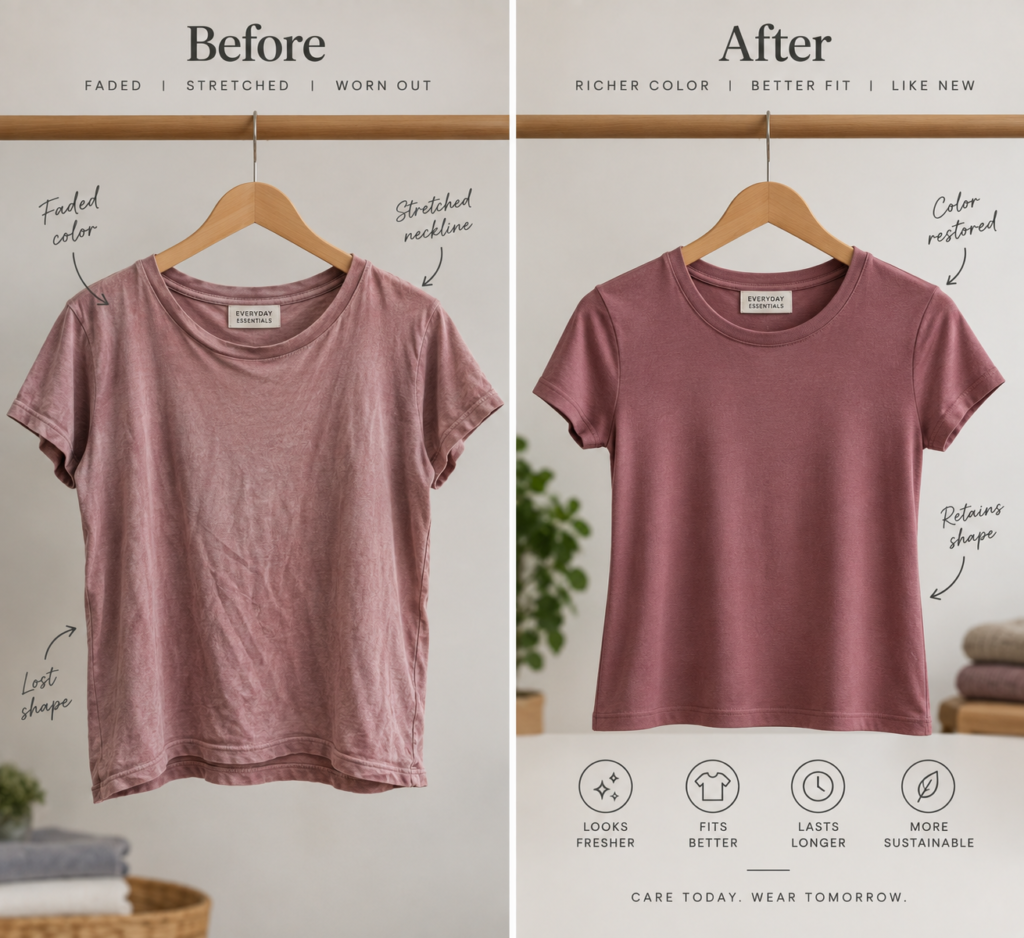
You can learn a lot about a fabric from how it behaves after washing.
Clothing that quickly becomes stretched, saggy, or misshapen may have weak fibers or poor construction. Dramatic fading after only a few washes can point toward problems with dye application or color fastness.
You obviously can’t run a wash cycle in a store, but you can still perform a few checks before buying.
Gently pull on a seam from both sides and notice how much movement you get. A well-constructed seam should provide some resistance and stay intact under light tension.
For knitted fabric, stretch a small section and watch how quickly it returns to its original shape. Fast recovery generally indicates better elasticity in the yarn.
Color fastness is more difficult to judge before buying, but care labels sometimes provide clues. Instructions such as washing dark colors separately or avoiding particular temperatures aren’t automatically signs of poor quality.
However, a garment intended for frequent everyday wear that requires unusually delicate treatment may deserve a closer look.
Shape loss is particularly frustrating because it affects fit. A collar, waistband, or hem that stretches out after only a handful of washes can make a garment unusable much earlier than expected.
That kind of rapid deterioration is one of the clearest signs that the fabric or construction may not be up to the job.
Frequently Asked Questions
What’s the fastest way to check fabric quality while shopping?
Start with your hands.
Rub the fabric lightly between your fingers, then scrunch a small section and see how quickly it recovers. After that, inspect a nearby seam and hold the fabric up to the light to check its density.
These three checks take less than a minute and can reveal several common signs of poor fabric quality.
Does a higher price always mean better fabric quality?
No.
A high price can reflect the brand name, marketing, store markup, or positioning just as much as the actual fabric.
Price can sometimes provide a clue, but it shouldn’t be your main test.
Looking directly at the texture, construction, stitching, and fabric label usually gives you much more useful information.
What does pilling say about fabric quality?
Pilling often means the fabric contains short or weak fibers, or that the yarn wasn’t spun tightly enough.
As the garment rubs against itself or other surfaces, those fibers break loose and become tangled into small balls on the surface.
Some pilling is normal after prolonged use. Finding obvious pilling on a brand-new garment, however, is generally a sign that the fabric may not be especially durable.
How can I tell if a clothing label is being transparent about fabric quality?
A good label should clearly state the fiber percentages, and those percentages should add up to 100%.
It should also include understandable care instructions.
Be cautious about vague wording such as “mixed fibers” or “synthetic blend” when no percentages are provided. Missing fiber content altogether is an even bigger concern.
It’s also worth checking whether the label is securely attached and clearly printed. A label that’s already coming loose on a new garment isn’t a good sign for overall quality control.
Are these quality checks relevant for home textiles too?
Yes.
The same basic checks work for bed sheets, towels, curtains, upholstery, and other textile products.
Look at how the material feels, inspect the stitching, check the fabric density under a light, and read the fiber content carefully.
The specific standards may differ between products, but these basic quality checks remain useful.
You Don’t Need to Be an Expert to Spot Cheap Fabric
You don’t need a background in fashion or textile production to make better fabric choices.
Most of the useful checks in this guide can be done in a shop, at a market, or even when you’re looking closely at product photographs online.
The goal isn’t to become suspicious of every inexpensive garment. It’s simply to slow down for a few seconds before buying.
Touch the fabric. Look at the stitching. Give it a quick scrunch. Read the label. Hold it up to the light if you can.
Those small checks can tell you much more about what you’re buying than a brand name or price tag alone.
For more guidance on choosing better clothing, explore our related posts on [Affordable Fashion Brands That Prioritize Quality] and [Common Fabric Care Mistakes That Shorten a Garment’s Lifespan].