Business casual works best when it doesn’t look like a watered-down suit.
The strongest outfits usually have some structure, but not too much. A tailored trouser with a polo. A soft blazer over a knit. A polished loafer with an otherwise relaxed combination. The balance is what matters.
That balance has become harder to define in 2026. Hybrid work has blurred the old boundaries between officewear and everyday clothing, while different industries have developed very different ideas of what “business casual” actually means. A finance office, a creative studio, and a tech company may all use the same phrase while expecting noticeably different clothes.
So rather than treating business casual as a fixed uniform, it makes more sense to think in terms of proportion, structure, fabric, and context.
Here are ten combinations that give you room to work with those elements, from traditional office formulas to more relaxed interpretations for workplaces that allow them.

1. Dress Shirt + Chinos + Loafers
Start here if business casual is new territory for you.
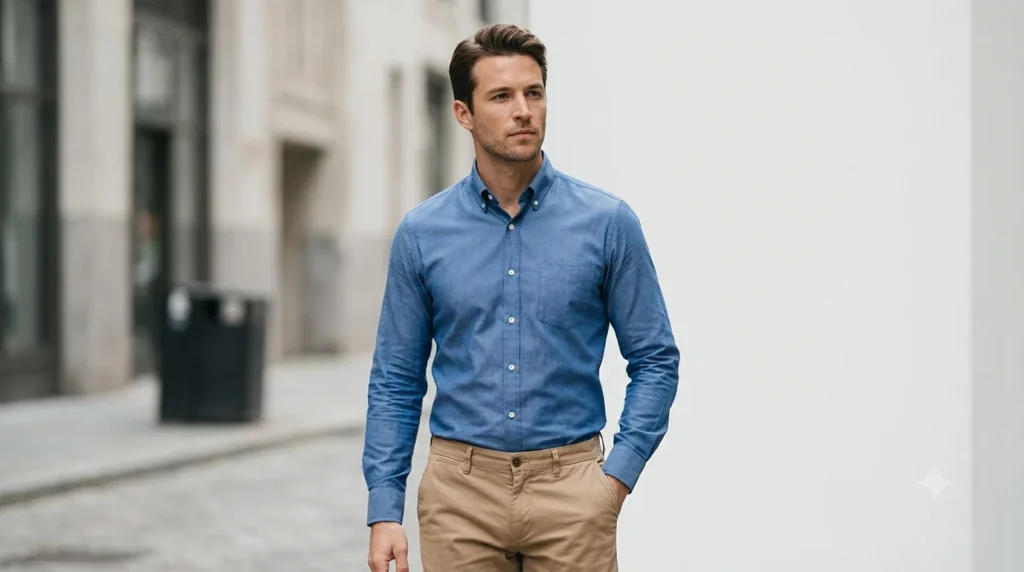
A crisp dress shirt, chinos, and loafers form one of the most dependable combinations in a professional wardrobe. It looks appropriate without feeling like you’re halfway into a suit, which is exactly where business casual should sit.
The chinos soften the formality of the shirt, while the loafers bring enough polish to keep the outfit anchored. Navy, khaki, and olive chinos are particularly useful because they can be paired with a wide range of shirt colors without making the outfit complicated.
The formula is simple, but that doesn’t mean every version works equally well. The shirt should fit cleanly through the shoulders and body, and the trousers shouldn’t bunch excessively around the shoes. Small details become more noticeable when the outfit itself is this straightforward.
It’s a particularly sensible starting point for a new workplace because there’s little here that is likely to look out of place.
Still, don’t assume every office interprets business casual the same way. If you’re unsure, check the dress code before experimenting with bolder patterns or more relaxed footwear.
2. Navy Blazer + Chinos + Dress Shirt
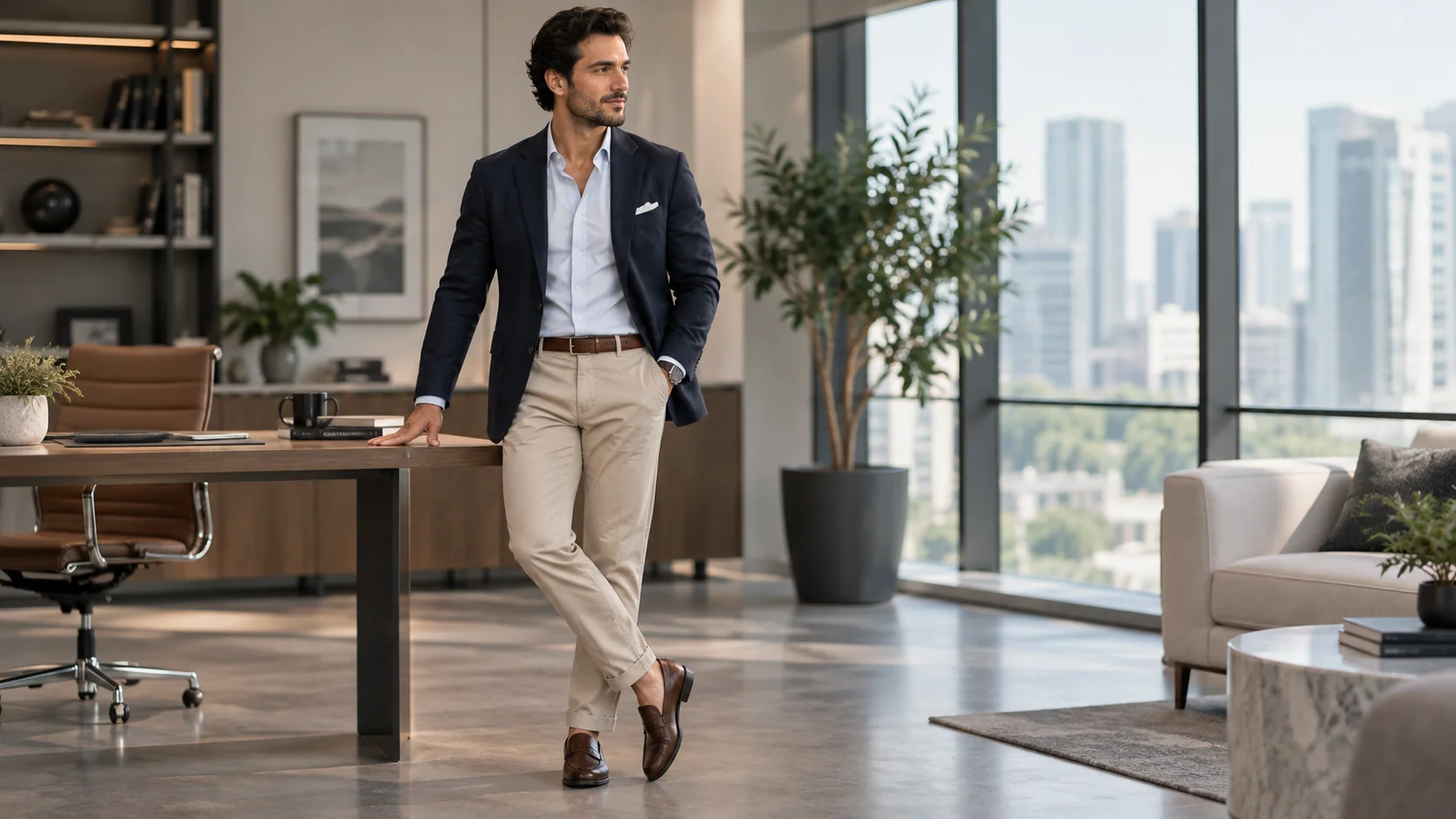
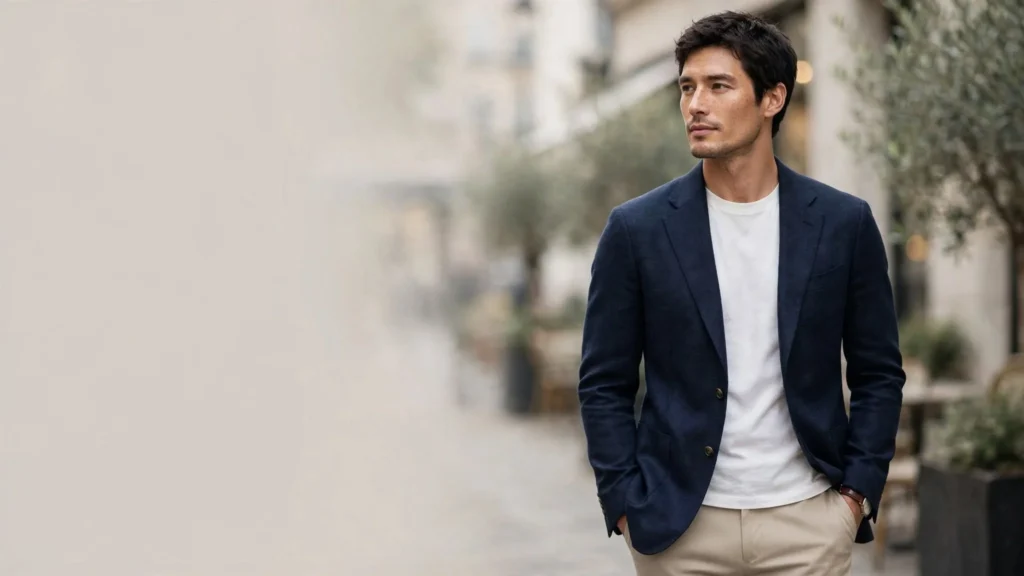
A navy blazer changes the entire character of an otherwise ordinary shirt-and-chinos combination.
Suddenly the outfit has a stronger silhouette. It looks intentional, even if getting dressed took about thirty seconds.
For business casual, an unstructured blazer is often the better choice. Without heavy shoulder padding or a rigid construction, it moves more naturally and avoids looking like you’ve simply separated a suit jacket from its matching trousers.
That’s an important distinction. The goal isn’t to recreate a suit with different pieces. It’s to bring some tailoring into an outfit while leaving enough softness for the setting.
This combination is particularly useful on days that move between different levels of formality. Wear the blazer for a presentation or meeting, then take it off once you’re back at your desk. It can sit over the back of the chair for the rest of the afternoon without making the shirt-and-chinos combination feel unfinished.
A navy blazer is one of those pieces that earns its place through repetition rather than novelty.
3. Polo + Tailored Trousers + Clean Shoes
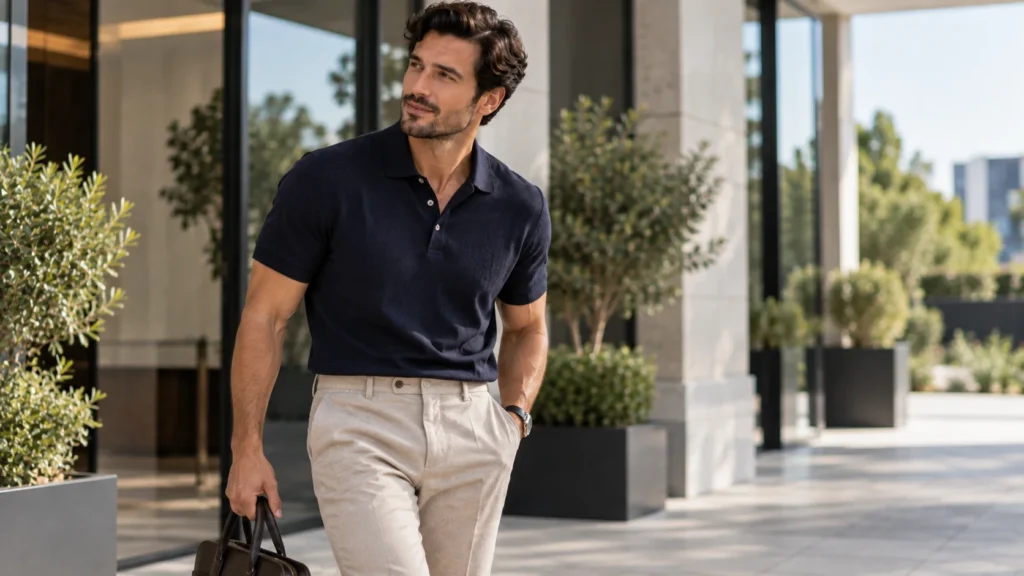
The polo can work in an office, but the trousers determine whether the outfit looks professional or simply casual.
Pair a soft polo with tailored trousers and the balance becomes much more convincing. The relaxed nature of the shirt is offset by the cleaner structure below it.
That same principle applies to the shoes. They don’t need to be formal, but they should look cared for. Clean loafers or similarly polished shoes help maintain the distinction between a relaxed office outfit and something you’d wear on the weekend.
This combination is especially useful for men who dislike the stiffness of traditional dress shirts. A good polo can feel considerably easier to wear while still looking appropriate for team meetings and, depending on the workplace, client-facing situations.
The mistake is making every element relaxed at once.
If the polo is soft and casual, let the trousers provide the structure. If the trousers are more relaxed, keep the rest of the outfit sharper.
That one principle goes a long way.
4. Unstructured Linen Blazer + Tee + Dress Trousers
Summer office dressing exposes the weaknesses of traditional business clothing pretty quickly.
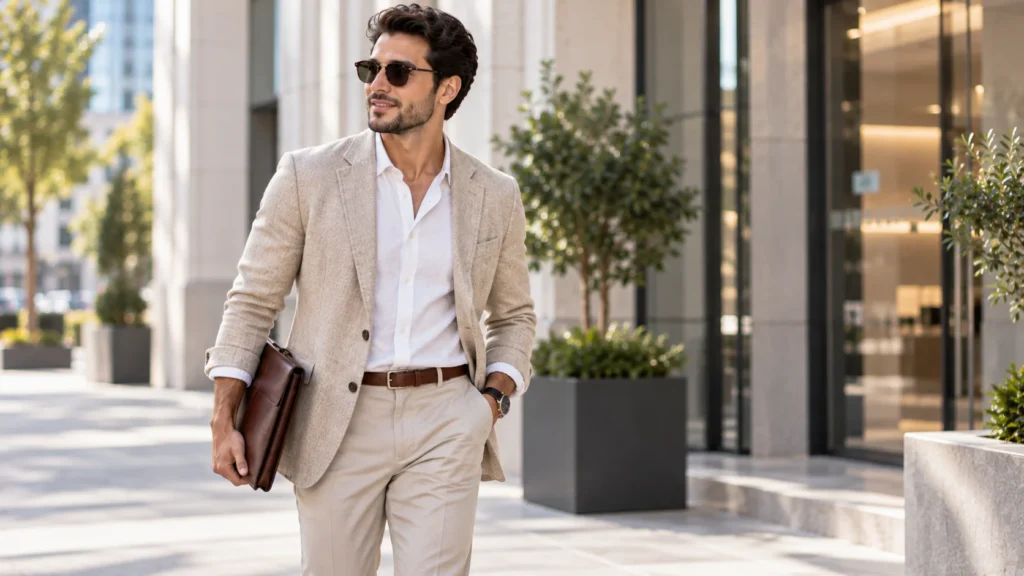
A heavy blazer that feels fine in an air-conditioned room can become uncomfortable the moment you’re walking outside. Linen offers a useful alternative because it is lighter, more breathable, and naturally less rigid in appearance.
An unstructured linen blazer over a simple T-shirt, paired with dress trousers, creates a combination that feels considerably lighter without abandoning the tailored elements that make it office-appropriate.
The T-shirt is the part that requires some judgment. A clean, well-fitting tee works because the trousers and blazer provide enough structure around it. Replace those trousers with shorts or very casual pants, and the same top can push the outfit too far toward weekend dressing for some workplaces.
Linen will wrinkle during the day. Let it.
Trying to keep it perfectly pressed misses some of what makes the fabric appealing. The slight creasing gives the blazer a relaxed character that works particularly well in warm weather.
For hot offices and summer months, this is one of the more convincing ways to stay polished without dressing as though the weather doesn’t exist.
5. Cardigan + Button-Down + Dress Trousers
Office air conditioning has its own interpretation of seasons.
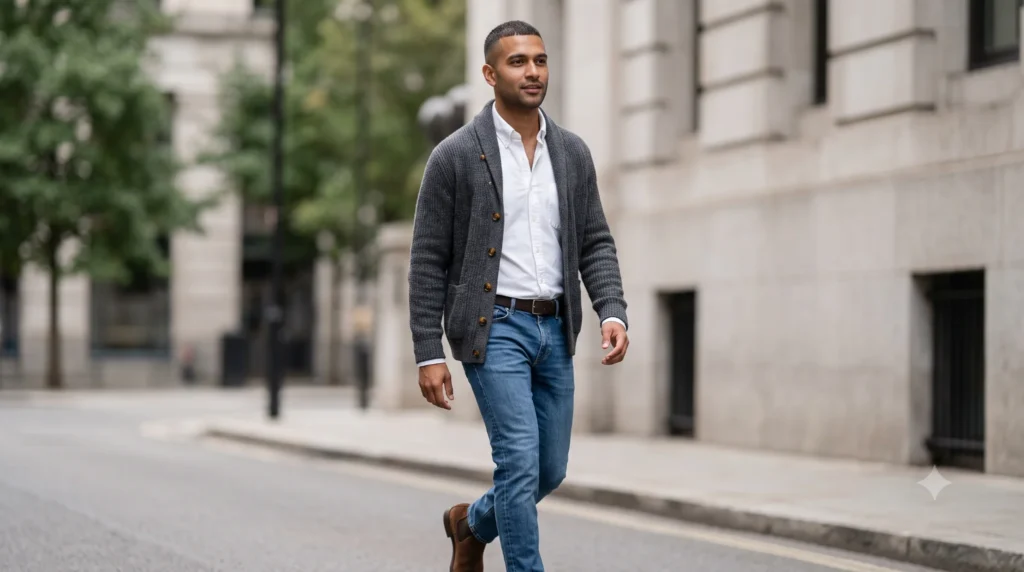
A cardigan is useful when the temperature outside says summer but the conference room says otherwise. Layered over a button-down shirt and worn with dress trousers, it adds warmth without the weight of a blazer.
The button-down underneath provides enough structure to keep the outfit professional. That gives the cardigan permission to be softer, whether it’s a fine knit, a textured weave, or a subtle pattern.
It’s a quieter alternative to tailoring, and that can be its strength.
A cardigan also leaves more room for texture than a traditional blazer. A restrained knit pattern or interesting weave can add personality without relying on loud colors or obvious fashion details.
This is particularly useful for men who find conventional office tailoring too corporate but still need to look considered.
The important thing is keeping the knit relatively refined. A chunky weekend sweater changes the conversation entirely.
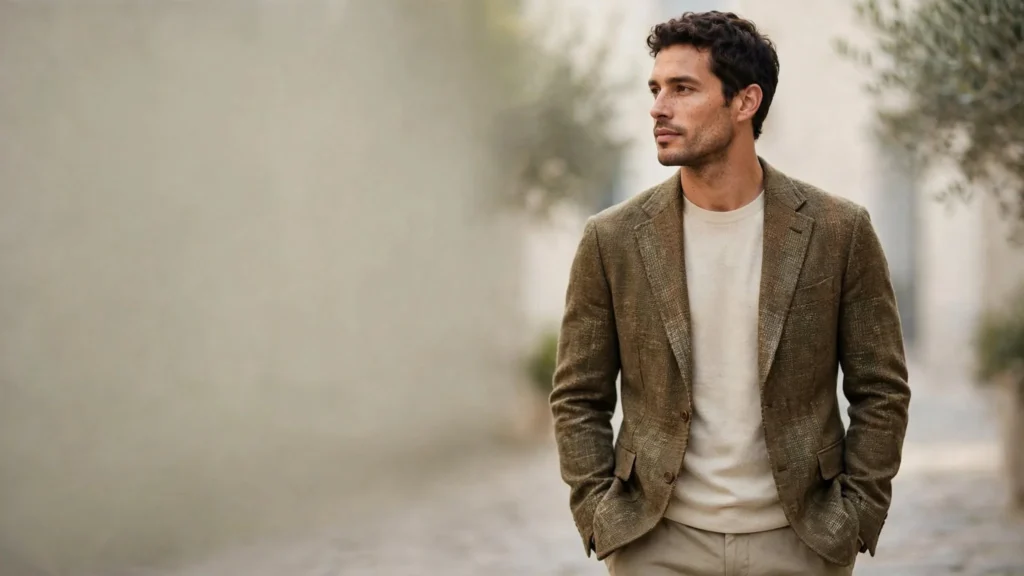
6. Earthy Tailoring: Brown Blazer + Ivory Shirt + Beige Chinos
Not every business casual outfit needs navy, white, and gray.
A brown blazer with an ivory shirt and beige chinos creates a warmer palette that feels distinctive without becoming difficult to wear. The colors sit close enough together to create cohesion, while the difference in shades keeps the outfit from looking flat.
Brown leather loafers continue the same story at the feet.
This is a good example of how color can do some of the styling work for you. There are no complicated patterns or statement pieces here. The interest comes from the relationship between warm neutrals and the different textures of the clothing.
It can work particularly well for client meetings, conferences, and other situations where you want to look considered without defaulting to the standard navy blazer formula.
The restraint is important. Once the palette is this warm, there’s little need to add another strong color.
7. Dark, Clean Denim (Where Office Policy Allows)
Jeans are where business casual gets complicated.
Some offices have fully embraced them. Others allow them only on certain days. Some don’t consider them appropriate at all. The same company can even have different expectations between departments.
So the first rule is simple: check the policy.
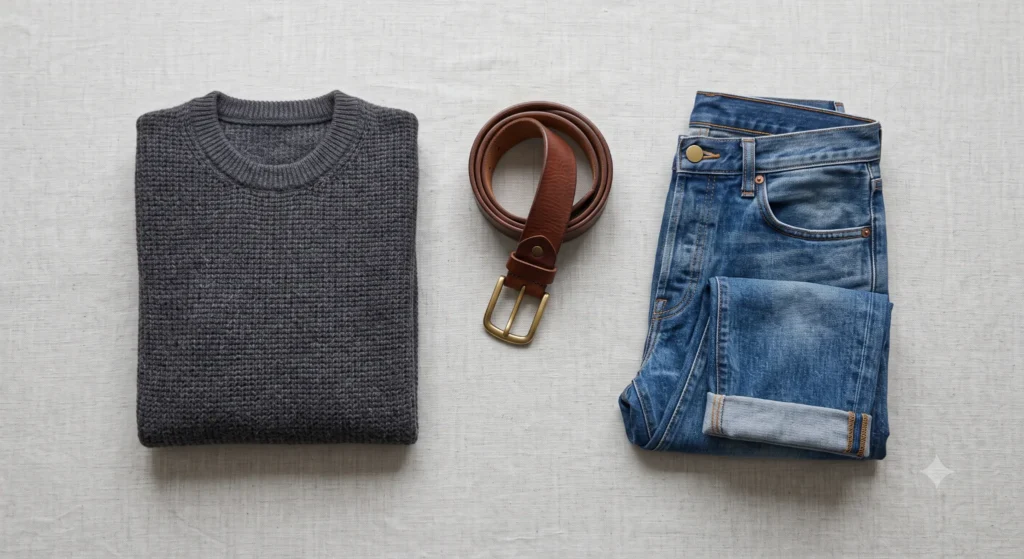
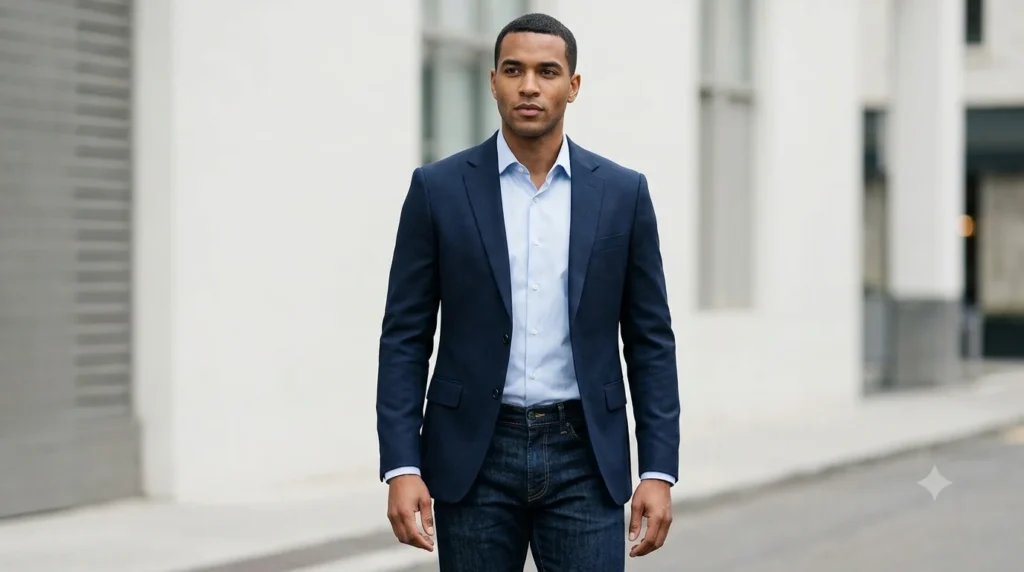
If dark denim is acceptable, choose solid indigo jeans without rips, heavy fading, or obvious distressing. Then keep the rest of the outfit structured.
A button-down shirt works. A blazer works even better when the setting calls for it.
The contrast is what makes the combination successful. The jeans introduce a casual element, while the shirt or blazer restores some professional structure.
The moment you add a graphic T-shirt and casual sneakers, however, the balance changes. You’re no longer making a business casual outfit slightly more relaxed. You’re moving toward weekend dressing.
Dark denim can work. It just needs to be treated as the casual element rather than an invitation to make everything else casual too.
8. Fine-Knit Crewneck as a Shirt Substitute
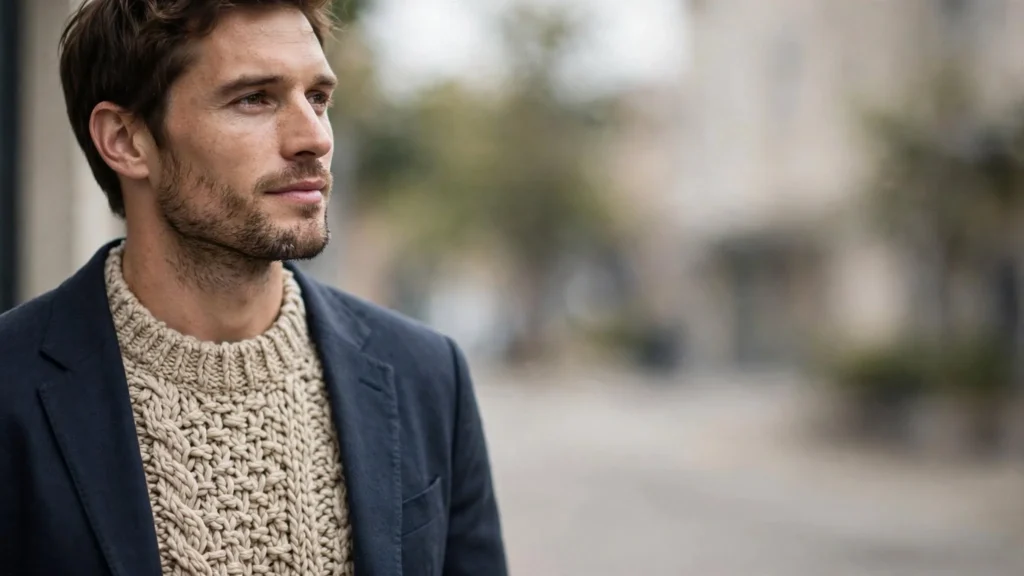
A fine-knit crewneck can quietly replace a dress shirt without making an office outfit feel underdressed.
Worn beneath a blazer, the knit adds texture while keeping the silhouette clean. There are no collars or cuffs competing for attention, so the outfit can feel more modern and pared back.
This works especially well with restrained, monochromatic combinations. A charcoal knit beneath a gray blazer, for example, creates depth through texture rather than relying on a strong color contrast.
The quality and weight of the knit matter.
Fine-knit is the important part. A chunky sweater may be perfectly appropriate for a casual office, but it has a much more relaxed character and won’t fit every interpretation of business casual.
For men who find dress shirts uncomfortable or simply want an alternative to wearing one every day, this is one of the easiest ways to change the texture of an office wardrobe without changing its overall level of polish.
9. Monochrome Grey Tailoring
Some mornings don’t need another decision.
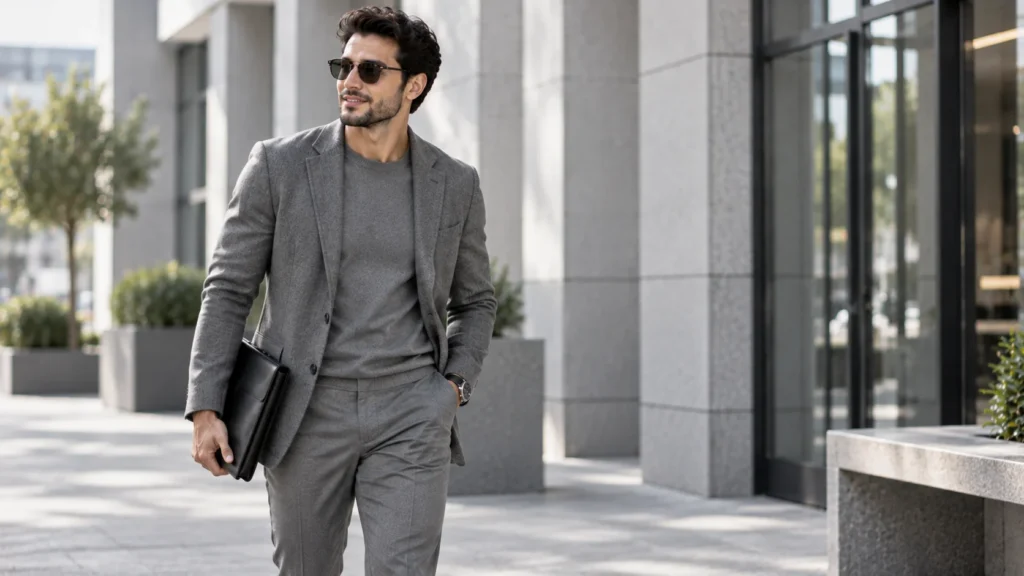
A slate blazer with charcoal trousers gives you a coordinated base before you’ve even considered the shirt or shoes. Because both pieces sit within the same color family, the outfit already has a sense of cohesion.
The result is clean rather than flashy.
Monochrome dressing also puts more emphasis on texture and proportion. With the color doing less of the visual work, the difference between a smooth blazer and a textured knit, or between a sharp trouser line and a softer layer, becomes more noticeable.
That’s part of what makes this formula useful for busy workweeks. There’s less opportunity for colors to clash, so the outfit comes together quickly.
It also translates well on video calls. The clean, uninterrupted color palette tends to read clearly on screen, which is a practical advantage in a hybrid workplace.
You don’t need to make monochrome interesting with extra accessories. The restraint is the point.
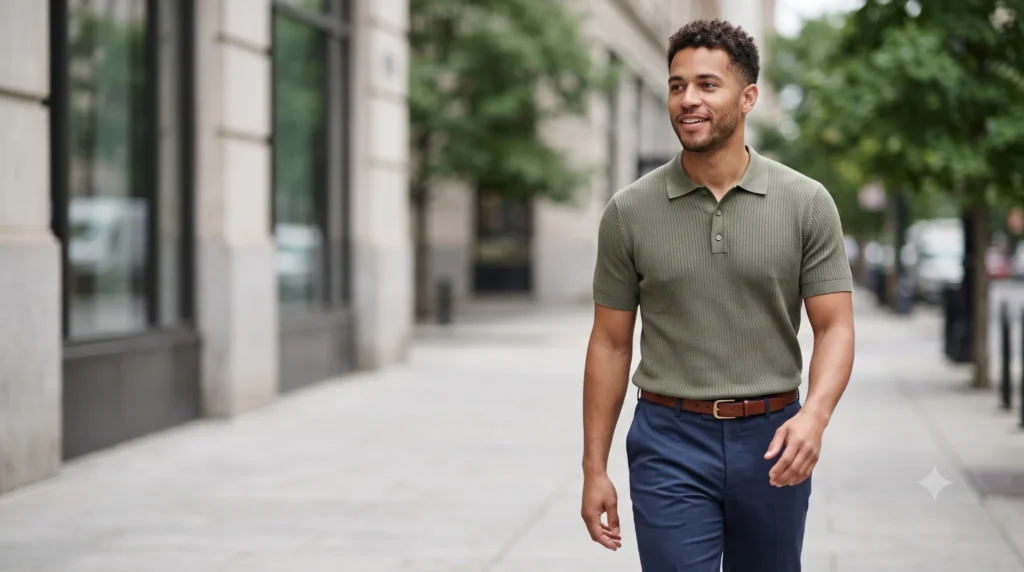
10. Knit Polo + Navy Trousers + Loafers
A knit polo occupies a different place from the standard cotton pique polo.
The finer texture and cleaner drape give it a more refined appearance, particularly when paired with navy trousers and loafers. The result is dressier than a polo with khakis but still noticeably more relaxed than a blazer-and-shirt combination.
It’s a useful option for days when you want to look sharper without feeling overdressed.
The outfit can move easily through the day, too. Morning meetings, lunch with colleagues, and the rest of the working day all make sense without requiring a change of clothes.
The knit polo is doing most of the work here, so the rest of the outfit doesn’t need to be complicated. Keep the trousers clean and well-fitted, choose polished footwear, and let the texture of the polo provide the interest.
For an office that allows a flexible interpretation of business casual, it’s a strong everyday formula.
Frequently Asked Questions
What exactly counts as business casual for men?
There isn’t one universal uniform.
Business casual generally sits between formal officewear and genuinely casual clothing. A blazer, tailored trousers, or polished shoes can provide structure, while pieces such as polos, fine knits, and chinos make the outfit less formal.
The exact boundary depends on the workplace. That’s why the same outfit can be completely appropriate in one office and too casual in another.
Can jeans ever work for business casual?
Yes, in some workplaces.
If denim is allowed, dark, solid jeans without rips or heavy fading are the safest interpretation. Pair them with something more structured, such as a button-down shirt or blazer, rather than making the entire outfit casual.
Always check your company’s expectations first. Denim policies can vary considerably between industries, companies, and even departments.
What’s the difference between business casual and smart casual?
The two overlap, and workplaces don’t always use the terms consistently.
Smart casual can allow more relaxed pieces, including certain sneakers and softer knitwear. Business casual generally leans a little more professional, particularly in traditional corporate or client-facing environments.
When in doubt, look at what people in your specific workplace actually wear rather than relying solely on the label.
How can I dress business casual for a hot summer office?
Start with the fabric.
Linen and breathable cotton can make a significant difference when temperatures rise. An unstructured linen blazer over a clean T-shirt or lightweight shirt can provide the structure you need without the weight of a traditional blazer.
Dress trousers are generally a safer choice than shorts when the office has a more traditional interpretation of business casual.
Does business casual look different across countries and industries?
Very much so.
Creative and technology-focused workplaces may allow more relaxed interpretations, including knitwear and clean denim. Finance, law, and many client-facing environments tend to lean toward more traditional tailoring.
There are also regional differences, so the safest approach when starting a new role is to observe the local office norm and check the company’s specific dress expectations.
Building a Business Casual Wardrobe That Works for You
Business casual isn’t really a uniform. It’s a balancing act.
You need enough structure to look appropriate for work, but not so much that every day starts feeling like a formal event. A blazer, tailored trousers, or polished shoes can provide that structure. A polo, knit, chino, or softer jacket can loosen the rest of the outfit.
Once you understand that relationship, getting dressed becomes much easier.
Start with the combinations that suit your workplace. If the environment is traditional, begin with the dress shirt, chinos, loafers, and navy blazer formulas. If the office is more relaxed, experiment with fine knits, knit polos, dark denim, and softer tailoring.
The goal isn’t to own every version of business casual. It’s to build a wardrobe where the pieces make sense together and where you know how far you can relax the dress code without crossing the line.
That’s what makes business casual useful in 2026. The clothes can adapt to the way people actually work now, while still leaving room for professionalism when the occasion demands it.
For more ideas on current men’s style, see our Men’s Fashion Trends 2026 guide. If you’re looking for something less formal for weekends and everyday wear, our Casual Outfits for Men guide covers that side of the wardrobe.