What Is Banana Fabric?
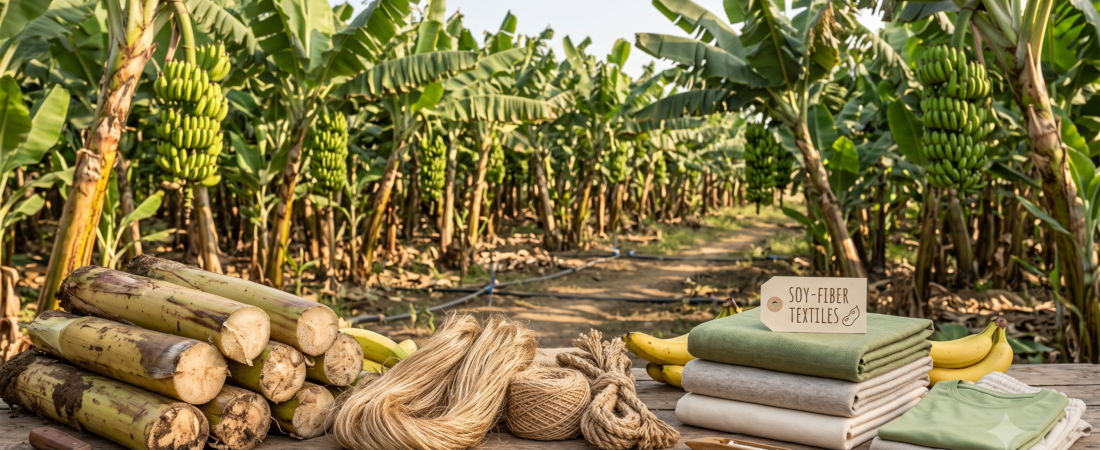
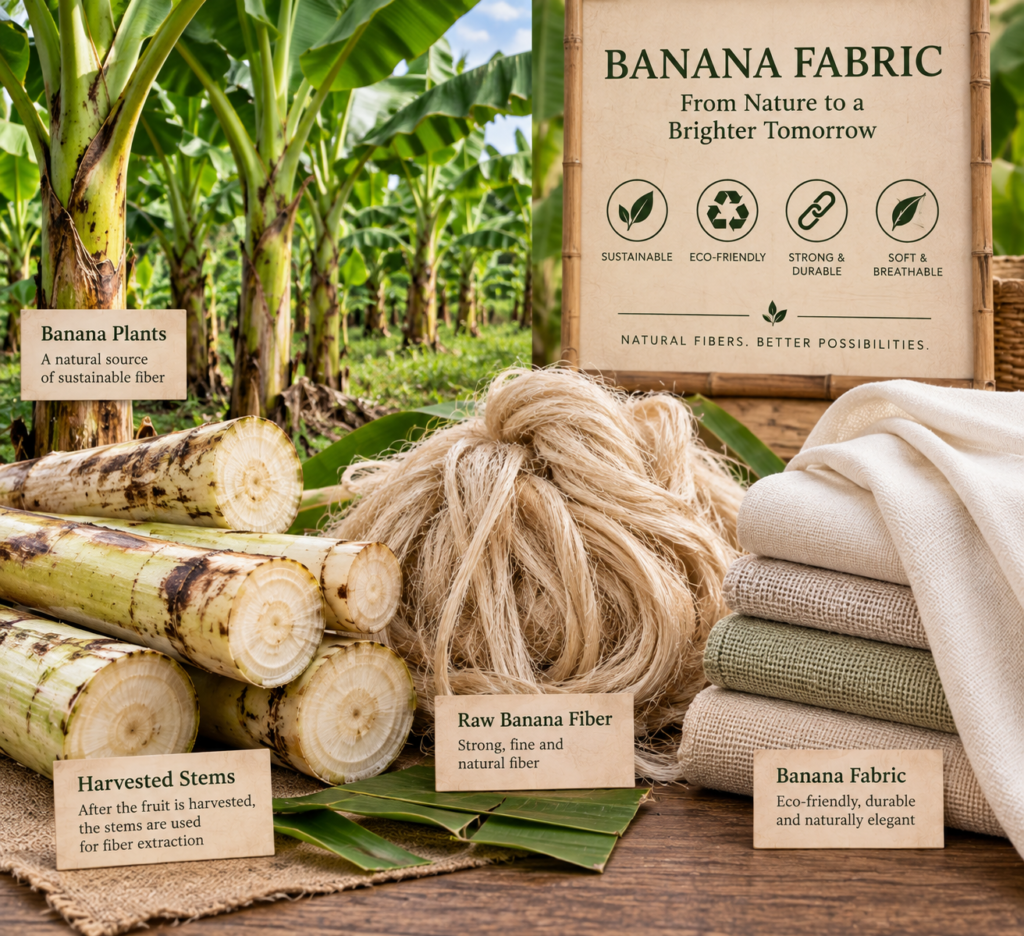
Banana fabric is a natural textile made from fibers extracted mainly from banana plant stems and peel linings. The soft fruit itself is not used to make the fabric. Instead, manufacturers use the fibrous parts of the plant that remain after harvesting bananas.
Banana fabric is also called banana fiber, banana silk, or Musa fiber. Its texture depends on the part of the plant used and the processing method. Fibers from the inner lining can produce a soft, smooth material with a silk-like appearance, while fibers from the outer lining are stronger, rougher, and more similar to burlap or other coarse plant textiles.
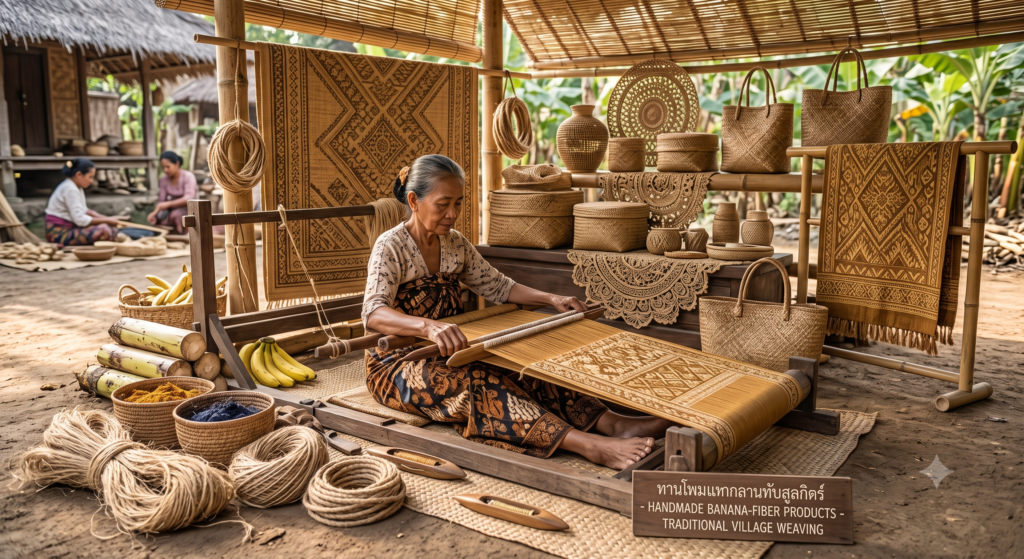
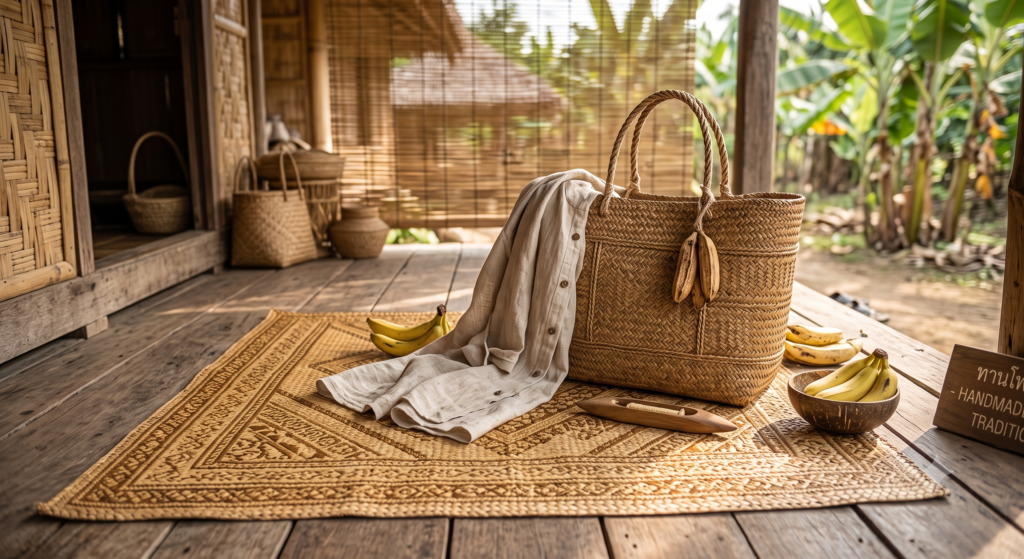
Banana fabric is used for clothing, scarves, bags, hats, home décor, ropes, mats, and other products. Although banana fiber has been used traditionally in parts of Asia for centuries, it remains a relatively specialized textile in the global fashion industry.
Quick Facts About Banana Fabric
| Property | Details |
|---|---|
| Fabric name | Banana fabric |
| Also known as | Banana fiber, banana silk, Musa fiber |
| Composition | Fibers extracted from banana stems and peel linings |
| Fiber source | Banana plant stalks and outer or inner stem layers |
| Breathability | Generally high |
| Moisture absorption | Good |
| Heat retention | Low |
| Natural stretch | Limited |
| Pilling tendency | Generally low |
| Texture | Soft and silk-like or coarse and firm |
| Main producing country | India |
| Traditional production region | Philippines and other parts of Southeast Asia |
| Common uses | Clothing, accessories, bags, ropes, mats, and home décor |
| Washing recommendation | Cold or warm water; delicate varieties require gentle care |
History of Banana Fabric
Banana fiber has been used in Southeast Asia for many generations. The Philippines is often associated with some of the earliest traditional uses of banana fibers. Local communities developed methods for extracting fibers from banana plants and turning them into practical and decorative materials.
Banana fiber was used for products such as ropes, mats, household items, and textiles. Other Asian countries also developed their own methods of working with banana plants.
As trade expanded between Asia and Western countries, manufacturers in Britain and the United States began exploring banana fiber as a possible textile material. However, the difficulty of extracting fine fibers, the delicate nature of some varieties, and the cost of production prevented banana fabric from becoming a mainstream textile.
Today, India is one of the leading commercial producers of banana fiber. The Philippines continues to produce banana-based materials, particularly for traditional and local applications.
How Is Banana Fabric Made?
The exact manufacturing process varies depending on the quality of the fiber and the intended use. Fine banana silk requires more careful processing than coarse banana fiber used for ropes or mats.
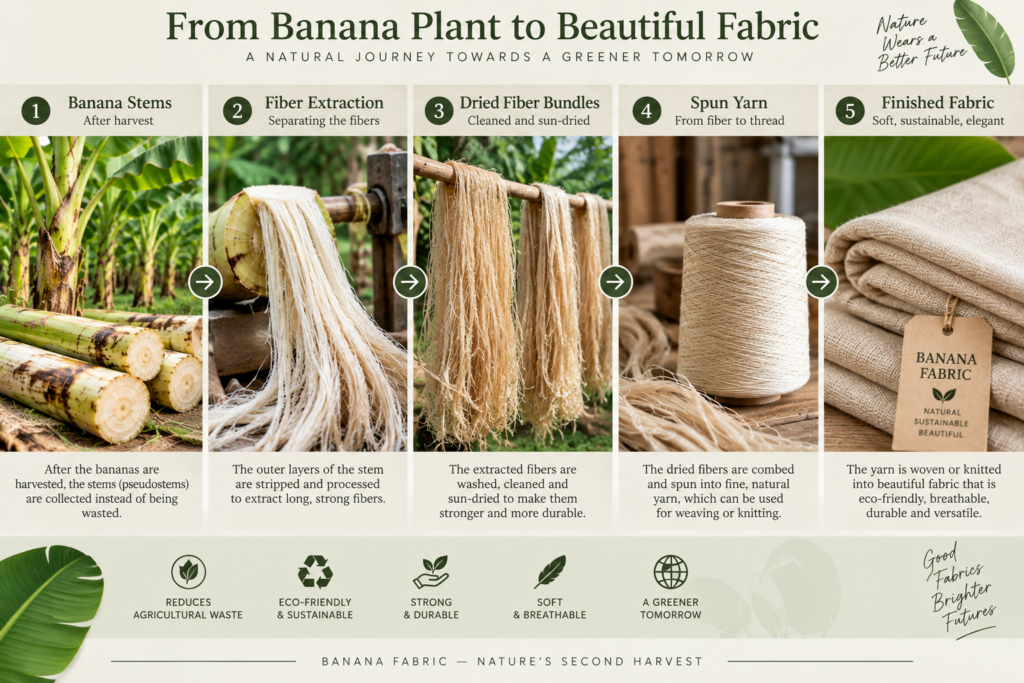
1. Collecting Banana Stems
Banana plants are harvested for their fruit several times during their growing cycle. After harvesting, the stems and other plant materials may be collected for fiber production.
Using these parts can provide an additional use for agricultural material that might otherwise be discarded.
2. Separating the Fibers
The stems are cut and processed to separate the fibrous layers from the softer plant material. This may be done by scraping, cutting, or mechanical extraction.
Another method is retting, in which the plant material is soaked in water or a processing solution. Retting helps loosen the fibers and makes them easier to remove.
3. Bunching and Drying
The extracted fibers are gathered into bundles and dried. The fibers may remain grouped together during this stage because separating wet fibers can be difficult.
Proper drying helps prevent unwanted moisture-related damage and prepares the material for sorting.
4. Sorting the Fibers
Once dry, the fibers are sorted according to their length, strength, texture, and appearance.
The finest fibers are generally selected for soft, silk-like fabrics. Stronger and coarser fibers may be used for ropes, mats, baskets, bags, and heavier textiles.
5. Spinning and Weaving
The selected fibers are spun into yarn. Depending on the desired result, the yarn may be dyed, treated, or blended with cotton, silk, or other fibers.
The yarn is then woven or knitted into fabric. The final texture and performance depend on the fiber grade, yarn construction, weaving method, and finishing process.
How Is Banana Fabric Used?
Banana fabric has several uses, although the application depends on whether the material is made from fine or coarse fibers.
Clothing and Fashion
Fine banana fibers can be used to create lightweight and breathable garments, including:
- Blouses
- Shirts
- Skirts
- Trousers
- Robes
- Gowns
- Slips
- Lingerie
- Cardigans
- Shawls
- Tropical clothing
- Lightweight eveningwear
Banana-silk fabrics may have a smooth drape and attractive surface appearance. However, delicate varieties may require careful washing and handling.
Accessories
Banana fiber is also used to make:
- Scarves
- Hats
- Gloves
- Bags
- Wallets
- Belts
- Decorative accessories
These products may use either fine banana fibers or stronger, coarser varieties.
Home Décor and Practical Products
Coarse banana fibers are often used for products that require strength rather than softness. Common examples include:
- Ropes
- Mats
- Baskets
- Wall hangings
- Table accessories
- Storage products
- Woven décor
- Heavy bags
- Handmade household items
Where Is Banana Fabric Produced?
India is currently one of the main commercial producers and exporters of banana fiber. The country also grows large quantities of bananas, creating a significant supply of stems and other plant material for fiber extraction.
The Philippines remains important for traditional banana-fiber production, although its commercial output is smaller than India’s. Banana fiber is also produced in other parts of Asia, particularly in regions where bananas are widely cultivated and local textile traditions remain active.
A considerable amount of banana fiber sold in international markets is manufactured in India.
How Much Does Banana Fabric Cost?
Banana fabric does not have one standard price. The cost depends on several factors, including:
- Fiber quality
- Fiber length
- Processing method
- Fabric weight
- Weaving or knitting technique
- Dyeing and finishing
- Country of production
- Whether the fabric is pure or blended
- Whether the material is handmade or industrially produced
Fine banana silk is usually more expensive because the inner fibers are difficult to extract and process. Their smooth texture and silk-like appearance can also increase their value.
Coarse banana fiber is generally less expensive and is more commonly used for ropes, mats, bags, baskets, and other practical products.
Organic or responsibly produced banana fabric may cost more than conventional material. Buyers should also consider whether the fabric has been chemically treated or blended with synthetic fibers.
What Different Types of Banana Fabric Are There?
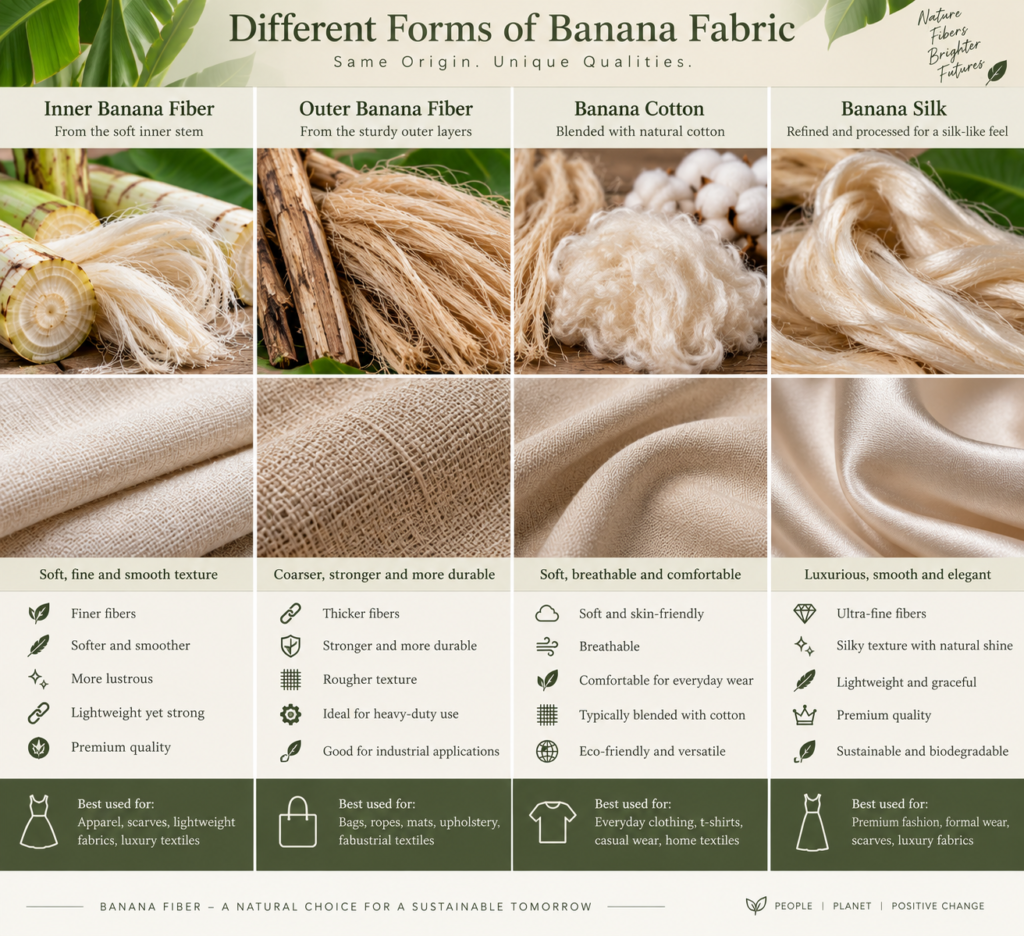
Banana fabric is generally classified according to the part of the plant used and the texture of the finished material.
Inner-Peel Banana Fiber
Inner-peel banana fiber comes from the softer inner layers of the banana stem. It is finer, smoother, and more delicate than outer-stem fiber.
This type is often used for:
- Lightweight clothing
- Scarves
- Fine shawls
- Decorative textiles
- Silk-like garments
It usually requires more careful processing and may have a higher cost.
Outer-Peel Banana Fiber
Outer-peel banana fiber comes from the tougher outer layers of the banana stem. It is stronger and more textured than inner fiber.
It is commonly used for:
- Ropes
- Mats
- Baskets
- Bags
- Wall décor
- Heavy textiles
- Household products
Banana Cotton
Some high-quality banana fibers are described as banana cotton because their texture can resemble cotton. Banana cotton may be breathable, absorbent, and relatively soft, depending on how it is processed.
The term does not always indicate a specific standardized fabric composition. Some banana-cotton products may also contain cotton or other fibers.
Banana Silk
Banana silk is a term commonly used for fabric made from fine banana fibers. It is valued for its smooth texture, lightweight feel, and silk-like appearance.
However, banana silk may be more delicate than coarse banana fabric and should be handled according to the manufacturer’s care instructions.
How Does Banana Fabric Impact the Environment?
Banana fabric has potential environmental advantages because it can be made from parts of the banana plant that might otherwise become agricultural waste. Using these materials can create an additional income source for farmers and reduce the amount of plant residue left unused.
Banana plants are renewable, and their fibers can be used without relying on petroleum-based raw materials. When production is managed responsibly, banana fiber may contribute to a lower-waste textile system.
However, banana fabric is not automatically sustainable in every situation. Its environmental impact depends on the complete production process, including:
- How bananas are cultivated
- Whether pesticides and synthetic fertilizers are used
- Water consumption
- Energy used during processing
- The method used to separate the fibers
- Whether chemical retting is involved
- Wastewater treatment
- Dyeing and finishing chemicals
- Transportation distances
- The use of synthetic fiber blends
Banana fiber is plant-based and may biodegrade under suitable conditions. However, dyes, coatings, chemical finishes, and synthetic blends can affect the biodegradability of the finished fabric.
Organic banana cultivation may reduce the use of certain agricultural chemicals, but organic certification of the crop does not automatically certify the finished textile. Buyers should ask about both agricultural practices and textile processing.
Banana Fabric Certifications Available
There is no widely recognized certification system created specifically for banana fabric. However, several certifications may be relevant to the raw material, textile safety, and production process.
USDA Organic
USDA Organic certification may apply to organically grown bananas. However, it does not automatically certify the finished banana-fiber textile.
EU Organic
EU Organic certification may apply to organic agricultural production in the European market. Buyers should confirm whether the certification covers only the crop or also applies to the textile-processing stages.
OEKO-TEX
OEKO-TEX certification can help verify that a finished textile has been tested for certain harmful substances. It may be useful when evaluating dyes, finishes, and chemical residues.
Supplier and Supply-Chain Documentation
Manufacturers may also provide information about:
- Fiber origin
- Farming methods
- Retting and extraction processes
- Dyeing and finishing chemicals
- Labor practices
- Wastewater management
- Recycled or blended content
Buyers should request relevant documentation rather than assuming that every banana-fiber product is organic, chemical-free, or fully sustainable.
Frequently Asked Questions
Is banana fabric made from the banana fruit?
No. Banana fabric is made mainly from fibers found in banana stems and peel linings, not from the soft fruit.
Is banana fabric soft?
Fine inner banana fibers can be soft and silk-like. Outer banana fibers are usually rougher and are better suited to ropes, mats, bags, and heavier products.
Is banana fabric breathable?
Yes. Banana fabric is generally breathable and has good moisture-absorbing properties.
Is banana fabric stretchy?
Banana fiber has limited natural stretch. A banana-fabric product may be more flexible if it contains elastane or another stretch fiber.
Is banana fabric durable?
Durability depends on the fiber type. Coarse outer fibers can be strong, while fine inner fibers are more delicate and may require careful handling.
How should banana fabric be washed?
Cold or warm water is generally recommended. Delicate banana-silk fabrics should be washed gently and protected from excessive heat, friction, and harsh detergents.
Is banana fabric biodegradable?
Banana fiber is plant-based and may biodegrade under suitable conditions. However, synthetic blends, dyes, coatings, and chemical finishes may reduce the biodegradability of the finished textile.
Is banana fabric sustainable?
Banana fabric can have sustainability benefits when it uses agricultural byproducts and is produced with responsible farming and processing methods. Its actual environmental impact depends on the entire supply chain.
Where is banana fabric mainly produced?
India is one of the leading commercial producers and exporters of banana fiber. The Philippines also produces banana fiber, particularly for traditional and local applications.