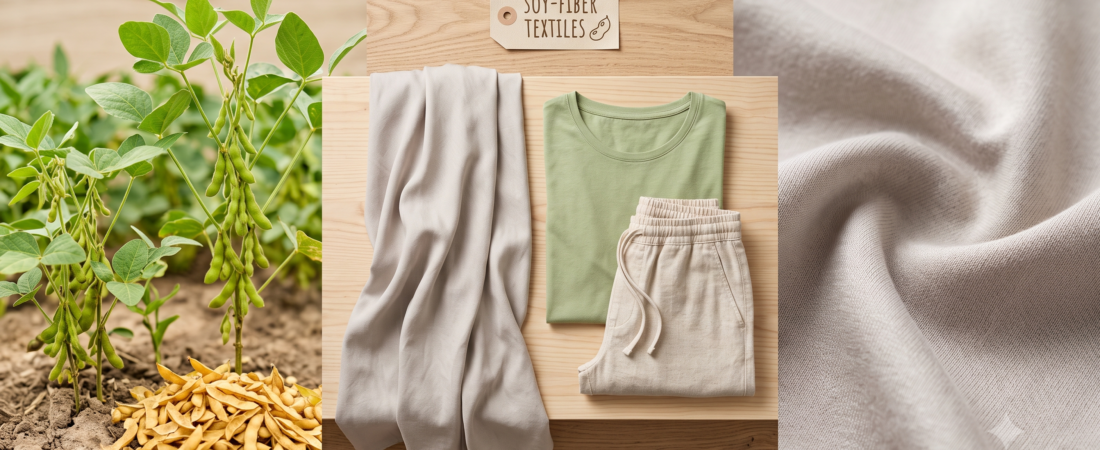
Soy fabric is a textile made from protein extracted from soybeans or soybean-processing byproducts. Also called soy silk, soy protein fiber, vegetable cashmere, or vegan cashmere, it is known for its softness, light weight, natural shine, breathability, and excellent drape.
Unlike cotton, linen, or hemp, soy fabric is not made from the plant’s stem or seed fibers. Instead, it uses protein recovered mainly from soybean hulls and other byproducts of the food industry. This makes soy fabric an interesting example of turning agricultural waste into a textile material.
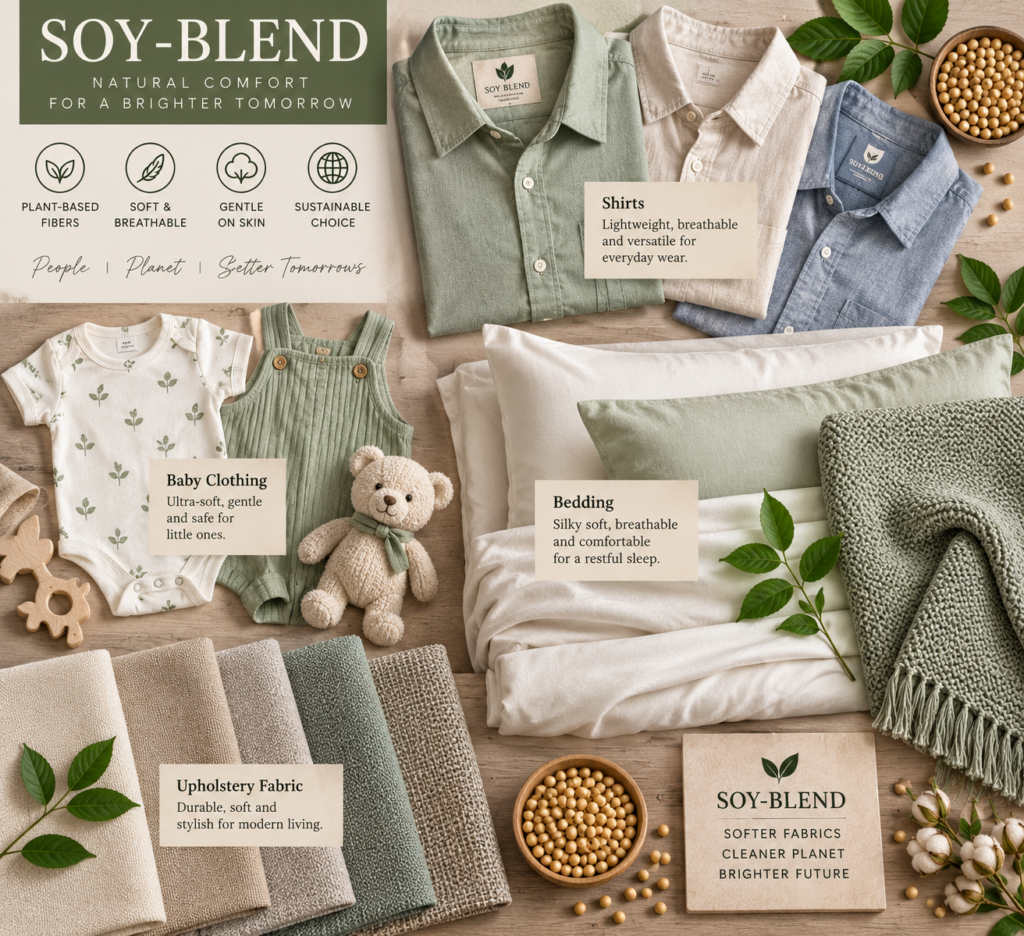
Soy fabric remains a niche textile, but it is used in selected clothing, athleticwear, infant products, bedding, and upholstery. Its softness and elasticity are attractive qualities, although durability, chemical processing, and limited availability can affect its practicality.
Quick Facts About Soy Fabric
| Feature | Details |
|---|---|
| Fabric name | Soy fabric |
| Also known as | Soy silk, soy protein fiber, vegetable cashmere, vegan cashmere |
| Composition | Protein-based fibers derived from soybean byproducts |
| Fiber type | Natural-origin plant protein fiber |
| Typical thread count | Approximately 100–500 |
| Breathability | High |
| Moisture-wicking ability | Medium |
| Heat retention | Low |
| Stretchability | High |
| Pilling tendency | Relatively high |
| First developed in | United States |
| Major production regions | United States and China |
| Common uses | Dresses, shirts, tank tops, athleticwear, infant clothing, bedding, upholstery, and blended fabrics |
| Recommended washing | Cool or warm machine wash, according to the care label |
What Is Soy Fabric?
Soy fabric is made by converting soybean protein into textile fibers. The protein is usually obtained from soybean hulls, which are the outer coverings removed during soybean processing.
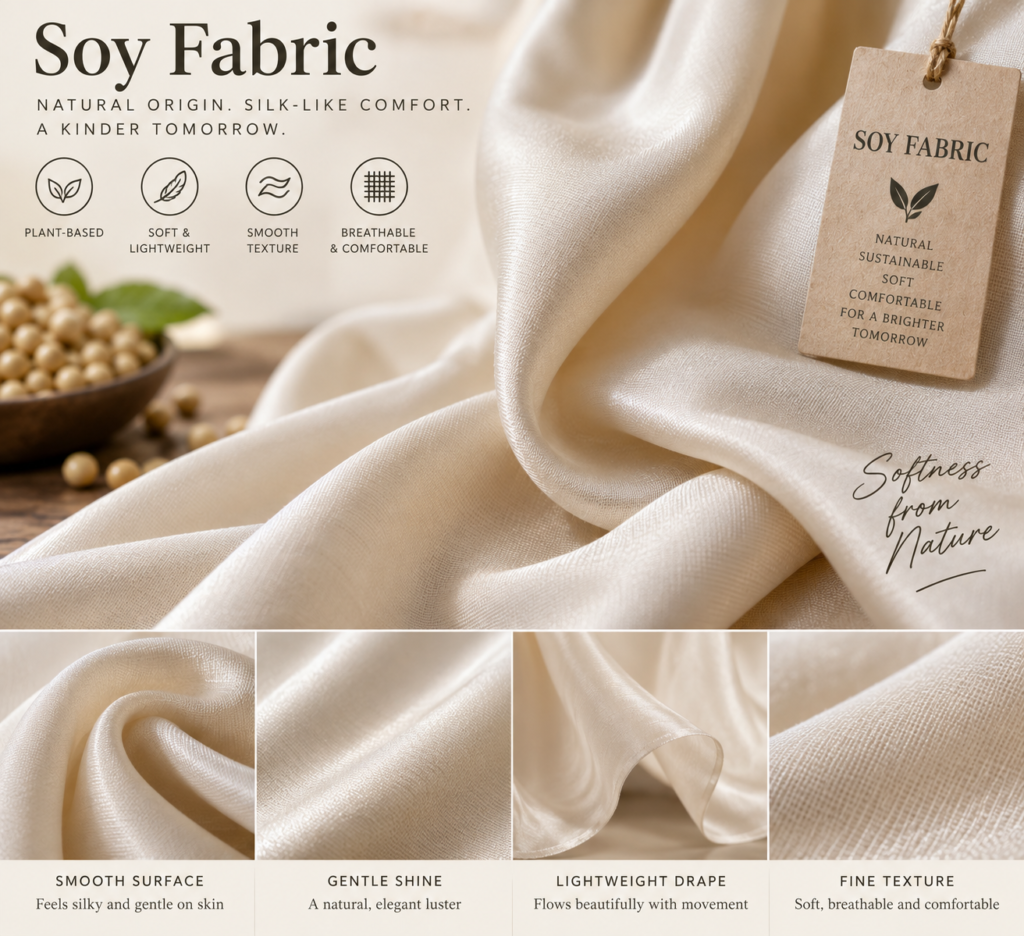
Soy fabric is sometimes described as “vegetable cashmere” because it can have a soft, smooth feel similar to silk or fine animal fibers. It is lightweight, highly elastic, and usually has a pleasant drape. Its natural light-reflective quality can also give it a slightly shiny appearance.
The fabric is generally:
- Soft and smooth
- Lightweight
- Breathable
- Highly elastic
- Absorbent
- Easy to dye
- Resistant to wrinkling
- Relatively resistant to shrinkage
- Biodegradable under suitable conditions
However, soy fabric also has some limitations. It can be prone to pilling, and its colors may bleed during the first few washes. Pure soy fibers are also less durable than many established textile fibers, which is why they are often blended with cotton, wool, or other materials.
Soy fabric is sometimes promoted as an extremely eco-friendly material because it uses food-industry byproducts. However, its environmental performance depends on the chemicals, energy, and finishing treatments used during production.
History of Soy Fabric
Soy fabric has an unusual history compared with most natural textiles. It was developed in the United States and is closely associated with industrialist Henry Ford.
Ford was interested in using soybeans for a variety of industrial purposes. During the early 20th century, he explored soybean-based materials for automobile parts, upholstery, clothing, and other products.
In 1941, Ford was photographed wearing a tie made from soy fabric. He was also seen wearing a suit made from a blend of soy protein fiber and sheep’s wool. Ford believed that soybeans could become an important industrial resource and supported research into soybean-based materials.
Ford Motor Company also explored using soy-based fabrics in vehicle interiors. Beginning around 1940, the company planned to develop a soy-and-wool upholstery material. Although the project was interrupted by World War II, some Ford vehicles produced between 1941 and 1945 reportedly used soy-based fabric in their sidewall upholstery.
During and after the war, synthetic fibers such as nylon became more popular for automobile interiors. Interest in soy fabric declined after Ford’s death in 1947.
Soy fabric returned to attention in the late 20th century. In 1999, textile engineers developed a more efficient and affordable method for producing soy protein fibers. By the early 2000s, interest in the material increased as consumers and manufacturers began looking for alternatives to conventional textiles.
Soy Fabric Today
Soy fabric has never become a major mass-market textile. It is still mainly used by specialty textile manufacturers and brands interested in unusual, soft, or plant-derived materials.
The fabric is often promoted for its combination of softness, elasticity, and biodegradability. It is also notable because it is made from plant protein rather than plant cellulose. Soy protein fiber is sometimes described as one of the few textiles made primarily from plant protein.
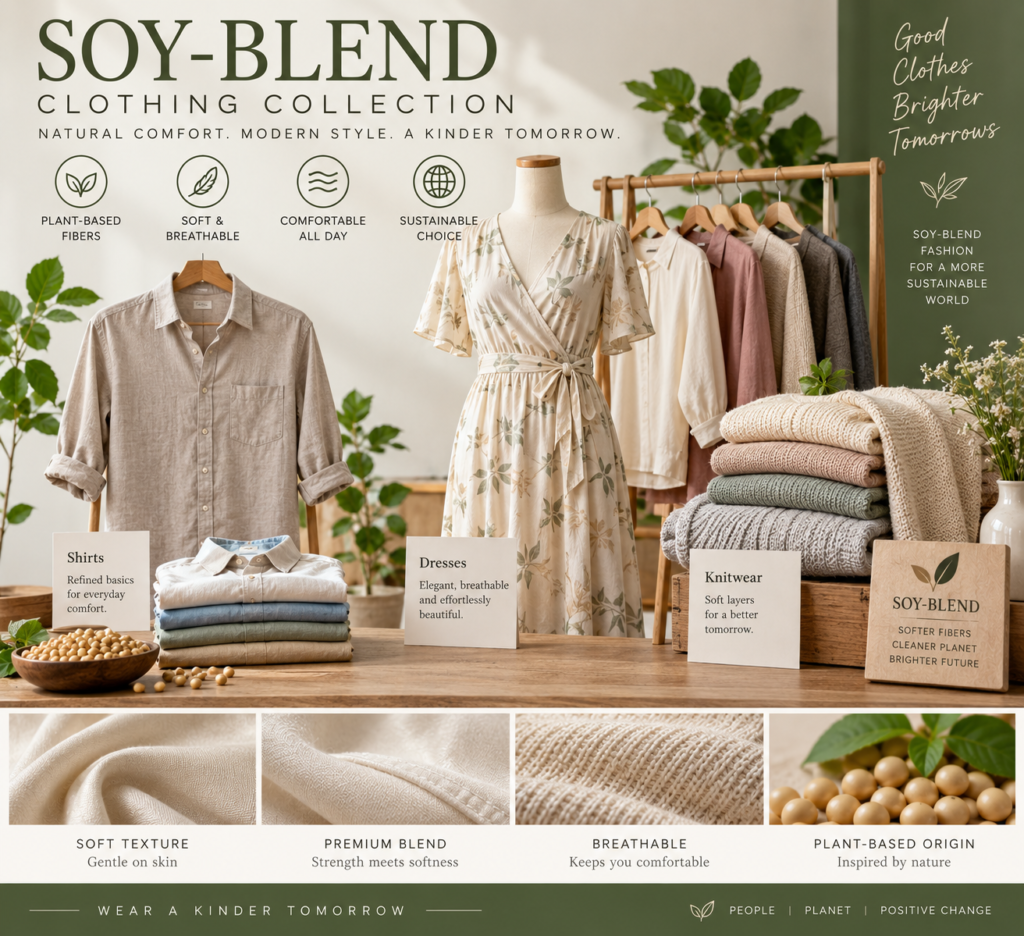
Modern soy fabrics are commonly sold as blends rather than as 100% soy fiber. Blending improves strength, durability, handling, and ease of care while preserving some of the softness and sheen associated with soy fibers.
How Is Soy Fabric Made?
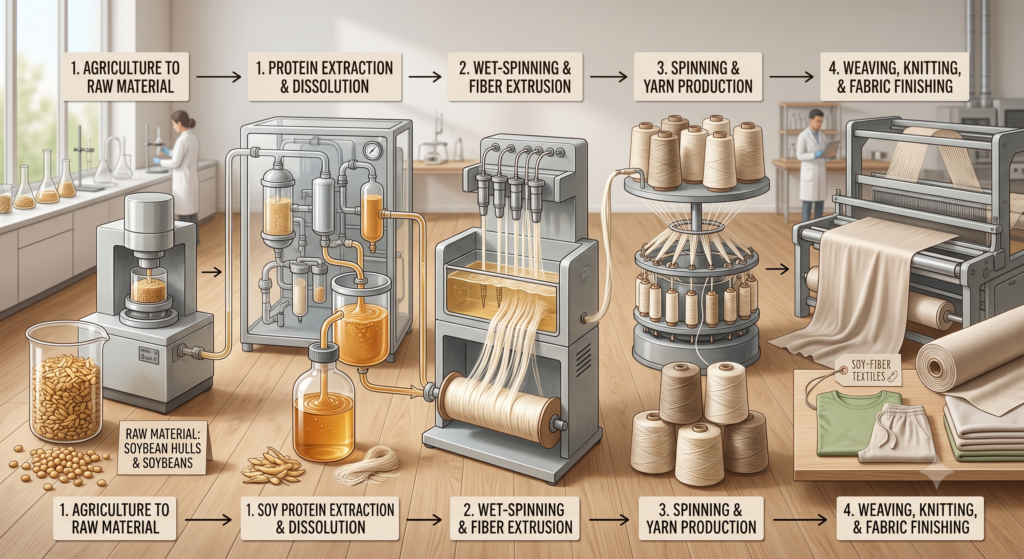
Soy fabric production varies between manufacturers. Some processes use fewer chemicals, while others rely on chemical treatments to make the protein suitable for spinning and improve the strength of the final fiber.
1. Isolation of Soy Protein
Soy protein is generally extracted from soybean hulls, which are a byproduct of soybean processing. The hulls contain useful protein but have limited value as food.
Protein can also be extracted directly from soybeans, but using the hulls is more attractive because it makes use of an otherwise low-value material.
2. Protein Breakdown
Soy protein cannot be spun into textile fibers in its original form. It must first be converted into a smoother, workable protein mixture.
Manufacturers may use:
- Heat
- Alkali treatments
- Enzymes
- Other chemical or mechanical processes
Alkali treatments can be effective, but the chemicals must be carefully managed and, where possible, recovered and reused. Enzyme-based methods may offer a more environmentally considerate alternative, although they can be more expensive.
3. Extrusion Through Spinnerets
The treated soy protein is formed into a liquid or semi-liquid mixture. This mixture is pushed through small openings called spinnerets to create long, thin fibers.
The fibers are then cooled and dried so they become stable enough for textile production.
4. Strengthening and Post-Treatment
Soy fibers are naturally delicate. Some manufacturers use additional treatments to improve their strength and resistance to creasing.
Historically, formaldehyde has been used for this purpose. However, formaldehyde is a known carcinogen, so responsible manufacturers may use alternative treatments such as polycarboxylic acids or avoid certain finishing processes altogether.
Avoiding strengthening treatments may reduce chemical concerns, but it can also result in yarn that is less durable and more likely to crease.
5. Spinning
The prepared soy fibers are spun into yarn. Because soy fibers can be delicate, manufacturers generally avoid bleaching them heavily.
The yarn may be dyed before it is woven or knitted. Soy fibers can absorb dyes well, although some fabrics may experience color bleeding during the first few washes.
6. Weaving or Knitting
The finished yarn is woven or knitted into fabric. The fabric is then rolled onto bolts and supplied to clothing, home-textile, or upholstery manufacturers.
The final appearance and performance depend on the soy fiber grade, yarn construction, blend ratio, weaving or knitting method, dyeing, and finishing.
How Is Soy Fabric Used?
Soy fabric is mainly used for apparel, accessories, home textiles, and selected specialty products.
Apparel
Soy fabric is suitable for garments that benefit from softness, elasticity, and good drape, including:
- Dresses
- Tank tops
- Skirts
- Shirts
- T-shirts
- Blouses
- Suits
- Athleticwear
- Lightweight casual clothing
- Infant clothing
Its high elasticity makes it useful for close-fitting garments. Its breathability also makes it suitable for some athleticwear, although its relatively low durability limits its use in demanding sports applications.
Infant Clothing
The smooth and soft feel of soy fabric makes it attractive for baby clothing and other garments designed for sensitive skin. However, the final product should still be checked for chemical treatments, colorfastness, and overall safety.
Bedding and Upholstery
Soy fabric may be used for:
- Bed sheets
- Pillow covers
- Blankets
- Soft furnishings
- Upholstery
Its softness and drape can be useful in home textiles, although stronger blends may be preferred for products that receive frequent wear.
Blended Clothing
Soy fibers are often combined with cotton, wool, or other fibers. These blends can improve strength, durability, warmth, shape retention, and ease of care.
Where Is Soy Fabric Produced?
China is an important manufacturer of soy fabric because its textile industry has been relatively open to experimental and specialty fibers.
However, China is not the world’s largest soybean producer. The United States and Brazil produce much larger volumes of soybeans. As a result, some of the raw material used in Chinese soy fabric production may be imported.
The United States is also associated with soy fabric’s early development and remains an important producer of soybeans and soy-based materials.
As with many textiles, the soybean byproducts may be collected in one country, processed into protein in another, spun into yarn elsewhere, and finally woven or finished in a different location.
How Much Does Soy Fabric Cost?
Soy fabric is generally priced similarly to lower-cost natural and synthetic textiles such as cotton and polyester. However, its limited availability and novelty may increase the price of certain products.
The cost depends on:
- Percentage of soy fiber
- Fabric weight
- Yarn quality
- Weave or knit structure
- Dyeing and finishing
- Durability treatments
- Certification
- Country of origin
- Brand
- Order quantity
Pure soy fabric may be more expensive or harder to source than soy-cotton blends. Blended fabrics are often more practical because they offer better durability and more consistent performance.
What Different Types of Soy Fabric Are There?
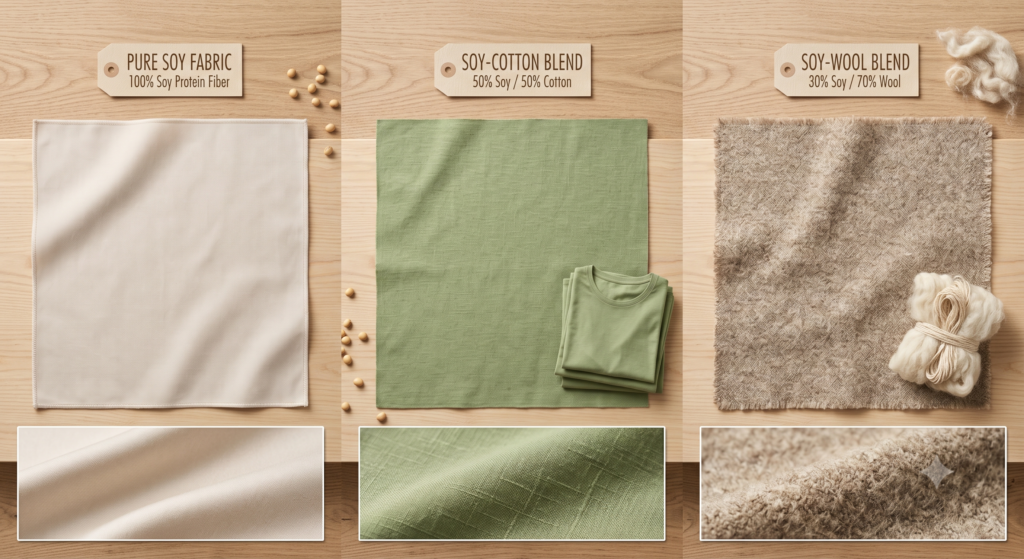
Soy fabric is mainly classified according to its fiber content and blend composition. Manufacturing methods can also create differences in softness, elasticity, durability, and appearance.
1. Pure Soy Fabric
Pure soy fabric is made entirely or almost entirely from processed soy protein fibers. It is known for:
- High softness
- Natural shine
- Good drape
- High elasticity
- Breathability
- Lightweight construction
However, pure soy fabric is relatively delicate and may be more prone to pilling, creasing, and dye-related problems.
2. Soy-Cotton Blends
Soy-cotton blends combine the softness and sheen of soy fibers with the strength and familiarity of cotton.
These blends are commonly used for:
- T-shirts
- Athleticwear
- Casual clothing
- Lightweight knitwear
Cotton helps improve durability while maintaining much of the comfort associated with soy fabric.
3. Soy-Wool Blends
Soy-wool blends combine the softness and elasticity of soy fibers with the warmth, insulation, and durability of wool.
These blends were explored during Henry Ford’s time and may be used for:
- Suits
- Jackets
- Warm clothing
- Structured garments
Soy-wool fabrics are less common than soy-cotton blends but can offer a useful balance of comfort and insulation.
How Does Soy Fabric Impact the Environment?
Soy fabric has both environmental advantages and potential concerns. Its main benefit is that it can be made from soybean-processing byproducts rather than requiring a completely separate crop grown only for textile production.
Use of Agricultural Byproducts
Soy fabric can give soybean hulls and other food-industry byproducts an additional use. This may reduce waste and improve the overall value of soybean processing.
However, using a byproduct does not automatically make a fabric environmentally harmless. The environmental impact of the complete production process must also be considered.
Chemical Processing
Converting soy protein into a stable textile fiber often requires heat, alkali, enzymes, or other treatments.
Some chemical processes can create wastewater or toxicity concerns if chemicals are not properly recovered and treated. Alkali solutions may be reused in well-managed facilities, but they can damage ecosystems if released untreated.
Formaldehyde Concerns
Some soy fibers have historically been treated with formaldehyde to improve strength and reduce creasing. Formaldehyde is a hazardous chemical and a known carcinogen.
Manufacturers seeking safer production methods may use alternative treatments or avoid chemical strengthening. Buyers should look for information about the finishing process and chemical testing of the finished textile.
Biodegradability
Soy protein fibers are generally biodegradable under suitable conditions. This can make them less persistent in the environment than many petroleum-based synthetic fibers.
However, the biodegradability of a finished soy fabric depends on its complete composition. Blends, dyes, coatings, and chemical finishes may affect how quickly the product breaks down.
Overall Environmental Performance
Soy fabric may be a lower-impact option when it:
- Uses agricultural byproducts
- Avoids hazardous strengthening chemicals
- Uses responsibly managed wastewater systems
- Limits unnecessary finishing treatments
- Contains a high percentage of biodegradable fibers
- Is designed for long-term use
It should not automatically be considered sustainable simply because it is plant-derived. The full manufacturing process and final product composition are important.
Soy Fabric Certifications Available
Soy fabric may qualify for different textile certifications depending on its fiber content, processing, and manufacturing location.
OEKO-TEX
OEKO-TEX certification can indicate that a finished textile has been tested for certain harmful substances. It focuses on product safety rather than proving that the fabric is organic or made without chemicals.
USDA Organic
Soy fabric produced in the United States may be eligible for USDA organic certification when the raw materials and processing meet applicable organic requirements. However, certification depends on the complete supply chain and the specific product.
European Union Organic Certification
Manufacturers operating in the European Union may be eligible for organic certification under relevant European standards. Buyers should confirm whether the certification applies to the soy fiber, the finished fabric, or the complete garment.
When evaluating a certified soy product, check the certification name, issuing organization, scope, and validity rather than relying only on general claims such as “natural” or “eco-friendly.”
Frequently Asked Questions
Is soy fabric made from soybeans?
Yes. Soy fabric is made from protein extracted from soybeans or, more commonly, soybean-processing byproducts such as soybean hulls.
Is soy fabric natural?
Soy fabric is made from plant-derived protein, but it usually requires chemical or mechanical processing before it can be turned into textile fibers.
Is soy fabric soft?
Yes. Soy fabric is known for its soft, smooth, lightweight feel and is sometimes compared with silk or cashmere.
Is soy fabric breathable?
Yes. Soy fabric is highly breathable and can be comfortable in lightweight clothing.
Is soy fabric stretchy?
Yes. Soy fibers have relatively high elasticity, making them suitable for fitted garments and some athleticwear.
Is soy fabric durable?
Pure soy fabric is generally less durable than cotton, wool, or many synthetic fibers. Blending soy with other materials can improve its strength and lifespan.
Does soy fabric shrink?
Soy fabric generally has low shrinkage, but the result depends on the blend, manufacturing process, and washing conditions.
Does soy fabric pill?
Yes. Soy fabric can be relatively prone to pilling, especially when made from delicate fibers or exposed to frequent friction.
Is soy fabric expensive?
Soy fabric is usually comparable in price to lower-cost natural and synthetic fabrics, although specialty products and pure soy fabrics may cost more.
Is soy fabric sustainable?
Soy fabric can have environmental advantages because it may use soybean-processing byproducts and can be biodegradable. However, chemical processing, formaldehyde treatments, wastewater, and blended fibers can affect its overall sustainability.
Is soy fabric vegan?
Soy fabric is plant-derived and does not require animal fibers. However, buyers should check whether the finished product contains other animal-based materials, such as wool or silk.
What is the difference between soy fabric and soy-cotton fabric?
Pure soy fabric is made primarily from soy protein fibers. Soy-cotton fabric combines soy fibers with cotton to improve durability, strength, and everyday performance.